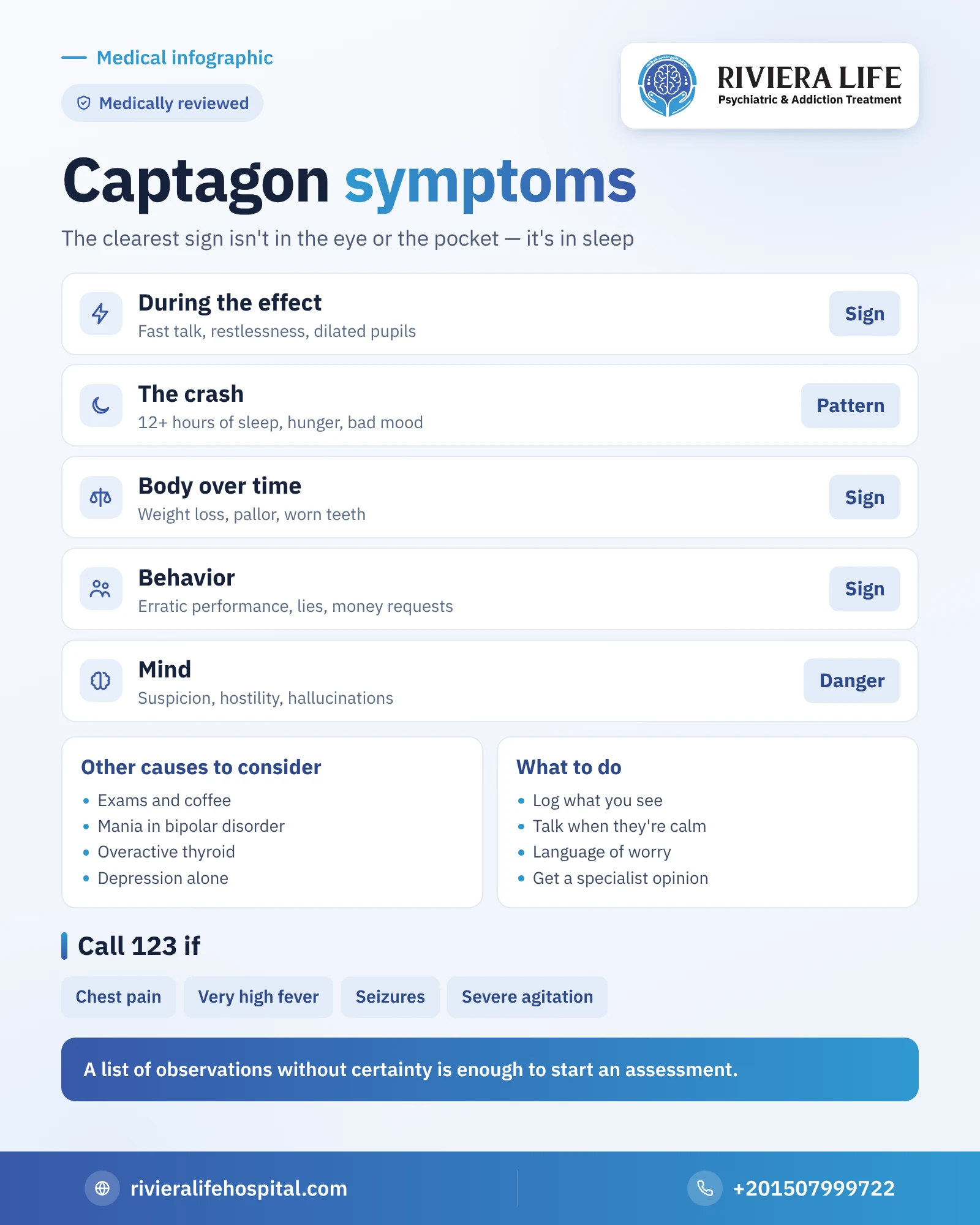
The clearest sign among the symptoms of Captagon addiction isn’t in the eye or the pocket, but in sleep: someone who stays up two or three nights with strange energy, then collapses and sleeps a whole day and wakes irritable and depressed. Around this cycle other signs gather, such as loss of appetite and weight loss, talking a lot, irritability, suspicion of others, and changes in friends and pocket money. One sign isn’t enough to judge, but several signs coming together and lasting weeks deserves attention. In this article we arrange for you what the family can notice, how to tell it from other causes, and when use turns into addiction.
Symptoms of Captagon use during the pill’s effect
In the hours after taking Captagon, the person is in a state of activity obvious to anyone who knows them well. You may see:
- Sudden enthusiasm and fast, flowing speech jumping from one subject to another.
- Constant movement, such as shaking a foot, moving around the room, or rearranging things over and over for no reason.
- Dilated pupils even in ordinary light.
- Clenched jaw muscles, teeth grinding or chewing the inside of the cheek.
- Sweating and a dry mouth, and drinking a lot of water or energy drinks.
- Complete aversion to food at a meal they used to love.
These signs by themselves resemble what happens with too much coffee or energy drinks, so don’t rush to judge from one day.
The cycle of staying up then collapsing
What really distinguishes stimulants is the repeated pattern. The person stays up a night or more without looking tired, then comes what doctors call the “crash”: very long sleep that may exceed twelve hours, intense hunger after waking, and a bad mood and irritability at the slightest thing. After a day or two the activity returns. This swing between peak and trough, especially if it repeats weekly or is linked to particular days such as exam nights or work shifts, is one of the strongest indicators of stimulant use.
Physical symptoms of Captagon addiction
After weeks or months of regular use, effects begin that are hard to hide:
- Noticeable weight loss, pallor and dark circles under the eyes.
- Sores or spots on the face, sometimes from scratching or picking at the skin.
- Worn teeth or jaw pain from constant grinding.
- Repeated complaints of palpitations, headaches or stomach pain.
- Chronic exhaustion on days without use.
The details of what happens inside the body, not just what shows on it, are in the article on the harms of Captagon.
What do a Captagon user’s eyes look like?
Many parents ask what the eyes of someone using Captagon look like, thinking the eye gives everything away. In fact Captagon, like other stimulants, widens the pupils while it is acting, so they look larger than usual even in ordinary room light, and the person may be bothered by strong light. With repeated sleepless nights come dark circles, redness and dry eyes, and they may blink less or have a tense, quick-moving gaze.
But these signs are not proof on their own: wide pupils also happen with fear, dim light, some medicines and eye drops, and dark circles and redness come from staying up for any reason. Once the pill wears off, the pupils return to their size within hours. So the eyes are read together with the other signs, especially the cycle of staying up then collapsing, not on their own.
Changes in behavior, study and work
Behavior usually changes before the body. You may notice erratic performance: a week of exaggerated achievement, then absence from work or college. Lying about where they stayed up increases, and friends change to a new circle you know nothing about. Requests for money increase or things disappear from the house, phones become locked with passwords, and simple questions are met with outbursts. Those who drive long distances or work night shifts may justify it by saying they “need the pill to finish the shift”.
Psychological symptoms in a Captagon addict
Mood with Captagon swings sharply. In the hours of the effect there is excessive confidence, impulsiveness and impatience, and afterwards anxiety, depression and distress. With continued use something more dangerous may appear:
- Unjustified suspicion of family or friends, or a feeling that someone is watching them.
- Interpreting ordinary events in a hostile way, and getting into fights.
- Hearing voices or seeing things that aren’t there, especially after sleepless nights.
- Bouts of crying or talk of hopelessness on days off.
The appearance of paranoia or hallucinations is a sign that calls for a quick medical assessment, and isn’t treated by arguing with the person about whether what they believe is true.
Things that may catch your eye at home
You may find small white or yellowish tablets, engraved with a logo resembling two facing crescents, wrapped in paper or a small bag. You may find many energy drink cans, or sleeping pills and sedatives without a prescription that the person uses to be able to sleep after the pill. The presence of these things doesn’t prove addiction alone, but it explains many of the other signs. If you need medical confirmation, read about detection windows and how to read results in the article on how long Captagon stays in the body.
How do you tell Captagon signs from other causes?
Some of the above may have another explanation, and it is fair to consider it before accusing:
- Exam pressure and too much coffee may cause staying up and anxiety, but are rarely accompanied by a sharp crash and sleeping a whole day.
- Manic episodes in bipolar disorder closely resemble the state of the effect, and need a psychiatric diagnosis.
- An overactive thyroid causes weight loss, palpitations and tension, and a simple blood test reveals it.
- Depression alone may explain withdrawal and isolation, but without the periods of excessive activity.
Ice produces a similar picture but usually more intense and longer, and you can compare it by reading ice addiction symptoms.
Signs that point to mixing with other substances
Many don’t stop at Captagon. If you see excessive activity quickly followed by heavy drowsiness, slurred speech and slowed movement, the person may be using tramadol, pregabalin or sedatives to “come down” from the pill’s effect. This pattern is more dangerous than using a single substance, because each substance hides the signs of the other, and they pressure the heart and breathing in opposite directions.
Signs in teenagers and students
In a teenager the signs mix with the natural swings of age, so watch for sudden change, not fixed temperament. Studying all night before an exam with unusual enthusiasm, then sleeping all the next day, weight loss not explained by a diet, a drop in grades after a temporary improvement, and moving away from old friends. And because many students start the pill looking for excellence, they don’t see themselves as “users” at all, which is why talking with them needs patience. The motives behind this start are explained in the article on the causes of Captagon addiction.
When does use become addiction?
Addiction isn’t diagnosed from a single sign, but from a pattern. Doctors tend to consider use a disorder if several things come together over about a year, including:
- Taking Captagon in larger doses or for longer than planned.
- Failed attempts to cut down or stop.
- An urgent craving for the pill, especially in situations linked to it.
- Neglecting study, work or home because of use or recovering from it.
- Continuing despite clear problems with health or relationships.
- Needing a larger amount to get the same effect, and depression and exhaustion appearing on stopping.
The more of these things there are, the more severe the case, and the specialist doctor is the one who assesses it.
What do you do if you notice these signs?
Start by recording what you see with dates: the nights awake, the days of long sleep, and the changes in weight and money. Choose a time when the person is rested and calm, not at the peak of the effect or the bottom of the crash, and speak in the language of worry: “I’ve noticed you don’t sleep and I’m afraid for your heart” is better than “you’re an addict”. Avoid threats and open searching, and ask for a specialist consultation even before they agree. You will find the steps after diagnosis in the article on Captagon addiction treatment.
Signs that can’t wait
Call an ambulance on 123 immediately if you see
These signs may mean stimulant poisoning that threatens the heart or brain.
- Chest pain or severe palpitations with shortness of breath
- Very high temperature with confusion or sweating stopping
- Seizures or fainting
- Severe agitation, hallucinations, or threats to harm oneself or others
At Riviera Life we receive many families who came with only a list of observations, without certainty. This is quite enough to begin: a confidential assessment that determines whether the signs are due to Captagon or another cause, and what the right next step is.
Captagon addiction in women
Captagon is sometimes thought to be a men’s problem only, but some women reach it through other doors: a pill taken to lose weight without hunger, to bear late nights studying, or to keep up with work, home and children without rest. The case remains more hidden because fear of scandal pushes a woman towards denial, and because the family explains what it sees with familiar causes.
The core signs are the same in both sexes, but some are read differently in women:
- Rapid weight loss attributed to a diet or interest in appearance.
- Insomnia and irritability counted as household stress or hormonal swings.
- Lethargy and long sleep after days of activity understood as ordinary exhaustion.
- Menstrual disturbance, which deserves to be shown to the doctor in any case.
And if the woman is pregnant the matter is more urgent, because stimulants may harm both mother and baby, and stopping suddenly without supervision isn’t the safest solution. The details are in the article on drugs and pregnancy.
A woman seeking treatment first needs complete confidentiality and a doctor she can talk to without prejudgment. The article on women’s addiction explains why their journey differs and how to begin privately.
More from the Captagon guide
- Captagon: the complete guide
- Captagon withdrawal symptoms
- The causes of Captagon addiction
- Captagon addiction treatment
- How to deal with a Captagon addict: a family guide to staying up, suspicion and the crash
- Types of Captagon pills: original and counterfeit, and why the types are a gamble
- Captagon vs tramadol: effects, harms and the dangers of combining them
Questions many people ask
Usually a clear pattern of disturbed sleep: long nights awake with excess activity followed by heavy sleep for many hours and a bad mood. It is usually accompanied by loss of appetite and talking a lot.
Yes, stimulants usually cause dilated pupils during the effect, but this sign alone isn't enough to judge because other causes may produce it.
At first, intermittent use may be well hidden, especially if linked to seasons such as exams. But with continued use, signs of the crash, weight loss and mood swings appear.
Repeated use or high doses may cause paranoia and hostility, and sometimes hallucinations, especially with lack of sleep. These signs need a quick medical assessment.
The test only confirms the presence of the substance and doesn't determine whether the person is addicted. Diagnosis depends on the pattern of use and its effect on the person's life, and the doctor makes it after assessment.