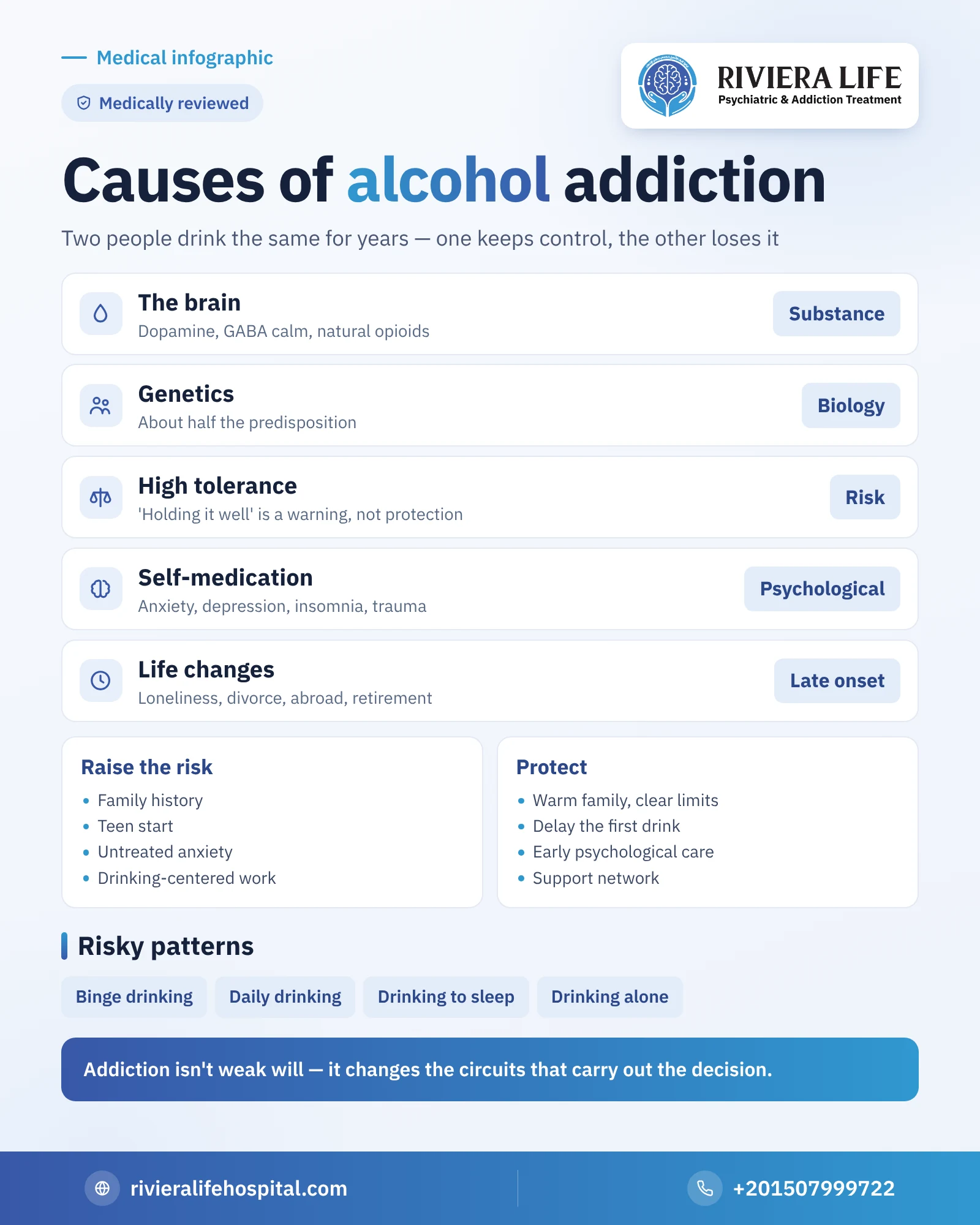
The causes of alcohol addiction can’t be traced to a single cause, as it is the result of three circles meeting: the nature of alcohol itself and its ability to change brain chemistry, the person’s genetic and psychological predisposition, and the environment in which they live and drink. That is why two people drink the same amount for years, and one remains able to stop while the other gradually loses control. This article explains how alcohol creates addiction, and the role of genetics, mental disorders, trauma, age at start, family and pressures, and what protects from it.
Why does alcohol cause addiction?
In the first glasses alcohol raises dopamine in the reward circuit, calms anxiety through the “GABA” system, and releases opioid-like substances the body naturally secretes. The brain quickly learns that this drink means relief and pleasure, so it links it to the places, people and times in which it happens. With repetition it adapts: it needs a larger amount for the same effect, and is in a state of tension and arousal when alcohol is absent. Here the motive for drinking changes from seeking pleasure to escaping distress, and this shift is the heart of addiction.
From pleasure to need: how does it develop?
Doctors describe a gradual shift from “positive reinforcement”, meaning the person drinks to feel better, to “negative reinforcement”, meaning they drink so as not to feel bad. In the first stage drinking is a choice linked to occasions. Then it becomes a daily means of relaxing after work. Then a day comes when they notice that anxiety, insomnia and irritability appear when they don’t drink, and that the first glass silences them. From that moment alcohol works to repair damage it made itself, so the cycle turns without stopping.
Genetic factors
Twin and family studies show that genes explain a large part of the risk of alcohol addiction, estimated at roughly half. This doesn’t mean there is an “addiction gene”, but a large group of genes each adding a small amount of predisposition, in the way the brain responds to alcohol, the speed of breaking it down, and traits such as impulsivity and anxiety. That is why someone with a father or brother addicted to alcohol carries a higher risk, but isn’t condemned to addiction, as environment and decisions remain a decisive factor.
Those who tolerate alcohol easily are more at risk
Paradoxically, the person who “holds” alcohol, that is, drinks a lot without appearing drunk from the start, is more susceptible to addiction, not less. A weak response to alcohol makes its owner drink larger amounts to reach the desired effect, without early warning signals such as dizziness and nausea. In the opposite direction, some people suffer severe flushing and palpitations when drinking because of slow breakdown of acetaldehyde, and this unpleasant feeling protects many of them from excess.
Mental disorders and drinking to calm down
A large part of those who become addicted to alcohol started drinking to treat something without naming it: social anxiety that makes parties exhausting, depression that weighs down the evening, chronic insomnia, bipolar disorder, or attention deficit hyperactivity disorder. Alcohol gives quick relief, so it becomes the only “medicine” the person knows. But over time it makes depression and anxiety worse, so they need a larger amount, and the two problems intertwine until it is hard to separate them. That is why the doctor treats both conditions together, as the article on alcohol addiction treatment explains.
Trauma and difficult experiences
Exposure to abuse or neglect in childhood, losing a loved one, or going through an accident or war raises the risk of addiction later. Painful memories, nightmares and chronic tension look for an outlet, and alcohol is available and numbs feeling temporarily. Doctors notice that some patients’ drinking increases on an anniversary or in a situation that brings back the old event. Understanding this background doesn’t justify addiction, but it explains it and determines what needs treatment.
Age at start
The younger the age at which a person starts drinking, the higher the risk of their addiction in adulthood. The reason is that the brain in adolescence is still building the circuits that control impulsivity, while the reward circuits are very active, so it learns faster to link alcohol with pleasure. That is why delaying the first glass, even by a few years, is among the most important tools of prevention.
Family and the surrounding environment
A child who grows up in a house where one of the parents drinks heavily learns that alcohol is the natural way to deal with tiredness and anger, in addition to the predisposition they inherited. The risk also rises with friends whose meetings revolve around drinking, and with jobs that make alcohol available and sometimes free, such as working in hotels and tourist resorts or jobs based on nights out and invitations.
In some social circles refusing a glass is considered a strangeness needing justification, a real pressure that is hard to resist. Added to this is what films and advertisements broadcast of an image of alcohol linked to success, celebration and manhood, so the young man enters the first experiment thinking he is getting closer to this image, not to a substance that may take control of him.
Pressures, loneliness and life changes
Many cases of alcohol addiction started late, in the forties or after, with increasing work pressure, divorce, travelling for work away from the family, or a sudden retirement that left a long emptiness. The person who lives alone abroad, and returns every evening to an empty flat, finds in the glass an easy companion. That is why the risk isn’t limited to young people, and attention must be paid to increased drinking in the big transitional stages of life.
The drinking pattern itself
The way of drinking is a risk factor in itself. Heavy drinking in one session, daily drinking even in amounts that seem moderate, drinking to sleep, and drinking alone are all patterns that speed up adaptation in the brain and raise the risk of dependence. Combining alcohol with other depressant substances such as pregabalin also adds a double risk, explained in the article on pregabalin and alcohol.
Risk factors and protective factors
| Raise the risk | Protect from it |
|---|---|
| A family history of alcohol addiction | A warm family relationship and clear limits |
| Starting in adolescence | Delaying the first experiment as much as possible |
| Untreated anxiety, depression or trauma | Early psychological treatment of disorders |
| Friends and work that revolve around drinking | Activities and friendships away from alcohol |
| High tolerance for alcohol from the start | Awareness of the real amount and personal limits |
| Loneliness, pressures and big transitions | A social support network and regular sleep |
Is addiction weak willpower?
The beginning may be a choice, but addiction itself isn’t. Alcohol changes the circuits responsible for decision-making and controlling impulsivity, so the person becomes able to sincerely decide to stop in the morning, then unable to carry out their decision in the evening. This doesn’t cancel their responsibility for seeking treatment, but it explains why promises alone fail, and why recovery needs a plan, not just an intention. Knowing the symptoms of alcohol addiction helps catch the problem before it deepens.
How do you protect yourself and your children?
- If there is a history of alcohol in your family, consider yourself more susceptible and honestly watch your drinking pattern, or avoid it completely.
- Talk with your children about alcohol early and clearly, before they hear about it from their friends.
- Don’t make alcohol your usual means of calming tension or bringing sleep in front of them.
- Treat anxiety, depression and insomnia early with a specialist, instead of leaving them to look for self-treatment.
- Pay attention to increased drinking in periods of transition: living abroad, loss, retirement or separation.
To learn the general picture about alcohol and its effect on the brain visit the alcohol page.
More from the alcohol guide
- Alcohol: the complete guide
- Alcohol addiction symptoms
- Alcohol addiction treatment: stages and medicines
- The harms of alcohol on the body and mind
Questions many people ask
Genetics plays a large role estimated at roughly half of the predisposition, but it doesn't condemn anyone to addiction. Environment, age at start and drinking pattern determine much of what actually happens.
Because of differences in genetic predisposition, psychological state, the way the brain responds to alcohol, and surrounding circumstances. Someone who doesn't feel drunk easily, for example, is more prone to excess.
Depression is among the most important risk factors, because some people drink to ease it. But alcohol makes depression worse over time, which is why the two need simultaneous treatment.
Yes, many cases start late with work pressure, divorce, living abroad or retirement, so the risk isn't limited to young people.
A supportive family relationship and early, clear dialogue, delaying the first experiment as much as possible, treating anxiety and depression early, and a role model who doesn't use alcohol to deal with pressures.