Alcohol addiction treatment is possible and effective, and many who went through this addiction live today for long years without drinking. But successful treatment doesn’t mean the person decides to stop on Thursday night and then endures it alone; it is a medical and psychological path that starts with a careful assessment, then safe withdrawal from alcohol that protects against seizures and delirium, then medicines the doctor decides the patient needs, and psychotherapy and follow-up that prevent relapse. This article explains each stage and its goal, the available medicines and the role of each, the expected duration, and how to choose the right hospital.
Stages of alcohol addiction treatment
The program differs from patient to patient according to the severity of dependence and health condition, but it usually passes through the following stations:
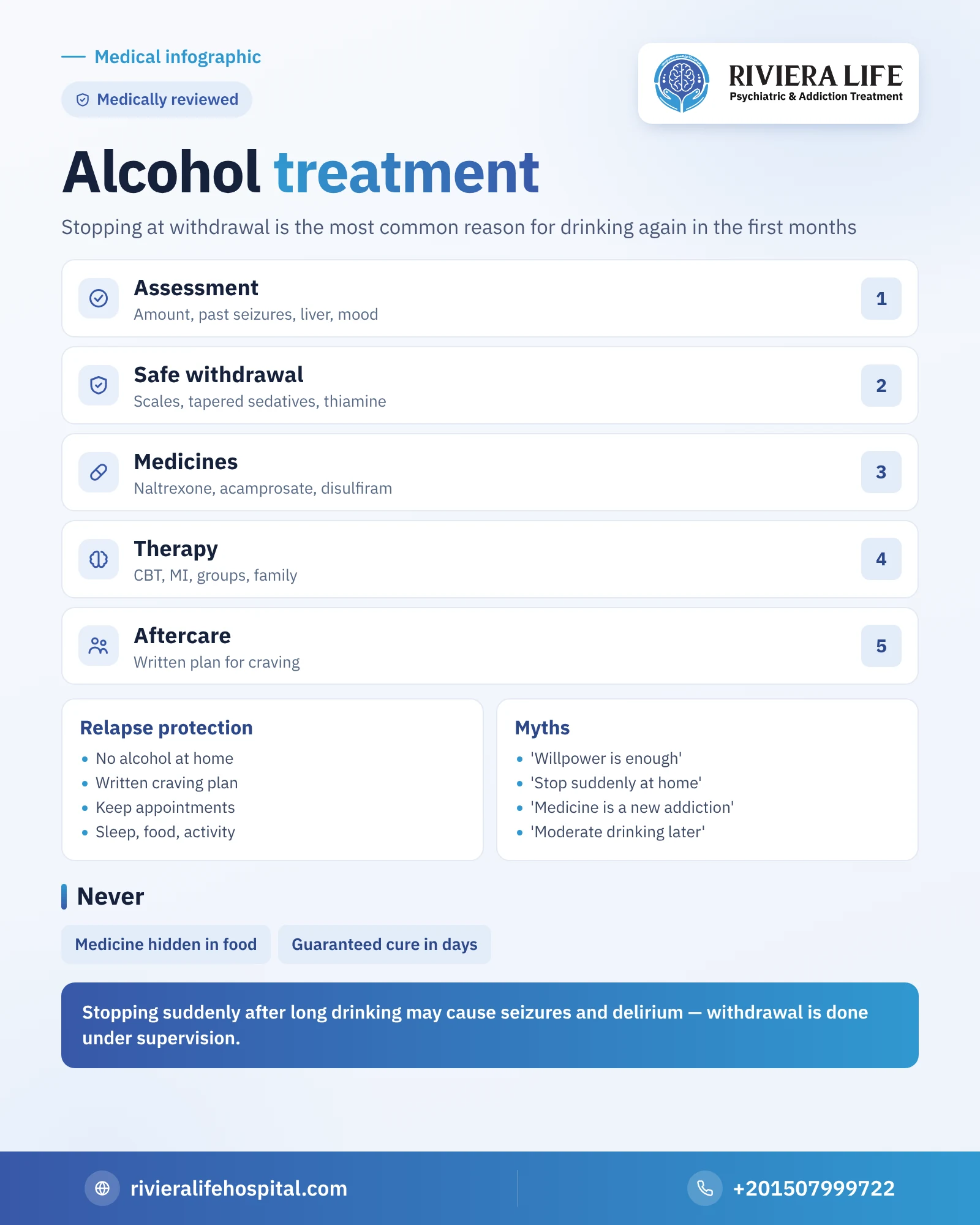
- Comprehensive assessment: drinking history, previous withdrawals, liver and blood tests, and the psychological and family situation.
- Alcohol withdrawal: getting through the withdrawal stage under medical supervision that prevents complications.
- Drug treatment: medicines that reduce craving or support abstinence, if the doctor sees them as suitable.
- Psychotherapy and rehabilitation: understanding the motives for drinking and building practical alternatives to it.
- Care after discharge: periodic meetings and a written plan the patient turns to when the urge to drink intensifies.
Stopping at the second stage, meaning withdrawal alone, is the most common reason for going back to drinking during the first months.
The first assessment: what does the doctor examine?
The assessment isn’t a formality, as it is what determines the place of treatment and the degree of caution needed. The doctor asks about the daily amount, the type of drink and the duration of drinking, about the last time they drank, and whether the patient has previously had a seizure or delirium on stopping. They ask for tests of liver function, blood count and salts, assess the psychological state looking for depression, anxiety or suicidal thoughts, and ask about any other pills they take, because mixing alcohol with sedatives, tramadol or pregabalin changes the withdrawal plan completely.
Withdrawing from alcohol safely
The goal of this stage is for the patient to get through withdrawal without seizures or delirium, and it usually takes from days to about a week. The medical team measures the severity of symptoms with approved scales at regular intervals, and the doctor uses sedative medicines that are withdrawn gradually, with thiamine, fluids and correction of salts. The details of the symptoms, their timing and emergency signs are in the article on alcohol withdrawal symptoms. Most importantly, the family should understand that the end of withdrawal is the beginning of real treatment, not its end.
The medicines used in alcohol addiction treatment
After withdrawal ends, the doctor may decide to use a medicine that helps continue abstinence. These medicines aren’t magic “pills that prevent drinking”, but tools that work better with psychotherapy, and each has a different way of working:
Naltrexone
It closes the opioid receptors in the brain, so it reduces the feeling of reward from alcohol and weakens the urgent craving for it. It suits many patients, but isn’t used with those taking opioid painkillers such as tramadol, and needs follow-up of liver function.
Acamprosate
It is believed to help restore balance between the calming and excitatory systems in the brain after stopping, so it eases the anxiety, insomnia and distress that push towards relapse. It suits those who have finished withdrawal and want to maintain abstinence, and the doctor needs to review kidney function before it.
Disulfiram
It works in a completely different way; it doesn’t reduce craving, but makes the body react violently to any amount of alcohol, so flushing, palpitations, nausea and severe vomiting appear. It suits only a motivated patient who knows what they are taking and agrees to it, in the presence of someone who follows their commitment. And it must never be given to a person without their knowledge, because drinking after it may cause a dangerous reaction.
Choosing the medicine and its duration is an individual medical decision that depends on the state of the liver and kidneys, other medicines and the patient’s goal. Drug treatment may continue for months, and continuing it is a sign of commitment, not weakness.
Psychological and behavioral therapy
Medicine eases craving, but psychotherapy is what changes the relationship with alcohol. Among the most evidence-supported methods:
- Cognitive behavioral therapy: reveals to the patient the circumstances and thoughts that push them to drink, such as work pressure or loneliness in the evening, then trains them in other ways of dealing with them.
- Motivational interviewing: suits those who haven’t yet made up their minds, as it leads them to their personal reasons for quitting alcohol instead of feeling forced.
- Group therapy and support groups: hearing the experiences of those who went before in recovery breaks isolation and shame.
- Family therapy: rearranges the way the family deals with the patient after years of tension.
Treating accompanying disorders
A large proportion of those addicted to alcohol started drinking to calm anxiety, depression, insomnia or traumatic memories. If the addiction is treated and these causes left, they press on the patient again until they go back to the only way they know to ease them. That is why the psychiatrist assesses these disorders and treats them in parallel, taking into account that some symptoms of depression and anxiety improve on their own after weeks of stopping. The article on the causes of alcohol addiction helps to understand these motives.
Residential or outpatient treatment?
Residence inside the hospital is usually preferred for those who drink large amounts daily, have had a previous seizure or delirium, mix alcohol with other substances, have liver or heart disease, severe depression, or live in an environment that encourages drinking. Outpatient treatment may suit milder cases or the stage after residence, and allows the patient to continue working. Many patients start with residence then move gradually to outpatient follow-up.
How long does alcohol addiction treatment take?
Withdrawal takes days, the intensive program may extend from several weeks to a few months, and follow-up continues in most cases for a year or more. There is no single duration that suits everyone, but what is certain is that staying in treatment for a sufficient period is linked to better results, and that a sudden break between stages is among the most dangerous moments for relapse.
The family’s role in treatment
The family of an alcohol patient has usually lived years of broken promises and tension, and may have learned without meaning to cover up for them or apologize for them. That is why its members need sessions of their own that help them set clear limits, understand that relapse, if it happens, doesn’t mean everything is lost, and learn how to support without watching every move. You will find a description of what the patient goes through in the first weeks and months in the guide to quitting alcohol.
Relapse prevention after treatment
The most dangerous moments come in the same old situations: an evening with friends, bad news, or the end of an exhausting week. Among the things that protect the patient at this stage:
- Removing alcohol from the home, the car and the workplace.
- A written plan for what to do when the urge is strong, and whom to call.
- Committing to follow-up appointments and medicine without stopping it by personal decision.
- Regular sleep, enough food and physical activity, because exhaustion and hunger are among the strongest triggers.
- Declining in advance occasions where the gathering revolves around drinking in the first months.
Myths about alcohol addiction treatment and what medicine says
Ideas spread around treatment that delay going to the doctor or expose the patient to danger, and the most common are the following:
- “Willpower alone is enough”: willpower matters, but addiction is a change in the brain, which is why most patients need a plan, a team and follow-up.
- “It’s enough to stop suddenly at home”: stopping suddenly after long drinking may cause seizures and delirium, and may threaten life. Withdrawal is done under medical supervision.
- “The medicine is a new substitute addiction”: the medicines used don’t produce a high or create a similar dependence, and their goal is to reduce craving or prevent relapse.
- “Whoever relapsed, treatment has failed”: relapse is common in all chronic illnesses, and means adjusting the plan, not ending it.
- “Moderate drinking after recovery is possible for everyone”: most doctors see complete abstinence as the safest for those who have reached the stage of addiction.
And there is no treatment that guarantees a cure in days or promises a complete success rate, and no treatment that is given to the patient secretly in food. For details of withdrawal and relapse prevention medicines read alcohol addiction treatment medicines, and to learn what awaits you after stopping see the stages of quitting alcohol through to recovery.
The right hospital for alcohol addiction treatment: how to choose
The right hospital for alcohol addiction treatment is the one that provides what an alcohol patient specifically needs: safe withdrawal that deals with the risk of seizures and delirium, checks of the liver and salts, and psychotherapy for the motives behind the glass. Ask before you decide:
- Is a medical team available all day that can intervene if the patient has a seizure or delirium tremens during alcohol withdrawal?
- Does the team measure the severity of withdrawal with approved scales and adjust the medicines based on them?
- Does it do liver and salt tests and give thiamine from the start?
- Do consultants in psychiatry and addiction treatment work there who assess accompanying depression and anxiety?
- Does the doctor discuss medicines that support abstinence after withdrawal, or settle for withdrawal alone?
- Does the program include the family and clear follow-up after discharge?
And beware of any place that promises you a guaranteed cure or treating alcohol addiction within a few days.
How Riviera Life meets these standards in alcohol addiction treatment
These are the details of what Riviera Life offers in this area:
- A licensed provider: the hospital holds a Ministry of Health license to provide psychiatry and treatment of alcohol addiction and others.
- Fourteen years of work: during which the team has treated thousands of patients who reached recovery.
- Round-the-clock supervision: 24-hour medical follow-up during the withdrawal days in which the risk of seizures and delirium rises.
- Assessment by consultants: the consultants in psychiatry and addiction examine each case, and determine the most suitable drug treatment after withdrawal ends.
- Treating motives, not just symptoms: psychotherapy for the anxiety, depression and insomnia that stand behind drinking.
- Complete confidentiality: the data of the patient and their family are kept, which matters a great deal to many alcohol patients with businesses and positions.
- Family support and life after discharge: a program that involves the family, and aftercare that protects the patient from going back to drinking.
You pay nothing for your first consultation, and you can call us night or day on +201507999722, or visit us at our location in Sheikh Zayed, Giza.
More from the alcohol guide
- Alcohol: the complete guide
- Alcohol withdrawal symptoms and danger signs
- Quitting alcohol from withdrawal to recovery
- Alcohol addiction symptoms
- Alcohol addiction treatment medicines: withdrawal, relapse prevention and thiamine
- The difference between ethyl and methyl alcohol: methanol poisoning and medical alcohol
Questions many people ask
Yes, many live long years without drinking after organized treatment and follow-up. Addiction is a chronic condition that needs ongoing management, and relapse, if it happens, means reviewing the plan, not its failure.
Disulfiram causes an unpleasant reaction when drinking, and naltrexone and acamprosate reduce craving or distress after stopping. But none of them works alone, and the doctor decides the most suitable after assessment.
No, this is dangerous and unethical. Some of these medicines cause a severe reaction if the patient drinks after them, which is why they are given only with their consent and under medical supervision.
Withdrawal takes days to about a week, the intensive program may extend weeks to months depending on the case, then outpatient follow-up continues for a longer period.
Look for safe withdrawal with 24-hour supervision, consultants in psychiatry and addiction, psychotherapy and follow-up after discharge. Riviera Life in Sheikh Zayed meets these criteria, with a Ministry of Health license and fourteen years of experience.