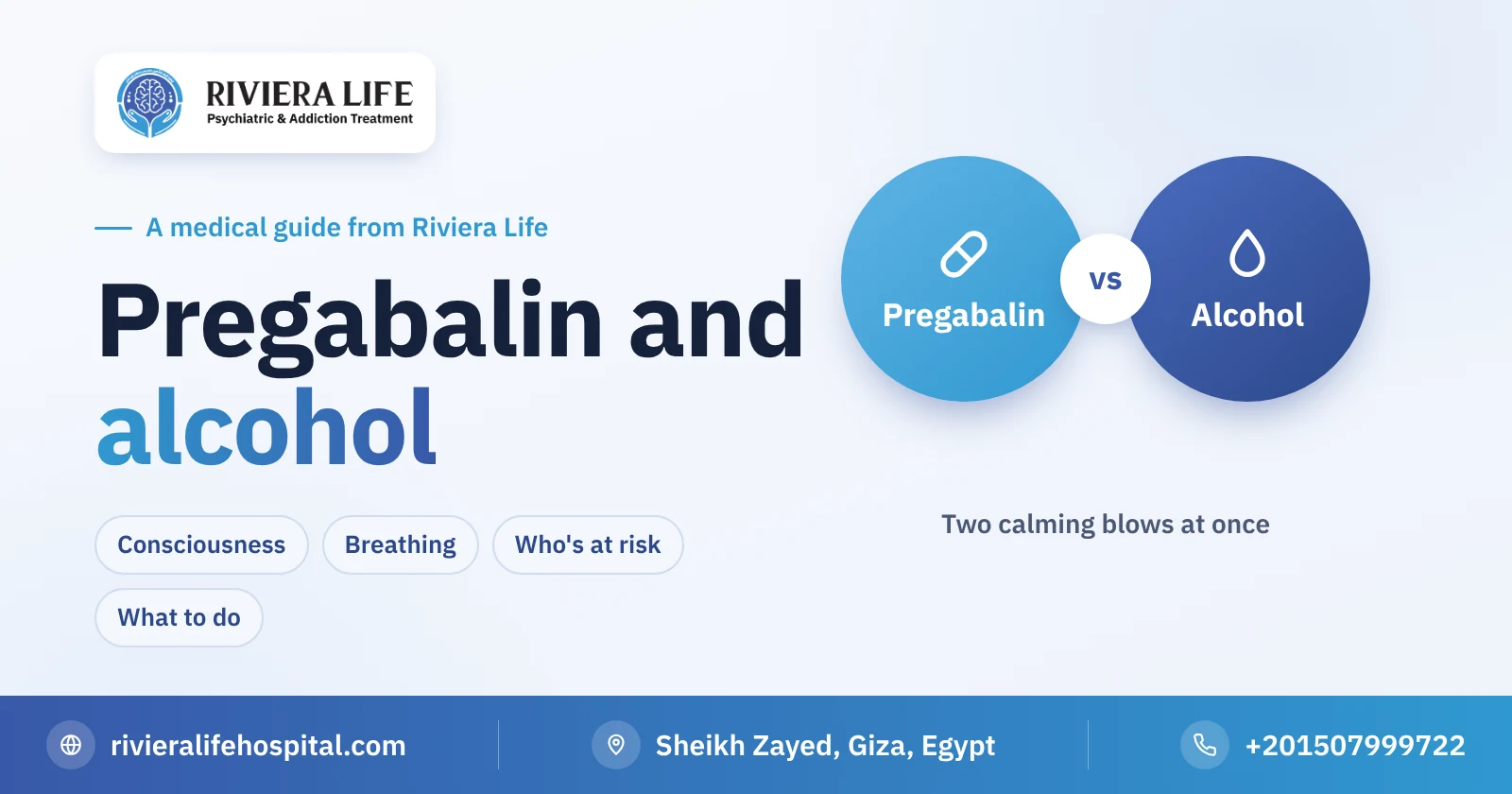
Combining pregabalin and alcohol is medically inadvisable, and there is no amount of alcohol that can be described as guaranteed safe with this medicine. Both calm the nervous system, and when they come together, drowsiness, dizziness and loss of balance multiply, and breathing may slow, especially if tramadol or a sedative is also involved. That is why health authorities advise anyone taking pregabalin to avoid alcohol. This article explains exactly what happens in the body, who is most at risk, what to do if they have already been combined, and when it becomes an emergency.
What happens in the body when they are combined?
Pregabalin reduces the release of stimulating neurotransmitters, and alcohol strengthens calming signals in the brain and also weakens stimulating ones. The result is that the brain receives two calming blows at the same time. The effect here doesn’t work by simple addition; one drink may feel much heavier than usual with pregabalin, and the reverse is true: the amount of medicine the person is used to may become disorienting if they drink with it.
This effect varies from person to person, influenced by age, weight and kidney function, by how long the medicine has been taken, and by whether the person has eaten. So no one can tell you in advance “this amount won’t harm you”.
Is there a safe amount of alcohol with pregabalin?
This is the part many people search for, and the frank answer is: there is no guaranteed safe amount. Someone may drink a small amount without a visible problem, but that doesn’t mean the experience will repeat with the same result, especially as circumstances change, such as late nights, fasting or adding a new medicine. The approved advice from health authorities is to avoid alcohol throughout treatment, and if stopping drinking is hard for you, this is important information your doctor needs to know before prescribing the medicine, not after.
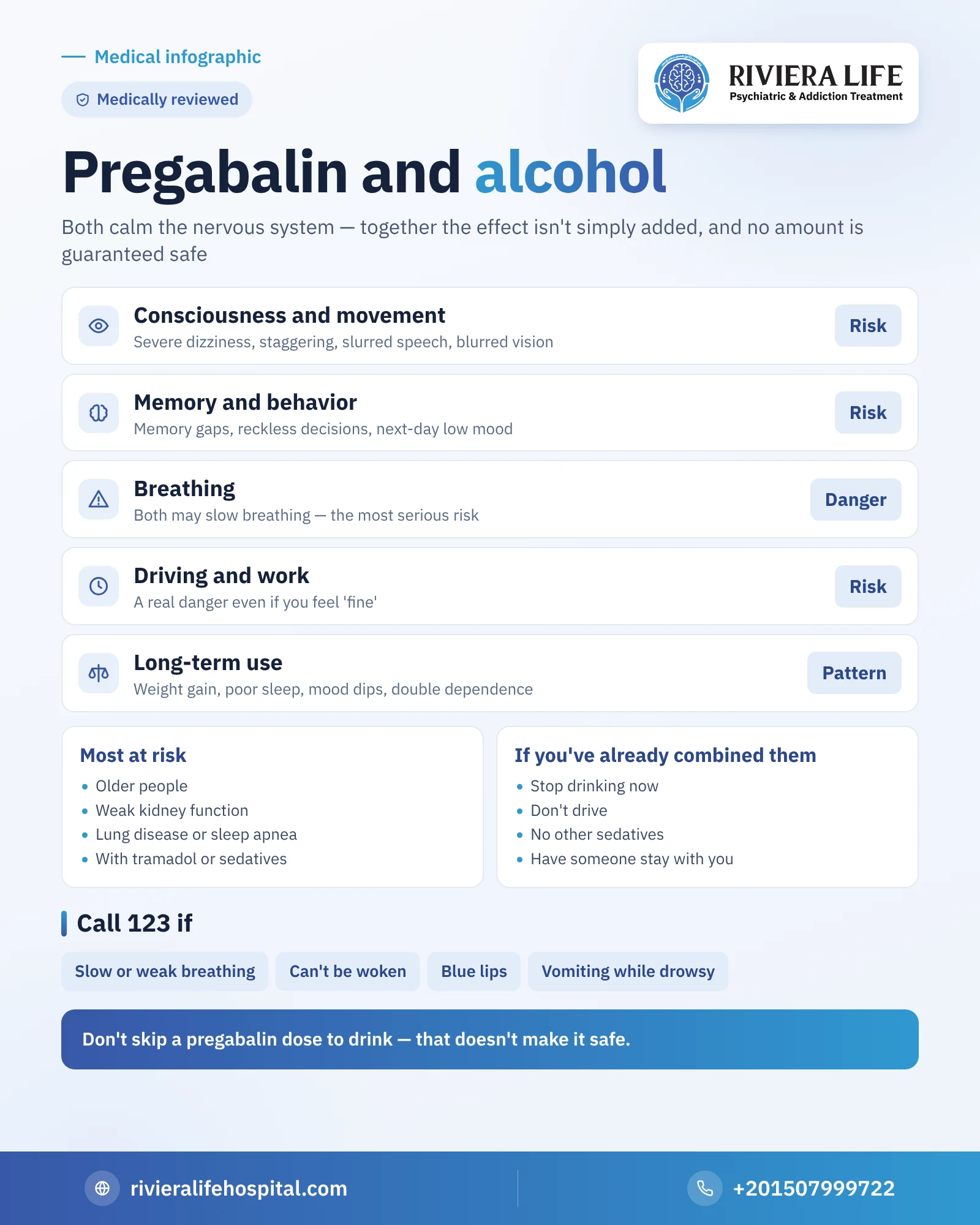
The risks of combining pregabalin and alcohol
On consciousness and movement
Severe dizziness, staggering, slurred speech, blurred vision and slowed reactions. These symptoms mean a possible fall on the stairs or in the bathroom, and head injuries that no one may notice if the person falls asleep afterward.
On memory and behavior
Some who have combined them complain of memory gaps in which they don’t remember what they said or did, and of reckless decisions they wouldn’t have made when fully aware. Mood may swing sharply, with anxiety or intense sadness appearing the next day.
On breathing
This is the most serious risk. Both substances may slow breathing, and the likelihood rises clearly in older people, lung patients and those with sleep apnea, with large amounts, or when tramadol, opioids or sedatives are added.
On driving and work
Combining them makes driving or operating machinery a real danger to the person and to others, even if they feel “fine”.
Who is most at risk?
- Older people, because balance is weaker and the kidneys are slower to clear the medicine.
- Patients with weak kidney function, as pregabalin accumulates in the blood.
- Those with lung disease or sleep apnea.
- Those taking tramadol, opioid painkillers or benzodiazepine sedatives with it.
- Those using pregabalin in larger amounts than prescribed or without a prescription.
- Those with depression or self-harming thoughts, because alcohol weakens the ability to control impulses.
Call an ambulance on 123 immediately if you see
After combining pregabalin and alcohol, don't leave the person to sleep alone if they are in an abnormal state.
- Slow, weak or irregular breathing
- Difficulty waking them, or no response to speech
- Blue lips, or severe paleness and cold skin
- Vomiting while semi-conscious
- Seizures
What about regular long-term use of both?
The risk isn’t limited to a single night. Someone who combines them regularly is exposed to an accumulation of similar side effects: weight gain, broken and unrefreshing sleep despite feeling drowsy, weakened concentration and memory noticed at work or school, and mood swings that tend toward depression. Most importantly, each of them can create dependence, so the person comes to need both the drink and the pill to feel normal. That is why anyone who finds themselves in this pattern needs a frank assessment, not individual attempts to cut down one and increase the other. For the harms of alcohol on its own, see our article on the harms of alcohol.
I took pregabalin and then drank: what should I do?
If they have already been combined and the symptoms are mild, here are practical steps: stop drinking immediately, don’t drive or use dangerous tools, don’t take any other sedative, sleeping pill or painkiller, and ask someone close to stay with you and watch you. Drink water and avoid hot showers or climbing stairs alone. And if any of the signs in the box above appear, don’t wait and don’t try a home remedy; call an ambulance. And at your next visit to your doctor, tell them what happened so they can review the plan.
Should I stop pregabalin for a day so I can drink?
This is a common idea, but it is wrong for two reasons. First, pregabalin doesn’t disappear from the body just by skipping one dose. Second, stopping suddenly and repeatedly after regular use may cause insomnia, anxiety, sweating and headache, and may increase the risk of seizures in epilepsy patients. Any adjustment to the medicine is made with the doctor, and the details of stopping symptoms are in our article on pregabalin withdrawal symptoms.
Is pregabalin used to treat alcohol addiction?
Some research has studied pregabalin in the context of alcohol withdrawal and craving, and a doctor may decide to use it in particular cases. But it isn’t among the approved core treatments for alcohol addiction, and it carries its own potential for misuse. So it is never right for someone to use it on their own to cut down drinking or to “get through” the withdrawal days, as they may escape one problem only to fall into two. The approved treatment steps are explained in our article on alcohol addiction treatment.
When two addictions come together
Some families notice that the person has been drinking more since starting pregabalin, or asking for the medicine more since their drinking increased. These signs deserve attention: getting the medicine from more than one source, the box running out before its time, drinking at unusual times such as the morning, repeated falls and bruises, or memory gaps. This doesn’t necessarily mean addiction, but it does mean a specialist assessment has become necessary. Our article on pregabalin addiction symptoms helps you read the signs accurately.
Why isn’t double withdrawal left to the home?
Alcohol withdrawal in someone who has drunk heavily for a long time can be dangerous in itself, as it may cause severe tremor and seizures, and may reach a state of acute disturbance of consciousness and perception. And if pregabalin withdrawal is added to it, the symptoms overlap and assessing the risk becomes harder for the family. So it is preferable for both substances to be withdrawn in hospital, with monitoring of vital signs and medicines that prevent complications. The details of alcohol withdrawal are in our article on alcohol withdrawal symptoms, and the full picture of alcohol is on our page on alcohol.
Pregabalin with hashish: is the combination lighter than alcohol?
Some young people think hashish is lighter than alcohol, so they combine it with pregabalin without worry. But each of them can cause drowsiness and slowed thinking, so when they come together the effect accumulates and the risk of accidents and falls rises. There aren’t enough studies to map the limits of risk in this mix precisely, and the absence of studies doesn’t mean safety.
- Weakened concentration and short-term memory to a greater degree than either causes alone.
- Anxiety, panic attacks or suspicion in some hashish users, which pregabalin may ease temporarily before it returns more strongly.
- Getting used to the combination itself, until each becomes a condition for sleeping or relaxing.
- A much higher risk if alcohol or tramadol joins them.
And someone who uses hashish to tolerate pregabalin’s side effects, or the reverse, has entered a double dependence that is hard to break alone. You can look at the harms of hashish to learn what it does on its own, and at the harms of pregabalin to learn its serious effects.
If the combination is repeated, a confidential medical assessment is better than suddenly stopping pregabalin, because stopping it all at once may cause severe insomnia and anxiety and may reach seizures.
How can Riviera Life help you?
At Riviera Life in Sheikh Zayed, withdrawal from alcohol and pregabalin together is managed under round-the-clock medical supervision, with a plan set by consultants in psychiatry and addiction treatment, followed by continued psychotherapy, the family program and follow-up after discharge. All in complete confidentiality, and the first consultation is free on +201507999722.
More from our pregabalin guide
- Pregabalin: the complete guide
- The harms of pregabalin and its serious effects
- Pregabalin addiction treatment
- Pregabalin and anxiety
Questions many people ask
It may cause no visible problem in some people, but that can't be guaranteed, as the effect varies with the person and the circumstances, and the medical advice is to avoid alcohol during treatment.
There is no set safe period, because the medicine remains in the body with regular use, and it is better to discuss it with the doctor than to experiment.
Slowed breathing, especially with tramadol or sedatives, or in older people and lung patients, as well as falls, accidents and memory gaps.
Some research has studied it, but it isn't an approved core treatment for alcohol addiction and it carries a risk of misuse, so it is only used by medical decision.
No, stopping suddenly may cause withdrawal symptoms, and any adjustment is made with the doctor.