Acamprosate is prescribed by doctors for those who have passed the alcohol withdrawal stage and want to maintain their abstinence. It isn’t intoxicating, doesn’t cause addiction and doesn’t produce an unpleasant reaction if the patient drinks; its action focuses on calming a brain whose balance has been disturbed after years of drinking, so it eases the anxiety, insomnia and tension that follow many people for weeks and months after stopping. It is seen as a suitable option for those who don’t tolerate other medicines or have a liver problem. The article explains how it works, who it suits and the safety conditions, without mentioning doses because determining them and stopping it are the doctor’s business alone.
What is acamprosate and why is it used?
A few days after stopping alcohol the body goes through the acute withdrawal stage, then milder symptoms remain that may last weeks, such as tension, insomnia, impatience and poor concentration. Some doctors call it “protracted withdrawal”. It is precisely in this period that most relapses occur, not because the person longs for euphoria, but because they want to relax and miss their sleep.
Here acamprosate comes in. It is a medicine from the group of “relapse prevention” medicines, prescribed with psychotherapy and follow-up, and gives the best result when the patient starts it after having actually stopped drinking. Among its most notable features in studies is that it increases the proportion of those who maintain abstinence more than it reduces the amount of drinking in those who continued.
How does it work in the brain?
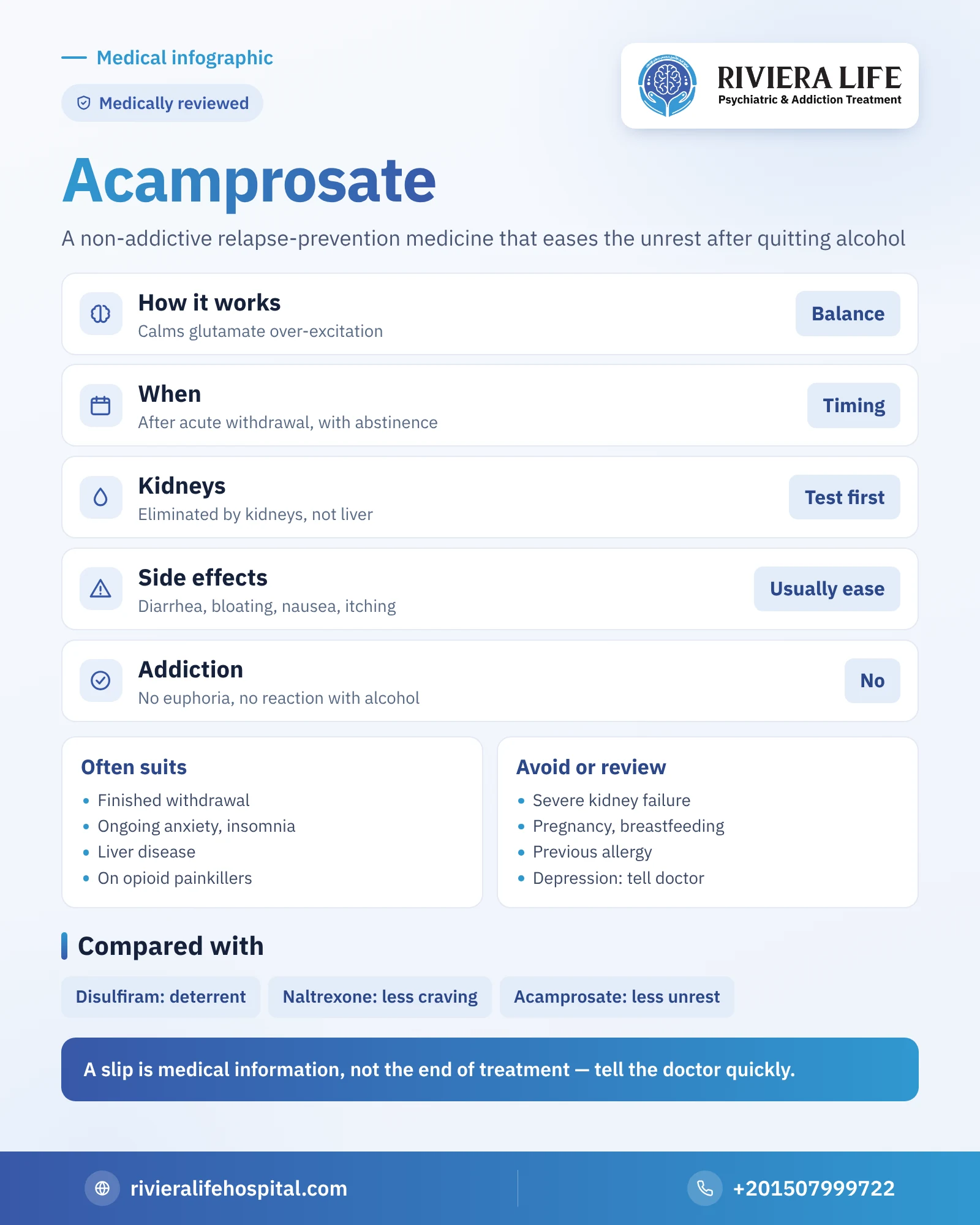
Chronic drinking disturbs the balance between two neurotransmitters in the brain: one calming (GABA), and the other stimulating (glutamate). On sudden stopping, the stimulating side dominates, so tension, insomnia and anxiety appear. Acamprosate is believed to modulate the activity of this system and ease its over-excitation, so the brain becomes calmer and the patient’s tendency to reach for a glass in search of relief weakens. The precise understanding of its mechanism is still under research, but doctors have used it for decades and know its behavior well.
The difference between it and other medicines
Acamprosate doesn’t compete with others, but fills a different place in treatment:
- Disulfiram: makes drinking an unpleasant experience, and works as a deterrent, and you will find it in the article on disulfiram.
- Naltrexone: reduces pleasure and craving through the opioid receptors, and is explained in the article on naltrexone.
- Acamprosate: eases distress and insomnia after stopping, doesn’t pass through the liver, and doesn’t cause a reaction with alcohol.
For a comprehensive comparison of withdrawal medicines, relapse prevention medicines and vitamins, read alcohol addiction treatment medicines.
Who does acamprosate suit?
The doctor usually considers it for someone who:
- Has finished withdrawal and wants complete abstinence.
- Complains of ongoing anxiety, insomnia or tension after stopping.
- Has a liver disease that makes some other medicines less suitable.
- Takes opioid painkillers for a medical reason and for whom naltrexone isn’t suitable.
- Doesn’t like the idea of a medicine that causes an unpleasant reaction with alcohol.
It is important for the patient to know that the timing of starting matters. Doctors usually start it after acute withdrawal has ended, and often with actual abstinence. It doesn’t replace the withdrawal medicines themselves, such as the sedatives given under supervision in the first days.
When isn’t it given?
The kidneys are the organ that eliminates this medicine, so the doctor requests a kidney function test before it, and it isn’t given to those with severe kidney failure, and the matter is adjusted in moderate failure. The doctor also avoids it or reviews it in pregnancy and breastfeeding, and when there is a previous allergy to it. Tell your doctor about all your medicines and supplements before starting, and if you have depression or thoughts of self-harm they must know this from the beginning.
Common side effects
Most people tolerate it well. The most frequently mentioned are:
- Diarrhea or loose stools, gas and bloating, and nausea.
- Abdominal cramps and loss of appetite.
- Itching or a skin rash in some patients.
- Dizziness, drowsiness or a change in sleep.
The digestive symptoms usually ease with time. If they continue or bother you, don’t stop the medicine yourself, but inform the doctor who may adjust the plan.
Contact the doctor or emergency department immediately if any of these appear
The most important rare effect is a change in mood or thoughts. Don't wait for it to pass:
- Thoughts of self-harm or severe despair, and call the ambulance on 123 or the mental health hotline 16328
- A widespread skin rash with swelling of the face or throat or shortness of breath
- Sudden severe swelling of the body or stopping of urine
What if the patient drinks during treatment?
Acamprosate doesn’t cause a painful reaction with alcohol as disulfiram does, but this doesn’t mean drinking is safe. The medicine loses its value if the patient returns to heavy drinking, and alcohol itself harms the liver and brain and weighs down depression and anxiety. If a slip happens, it is best for the patient to tell their doctor quickly, who may decide to continue, reassess or add another medicine. A slip is medical information, not the end of treatment.
How long does treatment continue?
There is no single duration that suits everyone. Treatment usually continues for months, and may extend longer depending on the patient’s condition and their risk of relapse, and the doctor decides to stop it after review. Among the common mistakes is for the patient to stop after a few weeks because they felt better, so the distress returns after a while. The improvement is usually due to the medicine and abstinence together, and stopping suddenly wastes the gain.
What acamprosate doesn’t do
The medicine doesn’t erase memories linked to drinking, doesn’t teach the patient how to deal with anger and loneliness, and doesn’t change the environment of friends. It eases the intensity of tension so the patient can learn new skills in psychotherapy. The article on quitting alcohol explains the stages of recovery from withdrawal to what comes after.
Practical tips for the family
The family helps more than it thinks, without turning into a watchdog. Ask him calmly whether he is taking the medicine regularly, encourage him to keep appointments, and notice any change in mood or sleep and pass it on to the doctor. You will find in how to deal with an alcoholic steps for the family that preserve the relationship and support treatment.
Where is acamprosate prescribed safely?
The right hospital for treating alcohol addiction with relapse prevention medicines is one that begins with safe withdrawal, then chooses the medicine suited to the state of the kidneys, liver and anxiety, and follows the patient after discharge. Ask before you decide:
- Does withdrawal end under medical supervision before acamprosate is started?
- Are the kidneys and liver checked before choosing the medicine?
- Are insomnia and anxiety after stopping treated with a clear plan without relying on addictive sedatives?
- Does the doctor explain side effects and danger signs to the patient and family?
- Are there alternatives if the medicine isn’t suitable?
- Is follow-up available after discharge to adjust or stop treatment at the right time?
And beware of any provider that promises you a guaranteed recovery rate or complete treatment within days.
How Riviera Life meets these standards in alcohol addiction treatment
The details of how Riviera Life applies these criteria are as follows:
- Ministry of Health license: a hospital licensed for psychiatry and addiction treatment.
- Safe withdrawal: 24-hour medical supervision before moving on to relapse prevention medicines.
- Choosing the medicine with a full assessment: consultants in psychiatry and addiction treatment weigh acamprosate against others according to the patient’s condition.
- Long experience: fourteen years in addiction treatment, and thousands of recovered cases.
- Treating anxiety and insomnia: psychological follow-up for the tension and disturbed sleep that follow stopping.
- Complete confidentiality: the patient’s data and treatment are fully protected.
- The family and aftercare: a program for the family and follow-up after discharge.
The first consultation is free, and you can get in touch around the clock via +201507999722, and our location is in Sheikh Zayed, Giza.
More from the alcohol guide
- Alcohol: the comprehensive guide
- Alcohol addiction treatment medicines
- Disulfiram
- Alcohol addiction treatment: stages and relapse prevention
Questions many people ask
No, it is a non-addictive medicine that doesn't cause euphoria, and it is used to support abstinence after withdrawal has ended.
It doesn't cause an unpleasant reaction with alcohol, but returning to drinking weakens its benefit and harms the body, and the doctor must be told of any slip.
It isn't broken down in the liver but is eliminated by the kidneys, so doctors see it as an option with liver problems, but kidney function must be checked first.
The doctor usually starts it after acute withdrawal has ended and with actual abstinence, and it doesn't replace withdrawal sedatives in the first days.
Look for a licensed hospital that provides safe withdrawal under 24-hour medical supervision, chooses the medicine after checking the kidneys and liver, and follows up after discharge. Riviera Life in Sheikh Zayed, Giza meets these criteria.