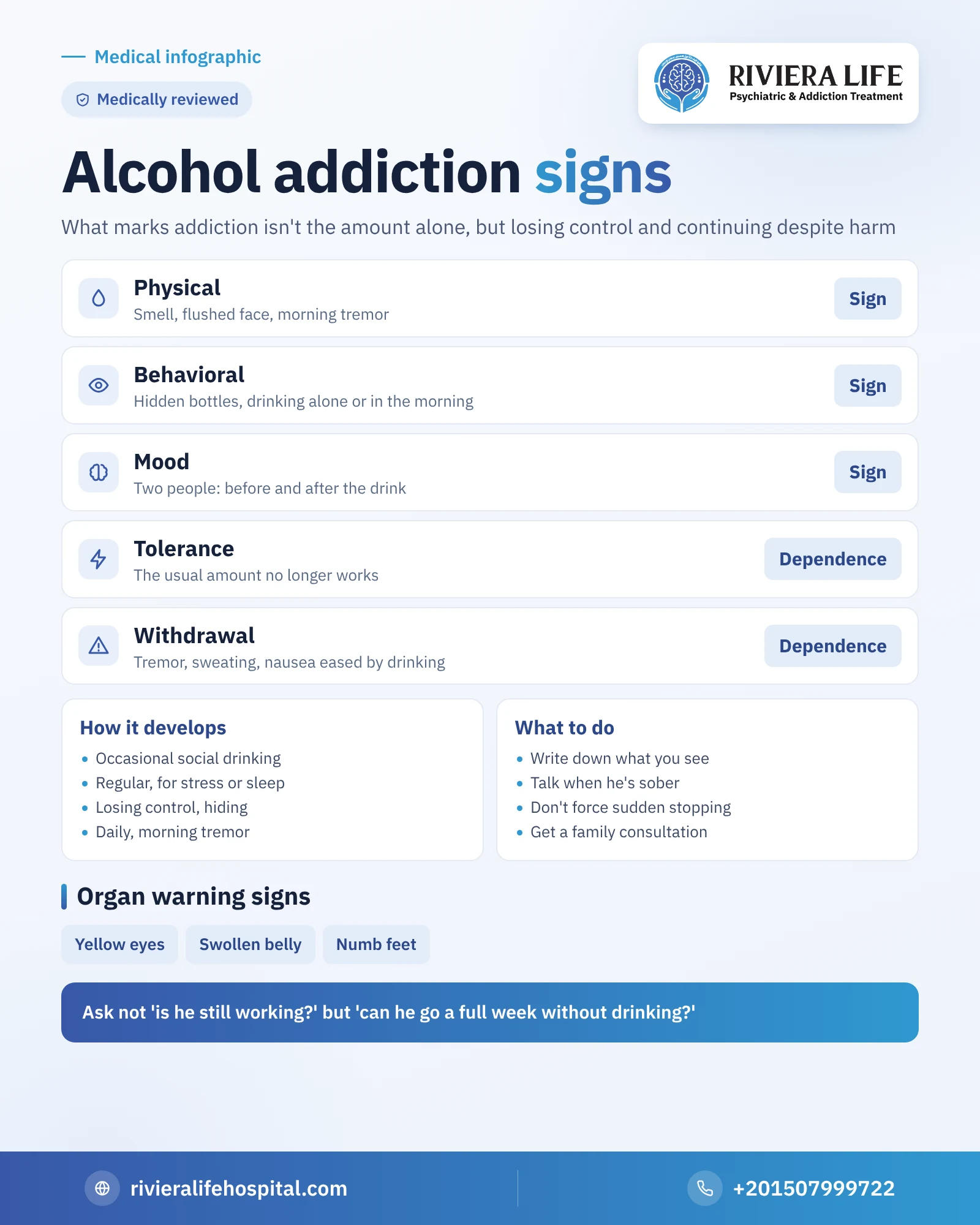
Alcohol addiction symptoms don’t appear suddenly, but creep in over months or years: a daily drink becomes three, a smell hidden with chewing gum, bottles disappearing into strange places, and a morning tremor calmed by the first drink. The most important thing that marks addiction isn’t the amount of drinking alone, but losing control over it and continuing despite harm. This article gathers the signs the family can notice in the body, behavior and mood, explains how they develop, when the doctor considers them addiction, and the right step after noticing them.
When does drinking turn into addiction?
Many who drink don’t become addicted, which is why families are confused about the moment they should worry. The essential difference is that a person who isn’t addicted decides how much they will drink and usually keeps to their decision, while someone who has started to lose control decides on “one drink” and ends up at the end of the night. Over time alcohol’s place in their life changes: from something that happens at an occasion to something occasions are built around, then to something they can’t start or end their day without.
Physical signs the family notices
- The smell of alcohol on the breath or sweat, especially in the morning or at work, with repeated attempts to hide it with perfume or chewing gum.
- Persistent redness of the face and nose, and fine blood vessels appearing on the cheeks.
- Hand tremor in the morning that eases after drinking.
- Excessive sweating and insomnia, or heavy, irregular sleep.
- A change in weight, whether gain around the belly or loss with loss of appetite.
- Unexplained bruises and small injuries from falling or bumping into things.
- Neglecting appearance and personal hygiene compared with before.
Behavioral signs
Behavior reveals more than the body does, because over time the addict becomes skilled at hiding the physical effect, but can’t hide their way of life:
- Hiding bottles in the car, the wardrobe or behind books, or pouring alcohol into juice and water bottles.
- Drinking alone, or before going out to occasions so as to arrive “ready”.
- Drinking in the morning or at unusual times, such as lunchtime at work.
- Repeated lateness or absence from work, especially on Sundays or after holidays.
- Withdrawing from activities and friends not linked to drinking.
- Sharp defensiveness when the subject is raised, and minimizing with phrases like “we all drink”.
- Unexplained money problems, or driving after drinking.
Psychological and mood signs
Those close usually notice the person has become “two people”: one before drinking who is tense, irritable and impatient, and another after it who is uninhibited, aggressive or tearful. Among the recurring signs:
- Sharp mood swings between drinking days and days off.
- Anxiety and depression that increase over time, with alcohol used “to calm down” or “to sleep”.
- Forgetting what happened on the night of drinking, and repeating the same stories or questions.
- Guilt or shame that appears in the morning then disappears in the evening.
- Excessive irritability if the drinking time is delayed or alcohol is unavailable.
Signs that the body has become dependent
Two signs in particular move the problem from habit to physical dependence. The first is tolerance: the amount that used to be enough no longer has an effect, so they raise it gradually without looking drunk. The second is withdrawal symptoms when drinking is delayed: tremor, sweating, nausea and anxiety that all calm as soon as they drink. The appearance of these symptoms means stopping needs a medical assessment beforehand, and the details of what happens on stopping are in the article on alcohol withdrawal symptoms.
Health signs that appear with continued drinking
After years of heavy drinking, symptoms may start indicating that organs have been affected: yellowing of the eyes or skin, a swollen abdomen or swollen feet, repeated heartburn and vomiting, numbness in the feet, and weakened concentration and memory. These signs need an urgent medical examination, not waiting, and the damage to the liver, nerves and heart behind them is explained in the article on the harms of alcohol.
How do the signs develop over time?
Drinking rarely turns into addiction in a single leap. More commonly it passes through successive stages:
- Occasional social drinking at occasions, with no clear effect on life.
- Regular drinking to relieve stress or to sleep, with a gradual increase in amount.
- The beginning of loss of control: promises to cut down that aren’t kept, hiding, and the first problems at work or home.
- Clear dependence: daily drinking, morning tremor, and a life revolving around alcohol.
The earlier the problem is discovered, the easier and less dangerous it is to deal with in terms of withdrawal and complications.
The addict who seems successful
Not all cases of alcohol addiction fit the stereotype of someone who has lost their job and home. Some go to work every day, achieve success and appear disciplined to people, while drinking a large amount every night and hiding their bottles from their family. This apparent success makes the family and the person themselves postpone admitting it for years, but it doesn’t protect the liver or the brain. The more honest question here isn’t “is he still working?” but “can he spend a whole week without drinking?”.
Phrases repeated by those hiding the problem
Language itself can be a sign. Someone who has started losing control often repeats sentences such as “I can stop whenever I want”, “It’s just beer, nothing heavy”, “I don’t drink more than my friends”, and “If it weren’t for work pressure I wouldn’t have drunk”. Each of these sentences may be true once, but repeating them in every discussion, and refusing any practical trial of stopping for two weeks, points to denial that protects the habit more than it describes reality.
Signs of drinking in teenagers and young people
In children the signs differ slightly. You may notice a sudden decline in studies, new friends, frequent late nights out, a smell of mint or strong perfume on returning, and money missing or bottles disappearing from the house. Teenagers usually drink in a “binge” pattern, meaning a large amount in one night, a pattern that raises the risk of poisoning and accidents even before addiction forms. Some also mix alcohol with pills such as pregabalin, a dangerous combination explained in the article on pregabalin and alcohol.
When does the doctor consider drinking an addiction?
Doctors use specific criteria to diagnose alcohol use disorder, revolving around questions such as: do they drink more or for longer than they intend? Have they tried to cut down and failed? Do they spend a long time drinking or recovering from it? Do they feel an urgent craving? Has drinking affected their work or family, and they continued anyway?
Have they given up important activities? Do they drink in dangerous situations such as driving? Have tolerance or withdrawal appeared? The more of these criteria apply over a year, the more the case is classified as mild, moderate or severe. This assessment is carried out by the doctor; the family doesn’t need to diagnose by itself, but to notice and ask for help.
What do you do if you notice these signs?
Start by writing down what you have noticed with dates, without police-style surveillance. Choose a time when he is sober and calm, and speak in the form “I’m worried about you”, not “you’re a drunk”. Don’t pour his bottles away in front of him or demand that he stop immediately if he drinks daily, because sudden stopping may be dangerous. Offer him a medical assessment, and ask for a family consultation for yourself too, even if he refuses. And if you want to understand why he reached this point, the article on the causes of alcohol addiction helps you see the picture without blame.
The personality of an alcoholic: are there shared traits?
Many search for “the alcoholic personality” as if there were a single mould recognizable at first glance. In reality, addiction affects the quiet and the loud, the employed and the unemployed, and no single temperament precedes it. What appears are patterns that repeat once dependence on drink has set in.
The traits linked to increased risk are medically known:
- High impulsivity and difficulty delaying pleasure.
- A tendency to seek excitement and try everything new.
- Intense sensitivity to stress, and using drink as the only way to calm down.
- Old social anxiety or depression that was never treated.
After addiction, the visible personality itself changes: the person becomes more secretive, justifying and emotional, blames circumstances and others, and their interests narrow around drink. This change is an effect of the substance, not an original temperament, and the person often returns to their nature after recovery.
It isn’t right to judge a person by a single trait or a stereotype of “the addict”; the standard is the physical and behavioral signs we explained above, decided by the doctor after a full assessment. If you want to understand the roots, read the psychological, genetic and social causes of alcohol addiction, and if you live with someone who drinks, you will benefit from the guidance on how to deal with an alcoholic.
How can Riviera Life help you?
The family can start with a free, confidential consultation with the Riviera Life team, even before the person themselves agrees to treatment, to determine how serious the case is and the most suitable way to open the conversation with them.
More from the alcohol guide
- Alcohol: the complete guide
- Alcohol addiction treatment: stages and medicines
- Alcohol withdrawal symptoms and danger signs
- The causes of alcohol addiction
- Symptoms of drunkenness: the stages from mild to alcohol poisoning and when to call an ambulance
- The AUDIT alcohol use test
Questions many people ask
Not necessarily, but it raises the risk a lot. The deciding factors are losing control over the amount, the appearance of tolerance or withdrawal, and continuing despite harm.
It varies from person to person, but among the earliest are drinking more than intended, constantly thinking about the next drink, and hiding how much one drinks from those around.
Yes, some addicts keep their job and appearance for a long time, but the health and psychological damage continues in the background, and this balance usually collapses over time.
Yes, repeatedly forgetting what happened while drinking indicates high amounts affecting the brain, and deserves medical assessment even if no other signs appear.
Watch for recurring changes in mood, sleep, smell, timings and money, and write them down. You can also ask for a confidential family consultation to learn how to open the conversation safely.