“Dopamine withdrawal” isn’t a diagnosis you will find in medical textbooks, but it is a popular description of a real experience many people in recovery know, and the symptoms of dopamine withdrawal are familiar to them: emptiness, flatness and loss of pleasure that appear after stopping a drug or a compulsive behavior that the brain had grown used to rewarding generously.
It may happen after quitting Captagon or hashish, after cutting out porn, games or the phone, or even during the “dopamine fast” challenge that is popular on social media, although the severity differs greatly between these situations. These symptoms are unpleasant, but they are usually temporary and improve with time and support. Here we explain what actually happens, the symptoms to expect, how long they last, and when you need a doctor.
What do people mean by dopamine withdrawal?
People use the term to describe three different experiences, and it is important to tell them apart:
Symptoms linked to illnesses in which dopamine actually falls, such as Parkinson’s, are a different subject, explained on our page on dopamine deficiency symptoms.
- After stopping drugs: the clearest and most severe case, especially after stimulants such as Captagon, crystal meth and cocaine, in which the person goes through a sharp crash and then a longer period of flatness.
- After quitting a compulsive behavior: such as gambling, porn, video games or excessive phone use, whose symptoms are mainly psychological and usually milder.
- The “dopamine fast”: a temporary, deliberate break from daily pleasures; the boredom and distress that accompany it are a normal reaction, not chemical withdrawal.
What they have in common is that the reward system has grown used to strong, repeated stimulation, and when this stimulation disappears, ordinary life seems dull for a while. To understand this system from the start, see our dopamine guide.
Why do these symptoms happen?
With repeated use or behavior, the brain adapts to the flood, so the sensitivity of dopamine receptors decreases, as our article on dopamine and addiction explains in detail. When the stimulus stops suddenly, this sensitivity doesn’t return in a single day, so for a while the person is left with a reward system that responds weakly and isn’t moved by small pleasures. Added to that is a psychological factor that is just as important: the person has lost their usual way of escaping boredom and pressure, and hasn’t yet learned alternatives.
Among the causes people often mention are: stopping drugs, quitting smoking, cutting down caffeine after long overuse, quitting porn or social media, and suddenly stopping some medicines that affect dopamine without medical supervision. These causes differ greatly in severity; the flatness after giving up the phone can’t be compared with what someone goes through when stopping crystal meth after years.
Psychological symptoms
- Anhedonia: food, friends and hobbies give almost no feeling at all.
- Flatness and loss of motivation, and difficulty starting the simplest tasks.
- Low mood and unexplained sadness, and sometimes anxiety and tension.
- Quick temper and irritability over small things.
- Poor concentration and muddled thinking.
- Repeated craving for the substance or behavior, which grows stronger with boredom or pressure.
- Negative thoughts about oneself, and a feeling that life will never be enjoyable again.
Physical symptoms
Physical symptoms appear clearly after stopping substances, and are mild or absent after behaviors:
- Severe exhaustion and heaviness in the body, especially after stimulants.
- Disturbed sleep: very long sleep in the first days, then insomnia or disturbing dreams.
- Changes in appetite, usually an increase after stimulants.
- Headache and scattered muscle aches.
- Slowness in movement and speech.
- Low sexual desire for a while.
Note that severe physical symptoms such as tremor, heavy sweating and seizures aren’t “dopamine withdrawal” but withdrawal from particular substances such as alcohol, sedatives and opioids, and need medical supervision. The details for opioids, for example, are in our article on heroin withdrawal symptoms.
Behavioral symptoms
These are what the family usually notices: withdrawing to the bedroom, neglecting duties, losing interest in what the person used to love, and looking for any quick stimulation such as overeating, endless scrolling on the phone or heavy smoking, hasty decisions and bouts of anger. The most dangerous of these signs is getting close to places or people linked to past use, because it is a common prelude to relapse.
Is it depression?
The two look very alike, and they may overlap. The flatness that follows stopping is linked in time to the stopping and tends to improve gradually week by week, while depression may predate the use or continue despite the passage of time, and is accompanied by a deep sense of guilt, worthlessness or thoughts of death. It is important to know that some people with addiction already had depression and were using the substance as self-treatment, so when they stop, the depression appears in full. Telling the two apart is the psychiatrist’s job, and you can look at the symptoms of depression for comparison.
Are dopamine withdrawal symptoms dangerous?
The flatness itself isn’t dangerous to the body, but its danger lies in two outcomes: relapse, because the person knows the substance will remove the emptiness immediately, and severe depression, which may appear especially after stopping stimulants and may be accompanied by suicidal thoughts in some cases. And someone who relapses after a period of abstinence is at risk of overdose if they go back to the amount they were used to, because their tolerance has fallen.
Get urgent help immediately if you see
Call an ambulance on 123 or go to the nearest emergency department if any of these signs appear after stopping:
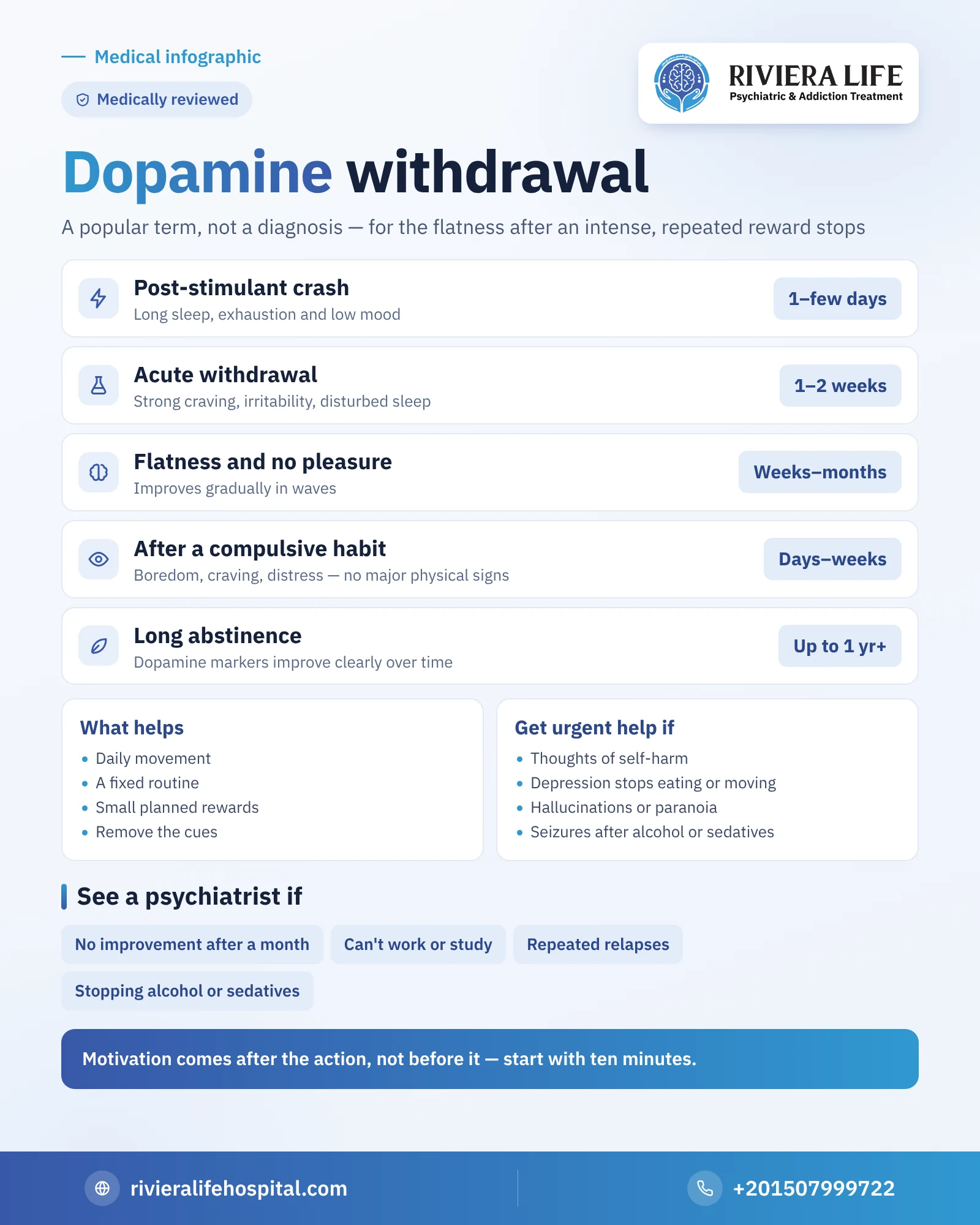
- Thoughts of self-harm or suicide, or talk of death
- Severe depression that stops the person eating or moving
- Hallucinations, suspicion and strange ideas, or aggressive behavior
- Seizures, or confusion and severe tremor after stopping alcohol or sedatives
- Loss of consciousness or difficulty breathing after relapsing on the old dose
How long do dopamine withdrawal symptoms last?
There is no fixed timetable: the duration is affected by the type of substance or behavior, the length and intensity of use, the presence of an accompanying mental disorder, and sleep and the support available. But the approximate picture is as follows:
| Situation | Approximate duration | What characterizes it |
|---|---|---|
| The crash after stimulants | From a day to a few days | Long sleep, exhaustion and low mood |
| Acute withdrawal after substances | About one to two weeks | Strong craving, irritability and disturbed sleep |
| Flatness and anhedonia | Weeks to several months | Improves gradually, with waves of ups and downs |
| After quitting a compulsive behavior | Usually days to a few weeks | Boredom, craving and distress without significant physical symptoms |
The stages of recovery
The first weeks: patience with the emptiness
The main task here is abstinence, sleep and regular eating, and avoiding the cues linked to the substance. Don’t judge your whole life by the mood of these days.
The first months: colors gradually returning
Small pleasures begin to return, tentatively: a meal you enjoy, or a genuine laugh with a friend. In this stage sudden waves of craving come, and psychotherapy helps a great deal.
After that: stability and building
Brain-imaging studies indicate that markers of the dopamine system improve clearly with long abstinence, and this may stretch to a year or more after a long addiction to stimulants. In other words, the answer to the question “does dopamine return to normal?” is yes in most cases, but gradually, and with continued abstinence.
How does the doctor diagnose the condition?
There is no test that measures “dopamine withdrawal”. The doctor relies on the history of use and stopping, the nature and timing of the symptoms, and an assessment of mood, sleep and thoughts of harm, and may request tests to rule out physical causes of exhaustion such as thyroid disorders or anemia, or a drug test to clarify the picture. The aim isn’t to put a name on the condition, but to distinguish between temporary flatness, depression that needs treatment, and another accompanying disorder.
How do you cope with dopamine withdrawal symptoms?
- Daily movement: a walk or light exercise every day is one of the things that most helps mood and sleep, even if you start with ten minutes.
- A fixed routine: fixed times for sleeping, waking and meals give the brain a rhythm to rely on.
- Small, deliberate rewards: simple activities planned in advance — motivation comes after the action, not before it.
- Removing the cues: deleting numbers, changing routes, and apps that block content if the behavior is digital.
- Support: at least one person you tell what you are going through, and a support group or therapist if possible.
- Medical treatment when needed: the doctor may treat accompanying depression, insomnia or anxiety with suitable medicines, and only the doctor decides their type.
You will find other evidence-based ways of supporting the reward system in our article on how to increase dopamine. And avoid filling the emptiness with another substance: replacing hashish with pills or alcohol is moving from one addiction to another.
When should you see a psychiatrist?
Ask for an assessment if flatness and anhedonia continue for more than a month without any improvement, if depression stops you from working or studying, if thoughts of self-harm appear, if you have relapsed more than once despite a sincere wish to stop, or if you are stopping alcohol, sedatives or opioids, because withdrawal from them may need medical supervision from day one.
How can Riviera Life help you?
The stage that follows stopping is the most fragile, and many relapses happen in it. At Riviera Life, consultants in psychiatry and addiction treatment assess the condition, distinguish between temporary flatness and depression or an accompanying disorder, and provide round-the-clock medical supervision when needed, together with psychotherapy that teaches the person in recovery how to get through waves of craving, plus a family program and aftercare after discharge. All of this is completely confidential, and the first consultation is free on +201507999722.
More from our dopamine guide
- Dopamine: the complete guide
- Dopamine and addiction: how use turns into addiction
- Dopamine deficiency symptoms
- How to increase dopamine naturally
Questions many people ask
No, it is a popular term rather than an official diagnosis. It describes a real experience of flatness and loss of pleasure after stopping a substance or compulsive behavior, which the doctor assesses within a broader diagnosis.
Yes, in most cases, but gradually. Pleasure improves over weeks to months, and it may take longer after a long addiction to stimulants.
It may cause boredom, distress, craving and difficulty concentrating for a while, but these are usually milder and shorter than the symptoms that follow stopping substances, and they aren't accompanied by serious physical symptoms.
The flatness linked to stopping improves gradually over time, while depression may predate the use or continue without improving. Telling them apart precisely needs an assessment by a psychiatrist.
Boredom and distress during a temporary break from daily pleasures are a normal reaction, not chemical withdrawal. That is completely different from stopping a drug.