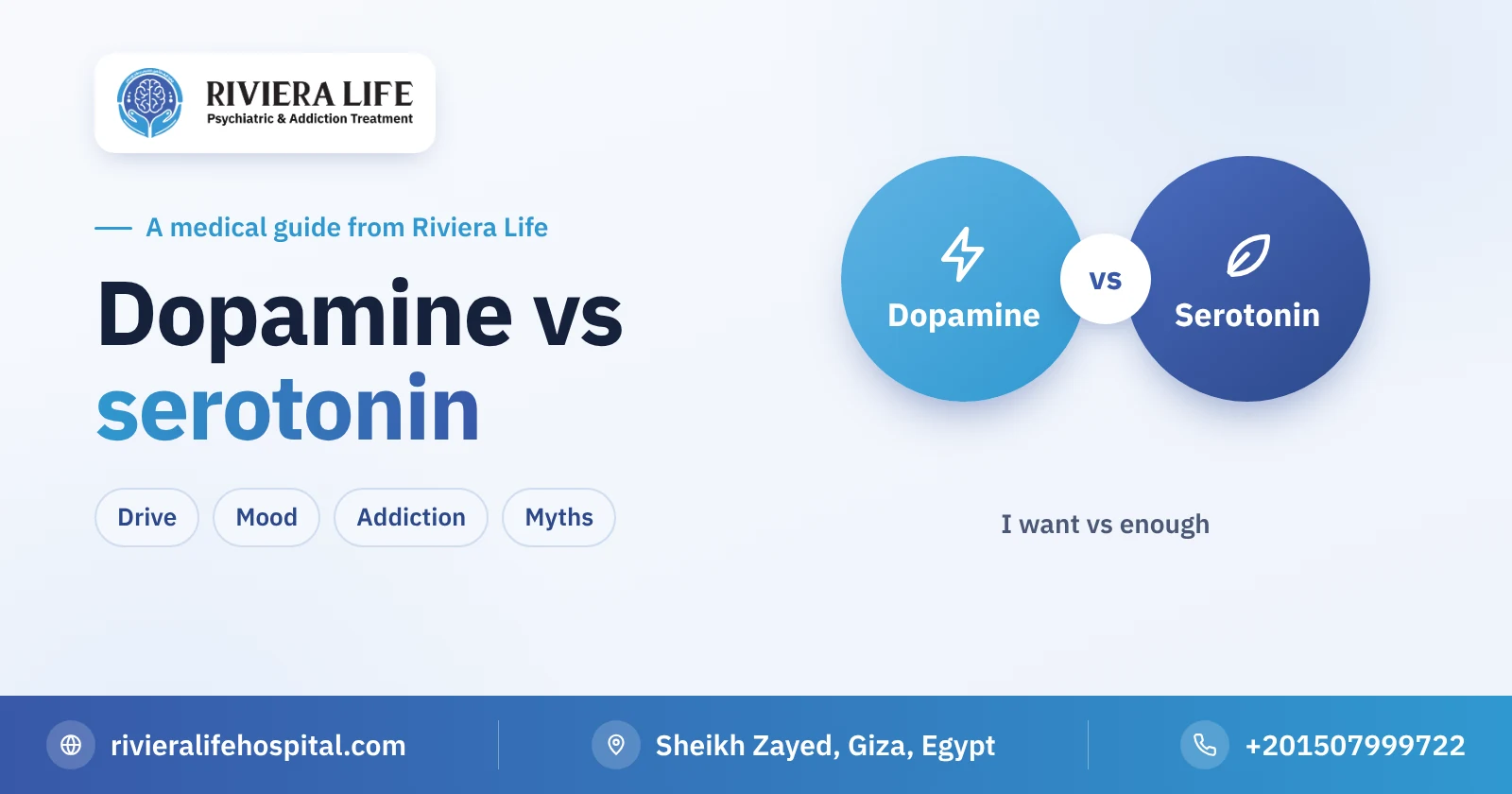
The difference between dopamine and serotonin can be summed up in two sentences: dopamine pushes you to want something and strive for it, and serotonin helps you feel content with what you have, be patient and control your reactions. Both are neurotransmitters from the same family, and both are popularly described as a “happiness hormone”, but their functions are different and sometimes opposite. This article explains the role of each, how they interact, and their relationship to addiction, depression and attention-deficit/hyperactivity disorder, then refutes widespread myths such as “dopamine detox”, with a quick comparison table.
Why do people confuse dopamine and serotonin?
The first reason is linguistic: social media puts them together on a list of “happiness hormones”, so they seem like two names for one thing. The second reason is scientific: both are monoamines, meaning small neurotransmitters the body makes from amino acids in food, and many psychiatric medicines affect them. But similarity in origin doesn’t mean similarity in action, just as the brakes and the accelerator are two parts of the same car.
Dopamine: the “I want” substance
Dopamine is made from the amino acid tyrosine in small areas deep in the brain, then sends its signals along specific pathways. The most important thing it does is record pleasant surprises and teach the brain to repeat what led to them. That is why it is linked to drive, desire and anticipation more than to calm pleasure itself. It has other roles unrelated to mood, most notably controlling movement, which is what is disrupted in Parkinson’s disease. You will find the details of its four pathways in the complete dopamine guide.
Serotonin: the “enough” substance
Serotonin is made from tryptophan, and most of it in the whole body is found in the gut, not the brain, where it regulates digestive movement. In the brain it works as a general regulator: it calms emotional reactions, helps with fullness and sleep, and supports the ability to wait and restrain impulses. Part of it turns into melatonin at night. That is why its deficiency or disturbed signaling is linked to anxiety, depression and obsessions more than to enthusiasm and drive. For more, see the complete serotonin guide.
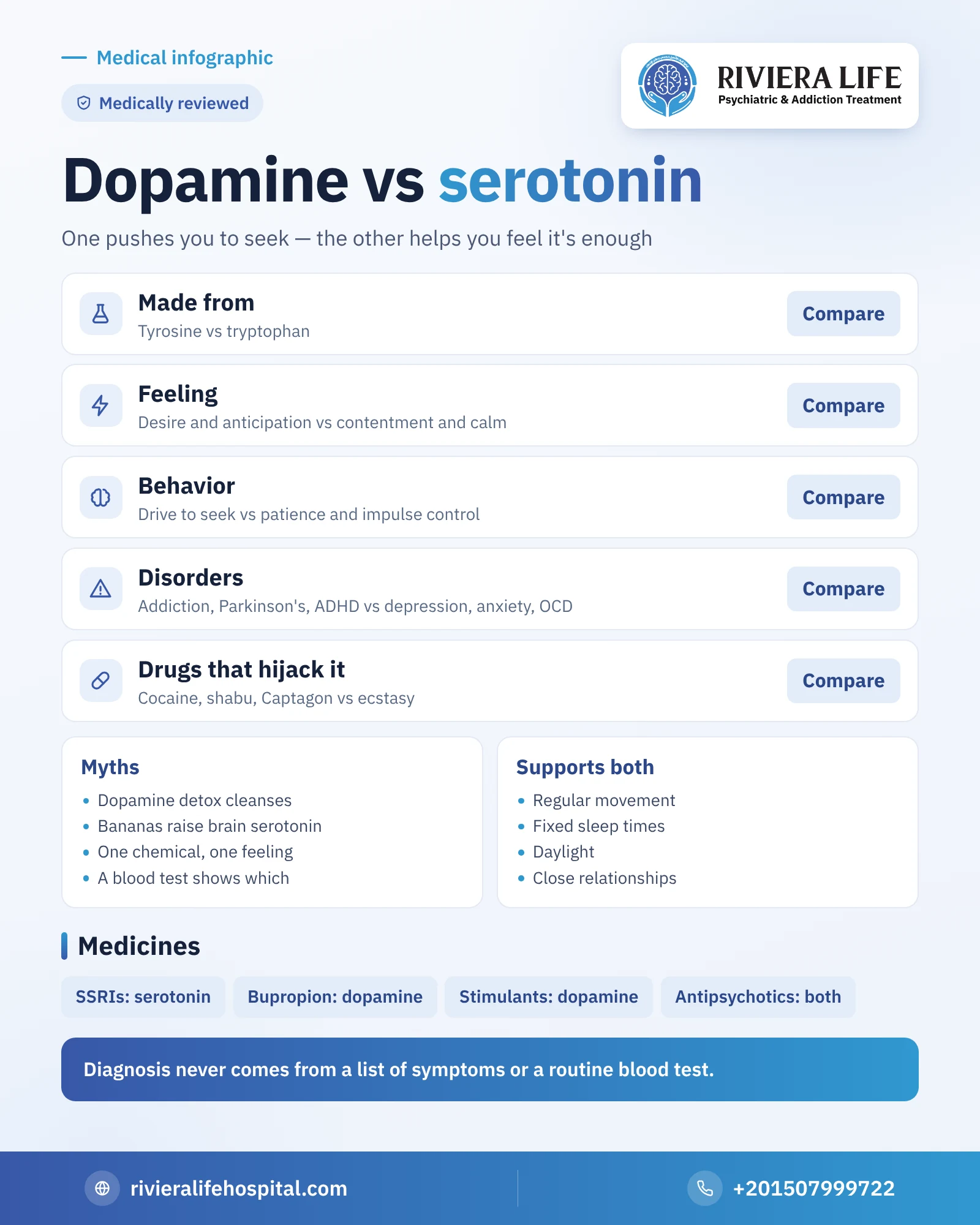
Comparison table: dopamine and serotonin
| Point of comparison | Dopamine | Serotonin |
|---|---|---|
| Made from | Tyrosine | Tryptophan |
| Where most of it is found | Specific pathways in the brain | The gut, then the brainstem |
| Feeling linked to it | Desire, enthusiasm and anticipation of reward | Contentment, calm and balance |
| Its role in behavior | Drive to strive and learn from reward | Patience, restraining impulses and controlling emotion |
| Physical functions | Movement and regulating prolactin | Digestion, fullness, sleep and blood clotting |
| Linked disorders | Addiction, Parkinson’s, schizophrenia, ADHD | Depression, anxiety, obsessive-compulsive disorder |
| Medicines that affect it | Stimulants, antipsychotics | SSRI antidepressants |
| Drugs that hijack it | Cocaine, shabu, Captagon | Ecstasy, and some hallucinogens |
How do dopamine and serotonin interact?
Neither works alone. In some areas of the brain serotonin can reduce dopamine release, as if telling the brain: this is enough, no need for more. This is where the image of balance between rushing towards reward and the ability to slow down comes from.
Imagine someone scrolling their phone at night. Every new notification carries the possibility of something enjoyable, and this possibility specifically is what dopamine feeds, so they keep scrolling hour after hour. The moment they put the phone aside feeling they’ve had enough is closer to the role of serotonin and the braking systems in the frontal lobe. When this braking weakens through exhaustion, lack of sleep or depression, scrolling lasts longer and the pleasure falls at the same time.
This interaction explains phenomena patients actually notice. Some who take antidepressants that raise serotonin complain of emotional blunting or reduced sexual desire, and part of this is thought to be due to the effect of high serotonin on dopamine pathways. The reverse is also true; substances that release dopamine strongly push towards impulsivity and risk-taking. These explanations are simplified, and noradrenaline, GABA, glutamate and others also take part in the brain.
Dopamine and serotonin in addiction
Almost all addictive substances raise dopamine in the reward circuit, some directly like stimulants, and some indirectly like opioids, alcohol and hash. This surge is much bigger and faster than what ordinary pleasures produce, so the brain learns that the substance is more important than food, relationships and work. The article on dopamine and addiction explains this mechanism in detail.
Serotonin shows clearly in the case of ecstasy, which releases large amounts of it, giving a sense of closeness and warmth, then leaves days of sadness and irritability afterwards that users describe as the midweek crash. In recovery from most substances both systems are affected together, which is why symptoms of lost pleasure overlap with anxiety and disturbed sleep in the first weeks.
Dopamine and serotonin in depression
For many years depression was explained with the phrase “serotonin deficiency”, and this idea is now under review. Antidepressants that affect serotonin really do help many people, but that doesn’t prove depression is just a deficiency of one substance; stress, heredity, inflammation, sleep and life experiences are all part of the picture.
Researchers point out that some symptoms of depression seem closer to the dopamine system, especially loss of pleasure, extinguished drive and the feeling that nothing is worth the effort. That is why the doctor sometimes chooses a medicine that affects more than one transmitter depending on the nature of the symptoms. To tell the two pictures apart, you can compare dopamine deficiency symptoms with serotonin deficiency symptoms, remembering that diagnosis doesn’t come from a list of symptoms.
Dopamine and serotonin in attention-deficit/hyperactivity disorder
In attention-deficit/hyperactivity disorder the focus is on dopamine and noradrenaline, because the stimulant medicines used to treat it raise them in the areas of attention and planning. This partly explains the tendency of some people with it to seek excitement and quick reward, and their higher risk of addiction if the disorder isn’t treated. Serotonin’s role here is less central, though it is linked to the impulsivity and mood swings that accompany the disorder in some patients.
Medicines that affect each
- SSRI and SNRI antidepressants: mainly raise serotonin, and some raise noradrenaline too.
- Bupropion: an antidepressant that affects dopamine and noradrenaline, not serotonin.
- Therapeutic stimulants: raise dopamine and noradrenaline, and are dispensed for ADHD under close follow-up.
- Antipsychotics: block dopamine receptors, and many of the newer ones affect serotonin receptors as well.
Combining more than one medicine or substance that raises serotonin may cause an emergency called serotonin syndrome. None of these medicines is started or stopped except with the doctor.
The “dopamine detox” myth and other myths
- “Dopamine detox resets the brain”: abstaining for a day from the phone and sweets doesn’t lower dopamine or “cleanse” it; dopamine isn’t a toxin that builds up. The real benefit, if any, comes from breaking a compulsive habit and regaining control over time, which is a legitimate behavioral goal but has nothing to do with washing out a chemical.
- “Bananas and chocolate raise serotonin in the brain”: the serotonin in food doesn’t cross into the brain, and the effect of food is slower and weaker than the adverts say.
- “Dopamine for happiness and serotonin for sadness”: no single substance is responsible for a single feeling; emotions are the product of networks working together.
- “A blood test reveals which one I’m low in”: there is no routine test that measures these substances inside the brain or diagnoses depression.
Can you know which one needs support?
Not on your own and reliably. Loss of enthusiasm may be depression, exhaustion, lack of sleep or the effect of a substance, and irritability and insomnia may be anxiety, stress or a gland problem. What is useful in practice is that the same habits support both systems together: regular movement, sleeping at fixed times, daylight, close relationships, and staying away from drugs. You will find practical steps in how to increase dopamine. And if the loss of pleasure or sadness continues for more than two weeks and starts disrupting your life, this is the time for medical assessment, not experimenting.
How does Riviera Life help you?
At Riviera Life we don’t treat the patient as a list of neurotransmitters; we ask about their sleep, mood and history with substances and medicines before any decision. The consultants in psychiatry and addiction assess the case in complete confidentiality, and the first consultation is free.
More from the dopamine guide
- Dopamine: the complete guide
- Serotonin: the complete guide
- Dopamine and addiction
- Happiness hormones
- Acetylcholine: its functions and link to memory, Alzheimer’s and nicotine
- Glutamate: the brain’s excitatory transmitter and its link to ketamine and alcohol
- Anhedonia: what it is, its link to dopamine, and how it differs from depression
Questions many people ask
They can't be ranked; dopamine is linked to enthusiasm and striving, and serotonin to contentment and balance. A good mood needs both systems together and many other substances.
Most common ones mainly raise serotonin, and some affect noradrenaline or dopamine. The doctor chooses the medicine according to the symptoms and the case.
This can't be judged from symptoms or a routine test, as these substances work differently in different areas of the brain. Diagnosis relies on medical assessment.
It doesn't lower or cleanse dopamine, but it may help break a compulsive habit and regain control over time; this is a behavioral benefit, not a chemical one.
Ecstasy is one of the most prominent examples, as it releases large amounts of serotonin, then leaves days of sadness and irritability afterwards.