The short answer
The drug addiction test here is eleven questions answered “yes” or “no”, based on the eleven criteria doctors use to diagnose substance use disorder, such as losing control over the amount, craving, continuing despite harm, tolerance and withdrawal symptoms. Depending on the number of “yes” answers during the past year: two or three point to a mild disorder, four or five to a moderate disorder, and six or more to a severe disorder. It is a screening test that helps you see the picture, and doesn’t replace a doctor’s assessment.
- Number of questions11 yes-or-no questions
- The periodThe past twelve months
- 6 or moreSigns of severe addiction
“I can stop whenever I want” is a sentence most people who use say, and it may be true at the start. But addiction isn’t measured by what we say about ourselves, but by what actually happens: have you tried to stop and couldn’t? Has the substance started taking your time, your money and your place among people? This test asks you the same questions the doctor asks, so you can answer them calmly and alone.
Start the drug addiction test
Drug addiction test
Think of one substance you use (a drug, pills or a medicine outside a prescription). In the past twelve months, has the following happened?
To discuss your result with a psychiatrist in confidence, the first consultation is free on +201507999722.
This is an initial screening test for awareness, not a diagnosis. Your answers are not saved or sent to anyone; the calculation happens on your device only.
How is the result read?
| Number of “yes” answers | Meaning |
|---|---|
| 0 or 1 | No clear signs of a substance use disorder |
| 2 or 3 | Mild substance use disorder |
| 4 or 5 | Moderate substance use disorder |
| 6 or more | Severe substance use disorder |
This scale is the same one doctors use to describe the severity of substance use disorder, with one basic difference: the doctor confirms each criterion through the interview, the history and the examination, while the test relies on your answers alone.
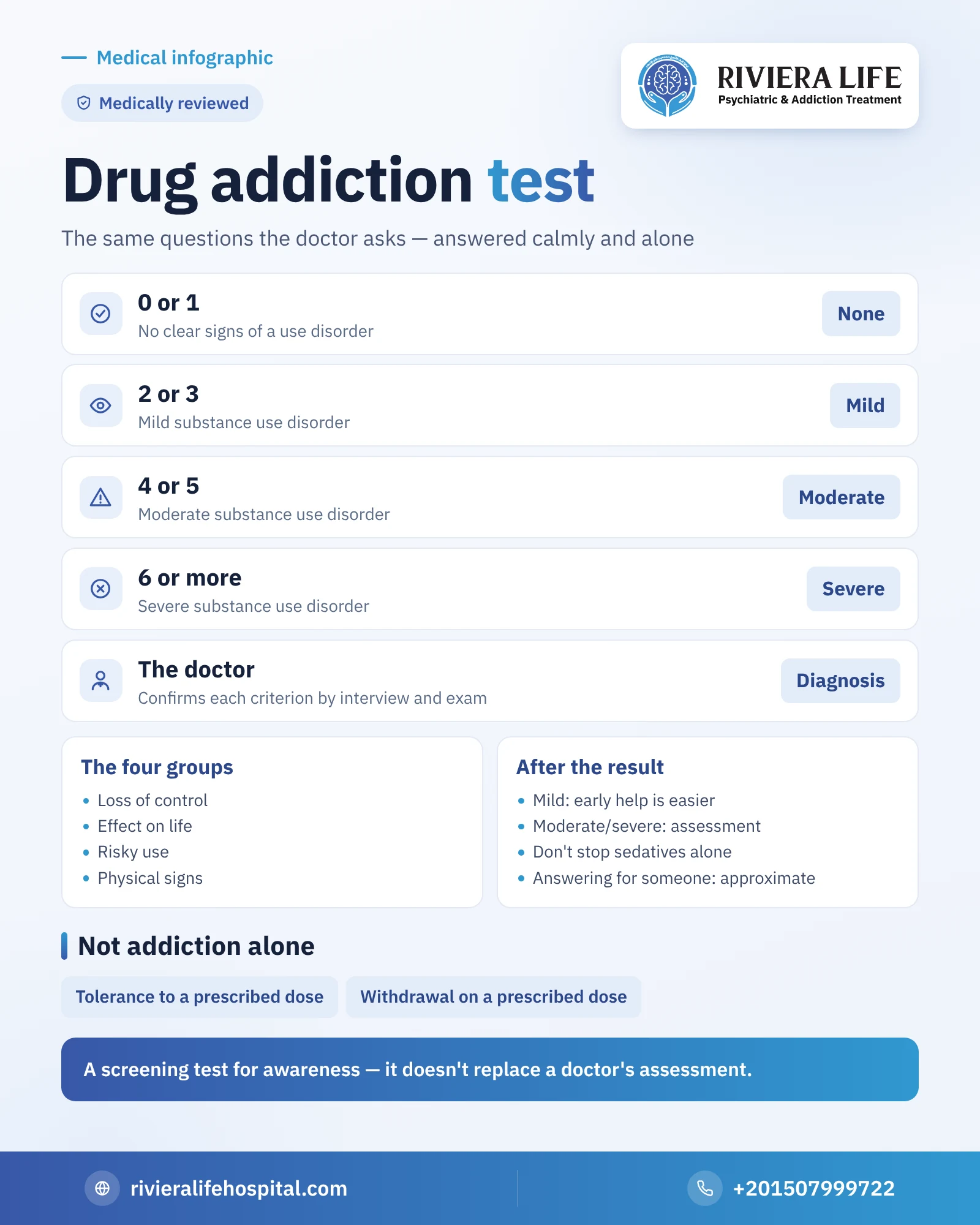
The eleven criteria in four groups
- Loss of control: a larger amount than you intend, failed attempts to stop, a long time spent around the substance, and strong craving.
- The effect on life: falling short in duties, problems with family and friends, and giving up important activities.
- Risky use: using in dangerous situations such as driving, and continuing despite physical or psychological harm.
- Physical signs: tolerance, meaning needing a larger amount, and withdrawal symptoms on stopping.
The physical signs alone don’t count as addiction in someone taking a prescribed medicine at the set dose, such as patients with chronic pain or anxiety, because the body adapts to the medicine without any addictive behavior.
What do you do after the result?
A mild result is a golden opportunity, because early intervention is easier and shorter and protects from years of harm, as the article on the importance of early addiction treatment explains. A moderate or severe result needs a specialist assessment and a clear plan. An important warning: don’t stop alcohol, sedatives or pregabalin suddenly on your own after long use, because their withdrawal may cause seizures.
And if you are answering on behalf of a son or husband based on what you notice, the result is approximate, and it is better to read how do I help a drug addict before any confrontation.
About this test
The questions were phrased in simple language from the eleven criteria for substance use disorder as described by medical references, including the MedlinePlus encyclopedia of the US National Library of Medicine, criteria that doctors use in diagnosis. The test is for awareness only.
How does Riviera Life help you?
If your result points to a moderate or severe disorder, the Riviera Life team starts with a confidential medical and psychological assessment that determines the substance, the severity of dependence and any accompanying disorder, followed by a plan for safe withdrawal and rehabilitation. The first consultation is free and confidential on +201507999722.
Read also
- The AUDIT alcohol use test
- The addictive personality: fact or myth?
- Addiction treatment: the complete plan
- Psychological tests: the complete guide
Questions many people ask
Having two or more of the eleven criteria during the past year, such as loss of control, craving, continuing despite harm and withdrawal, points to a substance use disorder that needs assessment.
No, tolerance and withdrawal symptoms alone in someone taking a prescribed medicine at the set dose don't mean addiction unless accompanied by addictive behavior.