The short answer
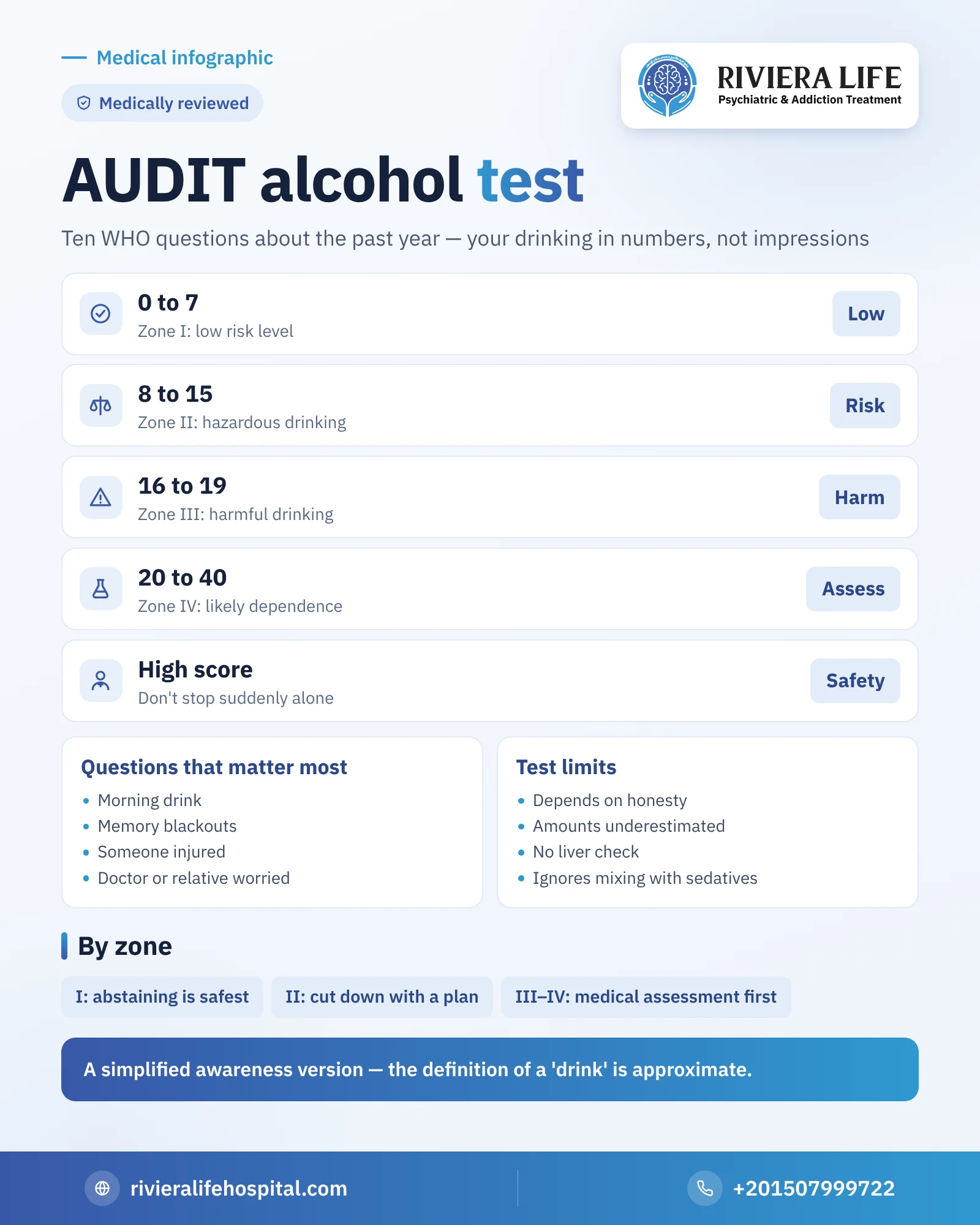
The AUDIT alcohol use test is a ten-question scale developed by the World Health Organization. It asks about how often and how much you drink, signs of loss of control and dependence, and the harms resulting from it during the past year. The score runs from 0 to 40: from 0 to 7 is a low risk level, from 8 to 15 hazardous drinking, from 16 to 19 harmful drinking, and from 20 upward likely alcohol dependence that needs a medical assessment. Most importantly, someone who has drunk daily for a long time doesn’t stop suddenly on their own, because alcohol withdrawal can be dangerous.
- Who developed it?The World Health Organization
- ScoreFrom 0 to 40
- 20 or moreLikely dependence needing a medical assessment
“I only drink on occasions” is a sentence many say sincerely, then discover that the occasions have become every weekend, then every evening. The line between social drinking and harmful drinking isn’t easily seen from the inside, and this is exactly what this scale helps with: looking at your drinking pattern in specific numbers, not by impression.
Start the alcohol use test
Alcohol use test (AUDIT)
A "drink" here means a regular glass of beer, a small glass of wine or a small shot of a strong drink. Answer about the past year.
To discuss your result with a psychiatrist in confidence, the first consultation is free on +201507999722.
This is an initial screening test for awareness, not a diagnosis. Your answers are not saved or sent to anyone; the calculation happens on your device only.
How is the test result calculated?
The first eight questions score from 0 to 4, and the last two questions score 0, 2 or 4. The World Health Organization divides the result into four zones:
| Score | Zone | Meaning |
|---|---|---|
| 0 to 7 | I | Low risk level |
| 8 to 15 | II | Drinking that carries a risk to health |
| 16 to 19 | III | Harmful drinking that has started causing problems |
| 20 to 40 | IV | Likely alcohol dependence |
Questions that deserve special attention
Some questions matter more than the total score. Needing a drink in the morning to regain balance is a clear sign of physical dependence, and losing the ability to remember what happened the night before means drinking has reached levels that harm the brain. And if someone has been injured because of your drinking, or a doctor or relative has been worried about you, these are messages that shouldn’t be ignored even if your score is moderate.
What do you do according to your result?
- Zone I: abstaining remains the safest option, as alcohol is linked to diseases of the liver and heart and several types of cancer even at amounts lower than people think. Read the harms of alcohol.
- Zone II: cutting down and then stopping with a clear plan, and talking with a specialist helps before the pattern turns into dependence.
- Zones III and IV: a medical assessment before stopping, because alcohol withdrawal after long daily drinking may cause tremor, hallucinations and seizures. Read alcohol withdrawal symptoms.
Limits of the test
- It depends on honest answers and estimating amounts, and many people underestimate unintentionally.
- It doesn’t measure physical harm that already exists, such as liver inflammation, as this needs examination and tests.
- It doesn’t cover mixing alcohol with sedatives or pregabalin, which is a dangerous mix in itself.
About the AUDIT scale
It was developed by the World Health Organization in collaboration with researchers from several countries, its updated manual was published in 2001, and it is used in primary care around the world to detect harmful drinking early. The version here is a simplified translation for awareness, and the definition of a “drink” in it is approximate.
How does Riviera Life help you?
If your result falls in Zone III or IV, the Riviera Life team assesses your physical condition before any stopping, and sets a safe withdrawal plan under medical supervision, then rehabilitation that prevents relapse. The first consultation is free and confidential on +201507999722.
Read also
- Symptoms of alcohol addiction
- Alcohol addiction treatment
- Drug addiction test
- Psychological tests: the complete guide
Questions many people ask
A score of 20 or more indicates likely alcohol dependence that needs a medical assessment, and scores from 8 to 19 mean hazardous drinking or existing harm.
Stopping suddenly on your own after long daily drinking isn't advised, because withdrawal may cause tremor, hallucinations and seizures; a medical assessment and a safe withdrawal plan are better.