Zolpidem is a hypnotic medicine that doctors prescribe for a short period for those who have difficulty getting to sleep, and many in Egypt know it by the name “Night Calm”. It works quickly and leaves the body within a few hours, which is why for years it seemed a lighter alternative to the old sedatives. But extended nightly use creates real dependence, and the medicine may sometimes lead to strange behaviors during sleep that the person doesn’t remember, such as driving a car or cooking. On this page you will find what zolpidem is, how it works, when it becomes dangerous, and why it isn’t stopped suddenly, with links to detailed articles about its withdrawal and treatment.
What is zolpidem?
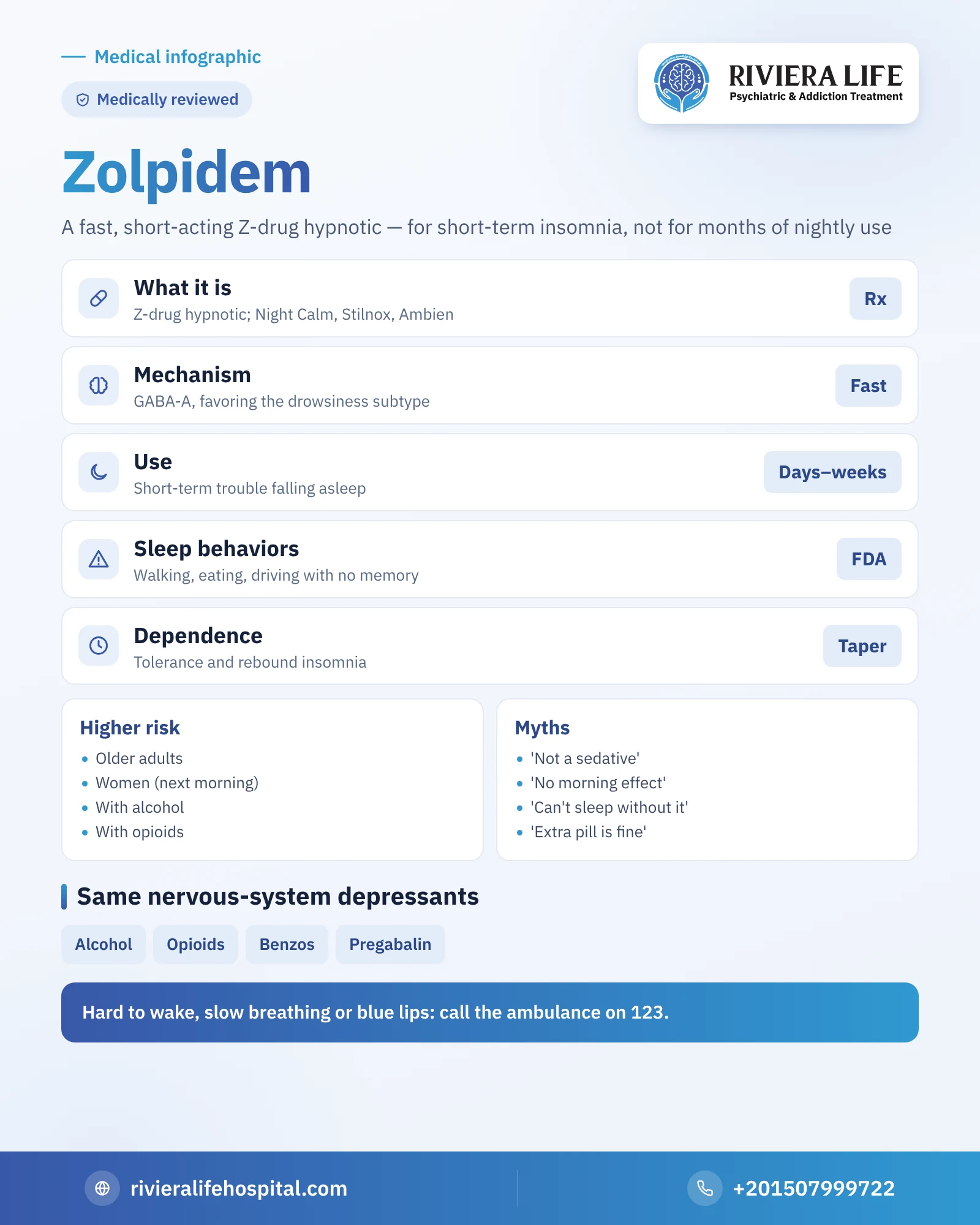
Zolpidem is a hypnotic from a group known as “Z-drugs” (Z-drugs), which includes alongside it zopiclone, eszopiclone and zaleplon. This group appeared in the 1980s and 1990s with a clear aim: fast sleep without the heavy effect that benzodiazepines leave the next day. The chemical structure of zolpidem is different from benzodiazepines, but it reaches almost the same place in the brain, which is why it shares a large part of their risks.
It is dispensed as ordinary tablets taken immediately before sleep, and in some countries there are extended-release tablets and others that dissolve under the tongue for those who wake at night. It reaches its peak concentration within about an hour, and falls to half within two to three hours in most adults, a period that is longer in older adults and patients with liver disease.
Night Calm and Stilnox: the trade names
In Egyptian pharmacies zolpidem is well known by the names “Night Calm” and “Stilnox”, in the United States it is known as “Ambien”, and there are other preparations carrying the same substance. These are names for a single substance, so moving from one name to another doesn’t mean a lighter medicine, and taking two names on the same night means doubling the zolpidem without the person noticing.
How does zolpidem work in the brain?
Zolpidem binds to “GABA-A” receptors, the receptors the brain uses to calm its activity. It favors a subtype of them linked mainly to drowsiness, which is why its hypnotic effect outweighs the anti-anxiety or muscle-relaxing effect. The result with medical use is sleep that comes within minutes, with a relatively short duration of effect.
However, this selectivity isn’t absolute. With larger amounts or long use the effect widens, and the brain adapts to the presence of the medicine so the self-calming it produces itself decreases. Here the story of tolerance and dependence begins, and here doctors explain why sleeping without the pill becomes harder than it was before starting it.
Medical use: a short treatment for insomnia
The approved use of zolpidem is insomnia in which it is difficult to start sleeping, and most guidelines recommend that treatment be for the shortest possible period, often days to a few weeks. It suits, for example, acute insomnia after a shock or a specific period of stress, not chronic insomnia continuing for years. As for chronic insomnia, its first treatment according to modern guidelines is cognitive behavioral therapy for insomnia, with a search for the cause: depression, anxiety, sleep apnea or chronic pain. You will find the picture of insomnia, its causes and its treatment in the insomnia guide.
The patient is asked not to take the pill unless there are seven to eight full hours ahead for sleep, and to go to bed as soon as they take it. Any change in the amount or decision to stop is made with the doctor who prescribed it.
Complex behaviors during sleep
The strangest and most worrying of zolpidem’s risks is what drug authorities call “complex sleep behaviors”. The person gets out of bed while partly asleep, and walks, eats excessively, cooks or makes calls, and in documented cases drives their car, then wakes remembering nothing. In 2019 the US Food and Drug Administration added its strongest warning to the leaflets of zolpidem and its relatives after serious injuries and deaths linked to these behaviors, and called for it not to be used by anyone to whom this has happened before.
These behaviors happen even with the prescribed amount and sometimes from the first time, but they are more likely with large amounts, with alcohol and sedatives, or when the person resists sleep after taking the pill. Anyone whose family notices something of this kind on them stops driving and contacts their doctor.
The next-morning effect
The short duration of zolpidem doesn’t mean the morning is always clear. Enough of it may remain in the blood to slow reactions and weaken attention, even if the person feels completely awake. This increases with extended-release tablets, with taking the pill in the middle of the night, and in women and older adults. That is why the leaflets advise caution with driving or operating machinery the next morning, especially in the first days of treatment.
Tolerance and dependence
After weeks of nightly use many notice that the pill no longer works as it did. This is tolerance. Some of them raise the amount on their own, and some try a night without the medicine and spend it completely awake, so they become convinced that they “only sleep with it”. The truth is that this difficult night is often rebound insomnia caused by the stopping itself, not proof that the original insomnia is still as it was. Physical dependence may happen to someone who sticks to the prescription completely, while addiction means loss of control: seeking out the medicine, taking it for something other than sleep, and continuing despite the harm.
Zolpidem misuse
Misuse takes several forms. There are those who swallow two or three pills because one pill is no longer enough, those who take it and deliberately resist sleep to feel elation, relaxation or a clouding of perception that reaches visual hallucinations, and those who take it during the day to calm tension. In Egypt it sometimes appears in a mix with tramadol, pregabalin or sedatives. You will find how this pattern is treated in the article on zolpidem addiction treatment.
Withdrawal and rebound insomnia in brief
On stopping suddenly after regular use, symptoms usually appear the following night or within a day or two: insomnia more severe than the original insomnia, anxiety, irritability, tremor and sweating. Rarely, after large amounts for a long period, confusion or seizures may occur. The details are in the article on Night Calm withdrawal symptoms.
Zolpidem with alcohol or opioids
Zolpidem depresses the nervous system, as do alcohol and opioids such as tramadol and heroin, and benzodiazepines and pregabalin. When two of them come together drowsiness multiplies, breathing slows, and the chances of complex behaviors, memory loss and falls rise. The most dangerous of these mixes is one that combines it with an opioid, because breathing may stop during sleep without anyone noticing.
Women and older adults
A woman’s body clears zolpidem more slowly on average, so its concentration in the morning stays higher. That is why the US Food and Drug Administration lowered the recommended amount for women, and left the matter to the doctor to determine what suits each patient. In pregnancy and breastfeeding it is only used by the doctor’s decision after weighing benefit and risk.
Older adults are the most prone to dizziness, falls, hip fractures and nighttime confusion, and the confusion may be mistakenly thought to be the start of dementia. That is why drug safety lists for older adults advise avoiding Z-drugs as far as possible, and looking for a non-drug treatment for insomnia first.
Zolpidem and the law
Zolpidem is listed internationally among the controlled psychotropic substances, and in Egypt it is only dispensed by medical prescription, and medicines in this category are subject to dispensing controls that change from time to time. Dispensing, selling or possessing it outside the medical framework is a violation that may expose a person to accountability. The reference for the details is the doctor and the pharmacist, and voluntarily seeking treatment remains a safe path.
The zolpidem guide: each aspect in a separate article
For every question about zolpidem there is an article that answers it in detail:
Zolpidem addiction treatment
The stages of safe stopping, from assessment to gradual tapering, cognitive behavioral therapy for insomnia and relapse prevention.
Night Calm withdrawal symptoms
When the symptoms begin, why the first nights are the hardest, and when withdrawal becomes an emergency.
Sleeping pill addiction
The types of hypnotics that may cause dependence, its signs, and why older adults pay the highest price.
Common myths about zolpidem
The myth: zolpidem isn’t a sedative, so it doesn’t cause addiction. The truth is that it acts on the same receptors that benzodiazepines act on, and causes tolerance and dependence with long use.
The myth: as long as its effect is short, it has no effect in the morning. The truth is that weakened attention the next morning is documented, especially in women and older adults and with extended-release tablets.
The myth: the sleepless night after stopping it proves I can’t sleep without it. The truth is that rebound insomnia is expected in the first nights, and recedes with gradual tapering and behavioral therapy.
The myth: an extra pill in the middle of the night does no harm. The truth is that it raises the risk of complex behaviors and next-morning impairment, and the dose is only changed on the doctor’s instruction.
Danger signs when zolpidem is mixed
Call the ambulance on 123 immediately if any of these appear
The greatest danger comes from a large amount of zolpidem or from mixing it with alcohol, opioids or sedatives.
- Deep drowsiness that makes it hard to wake the person
- Slow or shallow breathing, or unusual snoring with difficulty waking
- Bluish lips or fingertips
- Severe confusion or incomprehensible speech
- A head injury after a nighttime fall
- Loss of consciousness or seizures
Stay with the person until the ambulance arrives, and if they are unconscious and breathing, put them on their side. And take the empty blister strips with you, as they tell the doctor what was taken faster than any question.
When should you ask for help?
Ask for a specialized assessment if weeks have passed and you can no longer sleep without zolpidem, if you have increased the amount without a doctor, if you have started taking it during the day or with alcohol or tramadol, or if your family has noticed nighttime behaviors you don’t remember. At Riviera Life, the consultants in psychiatry and addiction treatment assess the case in complete confidentiality, and put in place a gradual tapering plan alongside treating the insomnia itself with methods that don’t create a new dependence, under round-the-clock medical supervision when needed. The first consultation is free on +201507999722.
Medical sources and referencesThe information in this article is based on reliable scientific sources