Sleeping pill addiction usually begins with a legitimate prescription for real insomnia, then the tablet turns from a temporary solution into a condition for sleeping every night. It isn’t limited to one medicine: sleeping pills from the Z-drug group, benzodiazepines, sedating antihistamines, and some antidepressants and antipsychotics used for sleep can all lead to tolerance and dependence to varying degrees. Older people pay the biggest price in the form of falls and mental confusion. This article explains the types of sleeping pills, how dependence on them develops, its signs, and why treatment is based on replacing the tablet with cognitive behavioral therapy for insomnia.
What is meant by sleeping pills?
Sleeping pills is a popular name for any medicine taken in order to sleep, whether or not it was made for this purpose. Some are licensed specifically for insomnia, some are licensed for other illnesses and used for sleep because drowsiness is one of their side effects, and some are sold without a prescription in many countries. This variety makes dependence on them hard to notice; the person doesn’t see themselves as “addicted”, but as someone who “takes something to sleep”.
The types of sleeping pills most linked to dependence
Z-drugs
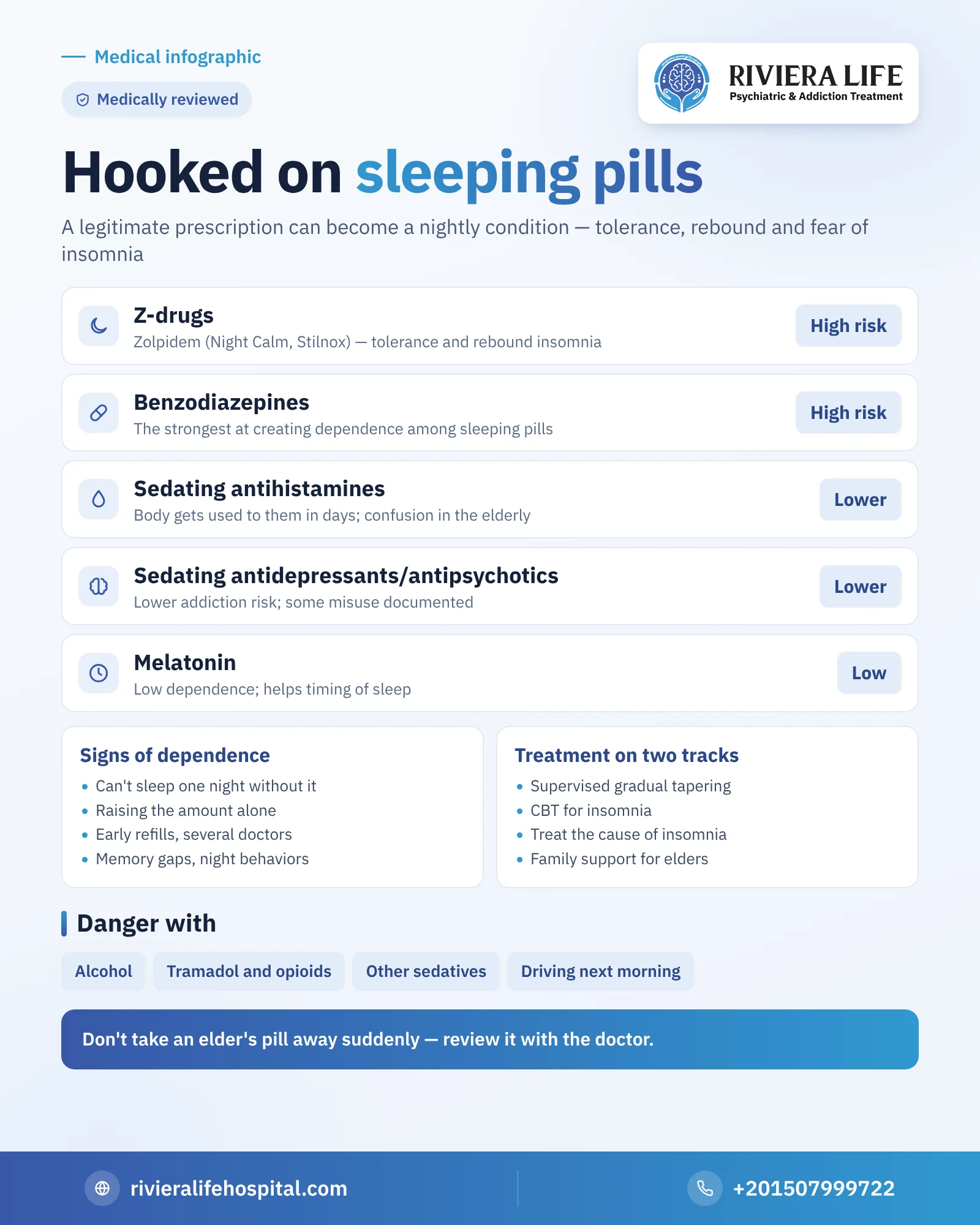
Zolpidem, known in Egypt as Night Calm and Stilnox, zopiclone and their relatives. They were designed to be lighter than the older sedatives, but act on almost the same receptors, so they cause tolerance, dependence and rebound insomnia with long-term use. You will find their details in our zolpidem guide.
Benzodiazepines
Some are licensed for insomnia in several countries, and in Egyptian reality many of them are used for sleep without this being their original purpose, such as anxiety and panic medicines. This group is the strongest at creating dependence among sleeping pills, and withdrawal from them after long use can be dangerous, as we explained in our benzodiazepines guide.
Sedating antihistamines
Older allergy and cold medicines that cause drowsiness, and are included in many “sleep aids” bought without a prescription abroad. They don’t cause addiction in the classic sense, but the body gets used to their sleep-inducing effect within days, so some people turn to larger amounts. In older people they may cause confusion, constipation, urinary retention and dry mouth.
Antidepressants and antipsychotics used for sleep
Some sedating antidepressants and antipsychotics are sometimes prescribed in small amounts for insomnia. Their addiction risk is generally lower than that of sedatives, but misuse of some sedating antipsychotics is documented, and stopping antidepressants suddenly may cause unpleasant discontinuation symptoms. The decision to use or stop them remains with the psychiatrist who knows why they were prescribed. Our article on Tryptizol explains an example of a medicine in this class.
As for melatonin, the likelihood of dependence on it is low, and its role in regulating sleep timing is explained in melatonin and sleep.
How does dependence on a sleeping pill develop?
The story repeats with similar details. A hard week at work or sudden grief interrupts sleep, so the doctor prescribes a sleeping pill for a few days. The tablet works, so the person continues it after the cause has passed, “as a precaution”. After weeks the effect weakens, so they increase the amount or add another tablet. Then they try a night without medicine, and get rebound insomnia worse than their original insomnia, so they become convinced they can’t sleep without it. And so a three-sided cycle is completed: tolerance that demands a larger amount, rebound that punishes stopping, and fear of insomnia that makes the tablet a ritual that can’t be abandoned.
The physical side intertwines with the psychological. Many depend on the tablet being beside the bed more than on its actual effect, and become anxious if the box runs out before the prescription is due for renewal.
Who is most prone to sleeping pill addiction?
- Someone who uses the sleeping pill every night for more than a few weeks without review.
- Someone with untreated anxiety or depression, who treats the symptom and leaves the cause.
- Someone with a history of alcohol or drug use.
- Someone who works shifts or travels a lot, so their sleep timing is disrupted.
- Older people, because sleep naturally decreases with age, which is wrongly interpreted as insomnia that needs medicine.
Signs of sleeping pill addiction
The signs noticed by the person or their family:
- Being unable to sleep a single night without the tablet.
- Increasing the amount or number of tablets without consulting the doctor.
- Renewing the prescription early, or getting it from more than one doctor or pharmacy.
- Taking the sleeping pill during the day to calm tension, or with alcohol or other sedatives.
- Gaps in memory, or night-time behaviors the person doesn’t remember.
- Morning drowsiness and slowness that affect work or driving.
- Failed attempts to stop that always end in going back after a night or two.
Older people: the most affected group
A familiar scene in Egyptian homes: a grandmother who has taken “the sleeping tablet” for years, and no one remembers who prescribed it. With age, the body clears the medicine slowly, so its effect accumulates, and dizziness and poor balance increase. A night-time fall on the way to the bathroom may end in a hip fracture that changes the elderly person’s life completely.
Confusion, disorientation and forgetfulness may appear that the family think are the beginning of dementia, while they may be a medicine effect that improves with reduction. That is why medication safety lists for older people put sedating sleeping pills and older antihistamines among the medicines best avoided. But the solution isn’t suddenly withdrawing the medicine from the elderly person, but a medical review that sets a gentle reduction plan.
Sleeping pills with alcohol or painkillers
Sedating sleeping pills depress the nervous system, as do alcohol and opioid painkillers such as tramadol. Combining them multiplies drowsiness and slows breathing, and increases the likelihood of memory loss, falls and accidents. Someone who takes a sleeping pill with any of them needs an urgent assessment, not passing advice.
Treatment: from the tablet to cognitive behavioral therapy for insomnia
The aim of treatment isn’t only to leave the sleeping pill, but for the person to be able to sleep without it again. That is why it runs on two parallel tracks:
Gradual withdrawal under medical supervision
The doctor sets the speed of reduction according to the type of sleeping pill, how long it has been used and the other substances accompanying it, and reviews the plan with the patient periodically. Stopping suddenly, especially benzodiazepines and Z-drugs, may cause severe rebound insomnia and sometimes serious complications.
Cognitive behavioral therapy for insomnia
Medical guidelines recommend it as the first line for treating chronic insomnia, and its results last after the sessions end, unlike the sleeping pill whose effect disappears in its absence. It usually includes:
- Linking the bed to sleep alone, and getting up when lying awake goes on too long.
- Organizing the time spent in bed and fixing the wake-up time to build a natural desire for sleep.
- Correcting anxious thoughts about sleep, such as the fear that a bad night will ruin the next day.
- Relaxation exercises and healthy sleep habits concerning light, caffeine and screens.
Our article on cognitive behavioral therapy sets out the basis of this approach, and our insomnia guide explains the causes and types of insomnia. In parallel, the doctor treats what lies behind the insomnia: anxiety, depression, chronic pain or sleep apnea.
When does the case need hospital admission?
Most cases of simple dependence on a single prescribed sleeping pill can be treated with outpatient follow-up. A stay is preferred, however, when large amounts or more than one sleeping pill are used together, when alcohol or opioids are present, with a history of seizures, severe depression, or failed previous attempts at home. Our article on zolpidem addiction treatment explains the stages of treatment for someone dependent on Night Calm specifically.
How can Riviera Life help you?
At Riviera Life the path begins with a confidential assessment by consultants in psychiatry and addiction treatment, which identifies the type of sleeping pill, the extent of dependence and the original cause of the insomnia. Then a gradual withdrawal plan is set, in hospital under round-the-clock supervision or with outpatient follow-up depending on the case, with sessions of cognitive behavioral therapy for insomnia and a family program, especially when the patient is elderly and needs someone with them. The first consultation is free on +201507999722.
More from our zolpidem guide
- Zolpidem (Night Calm): the complete guide
- Night Calm withdrawal symptoms and rebound insomnia
- Zolpidem addiction treatment
- Benzodiazepine addiction treatment
- How long zolpidem stays in the body: blood, urine and the next-day effect
- Doxepin: drowsiness, depression, overdose risk and warnings
- Trazodone (Trittico): sleep, depression, effects and warnings
- Insomnia test: an instant result
Questions many people ask
Benzodiazepines and Z-drugs such as zolpidem are the most linked to tolerance and dependence, while dependence on antihistamines and melatonin is much lower.
There is no fixed period, but tolerance may begin after a few weeks of nightly use, and with antihistamines the effect may weaken within days. That is why sleeping pills are usually prescribed for short periods.
Gradual reduction with a medical plan eases symptoms a great deal, the most common being temporary rebound insomnia. Stopping suddenly after long use may cause more severe symptoms.
Cognitive behavioral therapy for insomnia is the first choice for chronic insomnia according to medical guidelines, along with treating any cause behind the insomnia, such as anxiety, depression or sleep apnea.
Because their bodies clear them slowly, so dizziness, confusion and the likelihood of falls and fractures increase. Even so, they aren't stopped suddenly, but reviewed with the doctor to set a safe reduction plan.