Night Calm (zolpidem) withdrawal symptoms usually begin on the first night after stopping or within a day or two, because the medicine leaves the body quickly. The clearest of these symptoms is rebound insomnia that exceeds what sleep was like before the medicine, along with anxiety, irritability, sweating and tremor. In most cases the acute symptoms calm down within days to about two weeks, but someone who used large amounts for a long time may face confusion or seizures, which is an emergency. This article explains what happens night after night, how to tell withdrawal from the return of the original insomnia, and who is most at risk.
Why do symptoms appear when stopping Night Calm?
Night Calm strengthens the brain’s natural calming through GABA receptors. When this repeats every night for weeks or months, the brain reduces the sensitivity of these receptors and raises its stimulating activity to keep its balance. As long as the tablet arrives on time, the person feels nothing; if it suddenly disappears, the brain stays on alert with nothing to calm it. That, simply, is withdrawal, and it also happens to those who kept exactly to the prescription: physical dependence doesn’t necessarily mean addiction, but it does mean stopping needs a plan.
When do Night Calm withdrawal symptoms start?
The concentration of zolpidem in the blood halves within about two to three hours, and almost disappears within a day. That is why most people who stop feel the difference on the very night they would have taken the tablet. Someone who took it more than once a day, or during the day, may notice tension and tremor a few hours after the last tablet. Extended-release tablets may delay the start slightly.
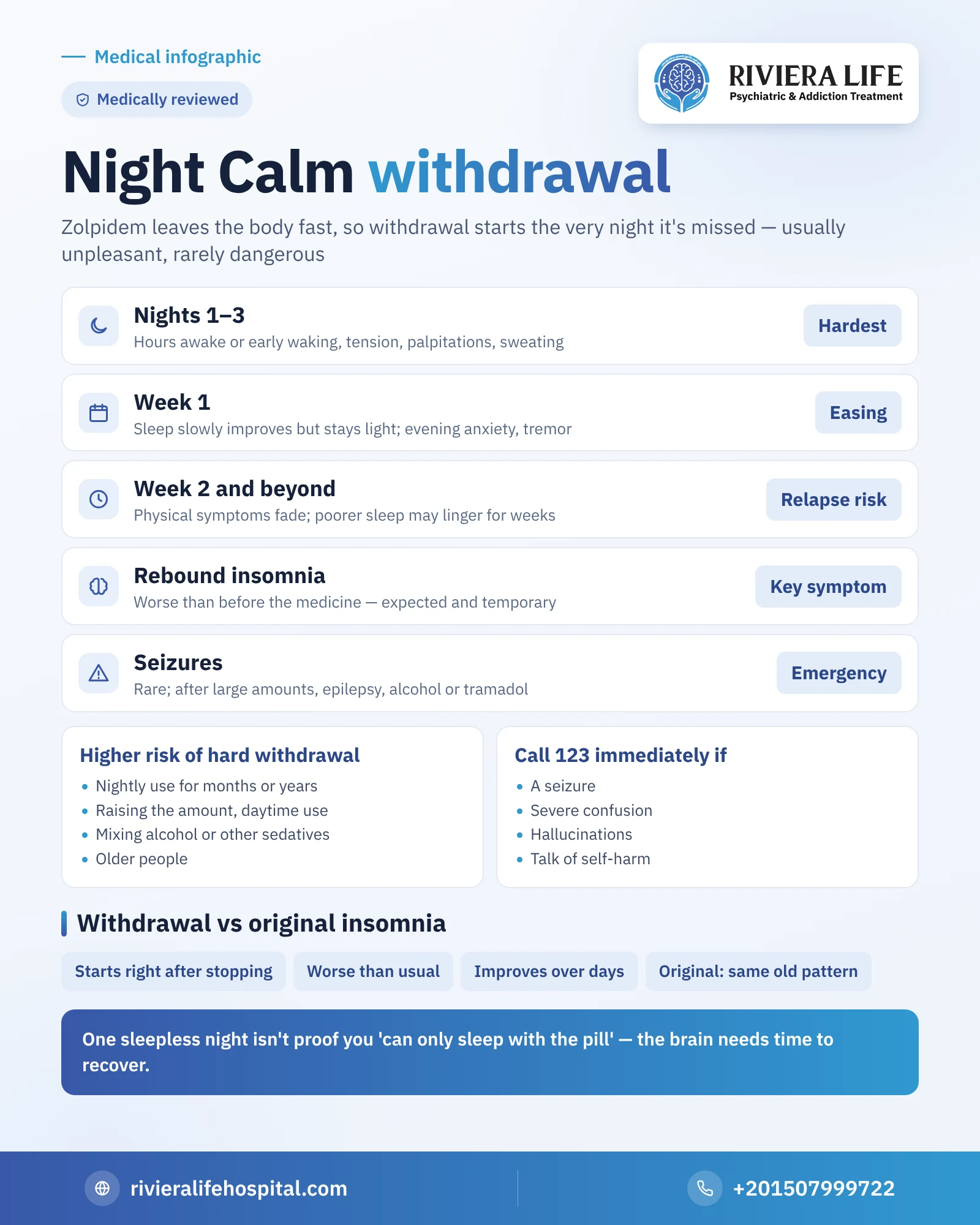
The withdrawal timeline
The details vary from person to person depending on the duration, amount and presence of other substances, but the usual sequence looks like this:
The first to third nights
Usually the hardest nights. The person lies awake for hours, or sleeps a little and then wakes very early. This is accompanied by tension, palpitations and sweating, and sometimes nausea and headache. During the day they are irritable, exhausted and poorly concentrated.
The first week
Sleep starts to improve slowly, but stays broken, light and full of dreams. Anxiety may intensify in the evening as the tablet time approaches, and slight hand tremor and muscle cramps appear in some.
The second week and beyond
Physical symptoms recede in most cases, while some are left with poorer-quality sleep and intermittent anxiety for weeks. This stage is the most dangerous in terms of relapse, because the person thinks the medicine is the only solution to nights that aren’t what they want.
Rebound insomnia: why does sleep seem worse than before?
Many say after two nights of stopping: “My sleep is worse than it was before the medicine.” This is an accurate description of what doctors call rebound insomnia. A brain used to outside help every night needs time to regain its ability to start sleep on its own, and during this time the insomnia is worse than the original. The likelihood of rebound rises the more sudden the stop and the larger the amount.
The danger here is more psychological than physical: a single sleepless night is enough to convince the person that they “only sleep with the tablet”, so they go back to it and the cycle repeats. Knowing that these nights are expected and temporary is part of the treatment itself, which is what makes gradual withdrawal better than stopping suddenly: slow reduction eases the rebound and gives the brain a chance to adapt.
Anxiety, irritability and other symptoms
Alongside insomnia, a group of symptoms of varying severity appears:
- Anxiety: inner tension, and sometimes panic attacks with chest tightness and unjustified fear.
- Irritability: quick reactions, sensitivity to sound and light, and impatience with those around.
- Physical symptoms: sweating, palpitations and tremor, nausea and abdominal cramps, and sometimes facial flushing.
- Mood swings: sadness or crying without a clear reason, and loss of enthusiasm in the first days.
- Poor concentration: difficulty reading or working, and minor forgetfulness that bothers the person.
Someone who was taking the medicine to calm daytime anxiety, not just for sleep, may feel that anxiety return strongly, which indicates a need for psychological treatment of the anxiety itself.
Can zolpidem withdrawal cause seizures?
Yes, but it is rare. Medical reports describe seizures, confusion and hallucinations on stopping suddenly, mostly in people who used amounts far above the prescribed ones for long periods. The risk also rises in those with a history of epilepsy, those withdrawing from alcohol or benzodiazepines at the same time, and those using tramadol, which by its nature lowers the seizure threshold. These people don’t stop at home, but under direct medical supervision.
Call an ambulance on 123 immediately if you see
These signs while stopping Night Calm can't wait until morning.
- A seizure or involuntary shaking of the whole body
- Severe confusion, or not knowing the place and time
- Hallucinations or incoherent speech
- Strong palpitations with a big rise in temperature or sweating
- Loss of consciousness or difficulty waking the person
- Talk of self-harm or ending life
During a seizure, move hard objects away, don’t put anything in their mouth or restrain their movement, and afterwards place them on their side and stay with them until the ambulance arrives.
Withdrawal, or the return of the original insomnia?
This question comes up repeatedly in the clinic, and the difference is practical. Rebound insomnia begins right after stopping, is more severe than usual, and improves gradually over the days. The original insomnia appears in the same old pattern, continues without improvement after the withdrawal period ends, and is usually linked to a clear cause such as anxiety, depression, pain or sleep apnea. Distinguishing them needs medical follow-up for weeks, because judging after only two nights pushes many back to the tablet unnecessarily. You will find the different causes of insomnia and their treatment in our guide to insomnia.
Who is most at risk of a hard withdrawal?
- Those who used the medicine every night for months or years.
- Those who raised the amount gradually without a doctor, or started taking it during the day.
- Those who combine it with alcohol, other sedatives, tramadol or pregabalin.
- Older people, because dizziness and nighttime confusion raise the risk of falls.
- Those with an untreated anxiety disorder or depression.
How is the reduction done under medical supervision?
We don’t publish schedules or amounts here, because what suits one person may be dangerous for another. What we can say is that the doctor starts by assessing the duration, amount and other substances, then sets a gradual reduction plan reviewed periodically according to the patient’s response. In some cases the doctor sees fit to switch to a longer-acting medicine before reducing, and in others gradual reduction of the same medicine is enough. During this, cognitive behavioral therapy for insomnia begins, because the goal isn’t just giving up the tablet, but regaining natural sleep. The full stages from assessment to relapse prevention are explained in our article on zolpidem addiction treatment.
How can the family help during withdrawal nights?
The first nights are long for the patient and for those around them. Don’t comment on staying up or compare their sleep with yours; insomnia here is a symptom, not laziness. Encourage them to get out of bed if lying awake goes on long, and to keep a fixed wake time however the night went.
Keep old strips out of their reach, and watch for any sudden confusion or talk of self-harm. If they are taking other substances with Night Calm, also read about benzodiazepine withdrawal symptoms, as their symptoms are similar and may overlap. At Riviera Life, the medical team follows this stage around the clock when the case needs it, with a plan to treat the insomnia itself.
More from our zolpidem guide
- Zolpidem (Night Calm): the complete guide
- Zolpidem addiction treatment and the stages of safe stopping
- Sleeping pill addiction: types and signs
- Benzodiazepine withdrawal symptoms
- How long zolpidem stays in the body: blood, urine and the next-day effect
- Night Calm and sex: insomnia, desire, sleep behaviors and consent
Questions many people ask
The acute symptoms calm down in most cases within days to about two weeks, and light sleep and intermittent anxiety may remain for weeks in those who used it for a long time.
This is usually rebound insomnia, which is worse than the original insomnia and happens because the brain needs time to regain its ability to start sleep on its own. It improves gradually, and slow reduction rather than sudden stopping eases it.
In most cases it is unpleasant rather than dangerous, but stopping suddenly after large amounts over a long time may cause confusion or rare seizures, especially when withdrawing alcohol or sedatives at the same time.
Yes. It may happen after regular nightly use for weeks even on prescription, which is why the medicine is reduced with a plan set by the doctor and not stopped suddenly.
The doctor may suggest it for some patients within a broader plan, but it doesn't replace gradual withdrawal or cognitive behavioral therapy for insomnia, and no medicine should be started without consultation.