Opioid addiction treatment is possible and effective, and rests on three pillars: safe detox under medical supervision, then an approved medicine that reduces craving and protects against relapse, then psychological rehabilitation and long follow-up. This combination of medicine and psychotherapy is what international guidelines recommend, and it clearly reduces the risk of death and return to use. But the plan differs from patient to patient: someone who started with a painkiller after surgery and suffers chronic pain needs a different plan from someone injecting heroin or mixing tramadol with pregabalin. Here we present the stages, the medicines and the role of each, how chronic pain is treated, and how to choose the right hospital.
Is opioid addiction treatable?
Yes. Medicine deals with opioid addiction as a chronic condition similar to diabetes or high blood pressure, that is, a condition that needs structured treatment and follow-up, not a single session or a week in a rehab. With the right treatment many patients return to their work and homes and live stable lives. And relapse, if it happens, doesn’t mean treatment has failed, but that the plan needs adjustment, just as the doctor adjusts the dose of a blood pressure medicine when it rises. Opioid addiction treatment is a special application of the general principles of addiction treatment, with greater attention to withdrawal and medicines.
The first assessment: why are no two plans alike?
Before any step, the medical team answers questions that determine the whole course of treatment:
- What opioid is used: heroin, tramadol, morphine or another painkiller? And is it short- or long-acting?
- What substances are mixed with it, especially sedatives, pregabalin and alcohol, because their withdrawal needs extra caution?
- Is there real chronic pain with which the use began?
- Is there accompanying depression, anxiety or another disorder?
- What is the physical condition: liver, heart, lungs, infections and pregnancy?
- What is the situation of the family, work and the environment the patient will return to?
The first stage: detox
The aim of this stage is for the patient to cross acute withdrawal safely and with as little suffering as possible, and it usually takes from days to two weeks depending on the substance. Medicines are used in it that ease symptoms or temporarily replace the opioid, with monitoring of vital signs, fluids and sleep. You will find the details of the symptoms and their stages in the article on opioid withdrawal symptoms.
But detox alone isn’t treatment. A patient who leaves straight after it carries a body that has lost its tolerance and a craving that is still strong, the most dangerous possible combination for an overdose.
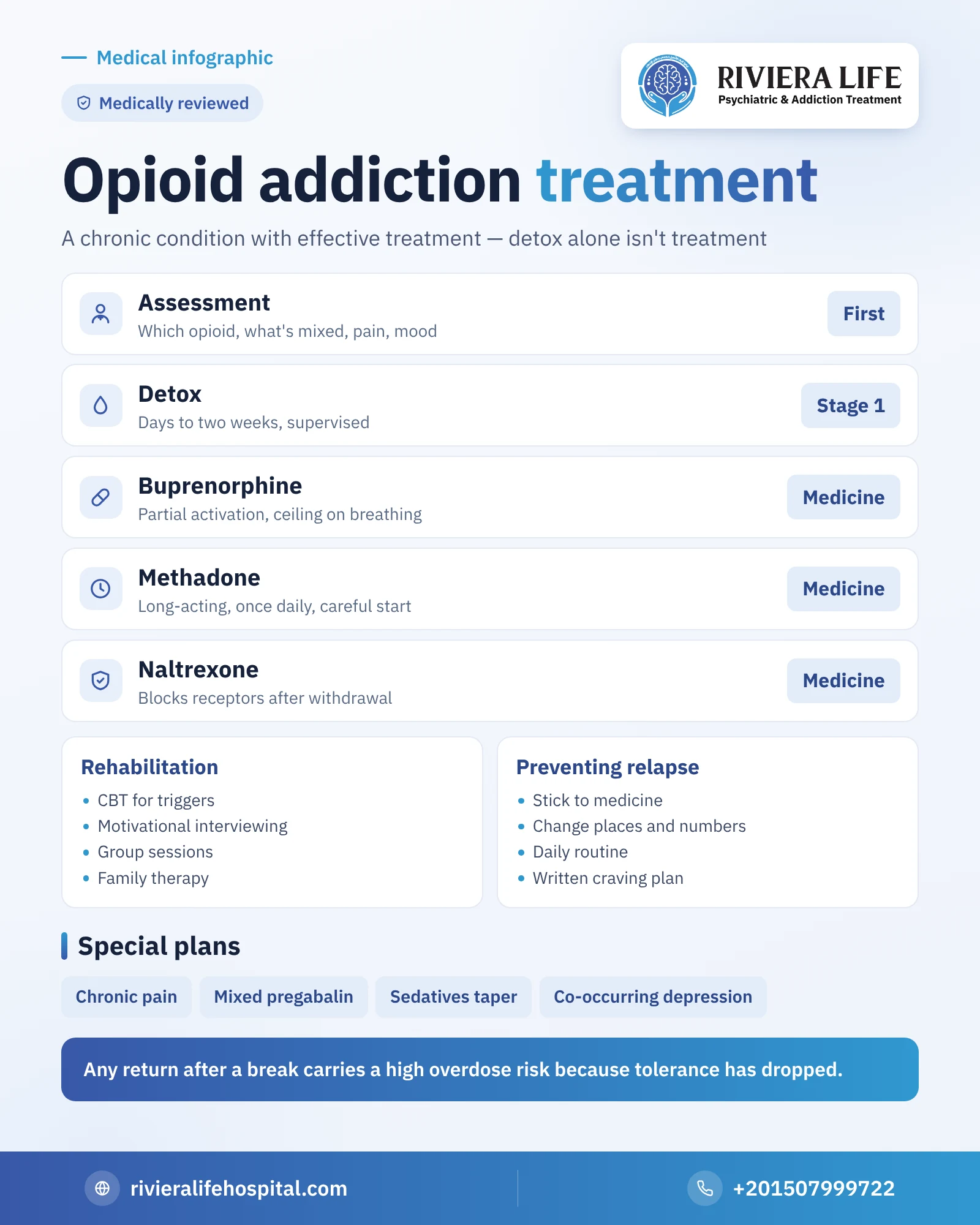
Approved medicines in opioid addiction treatment
Three main medicines are used worldwide, each with a different logic. The doctor chooses between them, or starts with one and moves to another, according to the case:
Buprenorphine
It partially activates the opioid receptors, like opening a tap halfway. That is enough to silence craving and prevent withdrawal without strong euphoria, and its effect on breathing is limited by a ceiling that makes it safer. It is started after withdrawal symptoms have appeared to a sufficient degree, otherwise it displaces the opioid present and causes sudden withdrawal.
Methadone
A long-acting opioid given once daily, so its level in the blood stays steady instead of rising and falling. It is especially useful in severe long-term dependence. It needs a careful start, a gradual increase of the dose and ECG monitoring in some cases, and it isn’t mixed with sedatives.
Naltrexone
It blocks the opioid receptors so it leaves the opioid no effect. It doesn’t cause dependence, and suits someone who has completely finished withdrawal and has strong motivation and good family support. It is started after the body has been free of opioids for days, and stopping it and then returning to use carries a high risk of overdose.
Continuing on the medicine for months or longer is normal, and stopping is a decision taken with the doctor, not on personal initiative.
If the addiction began with a prescribed painkiller
A large proportion of opioid patients didn’t start on the street, but after a fracture, an operation or chronic back pain. These need a plan that treats pain and addiction together, otherwise they return to the painkiller at the first bout of pain. This plan includes reviewing the cause of the pain again, using suitable non-opioid painkillers, physiotherapy, psychological techniques for dealing with pain, and sometimes buprenorphine because it eases both pain and craving. The article on tramadol alternatives by type of pain presents options to discuss with the doctor.
Psychological and behavioral rehabilitation
The medicine calms the brain, while rehabilitation teaches the patient how to live without the substance. Among the most used methods:
- Cognitive behavioral therapy to discover the situations and thoughts that precede use and build alternative responses to them.
- Motivational interviewing to strengthen the patient’s motivation instead of pressuring them from outside.
- Group sessions in which the patient sees that they aren’t alone.
- Family therapy to repair communication inside the home.
- Training in life skills: managing time and money and returning to work.
Multiple substances and co-occurring disorders
We rarely receive an opioid patient in Egypt who doesn’t use another substance. Mixing tramadol with pregabalin, sedatives or hashish is common, and each of these substances needs its own withdrawal plan; sedatives, for example, are reduced slowly to avoid seizures. At the same time many patients suffer depression, anxiety or old trauma, and treating them is an essential part of preventing relapse, not an extra step.
Residential treatment or outpatient treatment?
Residence inside the hospital suits someone who uses large amounts or mixes substances, with whom previous attempts have failed, who has a severe psychological disorder or thoughts of self-harm, or who lives in an environment that makes obtaining the substance easy. Outpatient treatment suits milder cases or the stage after residence. In many cases the best path is an initial residence followed by regular outpatient follow-up.
Preventing relapse after treatment
The first months are the most sensitive. What protects the patient in them is commitment to the medicine and sessions, changing the routes, places and numbers linked to use, a clear daily routine for sleep, work and physical activity, and a written plan for what to do when craving is strong. The patient and their family must know that any return after a break carries a high risk of overdose because of reduced tolerance. To learn the role of periodic tests in follow-up, see the article on how long opioids stay in the body.
Substances that need particular details have separate guides, such as heroin addiction treatment and tramadol addiction treatment.
The right hospital for opioid addiction treatment: how to choose
The right hospital for opioid addiction treatment isn’t the one with the biggest advertising, but the one that provides what the opioid patient specifically needs: safe detox, an approved medicine, treatment of mixed substances and chronic pain, and long follow-up. Ask before you decide:
- Is withdrawal managed by psychiatrists specialized in addiction, with round-the-clock medical supervision?
- Does it provide approved medication treatment for opioids, or is it content with detox?
- Does it assess mixed substances such as pregabalin and sedatives and set a safe withdrawal plan for each?
- Does it deal with chronic pain in those whose addiction started with a prescribed painkiller?
- Does the program include the family and provide clear follow-up after discharge?
- Is it licensed, and does it keep the patient and their data confidential?
And stay away from any place that promises you a guaranteed cure rate or complete treatment within a few days.
How Riviera Life meets these standards in opioid addiction treatment
This is what the patient and their family find at Riviera Life in practice:
- Official license: a hospital licensed by the Ministry of Health.
- A long treatment record: over fourteen years thousands of cases have recovered from addiction, among them people addicted to heroin, tramadol and prescription painkillers.
- A plan for each patient: the consultants in psychiatry and addiction treatment tailor treatment to the case, according to the type of opioid used and the substances mixed with it.
- Safe withdrawal: round-the-clock medical supervision throughout the detox stage.
- Complete confidentiality: the data of the patient and their family is kept in complete confidentiality.
- A family program: sessions that help the family support without covering up use.
- Care after discharge: extended follow-up to prevent relapse in the first months.
To arrange an opioid withdrawal plan, call at any time on +201507999722; the first consultation is free, and the hospital is in Sheikh Zayed, Giza.
More from the opioids guide
- Opioids: the comprehensive guide
- Opioid withdrawal symptoms
- Opioid addiction symptoms
- The harms of opioids
- Opium addiction treatment: safe gradual withdrawal and a plan suited to long-term use
- Nalbuphine addiction treatment: from screening injections and viruses to relapse prevention
- Mydrapid eye drops: medical use, the risk of misuse and poisoning
- Fentanyl addiction treatment: medically supervised withdrawal and overdose protection
- Codeine and cough syrup addiction treatment: from safe withdrawal to treating the cause
- Kratom addiction: is it safe? Dependence, withdrawal and contaminants
Questions many people ask
Yes, many recover and return to their lives with treatment that combines an approved medicine, psychological rehabilitation and follow-up. Addiction is a chronic condition, and relapse, if it happens, means adjusting the plan, not its failure.
The most important are buprenorphine and methadone, which ease craving and prevent withdrawal, and naltrexone, which blocks the receptors after withdrawal ends. The doctor chooses the most suitable for each case.
With a plan that treats pain and addiction together: reviewing the cause of the pain, non-opioid painkillers, physical and psychological therapy, and sometimes buprenorphine, which eases both pain and craving.
No, it only treats acute withdrawal, and leaving straight after it raises the risk of overdose because tolerance falls while craving remains. It must be followed by medicine, rehabilitation and follow-up.
Look for a licensed hospital with consultants in psychiatry and addiction, round-the-clock medical supervision, approved medication treatment, plans for mixed substances and chronic pain, and complete confidentiality. Riviera Life in Sheikh Zayed meets these criteria, with fourteen years of experience.