Exercise addiction doesn’t mean loving training or being committed to it, but training turning from a means of health into a shackle: you train despite injury and illness, feel guilt and anxiety if you miss a day, and sacrifice sleep, work and relationships for it. It isn’t an independent official diagnosis in the medical manuals, but doctors recognize the pattern of compulsive exercise and treat it, especially when it mixes with eating disorders and body image. This article helps you tell healthy commitment from harmful attachment, and sets out the signs, the harms and how recovery begins.
Can exercise be an addiction?
Regular sport is without doubt beneficial for the heart, mood and sleep, and most people who do it benefit from it. But in a small group, exercise becomes linked to the brain’s reward system in a way that resembles addictive behaviors: the feeling after training becomes what is sought, the person needs longer and harder doses of it to get the same effect, and their mood is disturbed if they are deprived of it.
Scientific research is still debating its precise definition, which is why many specialists prefer to describe it as “compulsive exercise” or “compulsive over-exercise”. What matters in practice isn’t the name, but whether you have lost flexibility and the harm has begun.
The difference between commitment and harmful attachment
| The committed athlete | The person with compulsive exercise |
|---|---|
| Trains because they love it and benefit from it | Trains because they fear what will happen if they stop |
| Stops or eases off when ill or injured | Continues despite pain, illness and warnings |
| Enjoys the rest day | Feels guilt and tension on the rest day |
| Training is part of their life | Life revolves around training times |
| Changes the plan if something comes up | Gets agitated or falls apart if the plan is disrupted |
Signs of exercise addiction
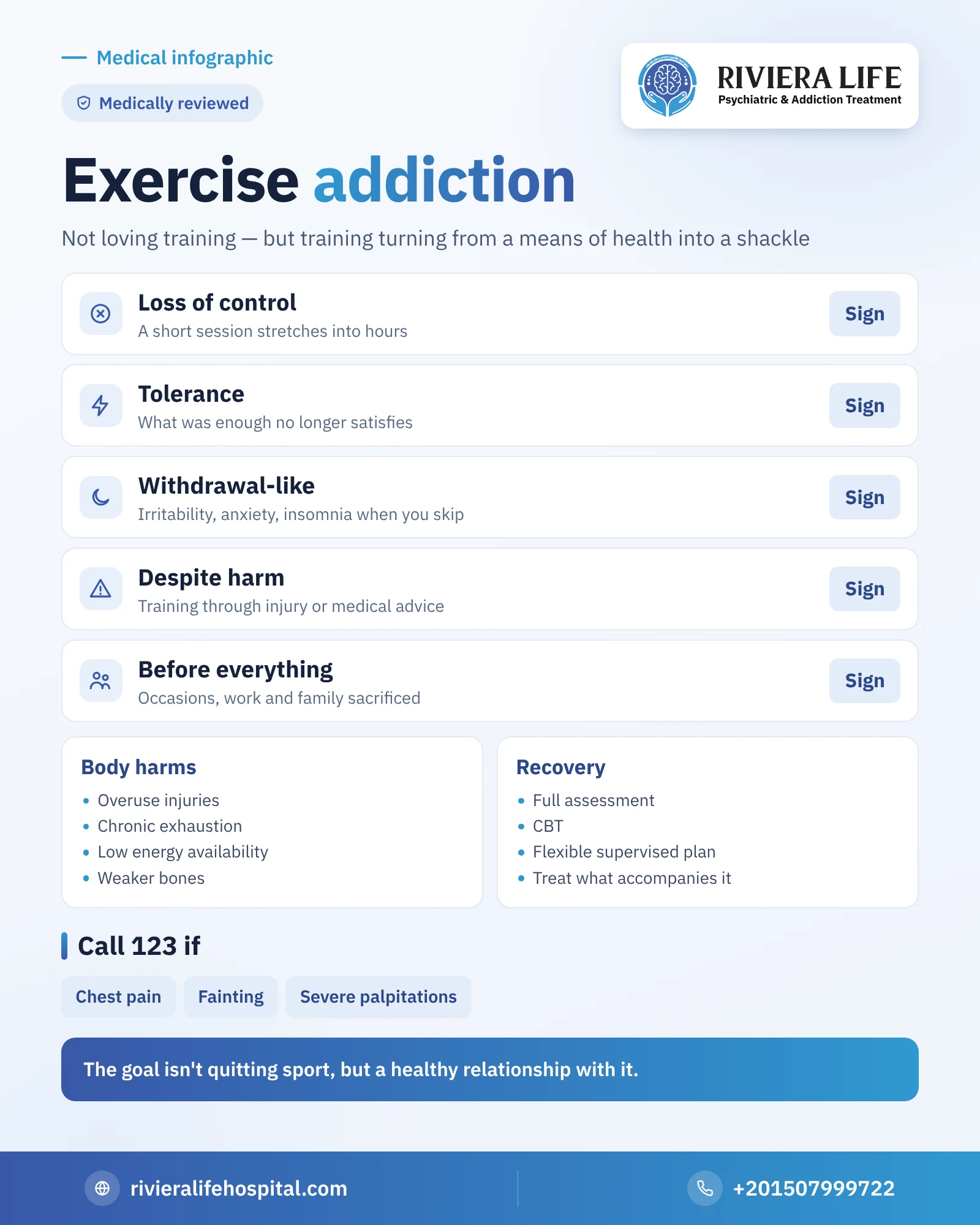
- Loss of control: you intend a short workout and stretch it into hours, or add sessions you didn’t intend to do.
- Tolerance: what was enough months ago no longer satisfies you.
- Withdrawal-like symptoms: irritability, anxiety, insomnia and sadness when you don’t train.
- Continuing despite harm: you train after an injury, severe exhaustion or a doctor’s recommendation to rest.
- Putting training before everything: you excuse yourself from occasions, arrive late to work and neglect your family to keep your schedule.
- Lying or hiding: you hide from others how much you do.
- Self-worth tied to training: your value in your own eyes rises and falls with what you have achieved.
Its types: compulsive exercise alone, or part of an eating disorder?
Specialists distinguish between two situations. In the first, exercise is the main problem, driven by a sense of achievement, escaping stress or fear of losing fitness. In the second, exercise is a way to compensate for eating or to control the body, and is part of an eating disorder not yet diagnosed.
This distinction matters because treatment differs. Someone who trains to compensate for what they ate needs treatment for the eating disorder itself, and you can see the eating disorders guide to understand the signs. It may also mix with excessive preoccupation with muscle size or body shape, which appears in body dysmorphic disorder. We don’t give weight or calorie figures here, because they don’t help diagnosis and may harm those already preoccupied with numbers.
Call an ambulance on 123 immediately if you see
Intense exercise with exhaustion or low energy may cause cardiac and other complications:
- Chest pain or pressure during or after exertion
- Fainting, severe dizziness or collapsing during training
- Severe palpitations or unusual breathlessness
- Confusion, severe headache or repeated vomiting after a long workout in the heat
The physical harms of over-exercising
- Repeated overuse injuries: tendinitis, chronic pain, and stress fractures caused by lack of rest.
- Chronic exhaustion: persistent tiredness and declining performance despite more training, and repeated infections from lowered immunity.
- Sleep disturbance: insomnia despite severe tiredness.
- Low energy available to the body: when food doesn’t make up for the effort, periods may be disrupted in women and bones weaken, and desire falls in men and women. Sports doctors know this condition, and it needs assessment.
- Bones: with long neglect their density may fall, a hidden danger because the person thinks they are at their fittest.
Psychological and social harms
Many think sport always protects mood, but when it becomes compulsory it turns into a source of pressure. The person swings between a sense of achievement after training and guilt and anxiety if they don’t train. Over time friendships and family life recede, and the body becomes a permanent project its owner is never satisfied with. This pattern is close to work addiction, in which a person measures their worth by their output, and it may be linked to depression and anxiety. To understand why the brain loves this kind of reward, read endorphins and addiction.
Test yourself with frank questions
- Do you train while injured or ill because you can’t bear to stop?
- Do you feel anxiety or intense guilt when you miss a day?
- Do your family or friends object to how much you do, so you hide it from them?
- Do you train more after eating more than you planned?
- Do you cancel social or work appointments to keep your training schedule?
Yes to several questions deserves a conversation with a doctor or psychologist. These questions are for awareness and aren’t a diagnosis.
How does recovery begin?
The goal isn’t to give up sport, but to regain a healthy relationship with it. This usually includes:
- A full assessment: the doctor examines injuries, heart and bone health and nutrition, and explores whether there is an eating disorder, anxiety, depression or OCD.
- Cognitive behavioral therapy: works on rigid thoughts such as “if I don’t train I’ll lose everything”, and trains tolerating anxiety on rest days. You will find an explanation of this approach in cognitive behavioral therapy.
- A flexible, supervised exercise plan: set rest days, varied activities, and linking training to enjoyment instead of duty.
- Treating accompanying conditions: an eating disorder, depression, anxiety or OCD if present, with any medicine decided only by the specialist doctor.
- Family and athletic support: a coach or friend who understands that rest is part of training, not weakness.
Advice for family and friends
Don’t start with mockery or by suddenly banning the person from sport, as this pushes them to hide it. Express your concern with calm facts: “I noticed you’re training despite your knee pain and I’m worried about you”. Encourage them to visit a sports doctor or psychiatrist, and share a calm activity with them that has nothing to do with numbers. If the person affected is a teenager, or shows weight loss or preoccupation with food, specialist assessment can’t wait.
When should you seek help?
Seek help if attempts to cut down fail, training continues despite injury, menstrual disruption, fainting or chest pain appears, training is linked to strict restrictions on eating, or you feel your mood and relationships depend on it. With any thoughts of self-harm, call the mental health hotline 16328 or the ambulance on 123.
How can Riviera Life help you?
Riviera Life’s consultant psychiatrists assess the pattern of compulsive exercise and the anxiety, depression or eating disturbance behind it, and set a suitable behavioral treatment plan, involving the family when needed. The first consultation is free and confidentiality is complete, and you can contact us on +201507999722 in Sheikh Zayed, Giza.
More from the eating disorders and body image guide
- Eating disorders: the complete guide
- Food addiction
- Body dysmorphic disorder
- How to raise endorphins in healthy ways
Questions many people ask
It isn't an independent diagnosis in the official manuals so far, but doctors recognize the pattern of compulsive exercise and treat it, especially when it is linked to eating disorders.
The committed person enjoys it and stops when ill or injured, while the sufferer trains out of fear and guilt, continues despite harm, and their work and relationships are affected.
Repeated overuse injuries, chronic exhaustion, sleep disturbance, menstrual disruption in some women, and weaker bones over time.
Yes, in some people exercise is a way to compensate for eating or to control the body, and then the eating disorder itself needs treatment.
No, the goal is a healthy, flexible relationship with sport, with rest days, varied activities and specialist supervision.