Gabapentin and sex is a question doctors hear repeatedly. Gabapentin is a medicine for epileptic seizures and nerve pain, not a stimulant or a way to make sex last longer. But someone who takes it for many months — usually in their fifties and beyond, alongside diabetes, blood pressure and other medicines — may notice a cooling of desire, a change in erections or a delay in reaching orgasm. The problem is that these complaints get mixed up with the symptoms of the illness itself and with other medicines, so it is hard to know the real culprit. This article separates what the medical leaflets say from what is rumored, and explains how a patient can track the matter with their doctor without stopping their medicine on their own.
Who is gabapentin prescribed for in the first place?
Doctors prescribe it to treat some types of epileptic seizure, nerve pain after shingles (herpes zoster), sometimes diabetic neuropathy, and other conditions at the doctor’s discretion. In other words, most of its patients are people with chronic pain or a neurological illness, not young men looking to improve performance. This matters because constant pain and the insomnia and anxiety that accompany it weaken desire even before the medicine starts.
The medicine is sold in Egypt under several brand names, with the same active substance. If you want to compare it with its better-known relative, you will find that in our article on pregabalin and gabapentin: the difference and which suits you.
What do the leaflets say about the sexual side?
Well-known drug references list sexual disturbances among the uncommon or reported side effects of gabapentin, including low desire, difficulty with erections, and delayed ejaculation or absent orgasm. They appear in only some patients, and aren’t inevitable. The useful idea here is that the medicine calms overactive nerves, and this general calming doesn’t pick particular areas: it can touch sensation and response just as it touches pain.
The complaint varies from person to person according to age, kidneys and other medicines. Gabapentin leaves the body through the kidneys, and someone whose kidneys work less well keeps the medicine in their body longer, with more dizziness and drowsiness. The details of how long it stays in the body are in our article on how long gabapentin stays in your system.
And does gabapentin make sex “last longer”?
This talk passes between people who tried the medicine after reading a post or hearing a story about pregabalin. All there is to it is that calming the nerves may delay ejaculation in some men, but this delay is uncontrolled and isn’t a treatment, and it can end in difficulty ejaculating or an absent sense of pleasure. Gabapentin has no medical approval for treating premature ejaculation, and anyone who suffers from it has a clear treatment path with an andrologist, beginning with identifying the type and the cause.
Gabapentin and sex: who is the culprit — the medicine, the illness or age?
This is the most important part of the article. When a fifty-five-year-old man complains of erectile weakness after starting gabapentin, there are many possibilities:
- Diabetes: damages both nerves and blood vessels, and gabapentin is often prescribed for diabetic nerve pain in the first place, so the weakness may have preceded the medicine by years.
- Blood pressure and the heart: their medicines and diseases are among the best-known causes of erection problems.
- The pain itself: someone in pain when moving avoids intimacy for fear of pain, not because of weak desire.
- Depression and anxiety: they often accompany chronic illness and extinguish desire.
- The medicine itself: more likely when the complaint begins shortly after starting it or after the dose is increased, and improves when the doctor adjusts it.
The patient doesn’t settle this question by guessing. The doctor is the one who compares the timing and checks sugar, hormones and kidneys before blaming a particular medicine.
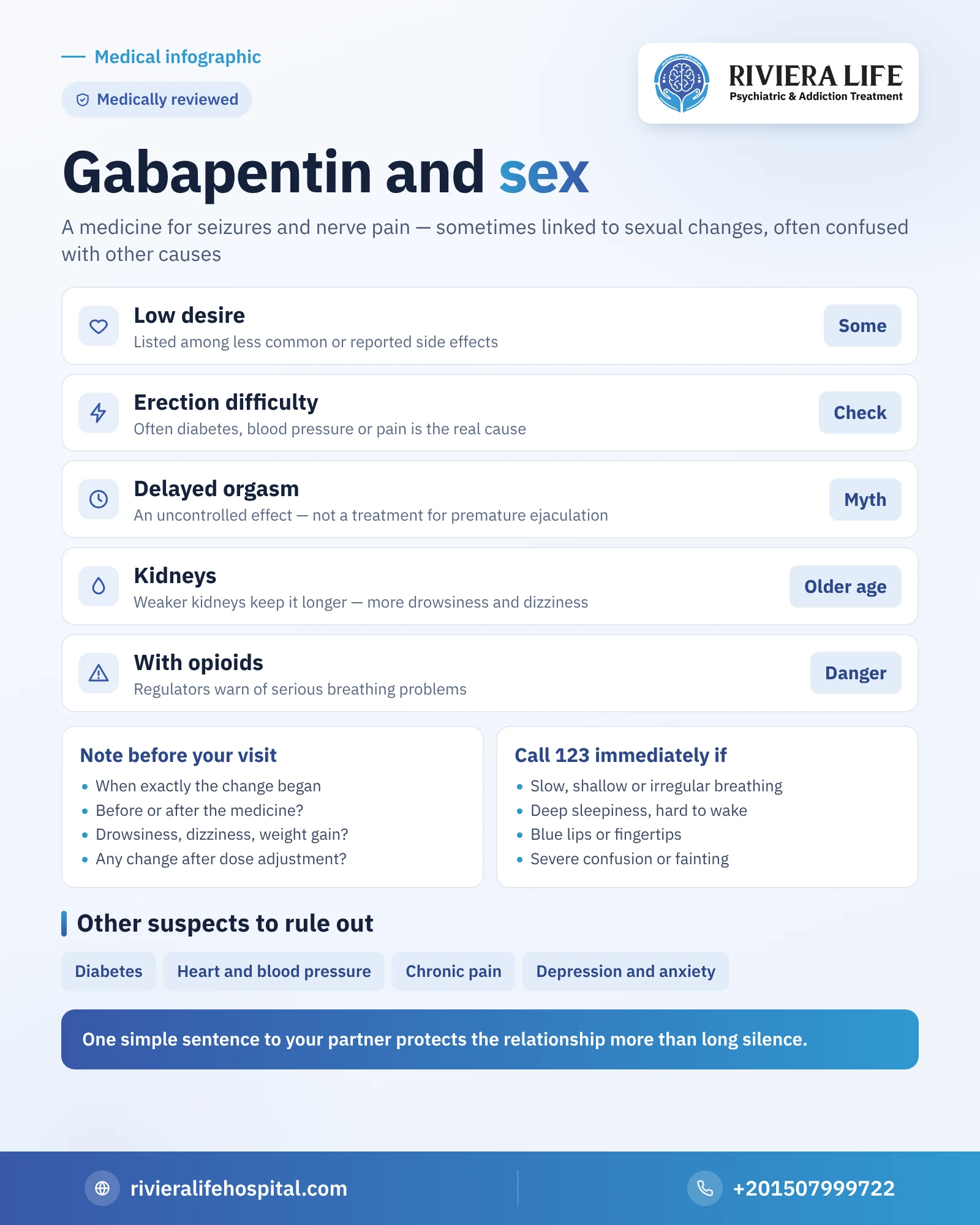
A notebook that makes the conversation with your doctor easier
Many patients are too embarrassed to raise the subject, so they leave the clinic after five minutes without mentioning it. Simple notes written before the visit help: when exactly did you notice the change? Did it start after the medicine or before? Does it come with drowsiness, dizziness or weight gain? And did anything change after the doctor adjusted the plan? With these answers, an embarrassing question becomes medical information the doctor can work with, and they may refer you to an andrologist or endocrinologist if needed.
Women taking gabapentin
Nerve medicines are prescribed to many women after the age of forty for nerve pain, headache or other symptoms. Some may notice low desire or difficulty reaching orgasm, and these symptoms overlap with perimenopausal changes, dryness of the tissues and mood swings. Don’t stay silent out of embarrassment: doctors deal with these complaints every day, and the solution may be a different treatment that has nothing to do with the nerve medicine.
Talking as a couple: what is said and what is understood
When one partner’s behavior changes without explanation, suspicion runs fast: they don’t care any more, there is someone else, or it’s my fault. But if the partner knows that a medicine or an illness is behind the coolness, the whole conversation shifts from accusation to sharing a solution. A simple sentence is enough: “I’m taking a medicine that can affect desire, and I’ll ask the doctor”. It protects the relationship more than a long silence. Some couples need a short counseling session to restore warmth before any change in medication.
When gabapentin is used outside a prescription
Some people who use opioids and tramadol turn to gabapentin because it magnifies the effect of other substances or eases withdrawal anxiety, and others take it in amounts above what was prescribed in search of relaxation. In this picture the calming becomes deeper and sensation weaker, and the emotional relationship declines before the physical one, because the person becomes preoccupied with the medicine and distant from their partner. It is in no way a sign of sexual strength, but of dependence that needs an assessment. You will find the steps in gabapentin addiction treatment.
Combining it with opioids and alcohol
Regulators have issued warnings about serious breathing problems with gabapentin, especially in older people and those with lung disease, and in those who take it with opioids, sedatives or alcohol. The danger isn’t limited to one night, but it doubles when a person falls asleep after mixing these substances. And there is no such thing as a safe “boosting mix”: adding a sexual stimulant to a medicine that causes dizziness can lower blood pressure and increase dizziness and fainting.
Call an ambulance immediately on 123 if you see
After gabapentin alone, or with opioids, alcohol or sedatives.
- Slow, shallow or irregular breathing, or unusual snoring
- Deep sleepiness that is hard to wake from
- Blue lips or fingertips
- Acute confusion or loss of consciousness
Don’t stop the medicine on your own
Stopping gabapentin suddenly after long use can cause insomnia, anxiety, sweating and nausea, and may raise the risk of seizures in people with epilepsy, which is the greatest risk. The doctor may suggest a gradual reduction, a change of medicine, or treating the other cause. The decision is theirs alone, because they know why the medicine was prescribed. The withdrawal warnings are in gabapentin withdrawal symptoms.
Will sexual life return to how it was?
If the medicine is the cause, improvement is common after the plan is adjusted or the medicine is stopped in an organized way, but it comes gradually, not in days. And if the cause is diabetes, blood pressure or pain, improvement comes through controlling those illnesses themselves. In both cases, regular sleep, light movement the doctor allows, and frank conversation between partners that removes misunderstanding all help. Many partners interpret the coolness as emotional coldness when it is the effect of an illness or a medicine.
When does it become a case for treatment?
If you have started taking gabapentin without a prescription, increased the amount yourself, can’t sleep without it, or combine it with tramadol or an opioid, you are facing dependence that needs medical supervision. At Riviera Life, consultants in psychiatry and addiction treatment assess your case in complete confidentiality, and set a reduction plan that suits your original illness. The first consultation is free on +201507999722.
More from our gabapentin guide
- Gabapentin: the complete guide
- Pregabalin and sex
- Gabapentin withdrawal symptoms
- Gabapentin addiction treatment
Questions many people ask
It can happen in some patients according to drug references, but it isn't common, and diabetes, blood pressure or chronic pain is often the real cause.
It has no medical approval for this purpose. Any delay in ejaculation is an uncontrolled side effect that can turn into real difficulty ejaculating.
Don't stop it on your own, especially if you have epilepsy, because stopping suddenly can cause seizures and withdrawal symptoms. Tell your doctor so they can adjust the plan.
Some women may notice low desire or difficulty reaching orgasm; these symptoms overlap with pain and hormonal changes, and are worth discussing with the doctor.
Yes. Regulators have warned of serious breathing problems when it is combined with opioids, sedatives or alcohol, especially in older people.