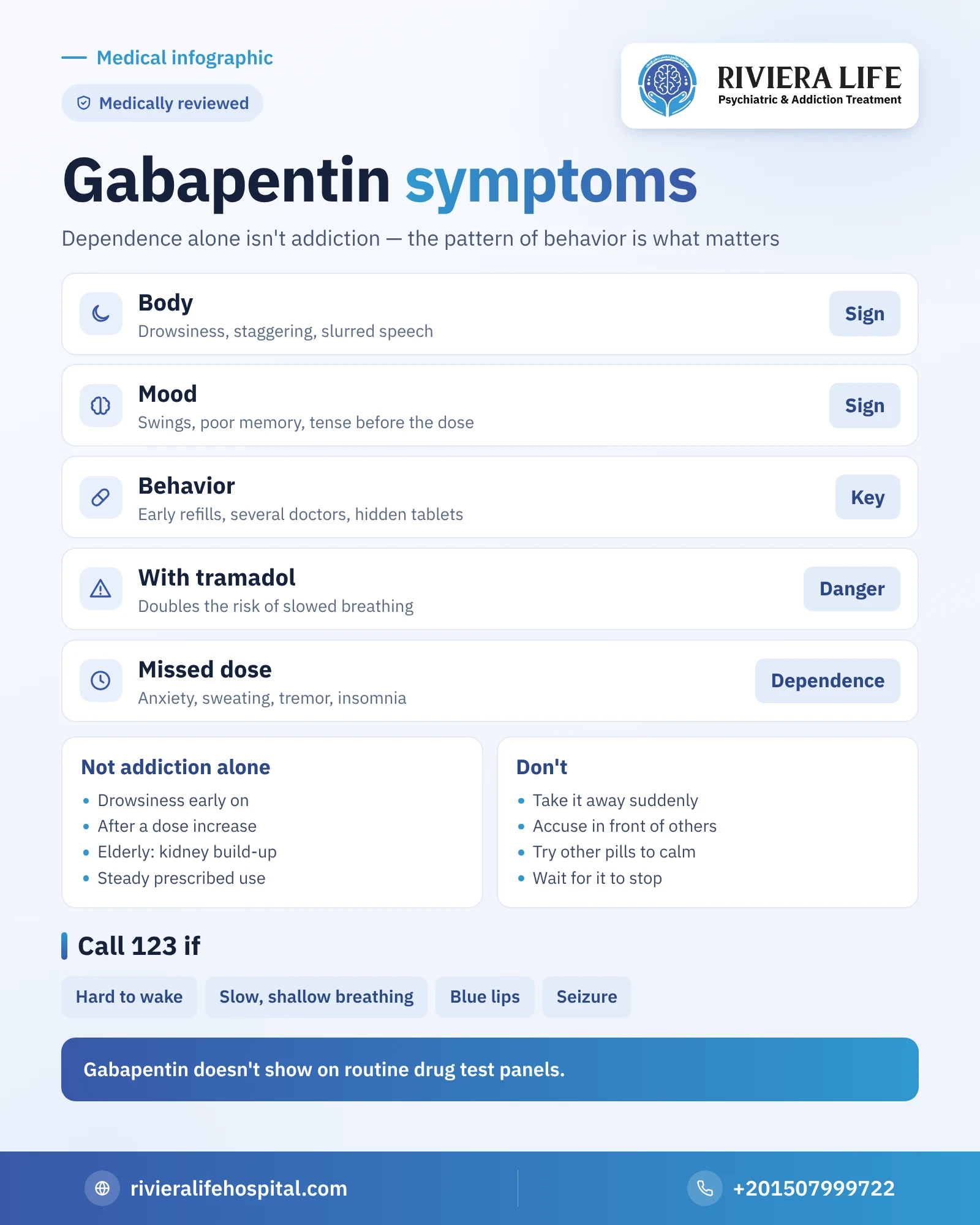
Gabapentin addiction symptoms usually start with changes in behavior before they show up in a test: drowsiness, unsteadiness and slurred speech, insisting on the medicine or asking for more than prescribed, running out of the pack before it should, and seeking prescriptions from more than one doctor. Suspicion grows if the medicine comes together with tramadol or opioids. But physical dependence alone doesn’t mean addiction; someone taking the medicine on a regular prescription may depend on it physically without misusing it. This article sets out the signs the family sees and tells them apart from ordinary side effects, and explains when asking becomes necessary.
Between dependence and addiction: a difference that changes how you talk
Many families are alarmed when they discover that their relative “can’t give up” a medicine a doctor prescribed. The truth is that the body gets used to gabapentin after weeks of regular use, and stopping suddenly causes symptoms, without the person being addicted. Addiction means another pattern: compulsive use despite harm, loss of control over the amount, and preoccupation with the medicine at the expense of life. That is why one sign isn’t enough to judge; a picture forms from several signs over weeks. And if you want to understand the medicine from the start, begin with the gabapentin guide.
Physical signs that can be noticed
These signs appear clearly when the amount exceeds what the body needs:
- Drowsiness that catches the person in the middle of a conversation, in front of the television or at work.
- An unsteady walk like someone who has drunk alcohol, without the smell of alcohol.
- Slow or slurred speech, and heavy eyes or a slight jerking in them.
- Dizziness on standing, and unexplained falls or bruises.
- Swelling in the feet, and noticeable weight gain over months.
- Tremor or mild muscle twitching.
These signs in themselves don’t prove addiction, but they say the medicine exceeds the body’s need or is building up, and both deserve a medical consultation.
Psychological and mood signs
At first many describe “relief”, calm, a mild high or a feeling of warmth, then the picture changes. The family may notice mood swings between exaggerated cheerfulness and flatness and irritability, emotional dullness, difficulty remembering and losing the thread in the middle of a conversation. Anxiety and insomnia intensify when the medicine’s time is late, so the person looks tense and hurried and then suddenly calms after taking it. Sharp irritability or sad thoughts may appear. If talk of hopelessness recurs, seek a psychiatrist’s help without delay, and don’t treat it as just a medicine effect.
Behavioral signs: what behavior says before the body
Here lies the real distinction between medical use and misuse:
- Running out of the pack early: with repeated excuses such as losing it, travel, or that the medicine “was weak”.
- Several doctors and pharmacies: asking for similar prescriptions from more than one place.
- Insistence and tension when the medicine is missing: clear anxiety if they don’t find it in the bag or drawer.
- Keeping a stock and hiding tablets: in the car, a pocket or empty boxes.
- Taking it for reasons other than the prescription: to sleep, to calm down or “for a high”.
- Failed promises: saying they will cut down, then going back to the previous amount.
Gabapentin with tramadol: a sign worth stopping at
In Egypt, gabapentin doesn’t come alone in many cases. Some people take it to strengthen tramadol’s effect or to ease the time of withdrawal from it, so at home they look unusually drowsy while opioid substances are around them. This combination is what raises the risk, because the two medicines together multiply the suppression of breathing. If you see the tablets together, or notice that their drowsiness increases after tramadol doses, the matter goes beyond symptoms of addiction to a direct danger. Linked to this is the article on tramadol addiction symptoms for those who want to know its different signs.
What does an ordinary day look like for someone addicted?
They wake late and heavy, and start their day by asking about the medicine before anything else. They work slowly and forget appointments, and are often absent or making excuses. In the evening they improve and become livelier as soon as they take what they need. Then their interest in the family and hobbies fades, and spending on anything other than the medicine shrinks. This repeated picture doesn’t come from weakness of character, but from a brain that has adapted to a substance that modifies its activity, and life now revolves around it. For a deeper understanding of the brain in this state, you can read GABA and addiction.
Does all drowsiness after gabapentin mean addiction?
No, and this is what doctors often reassure families about. Drowsiness and dizziness are known side effects of the medicine, and appear in people who don’t misuse it at all, especially in the first weeks or after the amount is increased by the doctor’s decision. What is worrying is the pattern: symptoms increasing without a clear medical reason, with behavior revolving around the medicine, such as asking for more, hiding it or lying about the amount. And if the relative is elderly, don’t assume addiction first; build-up of the medicine due to weak kidneys is more likely, and its treatment is completely different.
The picture in teenagers and young people
In younger people the features may differ. Some get the tablets from friends or non-medical sources, so there is no prescription and no doctor. The young person looks absent-minded and falling behind in study, their mood swings, they go out less, and their pocket money disappears quickly. They may mix the tablets with other substances to boost the effect, and here the risk rises a lot. Calm dialogue at this stage is more useful than punishment.
Withdrawal signs when a dose is missed
Among the indirect signs of dependence is that symptoms appear on the person when a dose is late: anxiety, sweating, tremor, insomnia, nausea and severe tension, which then go away after taking the medicine. This cycle shows that the body now needs the substance to feel normal. The details of the symptoms, their timing and their risks, including seizures, are in gabapentin withdrawal symptoms, and trying to stop suddenly at home is never advised.
Danger and overdose signs
Call an ambulance on 123 immediately if you see
The danger multiplies if the person combines gabapentin with tramadol, codeine, alcohol or sedatives.
- Severe drowsiness or difficulty waking them
- Slow, shallow or irregular breathing
- Blue lips or fingers
- A seizure or loss of consciousness
- Severe confusion where they don’t recognize the place or people
What shouldn’t you do when you suspect?
- Don’t take the medicine from them suddenly or throw it away; stopping suddenly can be dangerous.
- Don’t start with accusations and searching in front of others; shame pushes them to hide more.
- Don’t mix gabapentin with other pills by trial to calm them.
- Don’t wait for them to “have enough” and stop on their own.
It is better to choose a calm time and talk about specific events you saw yourself, then offer to go with them to a doctor. If the medicine is prescribed for them, the treating doctor is the first to be told.
Where does the assessment start?
The doctor asks about the reason for the prescription, the actual amount and accompanying substances, and examines the kidneys, breathing and psychological state. They may request tests, bearing in mind that gabapentin doesn’t show on routine panels, as explained in the article on how long gabapentin stays in the body. The harms to the body over time are explained in the article on the harms of gabapentin, and the recovery steps are in gabapentin addiction treatment.
At Riviera Life, your family can speak to a consultant in psychiatry and addiction in complete confidentiality and without commitment, through a free first consultation on +201507999722.
More from the gabapentin guide
- Gabapentin: the complete guide
- The harms of gabapentin
- Gabapentin withdrawal symptoms
- Gabapentin addiction treatment
Questions many people ask
Drowsiness, unsteadiness and slurred speech, with behavior revolving around the medicine: running out of the pack early, several doctors, hiding tablets, and anxiety when it is missing.
No, physical dependence can happen in someone who sticks to the prescription, while addiction is compulsive use despite harm and loss of control over the amount.
Yes, though its risk is lower than opioids and benzodiazepines, and the likelihood rises in those with a history with other substances or who combine it with tramadol.
Because the medicine calms the nervous system and affects balance and speech, so an unsteady walk and slow speech appear with large amounts, without the smell of alcohol.
Talk to them calmly about specific events, don't take the medicine away suddenly, and offer to go with them to a doctor to assess the case.