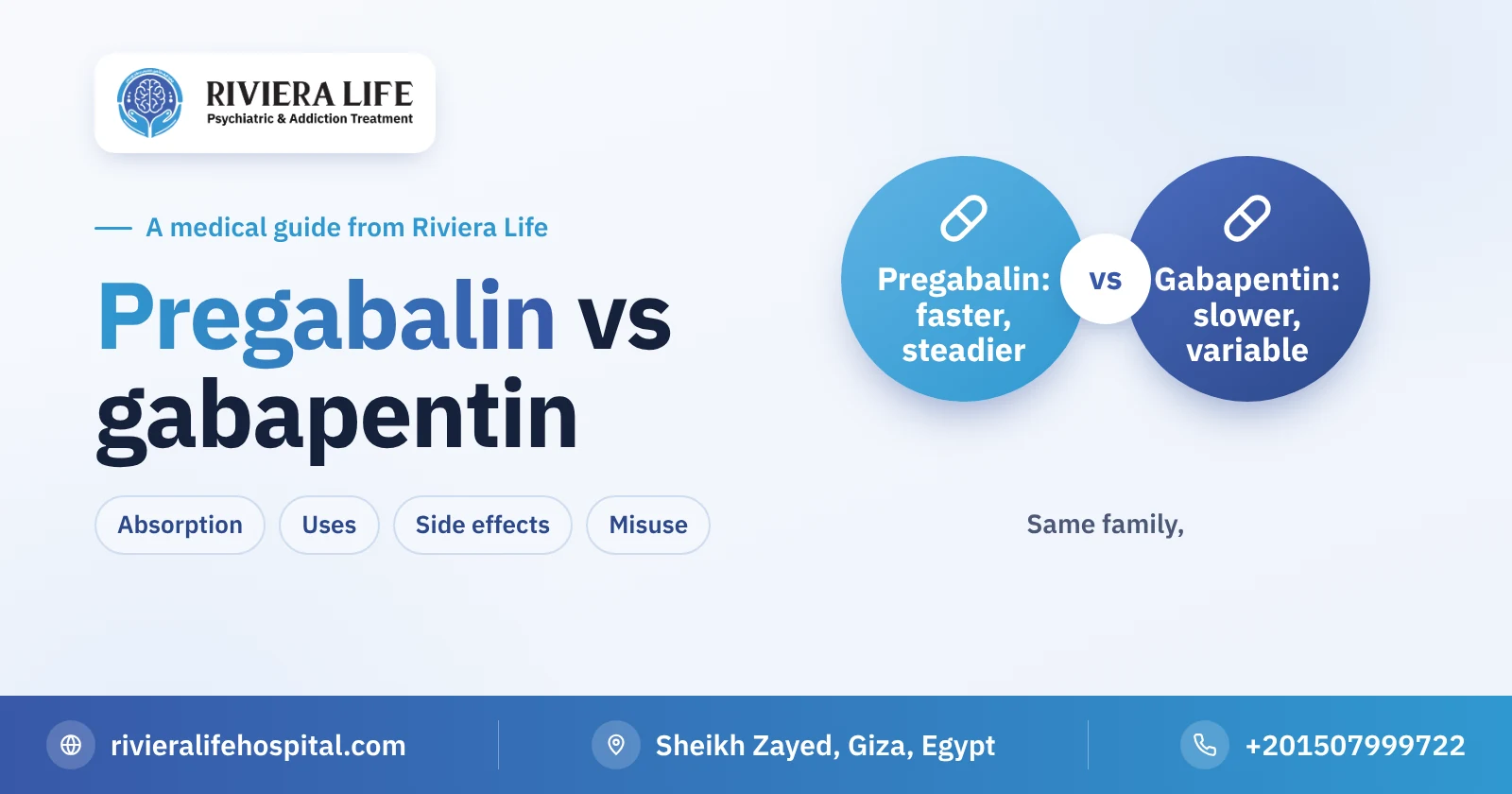
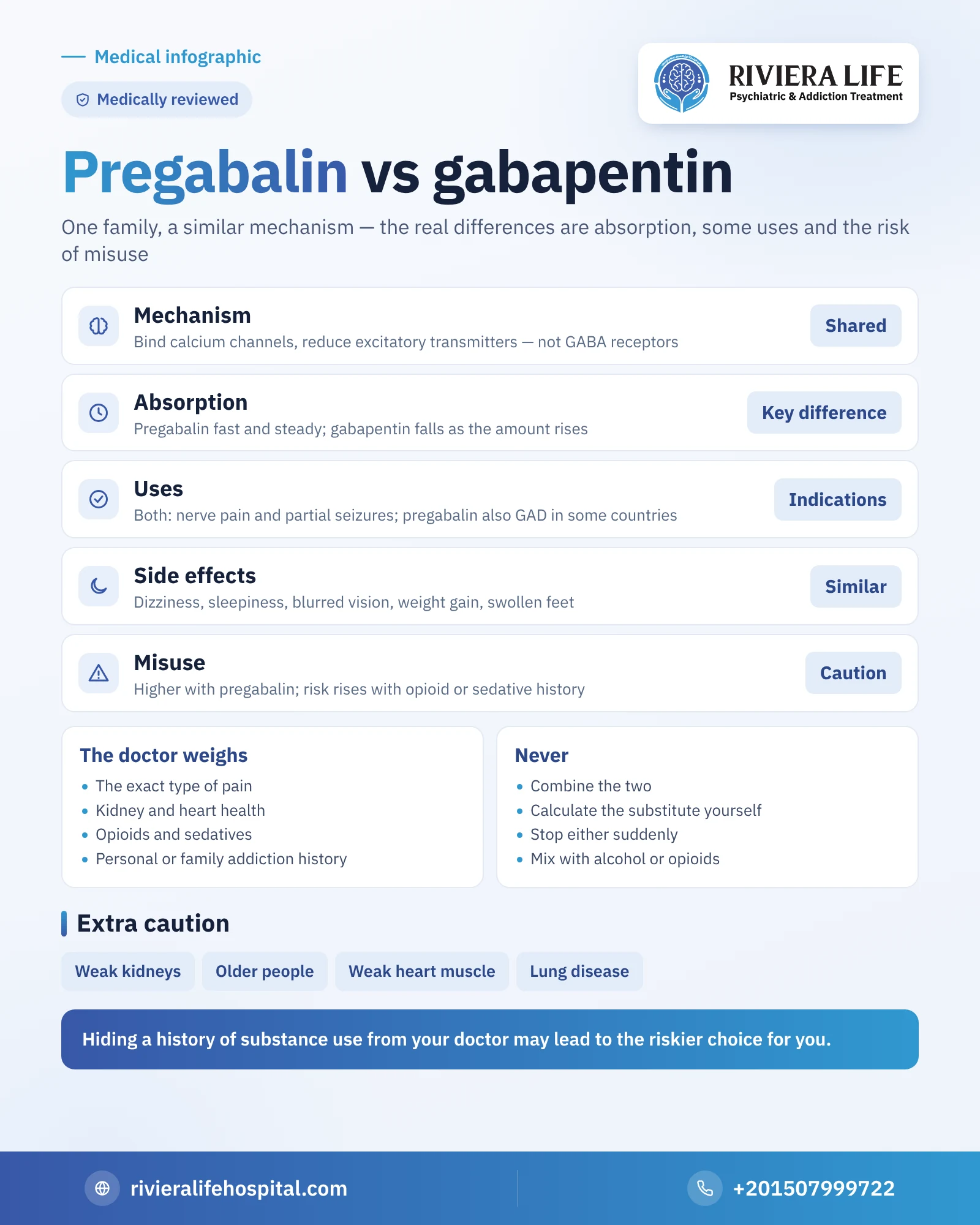
Pregabalin and gabapentin are two medicines from the same family that work by a similar mechanism and are often prescribed for nerve pain and epilepsy, which is why many people think they are the same medicine under two names. The real difference between them lies in the speed of absorption and the steadiness of the effect, in some approved uses, and in the potential for misuse, which seems higher with pregabalin. There is no absolutely “better” medicine: the choice depends on the type of pain, kidney health, other medicines and the patient’s history with sedatives and drugs. This article explains the similarities and differences in clear language, without any doses, because setting and adjusting them is your doctor’s decision alone.
The difference between pregabalin and gabapentin at a glance
| Comparison | Pregabalin | Gabapentin |
|---|---|---|
| Common brand names | Lyrica, Lyrolin | Neurontin |
| When it appeared | Relatively newer | A few years older |
| Absorption from the gut | Fast and almost steady whatever the amount | Falls relatively as the amount rises |
| Onset of effect | Faster | Slower and less predictable |
| Shared uses | Nerve pain and partial seizures | Nerve pain and partial seizures |
| Additional use in some countries | Generalized anxiety disorder and fibromyalgia | Other off-label uses decided by the doctor |
| Potential for misuse | Relatively higher | Lower, but present |
| How it leaves the body | Through the kidneys, largely unchanged | Through the kidneys, largely unchanged |
One family and a similar mechanism
The two medicines belong to a group called the “gabapentinoids”. Although their structure resembles GABA, the brain’s natural calming substance, they don’t act directly on its receptors as Xanax and similar medicines do. What they do is bind to part of the calcium channels in nerve cells, reducing the release of excitatory transmitters such as glutamate. The result is calming of overexcited nerves: less nerve pain, fewer seizures, and a feeling of relaxation in some patients.
This similarity in mechanism explains the closeness of their side effects, and also explains why they aren’t usually combined: combining them doesn’t add a new treatment, but doubles dizziness, sleepiness and the risk of falls.
Absorption and speed of effect: the most important practical difference
The body absorbs gabapentin through a transporter in the gut with limited capacity. So when the amount increases, the absorbed amount doesn’t increase in the same proportion, and absorption varies from person to person. Pregabalin, on the other hand, is absorbed quickly, at a high and almost steady rate, and reaches its highest blood concentration in a relatively short time.
Therapeutically, this means pregabalin is easier to adjust and more predictable, and its pain-relieving effect usually starts sooner. But the other face of this advantage is that its fast arrival in the brain gives some people a feeling of euphoria or a “light head”, and this is exactly what makes it more attractive to those who misuse it.
What is each used for?
Approved uses differ slightly between countries, but the general picture is as follows:
- Nerve pain: such as nerve pain caused by diabetes, and the pain that follows shingles. Both medicines are used here, and the doctor chooses according to response and tolerance.
- Epilepsy: both are an add-on treatment for partial seizures, meaning they are added to another medicine rather than replacing it.
- Generalized anxiety disorder: pregabalin is approved for it in Europe and other countries, and isn’t usually the first choice. The details are in our article on pregabalin and anxiety.
- Fibromyalgia: pregabalin is approved for it in some countries.
Gabapentin is sometimes prescribed for other off-label conditions, a decision the doctor makes after assessment, not something to try on the advice of a friend or a pharmacy.
Side effects: great similarity and differences in degree
Because of the shared mechanism, the complaints are largely similar. The most common are dizziness and sleepiness, then blurred vision, difficulty concentrating, increased appetite and weight, and swelling of the feet and ankles. These effects usually appear in the first weeks or when the dose is raised, and many ease with time.
Some patients notice that one medicine suits them better than the other: one tolerates gabapentin without noticeable sleepiness and complains of pregabalin, or the reverse. This individual difference is real, which is why the doctor increases gradually and monitors. The more severe effects, such as mood changes, difficulty breathing or swelling of the face, have a separate article: the side effects of pregabalin.
Which is more prone to misuse and addiction?
For years gabapentin was considered a medicine that doesn’t cause addiction, then it became clear that some people misuse it too. Even so, medical reports suggest that pregabalin is more linked to misuse and dependence, which led many countries to tighten control over dispensing it. The risk increases clearly in those with a history of opioids, tramadol, sedatives or alcohol.
In the Egyptian reality in particular, pregabalin often appears in patients’ stories within “mixtures” with tramadol, hashish or captagon, or as an attempt to ease the withdrawal symptoms of another substance. The signs that use has turned into addiction, such as increasing the amount without consultation or having several sources for obtaining it, are explained in our article on pregabalin addiction symptoms.
The shared danger: combining with opioids and sedatives
Both medicines depress the nervous system, and when an opioid painkiller, tramadol, a sedative or alcohol is added, the risk of severe sleepiness and slowed breathing increases. International regulators have warned of serious breathing difficulties with these medicines, especially in older people, lung patients and those taking opioids. This risk isn’t specific to one medicine rather than the other, which is why your doctor must know everything you take, even what you consider an “ordinary painkiller”.
Can they be combined or switched?
The two medicines aren’t usually combined, because they work on the same target, so side effects double without meaningful benefit. Switching from one to the other is possible, and happens often when the patient doesn’t respond or can’t tolerate the side effects. But amounts aren’t equivalent between the two medicines, and the way of switching differs from case to case, so don’t try to calculate the “substitute” yourself. The doctor decides when the new medicine starts and how the old one is withdrawn.
Kidneys and age: when does the doctor need extra caution?
Both medicines leave the body through the kidneys almost as they entered. If kidney function is weak, they accumulate in the blood and their effects increase, so the doctor adjusts the plan according to the kidney function test result. Older people need special attention, because dizziness and sleepiness in them may mean a fall and a fracture. A weak heart muscle also calls for caution with pregabalin because of possible fluid retention, which is covered in our article on pregabalin and blood pressure.
Pregabalin or gabapentin: which suits you?
There is no single answer that fits everyone. Pregabalin may be preferred when a faster and more consistent effect is needed, or for a generalized anxiety patient for whom first-line treatments didn’t work. Gabapentin may be preferred when there is concern about misuse, or when it is cheaper and more readily available. In every case, the doctor weighs several questions:
- What exactly is the type of pain or condition?
- How are the kidneys and heart?
- What other medicines are taken, especially opioid painkillers and sedatives?
- Is there a personal or family history of addiction?
- Has either medicine been tried before, and what was the result?
An honest answer to these questions, especially the question of addiction, is what protects you. Hiding a history of substance use from the doctor may lead them to choose the medicine that is more dangerous for you without knowing.
Stopping either one needs a plan
Stopping pregabalin or gabapentin suddenly after regular use may cause insomnia, anxiety, nausea, sweating and headache, and may increase the risk of seizures in people with epilepsy. That is why stopping is gradual and under medical supervision. The stages of these symptoms and their duration with pregabalin are explained in our article on pregabalin withdrawal symptoms.
When does it become an addiction problem?
If you find yourself looking for the medicine outside a prescription, taking it for mood rather than pain, or mixing it with other substances, this is a sign that your relationship with the medicine has changed. At Riviera Life, consultants in psychiatry and addiction treatment assess these cases in complete confidentiality and set a safe withdrawal plan under round-the-clock medical supervision, and the first consultation is free. You can contact us on +201507999722, and learn the steps of the plan in our article on pregabalin addiction treatment.
More from our pregabalin guide
- Pregabalin: the complete guide
- The side effects and serious effects of pregabalin
- The causes of pregabalin addiction
- The difference between pregabalin and tramadol
- Gabapentin (Neurontin): the complete guide
- Gabapentin withdrawal symptoms: when they start, the risk of seizures and prolonged symptoms
- Tramadol vs gabapentin: mechanism, withdrawal and the risks of combining
- Lyrolin vs pregabalin: one brand name, one active substance
- Alternatives to pregabalin: medical options by reason for the prescription, and the risks of switching
Questions many people ask
No. They are two different medicines from the same family that work by a similar mechanism, but differ in the speed and regularity of absorption and some approved uses.
Pregabalin is absorbed faster and more consistently, so its effect seems clearer and faster for many people, but actual strength depends on the condition and response, and the doctor decides which suits.
They aren't usually combined, because they work on the same target, so sleepiness, dizziness and the risk of falls increase without additional therapeutic benefit.
It may be misused by some people, especially those with a history of opioid use, but its link with misuse is less clear than pregabalin's.
The switch is set by the doctor, because amounts aren't equivalent between the two medicines, and it isn't right to calculate the substitute or stop either suddenly without supervision.