Ketamine withdrawal symptoms are mostly psychological: a pressing craving for the substance, anxiety, low mood, exhaustion and disturbed sleep, and they may be accompanied by sweating, a slight tremor and palpitations in those who used heavily. They usually begin within about one to three days of the last use, intensify in the first week, then calm gradually, while craving and mood swings may continue for weeks or months. Ketamine withdrawal doesn’t usually threaten life like alcohol or sedative withdrawal, but its real danger is in the depression that may accompany it and in fast relapse. This article explains the expected timeline, what makes withdrawal harder, and how it is managed medically.
Why do withdrawal symptoms appear after stopping?
With repeated use the brain adapts to ketamine blocking glutamate signals, resetting its balance around the substance’s presence. When it suddenly disappears, the brain needs time to restore its old balance, so a period of disturbance in mood, sleep and energy appears. Added to that is a strong psychological factor: the person got used to dealing with his distress with the substance, so when it is absent he faces all his feelings at once without the tool he relied on.
Does ketamine have physical withdrawal?
Ketamine usually doesn’t cause the acute physical symptoms known in opioid withdrawal, such as severe diarrhea and bone pain. But heavy users sometimes mention milder physical symptoms: sweating, tremor, palpitations, a change in appetite and general exhaustion. Also, bladder and abdominal pain, which the substance was hiding with its painkilling effect, may become clearer in the first days after stopping, which needs medical care that mustn’t be neglected.
The timeline of ketamine withdrawal symptoms
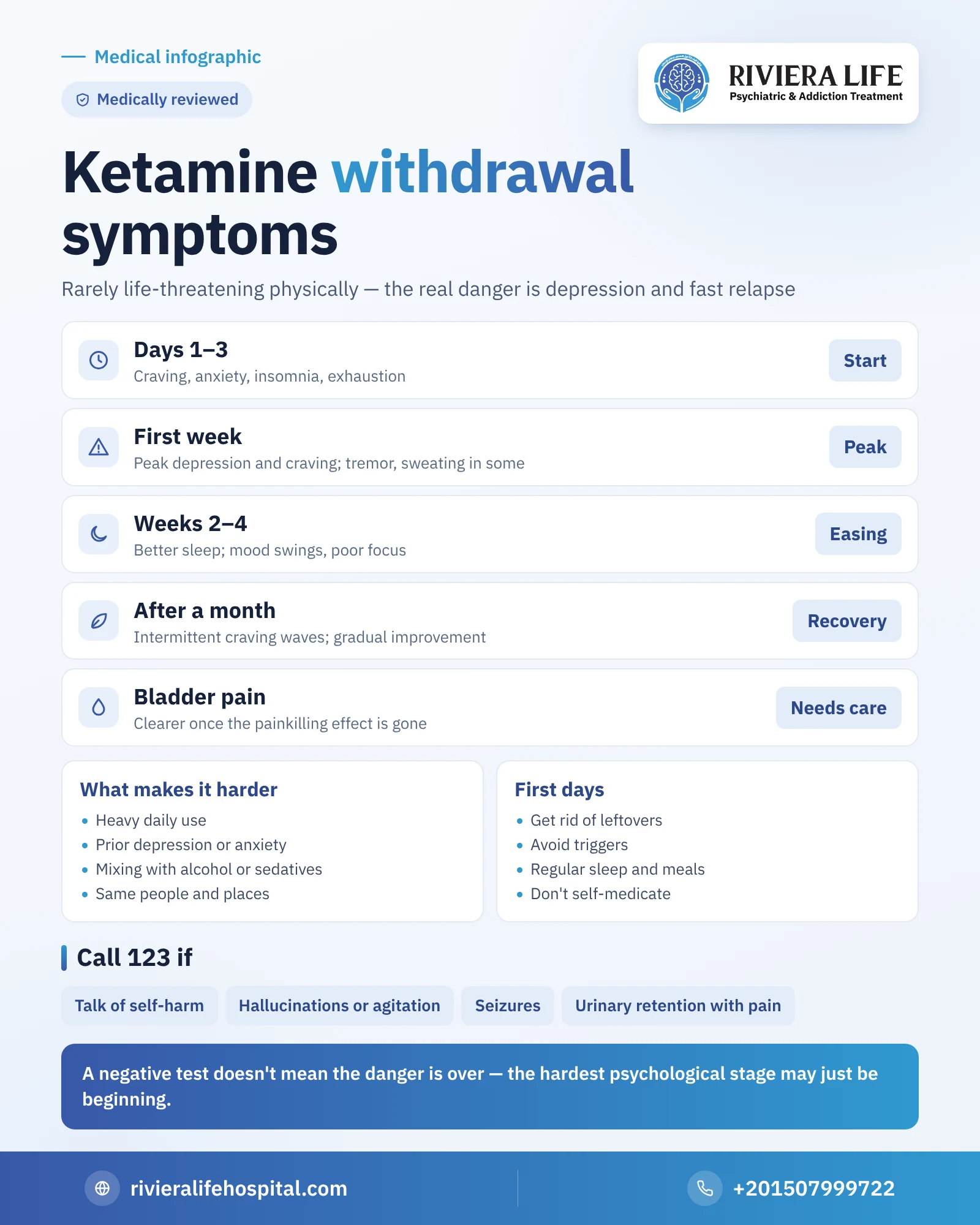
The details differ according to the amount and duration of use, but the general picture runs roughly as follows:
Day one to three
Craving for the substance starts to appear with anxiety, tension and irritability. Sleep is hard or broken, and the person feels exhausted and heavy. He may also notice urinary or abdominal pain clearer than usual.
The first week
This is usually the peak of symptoms. Low mood increases, loss of pleasure in anything may appear, and the pressing craving intensifies, especially at the times he used to use. In some heavy users tremor, sweating and palpitations may appear, and rarely suspicious thoughts or disturbed perception.
Weeks two to four
The physical symptoms usually calm, and sleep improves gradually, but mood swings and weak concentration may continue, and craving comes in waves triggered by places, people and feelings.
After the first month
Many regain a large part of their energy and concentration, but bouts of craving may return from time to time for months, and depression or anxiety may remain if they were present before use. This stage is what needs psychotherapy and regular follow-up.
An approximate table of symptoms
| Period | Most prominent symptoms |
|---|---|
| Day 1–3 | Pressing craving, anxiety, insomnia, exhaustion |
| The first week | Peak of depression and craving, tremor and sweating in some |
| 2–4 weeks | Improved sleep, mood swings, weak concentration |
| After a month | Intermittent waves of craving, gradual general improvement |
The psychological symptoms of withdrawal
- An intense, repeated craving to use, which may reach constant thinking about the substance.
- Depression, sadness and loss of pleasure.
- Anxiety, tension and irritability.
- Weak concentration and memory.
- In a few patients: suspicion or disturbed perception that needs urgent assessment.
Many patients are surprised that the hardest part of withdrawal isn’t the first days, but what follows when the feeling of crisis disappears and boredom sets in and ordinary life returns with all its pressures. In this period specifically the decision of “just once” is common, which is why following it up is an integral part of treating withdrawal, not a separate stage.
What makes withdrawal more severe or longer?
- Daily use in large amounts and for a long period.
- Having depression or anxiety before starting use.
- Mixing ketamine with alcohol, sedatives or other substances, so withdrawal is from more than one substance.
- Untreated bladder pain that pushes a return to the substance.
- Staying in the same environment and with the same friends.
- The absence of family support and medical follow-up.
Is ketamine withdrawal dangerous?
Withdrawal from ketamine alone rarely threatens life physically, but it has real risks. The first is depression, which in some patients may reach thoughts of self-harm, and the second is fast relapse in the first days. The biggest risk appears when the person is also dependent on alcohol or benzodiazepines, because withdrawal from these substances may cause seizures and dangerous conditions that shouldn’t be handled at home. That is why the doctor assesses all substances before deciding where detox takes place.
How is ketamine withdrawal managed medically?
There is no medicine approved specifically for ketamine withdrawal, so care relies on treating symptoms and following the patient closely. This includes regulating sleep, easing anxiety with short-term medicines the doctor decides on when needed, carefully following mood and starting treatment for depression if it appears. The urinary system is assessed at the same time, and pain is treated by safe means with the participation of a urologist. The patient also needs good nutrition and enough fluids, and psychotherapy starts early instead of waiting for withdrawal to end. The doctor decides whether the case needs a stay or can be followed as an outpatient, and the full plan is detailed in our article on ketamine addiction treatment.
Tips for the first days after stopping
- Get rid of any remaining amount of the substance and its equipment.
- Stay away temporarily from the places and people linked to use.
- Regulate sleep and meal times even if appetite is weak.
- Move daily, even by walking, as physical activity eases anxiety.
- Tell someone you trust what you are going through, and don’t face the first days alone.
- Don’t take sedatives or painkillers on your own to ease the symptoms.
Signs that call for the emergency department
Call an ambulance on 123 immediately if you see
Especially if the person is stopping alcohol or sedatives at the same time.
- Talk of self-harm or a wish to die
- Hallucinations, severe agitation or complete detachment from reality
- Seizures
- Urinary retention with severe pain
The substance leaving the body isn’t the end of withdrawal
Ketamine disappears from the urine within days in most cases, as our article on how long ketamine stays in the body explains, but the brain needs much longer to restore its balance. That is why a negative test result doesn’t mean the danger is over, but that the psychologically hardest stage may have just begun.
How does the family support its patient during withdrawal?
The first days after stopping are heavy for the patient and those around him. He may be irritable or silent or sleep for long, and may ask insistently to go out or for money. What helps here is calm and clarity together: no daily lectures about the past, and no giving up the basic agreements such as not giving money without a clear purpose. Encourage him to eat, move and keep medical appointments, watch his mood without besieging him, and take any talk of despair or death completely seriously. And remember that the family itself needs support, so asking for a consultation for members of the household is part of treatment, not a luxury.
How can Riviera Life help you?
At Riviera Life the patient is followed by a team of psychiatry and addiction treatment consultants around the clock during the withdrawal days, with special attention to mood, sleep and urinary health, in complete confidentiality. And the first consultation is free to determine the appropriate plan.
More from our ketamine guide
- Ketamine: the complete guide
- Ketamine addiction: how it develops
- Ketamine addiction treatment
- How long ketamine stays in the body
Questions many people ask
They usually begin within about one to three days of the last use, and usually peak in the first week.
The physical symptoms usually settle within one to two weeks, while craving and mood swings may continue for weeks or months.
It rarely threatens life physically, but the accompanying depression may be severe, and the matter becomes more dangerous if the person is stopping alcohol or sedatives at the same time.
There is no medicine approved specifically for it, and treatment relies on easing symptoms and following mood, sleep and urinary care under medical supervision.
The pain may become clearer in the first days with the absence of the substance's painkilling effect, and needs safe medical treatment so it doesn't become a reason to return to it.