Not everyone who has tried ketamine becomes addicted, and this is precisely what makes understanding the causes of ketamine addiction important. Addiction happens when the substance meets a person who has something pushing them back to it: psychological pain they want to silence, an environment that makes use normal, or a biological predisposition that makes the brain quicker to become attached to it. In the case of ketamine a special factor is added, which is the appeal of dissociation itself, that is, the feeling of distance from the body and worries. In this article we explain the first motives for use, the risk factors that turn it into addiction, and the factors that protect against it.
Why does ketamine attract some people in particular?
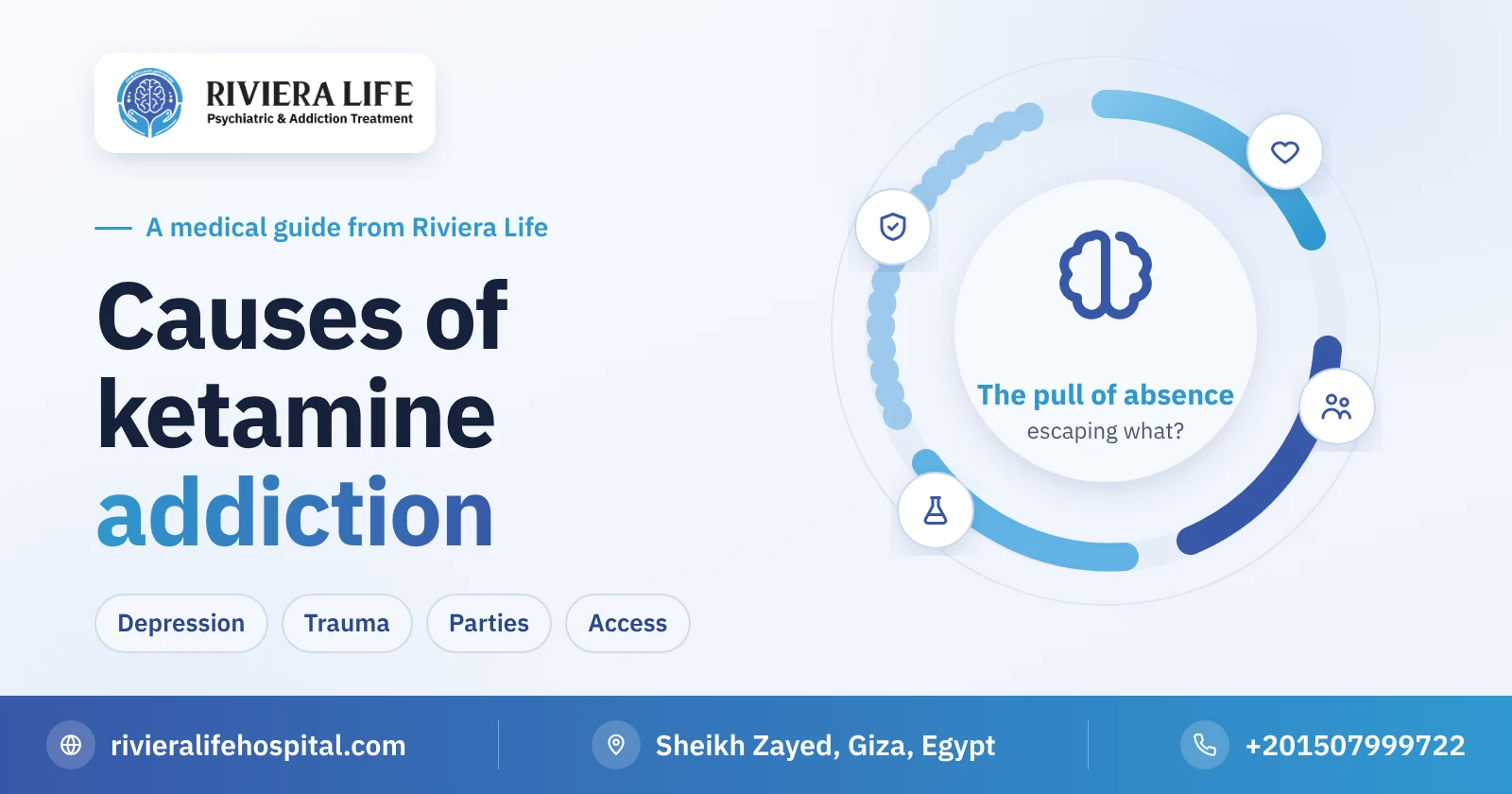
Stimulants give energy, opioids give warmth and comfort, but ketamine gives absence. Users describe a feeling that their problems have become distant, as if they are watching their life from outside. This feeling doesn’t attract everyone; many find it frightening and don’t repeat it. But it strongly attracts those living under pressure they can’t find a way out of, those with painful feelings they don’t know how to deal with, or those looking for an experience different from what they know. That is why the question about the cause of addiction often begins with another question: what was the person trying to get away from?
Motives for the first experience
Similar motives for the first time recur in patients’ stories:
- Curiosity, especially after hearing exciting descriptions of an “out-of-body experience”.
- Parties and nights out where ketamine is offered with other substances.
- Peer pressure and the desire to belong to a group.
- The belief that it is a medicine and therefore less dangerous than “real drugs”.
- The desire to escape the pressure of exams, work or a family problem.
These motives explain the experiment, but alone they don’t explain why one person stops after once and another continues for years.
Biological and genetic factors
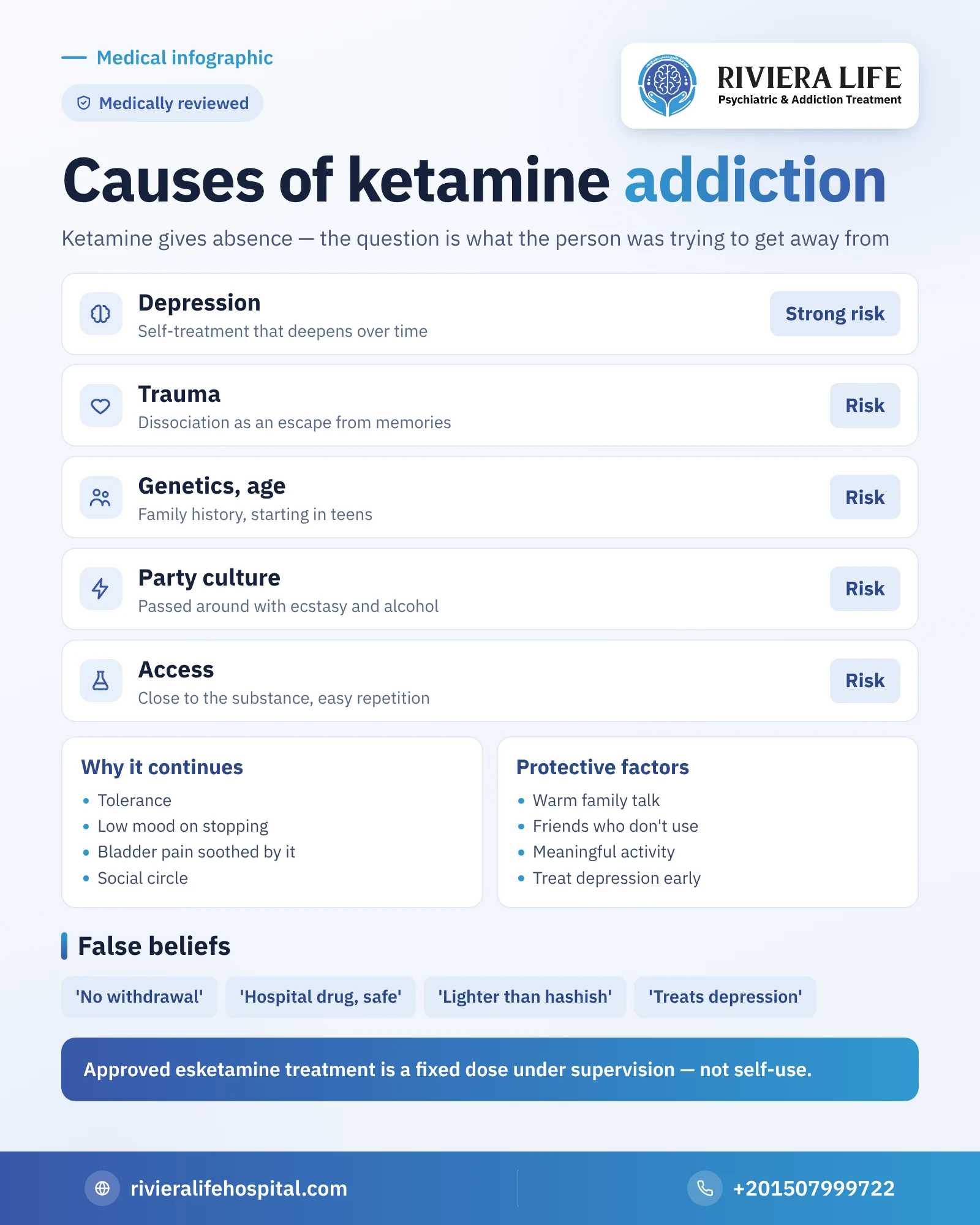
Studies on addiction in general indicate that genetics explains an important part of a person’s susceptibility to it, so having a father or brother suffering from addiction to any substance raises the risk. This doesn’t mean addiction is inevitable fate, but that some people are born with a reward system in the brain more responsive to substances, or with less ability to restrain impulsivity. Age also plays a clear role: the brain continues to mature until roughly the mid-twenties, and the areas responsible for judgment and self-control mature late, which is why someone who starts using in adolescence is more prone to it turning into addiction.
Depression and anxiety: seeking numbness
Among the strongest risk factors in ketamine addiction is the presence of depression or anxiety that hasn’t been diagnosed or treated. The person discovers that the substance eases their feeling of distress for hours, so without meaning to they start using it as a medicine for themselves. News about the use of esketamine in treating resistant depression has increased this confusion, so some young people thought that the ketamine in circulation was a treatment they could try themselves. The truth is that approved treatment is done with a known substance and a fixed dose under medical monitoring, while repeated self-use is linked to increased depression and anxiety over time, and adds addiction on top of them.
Trauma and painful experiences
People who have been through trauma in childhood, accidents or painful loss may find in the dissociation ketamine causes an escape from memories that haunt them. This often happens without awareness, as the person doesn’t link what they went through with what they are doing now. That is why good treatment cares about the patient’s whole history, not the substance alone.
The social environment and party culture
Ketamine is linked in many minds with late-night parties and loud music, where it is passed around with ecstasy, alcohol and hashish. In this environment use becomes normal behavior practiced by everyone, and refusing becomes the exception. Social media also plays a role in presenting softened images of the substance. And the more a person’s social life is tied to these settings, the harder it is for them to stay away from the substance without losing their friends. Ketamine is often combined with ecstasy, so attachment forms to more than one substance together.
Closeness to the substance and easy access
The closer the substance, the greater the risk. That is why workers in some medical and veterinary professions where ketamine is handled are more prone to misusing it than others, a known phenomenon that pushes health institutions to tighten control over these medicines. The same applies to anyone in whose close circle ketamine is available, as ease shortens the distance between the idea and the act, and makes repetition easier than stopping.
Previous use of other substances
Someone who has previously used other substances regularly, such as hashish, alcohol or stimulants, is more likely to try ketamine and become attached to it. The psychological barrier against drugs has already fallen, and the social circle provides access to it. These people need an assessment covering all substances, because treating one substance while neglecting the others leaves a door open to relapse.
Why does use continue despite the harm?
After addiction begins, new reasons appear that keep it going. The first is tolerance, which pushes the amount up, and the second is anxiety and low mood on stopping. The third is a reason specific to ketamine: the bladder pain it causes, which the patient soothes with the substance itself so it gets worse. Understanding this loop helps the family see continuing as an illness that needs treatment, not stubbornness. The details of this path are in the article on ketamine addiction.
False beliefs: an invisible cause
Some causes of addiction lie neither in the person nor in their environment, but in their ideas about the substance. Someone who believes ketamine doesn’t cause addiction because it “doesn’t cause withdrawal”, or that it is safe because it is used in hospitals, or that it is lighter than hashish, automatically lowers their caution and allows themselves a repetition they wouldn’t allow with a substance they fear.
These beliefs grow stronger when they come from a close friend or from posts talking about “spiritual” or “therapeutic” experiences. Correcting these ideas early, with calm medical information and not exaggerated scare tactics, is among the simplest and most effective means of prevention with young people. You will find the basic facts about the substance on the ketamine page.
Who is most at risk of ketamine addiction?
- Young people in late adolescence and their twenties.
- Those with untreated depression, anxiety or trauma.
- Those with a family history of addiction.
- Those who frequent parties and nights out where substances are passed around.
- Those already using other substances.
- Those working in environments where access to the substance is easy.
The presence of one factor from this list doesn’t mean addiction is coming, but several factors coming together in the same person deserve early attention and open dialogue before the experiment begins.
Factors that protect against ketamine addiction
Against the risk factors there are real protective factors: a warm family relationship in which the son can talk about his problems without fear, friends who don’t use, involvement in a meaningful activity such as sport, work or study, skills for dealing with stress, and early treatment of any depression or anxiety. These factors don’t always prevent the experiment, but they greatly reduce the likelihood that the experiment turns into addiction.
How does the family deal with these causes?
Understanding the causes doesn’t mean justifying use, but means knowing where to put your effort. If depression lies behind the use, treating it is an essential part of the solution. If the social environment is the driver, what is needed is building alternatives, not just prohibition. Ask open questions about his life and pressures, and listen more than you talk. And if signs of actual use appear, review the article on ketamine addiction symptoms, and learn about the steps of treatment in the article on ketamine addiction treatment.
More from the ketamine guide
- Ketamine: the comprehensive guide
- Ketamine addiction: how it develops
- The harms of ketamine
- Ketamine addiction treatment
Questions many people ask
No, but the likelihood of addiction rises with repetition and the presence of risk factors such as untreated depression, a family history of addiction or an environment where use is common.
Because it gives a temporary feeling of distance from distress, so it turns into self-treatment, while repeated use increases depression over time.
Genetics raises susceptibility to addiction in general, but doesn't decide the matter alone, as environment and psychological state play a strong part.
Ketamine is often passed around at parties with other substances, so use becomes normal behavior within the group and refusing becomes difficult.
With a relationship in which he can talk without fear, correct information about the substance, involvement in meaningful activities, and early treatment of any anxiety or depression.