Ketamine addiction symptoms don’t resemble the stereotypical image of an addict. The person may seem normal most of the day, then you notice a vacant stare and slow speech after they come back, or you see them going to the bathroom every half hour and complaining of burning when urinating. What most distinguishes this addiction is three groups of signs: urinary symptoms and abdominal pain, a decline in memory, concentration and mood, and behavior that tends towards isolation, secrecy and unexplained spending. In this article we arrange these signs so the family can distinguish between what calls for attention and what calls for urgent action.
Signs of the immediate effect or symptoms of addiction?
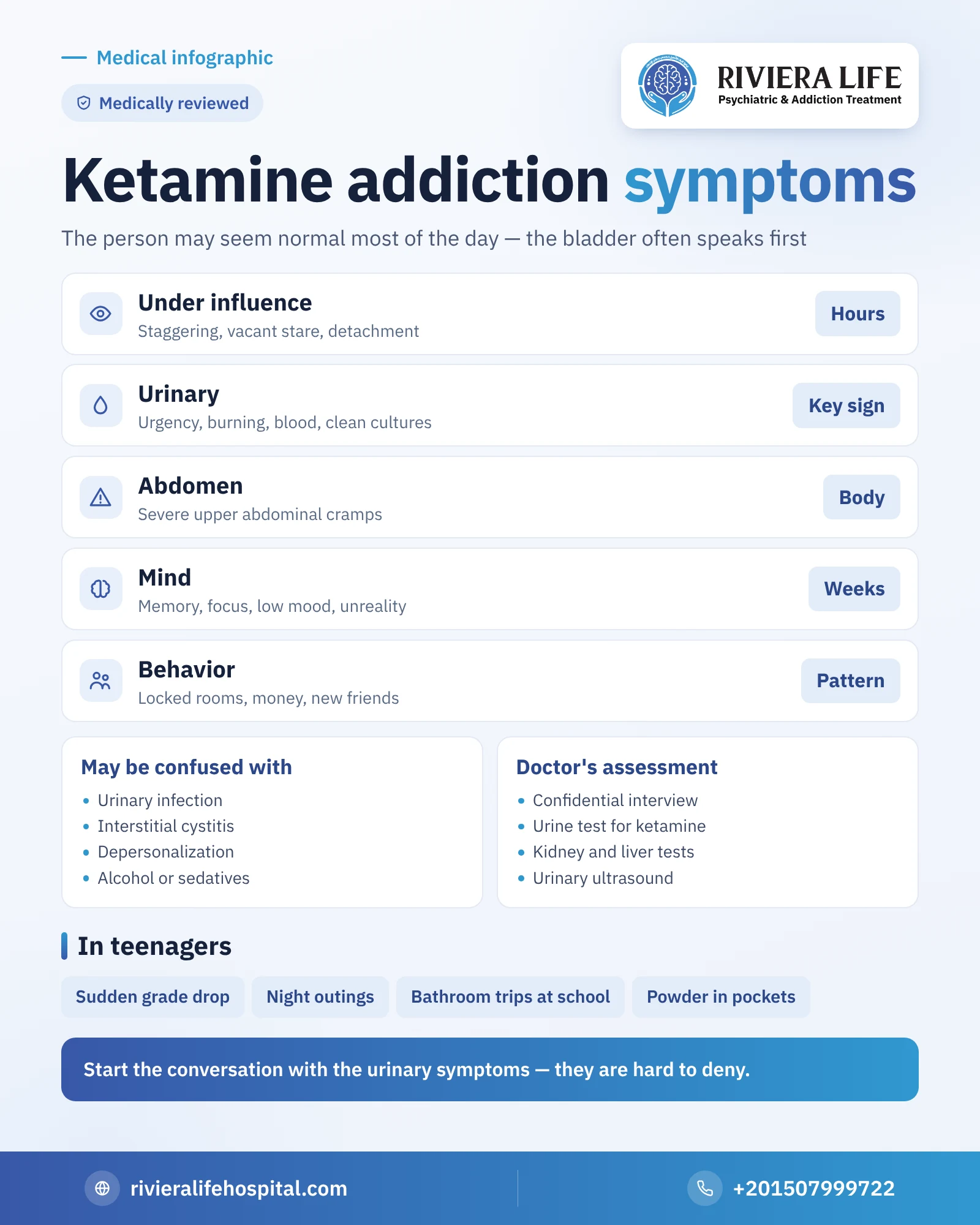
It is important to distinguish between two types of signs. The first appears during the effect itself and disappears within hours: staggering when walking, wandering eyes or involuntary movement in them, broken speech, slow response, clear detachment from what is going on around them, and sometimes nausea and vomiting. The second accumulates over weeks and months and remains even on days of not using: bladder problems, weak memory, and changes in mood and relationships. The first type tells you that the person has used, while the second tells you that use has become a way of life.
Physical symptoms of ketamine addiction
- A frequent and urgent need to urinate, night and day, with small amounts each time.
- Pain or burning during urination, and sometimes visible blood in the urine.
- Bouts of severe pain in the upper abdomen, which some users call “K-cramps”.
- Loss of appetite and weight loss, with recurrent nausea.
- Bruises and wounds the person doesn’t remember getting, due to reduced sensation of pain during the effect.
- Nasal congestion or recurrent nosebleeds in those who snort it.
- Constant fatigue and disturbed sleep.
Urinary symptoms: a signal often neglected
What most distinguishes ketamine addiction from others is that the bladder speaks before any other organ. It usually begins with a slight increase in the number of times of urination, then turns into an urgency that can’t be postponed, and may reach leaking of urine.
Many patients are initially diagnosed with an ordinary urinary tract infection and take antibiotics time after time without improvement, because the urine culture usually comes back free of bacteria. If these symptoms recur in a young person in their twenties or thirties with no clear cause, it is wise to ask calmly about ketamine. What happens inside the bladder and kidneys is explained in the article on the harms of ketamine.
Psychological and mental symptoms
Repeated use of ketamine affects the brain’s daily functions, so the family or colleagues notice:
- Repeated forgetting of appointments and recent conversations, and difficulty keeping up with study or work.
- Poor concentration and slow thinking even on days of not using.
- Low mood and loss of interest in what they used to love.
- Anxiety, tension and quick irritability, especially when the substance isn’t available.
- A feeling of detachment from oneself or that the world isn’t real, sometimes continuing outside times of use.
- In some heavy users: suspicion of others, strange thoughts or hallucinations.
Behavioral symptoms
Behavior is often the first thing that catches the family’s eye, even before the body:
- Long absences in the bathroom or a locked room, and coming back with a vacant stare.
- Repeated late nights and new friends the family doesn’t know.
- Repeated requests for money without a convincing explanation, or things disappearing from the house.
- A decline in study or work, and repeated absence.
- Isolation and withdrawal from family gatherings, with extreme sensitivity to any question.
- Using alone after it had been linked only to nights out.
Not all these signs necessarily mean addiction, but three or four of them appearing together for more than a few weeks, especially with urinary symptoms, makes it likely there is something that deserves examination.
Traces you may find at home
The family may find small plastic bags with remains of white powder, cards and papers rolled into a tube, or small glass bottles unrelated to any known treatment in the home. The presence of these things doesn’t prove the type of substance, as white powder may be ketamine or another substance. But they are sufficient reason for a calm conversation and a specialized consultation, not for daily searches that turn the home into a battlefield.
How do the symptoms change with longer use?
In the first months the signs are intermittent: nights out, fatigue the next day, and mood swings explained by the pressure of study or work. With continued use the urinary symptoms become fixed, sleep decreases and mental performance clearly declines. In advanced stages the person may use daily to relieve the bladder pain itself, abdominal pain increases, and their life becomes organized around the substance. The article on ketamine addiction explains how this move from one stage to another happens.
Symptoms that may be confused with other conditions
Some ketamine symptoms resemble other medical conditions, so it isn’t right to judge from a single sign:
- Urinary symptoms resemble a urinary tract infection or interstitial cystitis.
- Spacing out and detachment may be thought to be a psychological disorder such as depersonalization disorder.
- Staggering and slurred speech may be confused with the effect of alcohol or sedatives.
- Suspicion and hallucinations may resemble the beginning of a psychotic disorder.
The doctor is the one who gathers these threads into a single picture.
Ketamine symptoms in teenagers and students
In a teenager the signs of use may get mixed with the natural fluctuations of age, but some details deserve attention: a sudden drop in grades or repeatedly forgetting what they studied, requests to go out at night or stay over with new friends, a smell or remains of powder in clothes pockets, and repeatedly asking to go to the bathroom at school with complaints of abdominal pain.
Teachers may also notice clear spacing out or slow response in class. These signs together with a change of friends and isolation at home deserve a calm conversation with the son, then a specialized consultation without waiting for conclusive proof, as intervention at this age is far more successful than years later.
How does the doctor assess the case?
The assessment begins with a calm, confidential interview with the patient, then with the family if they agree, about the pattern of use, other substances, and psychological and physical symptoms. The doctor usually requests a urine test that includes ketamine specifically, because common tests don’t always detect it, and you will find the details in the article on how long ketamine stays in the body. The patient may also need kidney and liver function tests, a general urine test, and an ultrasound of the urinary tract to assess the bladder and kidneys. These tests don’t only confirm the addiction, but determine the extent of damage that needs parallel treatment.
Symptoms that can’t wait
Call the ambulance on 123 immediately if any of these appear
Some signs can't be postponed until a clinic appointment.
- Loss of consciousness or no response after use
- Slow or irregular breathing, especially with alcohol or sedatives
- Complete urinary retention with severe pain
- A lot of blood in the urine or severe flank pain with fever
- Hallucinations or agitation that make them a danger to themselves or others
- Talk of self-harm
What do you do after noticing the symptoms?
Don’t wait until all the signs are complete. Record what you noticed and its dates, then talk with the person at a calm time about your worry for their health, and start with the urinary symptoms they actually suffer from, as they are an entry point that is hard to deny. And if they refuse help, ask for the consultation yourself first. At Riviera Life the journey begins with a confidential assessment carried out by consultants in psychiatry and addiction treatment, and the first consultation is free; you can learn about the steps of treatment in the article on ketamine addiction treatment.
More from the ketamine guide
- Ketamine: the comprehensive guide
- Causes of ketamine addiction
- Ketamine withdrawal symptoms
- The harms of ketamine
Questions many people ask
It is often urinary symptoms, such as frequent urination and burning, along with spacing out after coming back from nights out and a change in behavior and friends.
It may be, especially if accompanied by pain and burning and normal urine culture results in a young person with no other cause, but it needs a medical assessment, not a quick judgment.
Usually a vacant stare, slow speech and movement, staggering and detachment from surroundings appear, and these signs disappear within hours.
Repeated use is linked to weak short-term memory and concentration, and part of this improves after stopping.
With loss of consciousness, slow breathing, urinary retention with severe pain, dangerous hallucinations or talk of self-harm, call the ambulance on 123.