The symptoms of masochism that matter to the doctor aren’t the details of what the person does, but what it leaves on him: persistent distress and inner conflict, behavior that repeats and escalates despite harm, physical injuries, or a life that stops working. An inclination of this kind alone isn’t enough for any diagnosis. In this article you will learn the psychological, behavioral and physical signs that distinguish an inclination from a disorder, and the signs of the non-sexual pattern people call “masochism”, with questions that help you review your situation. Remember that the diagnosis is made only by a psychiatrist or a qualified specialist.
What do we mean by symptoms of masochism?
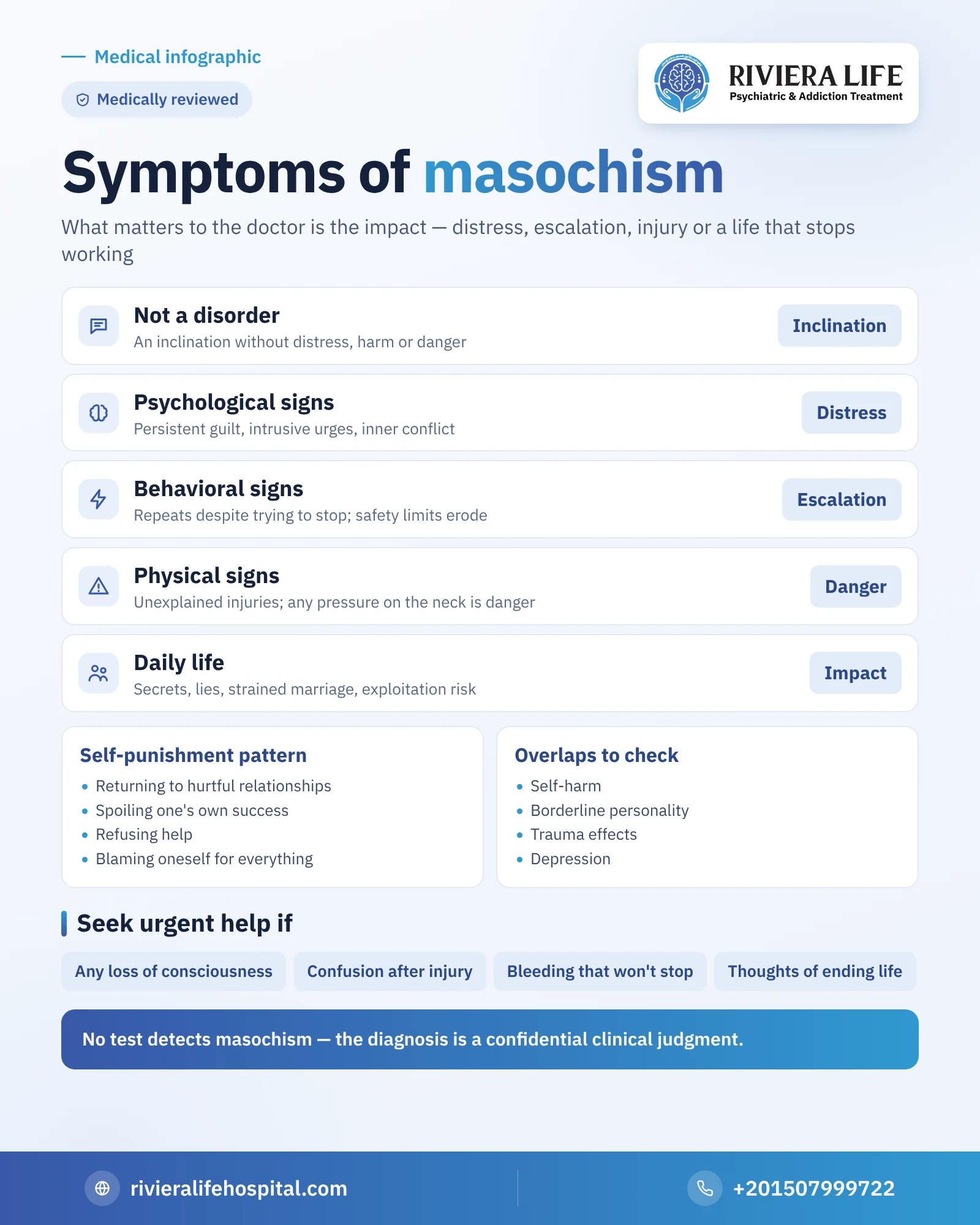
Sexual masochism in psychiatry is a recurrent and strong link between sexual arousal and being subjected to pain, humiliation or restraint, appearing as fantasies, urges or behavior. But the DSM-5 doesn’t speak of a “disorder” unless this pattern lasts at least six months and causes clear distress or impairment in important areas of life. So the symptoms we explain here are signs of distress, impairment and danger, not the inclination itself. To understand the full picture, from the concept to treatment, you can start with our complete guide to masochism.
When is an inclination not a symptom of a disorder?
A man in his thirties who has known about this interest in himself for years, lives in a stable relationship with a partner who shares his view, isn’t pursued by guilt, hasn’t been harmed in any way, and whose professional and social life runs normally. By current medical classifications, this person doesn’t meet the criteria for the disorder. Fear of society’s opinion alone isn’t a diagnostic criterion either; what is required is distress coming from the person himself, real harm, or clear danger.
Psychological signs: distress and inner conflict
These are the most common signs in those who seek help themselves:
- A constant feeling of guilt or self-disgust after each time, followed by a promise to stop that doesn’t hold for long.
- Thoughts and urges that intrude on the mind at inappropriate times and distract it from work or study.
- Sharp conflict between the urge and the person’s religious or moral values, causing persistent insomnia and anxiety.
- A feeling that the matter has started to “control” him, and that he needs a higher level each time to feel the same thing.
- Isolation and withdrawal for fear that the secret will be exposed.
Behavioral signs: repetition and escalation
The most important behavioral sign isn’t the type of behavior but its course. Specialists notice in those with the disorder that the behavior repeats despite attempts to stop, that it escalates gradually, and that the safety limits that existed at the beginning recede one after another. This may be accompanied by spending a lot of money, spending long hours online, meeting strangers he knows nothing about, or accepting situations in which he feels pressured and unable to refuse. The more the behavior is linked to alcohol or drugs, the greater the chance of crossing limits.
Physical signs that call for attention
Physical signs may be the first thing the family or the general practitioner notices: repeated bruises or wounds for which the person gives no convincing explanation, repeated emergency visits, or chronic pain in particular areas. More dangerous still is any sign suggesting pressure on the neck or restriction of breathing, such as marks around the neck, small bleeds in the whites of the eyes, or unexplained headache after a brief loss of consciousness. These practices in particular may lead to brain damage or sudden death, and doctors consider them a danger sign requiring immediate intervention, not just a symptom to be discussed later.
Signs in relationships and daily life
The disorder often reflects on marriage and relationships: growing secrets, lying to cover time or money, and tension because the partner doesn’t know what is happening or feels forced into something they don’t want. The person’s performance at work may decline because of preoccupation, late nights or injuries. In some cases the person becomes a victim of blackmail or exploitation by someone he met online, a situation that needs support, not blame.
“Masochism” in the everyday sense: signs of self-punishment
Many search for this word meaning something unrelated to sex: a person who seems to be punishing himself constantly. This pattern isn’t a formal standalone diagnosis, but its signs are known to therapists:
- Returning time after time to hurtful or humiliating relationships, while justifying the other party’s behavior.
- Spoiling success or opportunities with his own hands when things approach improvement.
- Refusing help and support, or feeling guilty on receiving them.
- A feeling that he doesn’t deserve rest or joy except after exaggerated effort or sacrifice.
- Blaming himself for everything that happens, even what he isn’t at fault for.
These signs are often part of chronic depression or the effects of old trauma, so they deserve a psychiatric assessment like any other symptoms; for comparison, see our article on depression symptoms.
Symptoms that overlap with other disorders
Some of the above may resemble other disorders, and may occur together with them. It is important to distinguish the following two:
Self-harm
Self-harm is behavior that usually aims to relieve unbearable psychological pain, and isn’t linked to sexual arousal. But it may appear in some people with masochistic inclinations, especially with depression or borderline personality disorder. Its presence immediately changes the priorities of the assessment, and you can compare its signs with what is in the symptoms of borderline personality.
The effects of trauma
Some who have been through traumatic experiences repeat, without awareness, situations resembling what hurt them. This doesn’t mean every masochistic inclination is caused by trauma, but the appearance of intrusive memories, nightmares or emotional numbness calls for an assessment for post-traumatic stress disorder.
Questions for self-review
These questions don’t diagnose you, but they help you decide whether talking to a specialist would be useful:
- Do I feel real, persistent distress or guilt because of these urges, not just fear that someone will find out?
- Have I tried to stop or cut down more than once and been unable to?
- Have I had an injury that needed treatment, or a situation in which I felt in danger?
- Have my marriage, work or finances been affected by this?
- Is it linked for me to alcohol or drugs?
- Do I have thoughts of harming myself or that life isn’t worth it?
If you answered yes to one or more questions, that is reason enough to ask for a confidential assessment.
How does the doctor confirm the diagnosis?
The psychiatrist conducts a calm interview that respects your privacy, and doesn’t ask for details the plan doesn’t need. He asks about the duration of the symptoms, the level of distress, the impact on life, injuries, and any practices that affect breathing, then assesses depression, anxiety, substance use and personality traits. He may request a physical examination if there are injuries. There are no tests that detect masochism, and the diagnosis is a clinical decision the specialist builds on the full picture.
When do you need a psychiatric assessment?
Ask for an appointment soon if the distress is persistent, injuries recur, life starts to stop working, or you feel you are losing control. The following situations can’t wait:
Seek urgent help immediately if you see
Call an ambulance on 123 or go to the nearest emergency department.
- Loss of consciousness, even for seconds, or difficulty breathing after pressure on the neck or chest
- Severe headache, confusion, or a change in speech or vision after an injury
- Bleeding that won’t stop or a deep wound
- Thoughts of ending your life or a plan to harm yourself
How can Riviera Life help you?
Many put off asking for help for years because they fear being judged. At Riviera Life, psychiatry consultants carry out the assessment in complete confidentiality and without any blame, starting with safety and then the distress and accompanying disorders. The first consultation is free, and the next steps are explained in our article on masochism treatment.
More from our masochism guide
- Masochism: the complete guide
- Causes of masochism and the limits of the medical evidence
- Masochism treatment: psychotherapy and the role of medicines
- Borderline personality disorder: the complete guide
Questions many people ask
The main indicator is the impact: persistent distress coming from you, disruption of your life, or injuries and physical danger over a long period. The final diagnosis is made by a psychiatrist after a confidential assessment.
Not necessarily, but if the guilt is severe, persistent and affects your sleep, work and relationships, it is a good reason to talk to a specialist, even if the criteria for the disorder aren't met.
Repeated unexplained injuries, emergency visits, or any loss of consciousness or marks around the neck. These signs call for stopping and seeking a prompt medical assessment.
Yes, repeatedly choosing what hurts, with self-blame and a feeling of not deserving, may be part of chronic depression or the effects of trauma, and deserves a psychiatric assessment.
No, the diagnosis depends on a clinical interview with a psychiatrist. A physical examination may be requested only if there are injuries that need treatment.