Masochism treatment relies mainly on psychotherapy, led by cognitive behavioral therapy, along with treating any accompanying depression, trauma or substance use. The doctor may add medicines in selected cases to reduce urges and impulsivity, but there is no medicine specifically for masochism itself. An inclination that causes no distress or harm doesn’t need treatment at all; treatment is for the disorder only. Improvement usually happens over months, and varies with the severity of the condition and what accompanies it. In this article you will learn the goals and types of treatment, the role of medicines and their limits, when hospital care is needed, and how to choose a place of treatment.
Does masochism need treatment?
Not always. Modern medical classifications are clear that interest alone, without distress, harm or danger, isn’t considered a disorder. But when the person lives with a painful conflict over their desires, injuries repeat, their life or marriage is disrupted, or safety limits are crossed, treatment becomes necessary and useful. If you aren’t sure which side you are on, start by reviewing the symptoms of masochism before any decision.
The first step: an assessment that starts with safety
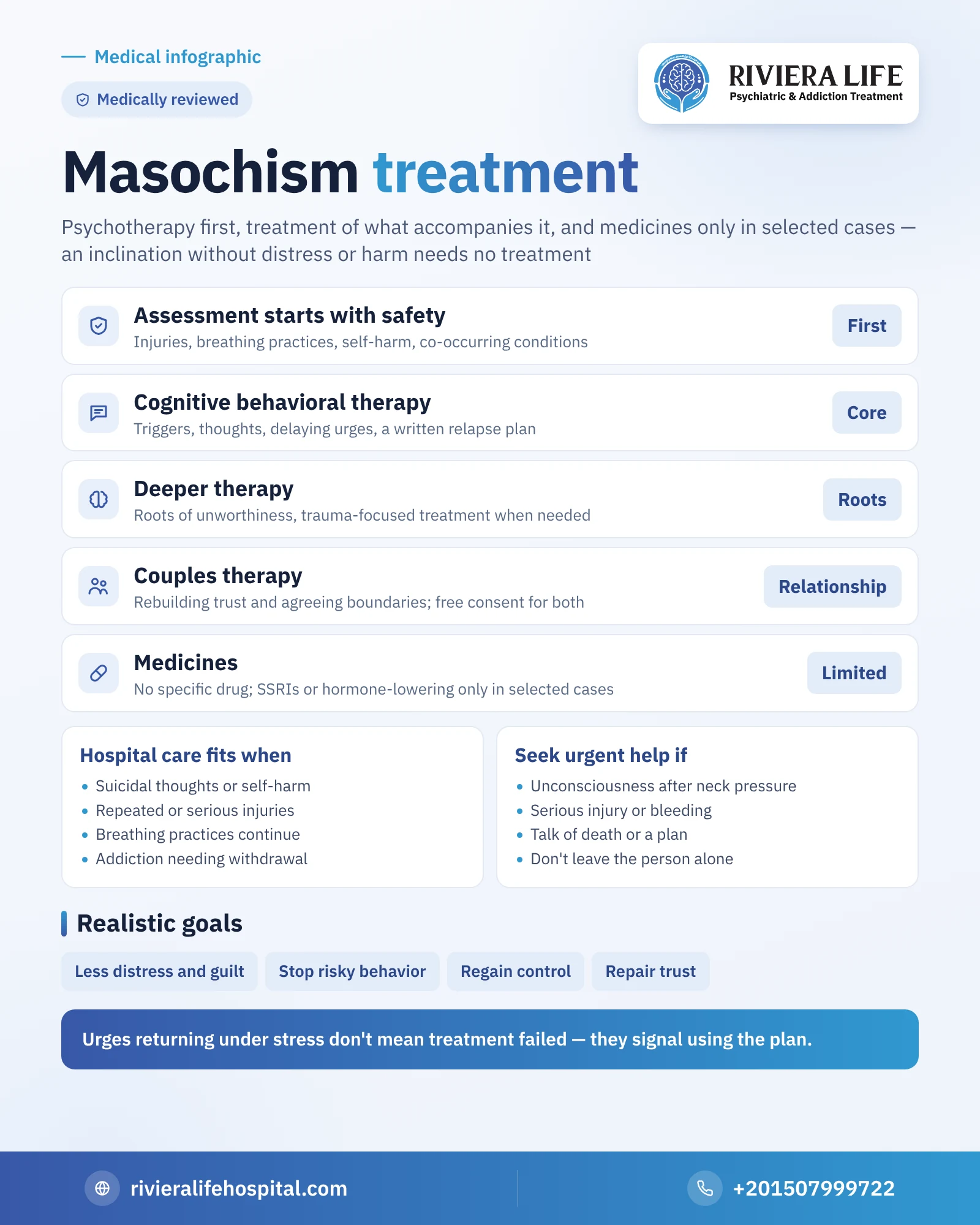
The first thing the psychiatrist asks about is physical safety: have there been injuries? Are there any practices that affect breathing or the neck? Are there thoughts of self-harm? Then they assess the severity of distress and its effect on life, and look for co-occurring disorders, most importantly depression, anxiety, personality disorders and substance use. Then they agree with the patient on clear, written goals. All of this is done in complete confidentiality, without asking the patient to describe details the plan doesn’t need.
Realistic goals of treatment
Treatment doesn’t aim to “put the person on trial” or change them by force, but toward goals agreed with them:
- Reducing distress, guilt and inner conflict to a level that allows a normal life.
- Stopping risky behavior completely, above all any practice that affects breathing.
- Regaining a sense of control instead of feeling driven.
- Treating accompanying depression, anxiety, trauma or substance use.
- Repairing trust in marriage and relationships, and building healthy boundaries.
Cognitive behavioral therapy
This is the most widely used approach in this area. It helps the patient recognize the situations and feelings that precede the urge, such as loneliness, anger or pressure at work, and the thoughts that accompany them, such as “I don’t deserve anything better”. Then they learn alternative ways of dealing with these feelings, and skills to delay impulses and tolerate urges until they pass.
With the therapist they set a clear relapse prevention plan that identifies high-risk situations and what they will do in them. For example, a man noticed that his urges intensified on nights he spent alone after a marital argument, so he learned to call someone he trusts and close the sites that aroused him before things escalated.
Deeper psychotherapy and trauma treatment
When distress is linked to an old feeling of unworthiness or painful past experiences, psychodynamic therapy may help, assisting the person to understand the roots of their feelings and their relationship patterns. If there are clear trauma symptoms, the doctor directs them to recognized trauma treatments, as explained in our article on PTSD treatment. This path also suits those who suffer a daily pattern of self-punishment even without any sexual aspect.
Couples and family therapy
Often the wife or husband discovers the matter in a shocking way, and trust is shaken. Couples therapy provides a safe space in which both partners talk under professional supervision, and agree on boundaries and a way to rebuild trust. Neither partner is asked to accept what they don’t want, as free consent is the basis of any healthy relationship. Involving the family is sometimes useful when the young person is young or when there are risks that need close follow-up.
Medicines: when are they used, and what are their limits?
There is no medicine specifically for treating masochism, and the evidence on medicines in this area is limited and based mostly on case reports and small studies. But the psychiatrist may use medicines in selected cases:
- Selective serotonin reuptake inhibitor antidepressants: may reduce urges and repetitive thoughts, and treat accompanying depression or anxiety at the same time.
- Medicines that reduce sex hormones: reserved for a few severe cases that don’t respond to anything else, by decision of a specialist consultant, with the patient’s clear consent and regular medical follow-up.
- Medicines for co-occurring disorders: such as treating depression, anxiety or bipolar disorder if present.
The doctor chooses the medicine, dose and duration for each case, and no medicine is used without parallel psychotherapy.
Treating co-occurring disorders
Treating masochism while leaving depression or substance use untreated brings relapse closer. If there is depression, it is treated in parallel, and you can learn its options in depression treatment. If there is impulsivity, self-harm and unstable relationships, the dialectical behavior therapy used in borderline personality disorder treatment may suit. Alcohol and drugs need a withdrawal plan and addiction treatment before or alongside psychotherapy.
How long does improvement take?
There is no fixed period. Some patients feel a clear reduction in distress within weeks of starting treatment, especially when depression is a large part of the picture. Controlling behavior and building relapse prevention skills usually takes months of regular sessions, then longer follow-up. It is natural for desires to return in periods of stress; this doesn’t mean treatment has failed, but is a signal to use the plan the patient has learned.
When is hospital care needed?
Most cases are treated in the outpatient clinic, but inpatient care is the most suitable option in situations including:
- Suicidal thoughts or repeated self-harm.
- Repeated or serious injuries with an inability to stop.
- Practices affecting breathing that continue despite warnings.
- Severe depression or accompanying psychotic symptoms.
- Alcohol or drug addiction that needs safe withdrawal under medical supervision.
Seek urgent help immediately if you see
Call an ambulance on 123 or go to the nearest emergency department, and don't leave the person alone.
- Loss of consciousness or difficulty breathing after pressure on the neck or chest
- A serious injury or bleeding that won’t stop
- Talk of death or a plan for self-harm
The right hospital for masochism treatment: how to choose
The right hospital for masochism treatment is one that provides what this patient specifically needs: complete confidentiality without judgment, a team that clearly distinguishes inclination from disorder, the ability to treat depression, trauma and substance use in the same plan, and continuous supervision for high-risk cases. Before you decide, ask:
- Does the team carry out a confidential assessment that starts with physical safety and the risk of self-harm?
- Does it have consultant psychiatrists with experience in sexual and behavioral disorders?
- Does it offer structured cognitive behavioral therapy with a written relapse prevention plan?
- Does it treat accompanying depression, trauma and substance use within the same program?
- Is there medical follow-up night and day if the case requires a stay?
- Does it provide sessions for the partner or family, and follow-up after the program ends?
And don’t trust a provider that guarantees a cure or promises a radical change in your behavior within a few days.
How Riviera Life meets these standards in masochism treatment
Here are the details of what Riviera Life offers in this area:
- Complete confidentiality: the patient’s data and the details of their case are protected at every stage, and assessment is done without any judgment.
- Ministry of Health license: Riviera Life is an officially approved hospital for psychiatry and addiction treatment.
- Specialist consultants: consultants in psychiatry and addiction set the plan and follow any medicine closely.
- Round-the-clock medical supervision: for cases accompanied by injuries, self-harm or severe depression.
- Dual diagnosis treatment: safe withdrawal from alcohol or drugs, then continuing psychotherapy.
- Experience built over fourteen years: which has seen thousands of patients recover in psychiatry and addiction.
- A family program and aftercare: sessions for the partner and family, and follow-up after discharge to prevent relapse.
To talk about masochism in complete confidentiality, book your free first consultation on +201507999722 at any hour, or visit us in Sheikh Zayed, Giza.
More from our masochism guide
- Masochism: the complete guide
- The symptoms of masochism and when you need an assessment
- The causes of masochism and the limits of the evidence
- Depression: the complete guide
Questions many people ask
There is no medicine specifically for it. The doctor may use antidepressants or other medicines in selected cases to reduce urges or treat a co-occurring disorder, always alongside psychotherapy.
Many patients benefit from cognitive behavioral therapy in reducing distress and controlling risky behavior, especially when co-occurring depression or substance use is treated at the same time.
Yes. Couples therapy is a useful part of the plan in many cases, and helps rebuild trust and agree on healthy boundaries under professional supervision.
When there are suicidal thoughts or repeated self-harm, serious injuries, ongoing practices that affect breathing, or an addiction that needs safe withdrawal under medical supervision.
Complete confidentiality without judgment, a team that distinguishes inclination from disorder, treatment of depression, trauma and substance use in the same plan, and continuous supervision. Riviera Life in Sheikh Zayed meets these standards.