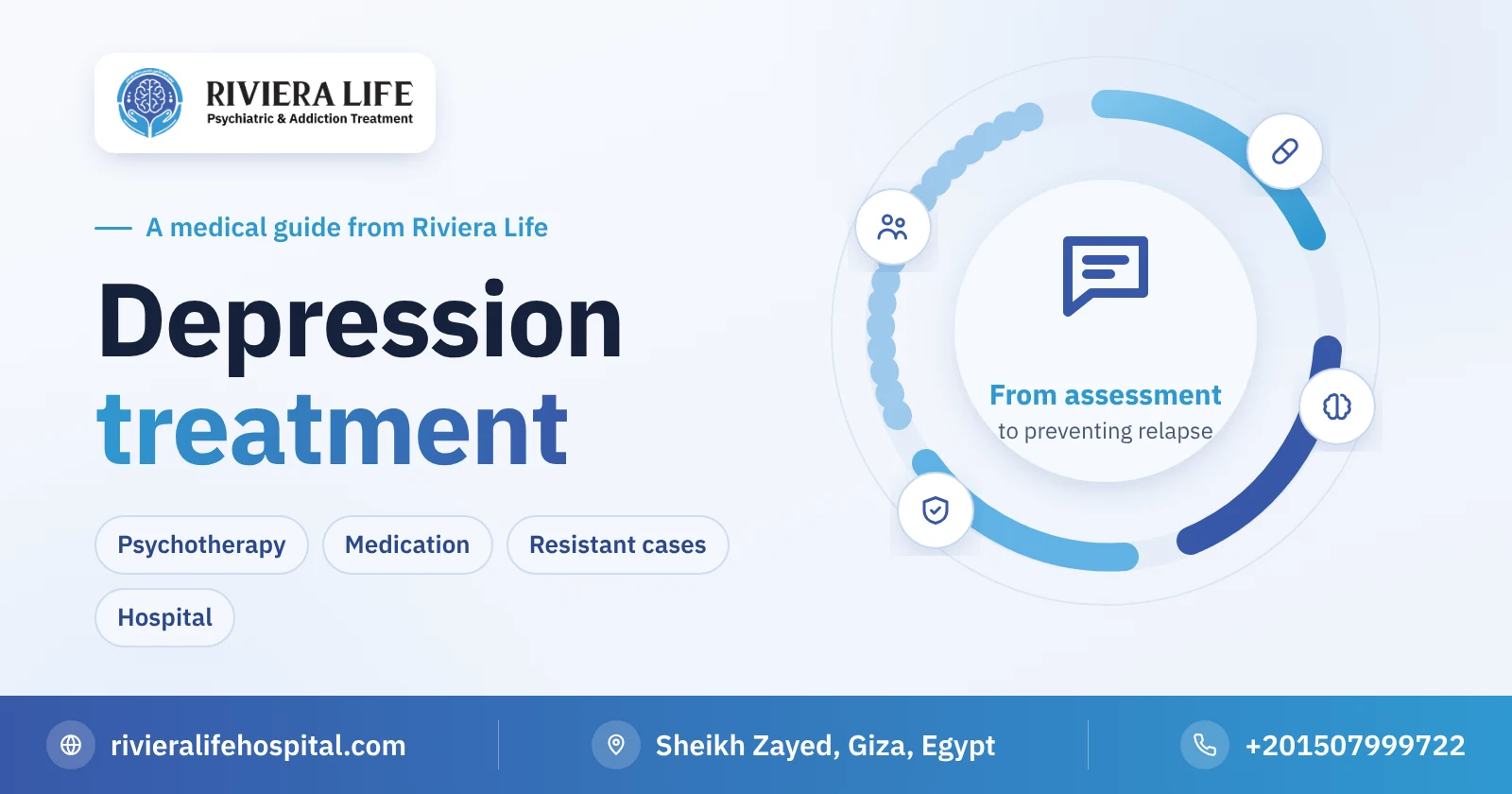
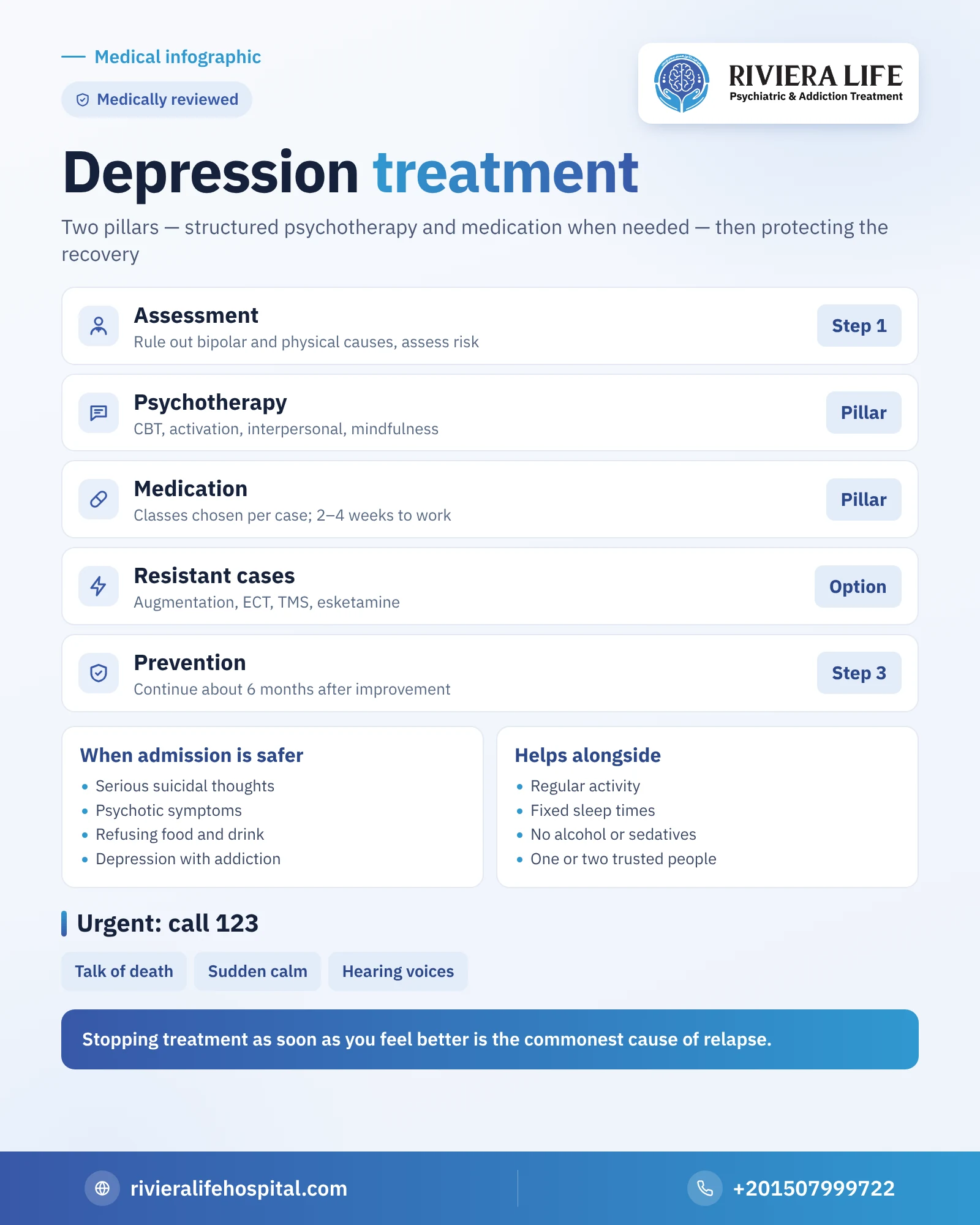
Depression treatment rests on two main pillars: structured psychotherapy, and antidepressant medication when needed, with hospital admission or advanced options added in severe cases. The goal isn’t to ease the symptoms a little, but to reach full recovery and then protect the patient from the episode returning. Most patients improve clearly when they get the treatment suited to the severity of their condition and stick with it long enough. In this article we explain the steps of the plan from assessment to preventing relapse, when hospital is necessary, and how to choose a place you trust.
Is depression really curable?
Yes, and the word doctors use is “remission”, meaning the symptoms disappear and the person returns to their previous level of functioning. Many patients reach this stage with the first treatment plan, and others need one or more adjustments before finding what suits them. But depression can recur, especially if treatment stops early, which is why a good plan includes a later stage aimed at maintaining improvement, not just reaching it.
The right start: assessment before any treatment
No sound treatment plan begins before the doctor knows exactly what they are treating. Assessment includes a detailed interview about the symptoms, their duration and severity, questions about previous episodes of excess activity that might point to bipolar disorder, about alcohol and drug use and current medicines, and about physical illnesses. Thyroid and blood tests may be requested to rule out causes that resemble depression. Most important is assessing the risk of self-harm, because it determines whether treatment starts in the clinic or inside the hospital. As for the signs themselves, you will find them in the article on depression symptoms.
This article is about the steps and options of treatment. If you are still wondering whether what you are going through is depression at all, start with the article on depression symptoms, then come back here.
Psychotherapy: its types and how it works
Psychotherapy isn’t “venting”, but structured sessions with goals and exercises between sessions. Among the types best supported by evidence:
Cognitive behavioral therapy
It helps the patient catch harsh automatic thoughts such as “I’ll never succeed”, examine them, and replace them with more realistic thoughts, along with practical behavioral steps.
Behavioral activation
It rests on a simple idea: depression pushes towards withdrawal, and withdrawal feeds depression. So the patient gradually reschedules small enjoyable or useful activities to break the cycle.
Interpersonal therapy
It focuses on relationships and roles: marital conflict, the loss of a loved one, or a big change such as retirement, and builds skills for dealing with them.
Mindfulness-based cognitive therapy
It is often used after recovery for those with repeated episodes, and trains them to notice the beginnings of relapse early.
Antidepressant medicines: classes, not ready-made prescriptions
The doctor chooses between several classes, the best known being selective serotonin reuptake inhibitors, serotonin and noradrenaline reuptake inhibitors, and other medicines with different mechanisms, then tricyclic antidepressants, which are now used in specific cases. There is no class that is “strongest” for everyone; the choice depends on the symptoms, likely side effects, other illnesses and accompanying medicines, which we have detailed in the article on the best medication for depression and anxiety.
It is important for the patient to know three facts: improvement usually begins after two to four weeks and is completed over a longer period, some side effects appear early and then ease, and sudden stopping may cause unpleasant symptoms, so tapering is gradual under the doctor’s supervision. Young people at the start of treatment also need closer follow-up for any increase in suicidal thoughts.
When depression doesn’t respond: advanced options
If the patient doesn’t improve after two treatment trials adequate in duration and dose, doctors speak of “treatment-resistant depression”. Several options are available here: changing the medicine or adding an augmenting medicine to it, intensifying psychotherapy, electrical brain rhythm regulation sessions, which are carried out under full anesthesia and are among the most effective treatments for severe depression, and transcranial magnetic stimulation of the brain. In some countries a nasal spray derived from ketamine has also been approved, given only inside a medical center under direct observation.
When does a depression patient need hospital admission?
Most cases of depression are treated in the clinic, but admission becomes the safer option in cases such as: serious suicidal thoughts or a recent previous attempt, psychotic symptoms, refusing to eat and drink, complete inability to care for oneself, failure of outpatient treatment, or depression combined with an addiction that needs medical withdrawal. Admission here isn’t a punishment or “confinement”, but a safe environment that allows treatment to be adjusted quickly with close follow-up.
Seek urgent help immediately if you see
If you notice any of these signs during or before treatment, call the ambulance on 123 or go to the nearest emergency department.
- Explicit talk of wanting to die or planning self-harm
- Rapid deterioration after starting or changing a medicine, with severe anxiety and insomnia
- Sudden unexplained calm after a period of deep depression
- Refusing food and drink for days
- Hearing voices or strange beliefs accompanying the depression
What happens during the admission itself, from safety and observation to adjusting medication, psychotherapy and the discharge plan, is explained in the inpatient depression treatment section of the Riviera Life psychiatric hospital page. And if the depression is linked to substance use, see depression and addiction and how they are treated together.
What helps treatment outside the clinic?
Daily changes don’t replace treatment in moderate and severe depression, but they multiply its effect:
- Regular physical activity, even half an hour’s walk most days of the week.
- Fixed times for sleeping and waking, and avoiding long daytime sleep.
- Avoiding alcohol and unprescribed sedatives, because they deepen depression and interfere with medication.
- Social contact, even limited, with one or two trusted people.
- Not relying on supplements and herbs as a substitute, and telling the doctor about any of them because they may interact with medicines.
How long does depression treatment take?
The plan usually passes through three phases: an acute phase aimed at removing the symptoms, lasting weeks to a few months; then a continuation phase in which continuing the medicine for about six months at least after improvement is advised; then a longer preventive phase for those with repeated or severe episodes. Stopping treatment as soon as you feel better is the most common cause of relapse.
Treating depression that accompanies addiction
When depression combines with using alcohol, hash or painkiller pills, it isn’t right to treat each in a separate place. The team usually starts by withdrawing the substance safely, then reassesses mood after weeks, because part of the symptoms may be caused by use or withdrawal, then treats the real remaining depression in parallel with the rehabilitation program. You can read more about the role of substances in the onset of depression in the article on the causes of depression.
The family’s role in the treatment journey
The family is a partner in the plan: it helps remind the patient of their appointments, notices early changes, and encourages without pressure or comparison. Among the things that hurt the patient most are phrases like “you don’t lack anything” or insisting on stopping the medicine “so he doesn’t get used to it”. Family sessions are an essential part of good programs, because they teach relatives how to support without draining themselves.
St John’s wort and depression: what do we really know?
St John’s wort (Hypericum perforatum) is one of the best-known herbs people turn to when they want to treat depression “naturally”. Researchers have studied it, and some trials found it has an effect in mild to moderate depression, but the results aren’t consistent, and the quality of products on the market varies a lot because their composition isn’t standardized.
More importantly, “natural” doesn’t mean “safe”. The herb interacts with many medicines and may weaken their effect, including some contraceptives, heart and anticoagulant medicines and organ transplant medicines. And if combined with antidepressants it may raise the risk of serotonin syndrome, a condition that needs medical care.
So don’t start it or add it to an existing treatment without consulting the doctor or pharmacist, and don’t stop a medicine prescribed for you to replace it with the herb. It isn’t suitable for severe depression or depression accompanied by thoughts of self-harm. To compare the options, read about antidepressants and how they work, and about treating depression without medication and when it is enough.
The right hospital for depression treatment: how to choose
The right hospital for depression treatment is the one that offers what a depression patient specifically needs: an accurate assessment that distinguishes it from bipolar disorder and physical causes, complete safety when thoughts of self-harm appear, and real psychotherapy that doesn’t settle for pills. Ask before you decide:
- Does a consultant psychiatrist carry out the assessment, and check for the possibility of bipolar disorder and organic causes?
- Is there safe inpatient care with round-the-clock medical supervision for cases accompanied by suicidal thoughts?
- Does the place offer structured psychotherapy, such as cognitive behavioral therapy, alongside medication?
- Can the team treat depression and addiction together if they coexist?
- Is there a follow-up plan after improvement to prevent relapse?
- Does it involve the family and fully respect the patient’s confidentiality?
And be wary of any party that promises a guaranteed cure at a certain rate, or claims to remove depression in a few days.
How Riviera Life meets these standards in depression treatment
Here is how these criteria are met at Riviera Life:
- Ministry of Health license: a licensed hospital for treating depression and other psychiatric illnesses and addiction.
- Long experience: fourteen years of work and thousands of recovered cases.
- Specialist consultants: consultant psychiatrists assess the case and distinguish between types of depression before setting the plan.
- Round-the-clock safety: 24-hour medical supervision for severe cases or those accompanied by thoughts of self-harm.
- Dual diagnosis treatment: one team treats depression and addiction together when they coexist.
- Complete confidentiality: the privacy of the patient and their family is protected at every stage.
- Support for the family and after treatment: family sessions, and follow-up after improvement that protects against depression returning.
Talk to a specialist in a free first consultation whenever you like on +201507999722; the line works without interruption, and our address is Sheikh Zayed in Giza Governorate.
More from the depression guide
- Depression: the complete guide
- The best medication for depression and anxiety
- Types of depression and its degrees of severity
- Depression symptoms and signs
- Antidepressant withdrawal symptoms: causes, duration and stopping safely
- Mirtazapine (Remeron): drowsiness, appetite, side effects and warnings
- Treating depression without medication: when is it enough and what really helps?
- Depression relapse: early warning signs and a prevention plan
- Transcranial magnetic stimulation: how it works, who it’s for and its side effects
- Maprotiline (Ludiomil): depression, seizure risk and warnings
- Nortriptyline (Motival): depression, nerve pain and warnings
- The PHQ-9 depression test
Questions many people ask
In mild depression, structured psychotherapy with lifestyle changes and close follow-up may be enough. Moderate and severe cases usually benefit from combining medication and psychotherapy.
Improvement usually begins after two to four weeks, and is completed over a longer period. That is why a medicine isn't judged after a few days.
The acute phase takes weeks to months, then continuing for about six months at least after improvement is usually advised, and prevention may last longer for those with repeated episodes.
They are carried out under full anesthesia and medical supervision, and are among the most effective treatments for severe or resistant depression. They may cause temporary memory disturbance that usually improves after the sessions end.
Look for accurate assessment, safe inpatient care, psychotherapy alongside medication, and follow-up after improvement. Riviera Life in Sheikh Zayed, licensed by the Ministry of Health with fourteen years of experience, meets these criteria.