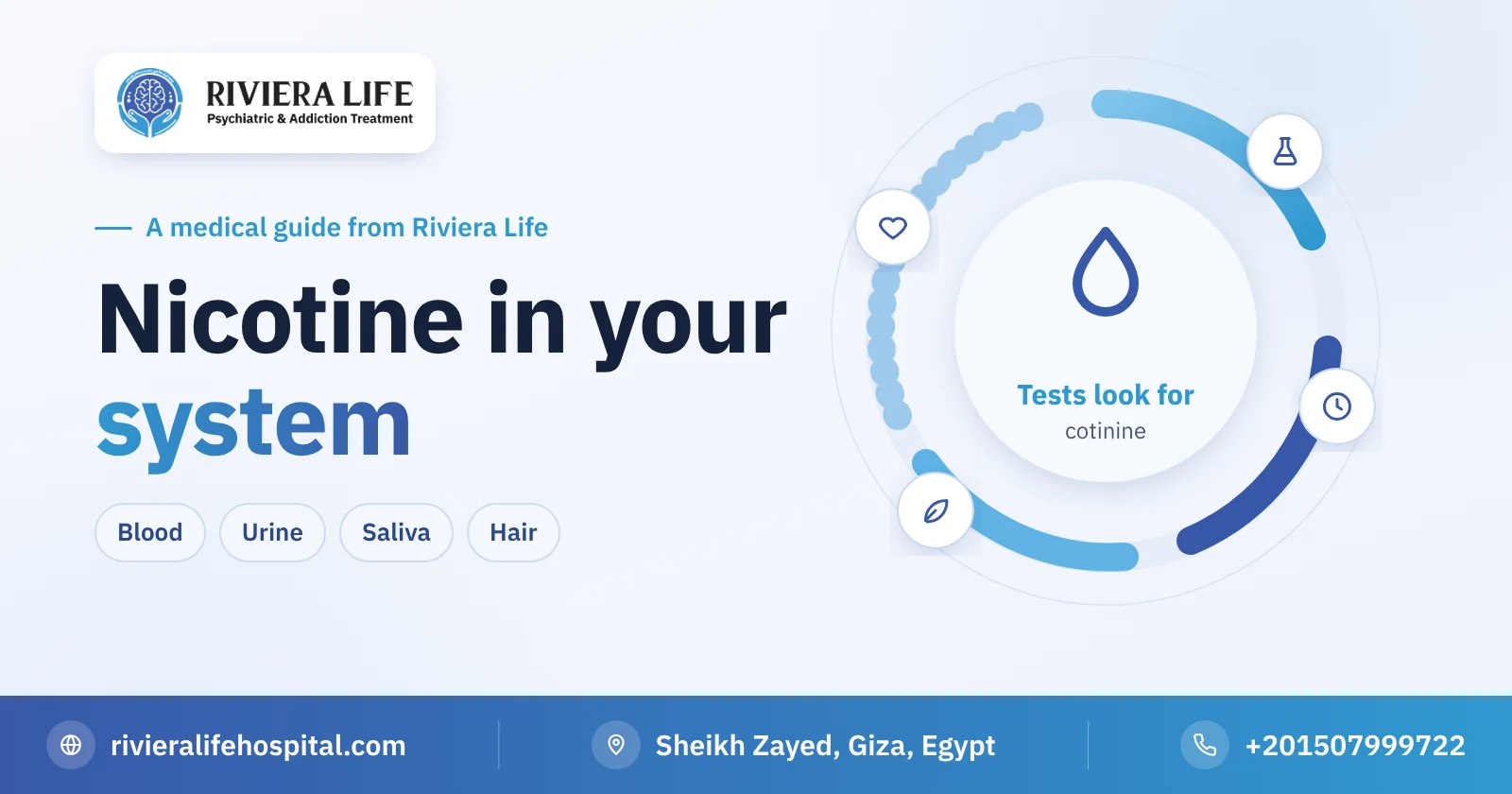
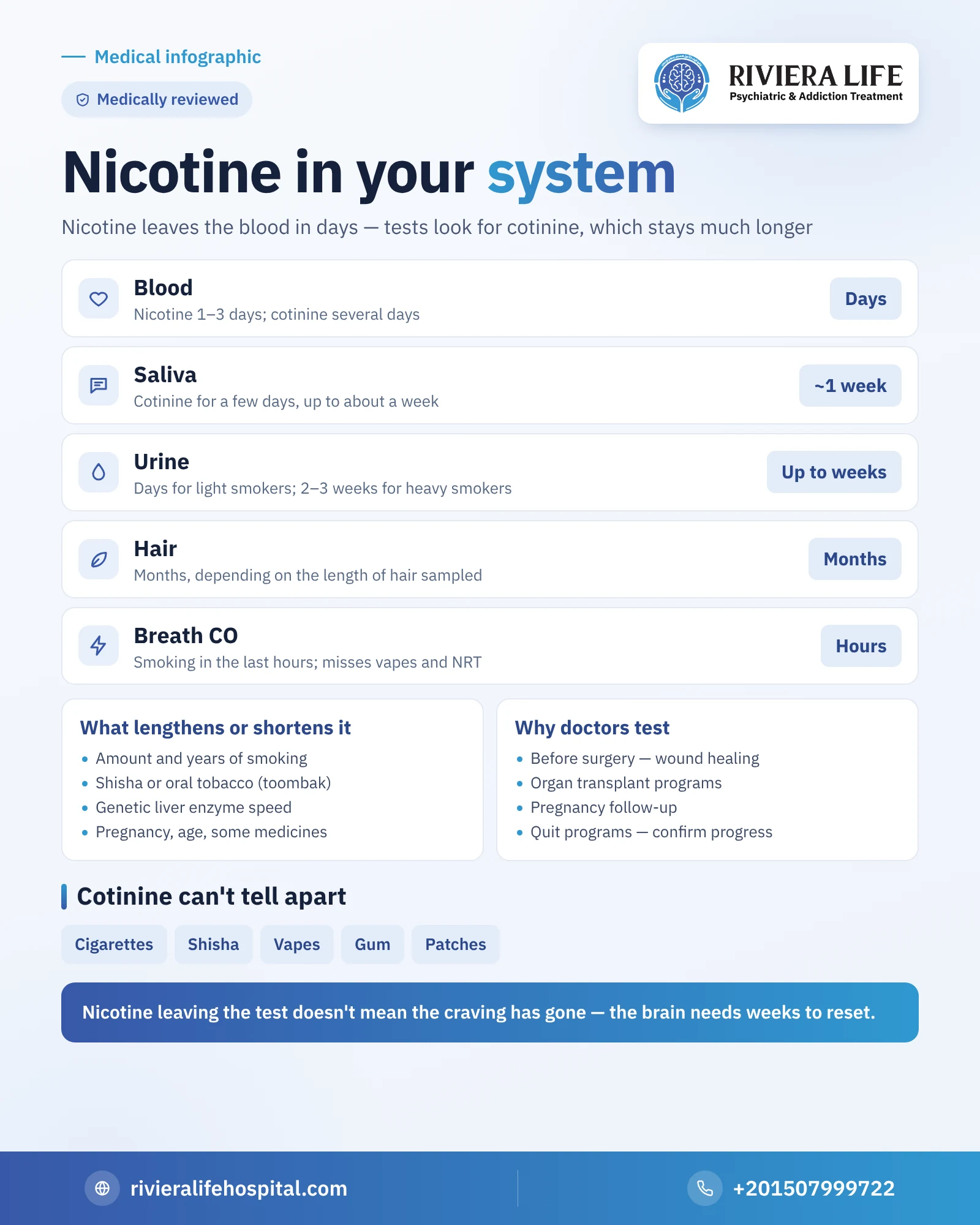
Nicotine stays in the body for a relatively short time; it usually disappears from the blood within roughly one to three days after the last cigarette. But tests don’t usually look for nicotine itself, but for cotinine, the substance the liver converts it into, which stays much longer: days in blood and saliva, possibly two weeks or more in the urine of a heavy smoker, and months in hair.
These periods are approximate and vary from person to person. In this article we explain the difference between nicotine and cotinine, the types of test, the factors that change the duration, and why this matters to you before surgery or insurance or while trying to quit.
Nicotine and cotinine: what’s the difference?
When you smoke a cigarette, shisha or vape, nicotine reaches the brain within seconds, then the liver starts breaking it down quickly. Nicotine’s half-life in the blood is only a few hours, which explains why a smoker feels the need for a new cigarette every short while. Most nicotine is converted to cotinine, a substance that doesn’t cause the same effect but has a much longer half-life, about sixteen hours according to the US Centers for Disease Control and Prevention. That is why doctors and laboratories rely on it as a reliable indicator of tobacco exposure over the past days.
How long nicotine shows in each type of test
The following figures are approximate, and depend on the amount and duration of smoking and the sensitivity of the test:
| Type of sample | What is usually measured | Approximate time after last exposure |
|---|---|---|
| Blood | Nicotine or cotinine | Nicotine roughly one to three days; cotinine several days |
| Saliva | Cotinine | A few days, possibly extending to about a week |
| Urine | Cotinine | A few days in a light smoker, possibly two or three weeks in a heavy smoker |
| Hair | Nicotine and cotinine | Months, depending on the length of hair taken |
Some doctors also measure carbon monoxide in exhaled breath, which detects smoking roughly within the last hours, but it doesn’t detect vapes or nicotine replacement because they produce no smoke.
Factors that lengthen or shorten the time
- Amount and duration of smoking: someone who has smoked a pack a day for years builds up more cotinine than an occasional smoker.
- Type of product: a long shisha session or oral tobacco products such as toombak can deliver a large amount of nicotine.
- Speed of metabolism: liver enzymes differ between people for genetic reasons, so some clear nicotine faster than others.
- Liver and kidney function: weakness in them can slow clearance.
- Pregnancy: the body usually breaks nicotine down faster during pregnancy.
- Age and some medicines: may change the rate of metabolism.
Shisha, vapes and oral tobacco: does the time differ?
What matters in the test is the amount of nicotine that entered the body, not the form of the product. A shisha session can last an hour or more, giving the smoker a lot of nicotine, and cotinine may remain afterwards for about as long as after a day of heavy smoking. Vapes vary greatly depending on the liquid’s concentration and the number of puffs, and some users puff all day and reach high levels. Oral tobacco delivers nicotine for hours on end. So there is no fixed time for each product, and it is best to treat the figures as estimates.
Does passive smoking show in the test?
Yes. Cotinine may show at low levels in someone who lives or works with smokers. But the level is usually much lower than that of a smoker, and laboratories set limits to distinguish passive exposure from actual smoking. Even so, interpretation may be difficult in borderline cases, and the doctor needs to know the person’s circumstances.
Do nicotine replacement and vapes show in the test?
A cotinine test doesn’t distinguish the source of nicotine; cigarettes, e-cigarettes, nicotine gum and patches all give a positive result. In some medical situations, such as assessment before an organ transplant, the doctor may request a test for another substance found in tobacco but not in medicinal nicotine replacement, to know whether the patient is still smoking or only using replacement. So always tell your doctor what you use.
How is the test result understood?
A positive result means the body was exposed to nicotine recently, but on its own it doesn’t determine whether the person is addicted or smoked once, and it doesn’t necessarily mean they are a smoker if levels are low and they live with smokers. A negative result means the level is below what the test detects, not that the person has never smoked. That is why the doctor interprets the result alongside the history the patient gives, and may ask for it to be repeated or for a more precise laboratory test if needed.
Why does this matter in medical checks?
Doctors request a nicotine test primarily for reasons concerning your health:
- Before surgery: smoking slows wound healing and raises the risk of anesthetic and breathing complications, which is why some surgeons, especially in cosmetic and orthopedic surgery, ask you to stop some time before the operation.
- Organ transplants: many transplant programs require stopping tobacco and verify it.
- Pregnancy: to monitor the health of mother and baby and support quitting.
- Quit programs: to confirm progress and encourage the patient.
Nicotine testing and insurance
In some countries, life or health insurance companies request a cotinine test, because smoking raises the calculated health risks. The rules vary greatly between countries and companies, so read the policy terms or ask the company directly how long you need to be smoke-free to be classed as a non-smoker. Honest disclosure is the right path, as hiding smoking may affect the validity of the policy later.
There is no safe way to cheat the test
Advice about drinking large amounts of water or certain drinks before a test is widespread. These methods don’t change what the liver does, too much water can upset the body’s salts, and laboratories check the validity of the sample itself. Most importantly, the purpose of a medical test is to protect you; if the surgeon wants you smoke-free before the operation, it is genuinely stopping that protects your wound and lungs, not the result on a piece of paper.
Nicotine leaving the body doesn’t mean the end of the craving
Nicotine disappears from the blood within days, but the brain that got used to it needs longer to readjust. Craving begins within hours of the last cigarette, withdrawal symptoms usually peak in the first two or three days, then gradually settle over weeks, while sudden urges in certain situations may return for months. You’ll find an explanation of withdrawal in our article on nicotine addiction.
So it isn’t enough to wait for nicotine to leave the test to consider that you have quit; the real battle is with the habit and the situations linked to it, and it continues long after the result becomes negative.
What happens to your body after stopping?
In parallel with nicotine and cotinine leaving, the body begins to recover: the pulse falls within a short time, carbon monoxide in the blood drops within days, and breathing gradually improves over weeks and months. If you are planning to stop before an operation or for your health, you’ll find practical steps in our guide to quitting smoking.
How can Riviera Life help you?
If quitting falters at every attempt, or smoking is linked to hashish or another substance, Riviera Life’s consultants can assess the case and set a comprehensive plan. The first consultation is free and confidential on +201507999722.
More from our smoking and nicotine guide
- Nicotine addiction: symptoms, withdrawal and harms
- Quitting smoking: a practical plan
- E-cigarettes: the harms and the truth about helping you quit
- Nicotine gum: how it works and who it suits
- Smoking and nicotine: the complete guide
Questions many people ask
Nicotine disappears from the blood quickly, while cotinine is its breakdown product and stays longer, which is why most tests rely on it to detect tobacco exposure over the past days.
Yes. Shisha delivers nicotine like cigarettes, and a long session can produce high cotinine levels.
Yes. A cotinine test doesn't distinguish the source of nicotine. Tell your doctor if you use nicotine replacement so they can interpret the result accurately.
Because smoking slows wound healing and raises the risk of anesthetic and breathing complications, and genuinely stopping before surgery improves outcomes.
No. The liver breaks nicotine down at its own rate, and too much water can upset the body's salts. Time and actually stopping are what clear it.