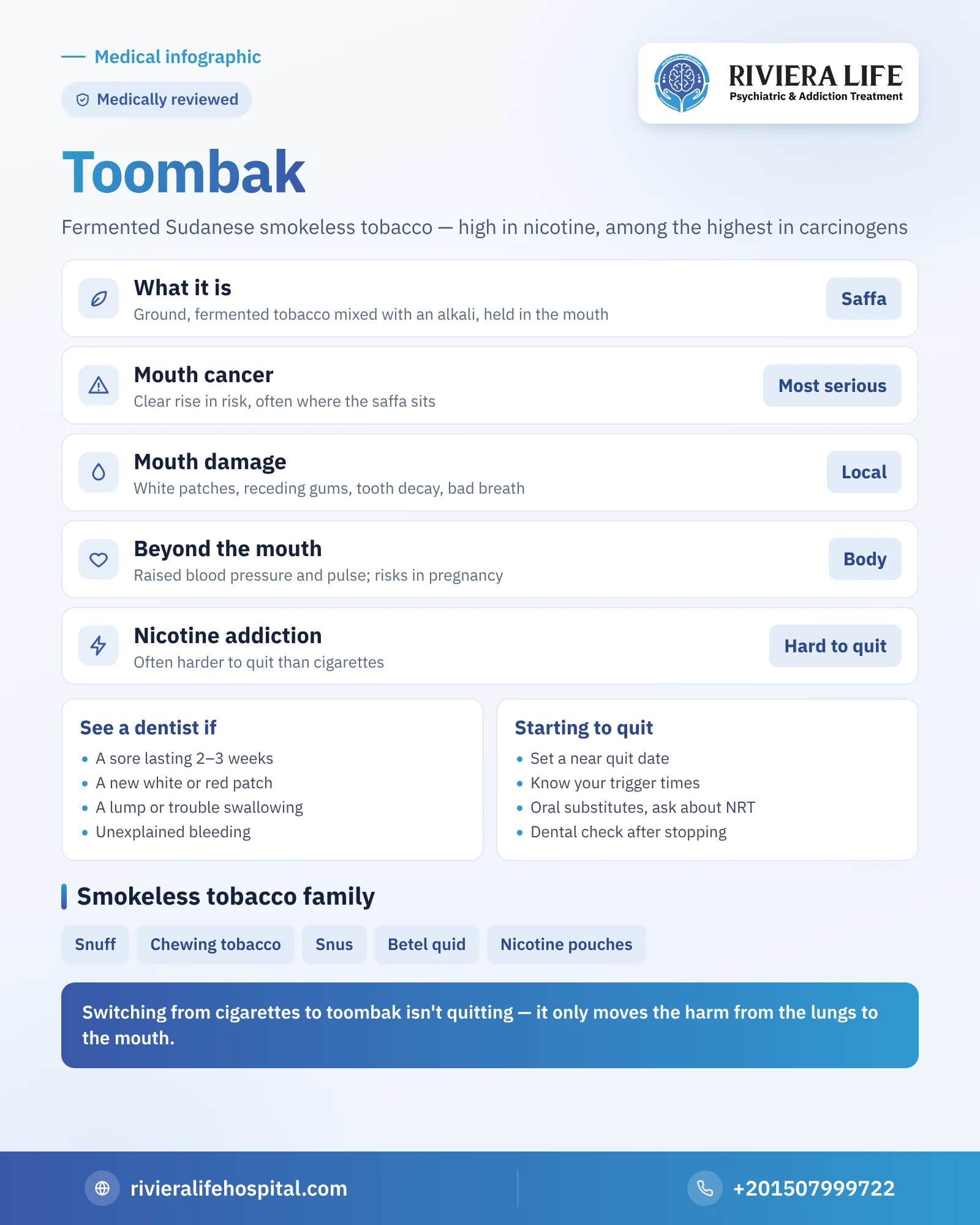
Toombak, which some spell “tumbak”, is smokeless tobacco that is ground, fermented and mixed with an alkaline substance, then a small amount is placed between the lower lip and the gum or inside the cheek for hours. It is widespread in Sudan, where it is known as saffa, and some Sudanese living in Egypt and elsewhere use it.
Although it produces no smoke, it is one of the most addictive tobacco products because of its high nicotine concentration, and one of those most linked to mouth cancer in research, because it contains large amounts of carcinogens produced by fermenting the tobacco. In this article we explain what toombak and similar smokeless tobacco are, their harm to the mouth and body, why it is hard to quit, and how to start quitting.
What is toombak?
Traditional toombak is made from a strong type of tobacco leaf, which is dried, ground and left to ferment for a while, then mixed with an alkaline substance such as sodium bicarbonate, which some call “atrun”. This mixing raises the mixture’s alkalinity, speeding up the absorption of nicotine through the lining of the mouth. The result is a moist, dark brown powder, wrapped in paper or kept in a small tin, from which the user takes a “saffa” to put in their mouth, spitting out the saliva that collects.
Some users put it in dozens of times a day, and some sleep with it in their mouth, so the tissue of the mouth stays in contact with tobacco for most hours of the day.
Smokeless tobacco: one family with different names
Toombak is one of many products used without burning, all of which deliver nicotine through the mouth or nose:
- Snuff: fine tobacco powder sniffed through the nose, or a moist type placed in the mouth.
- Chewing tobacco: cut leaves that are chewed and spat out.
- Snus: small pouches of moist tobacco placed under the lip, widespread in Scandinavian countries.
- Tobacco mixed with betel nut: common in South Asia, adding another carcinogen to the tobacco.
- Modern nicotine pouches: contain no tobacco leaf, but contain nicotine and cause the same addiction.
The level of carcinogens varies greatly between these products, and Sudanese toombak is among the highest according to what research has recorded.
Why is toombak widespread?
Many start toombak at a young age, imitating a father, uncle or work colleagues, in environments that consider it normal or even a sign of manhood. Some promote it as helping concentration during long work or easing hunger and tiredness, an impression that actually comes from relieving nicotine withdrawal in those used to it. It is also cheap, has no smell of smoke, and can be used in places where smoking is banned, staying in the mouth for hours without anyone noticing. All these factors make use daily and repeated, and make stopping harder.
Why is toombak especially dangerous to the mouth?
The place where toombak is held is exposed to constant irritation from the tobacco, the alkaline substance and the products of fermentation. Over time these changes may appear:
- White or grey wrinkled patches where the saffa is placed, some of which may turn into cancer.
- Gums receding from the teeth and exposing the roots.
- Tooth wear, decay and staining, and persistent bad breath.
- A weaker sense of taste and smell.
Toombak and mouth cancer
This is the most dangerous part. Studies in Sudan have linked toombak use with a clear rise in the risk of mouth cancer, often in the same area where the saffa is placed. Smokeless tobacco in general is classified among the causes of cancer of the mouth, esophagus and pancreas. The risk increases with the number of years of use and the number of times a day, and when toombak is combined with smoking.
So take any change in your mouth seriously: a sore that doesn’t heal within two or three weeks, a new white or red patch, a lump, difficulty swallowing or moving the tongue, or unexplained bleeding. These are signs that need an early examination by a dentist or oral specialist, because early detection changes the outcome a great deal.
Harms beyond the mouth
The nicotine absorbed from toombak raises blood pressure and heart rate, and over time may contribute to heart and blood vessel disease. Health authorities point out that smokeless tobacco during pregnancy is linked to risks to the baby, such as premature birth and low birth weight. Swallowing some of the saliva mixed with tobacco also exposes the esophagus and stomach to its substances.
Nicotine addiction: why is saffa hard to give up?
Many toombak users say quitting it is harder than quitting cigarettes. The reason is that the mixture delivers a large amount of nicotine that stays in the mouth for a long time, so the brain gets used to a high level all day long. On stopping, irritability, difficulty concentrating, craving, insomnia and increased appetite appear. Added to that is the hand-and-mouth habit: a tin in the pocket, and a saffa after eating, with tea or while driving. You’ll find a detailed explanation of this addiction in our article on nicotine addiction.
Myth: toombak is lighter than cigarettes
It’s true that toombak doesn’t harm the lungs with smoke, but that doesn’t make it safe. It moves the harm from the lungs to the mouth, and carries the risk of cancer, addiction and heart disease. Switching from cigarettes to toombak isn’t quitting, but changing the way nicotine enters the body, and many end up using both together.
Toombak with cigarettes or shisha
Some users combine toombak with cigarettes, or use saffa by day at work and smoke shisha in the evening at the café. This combination doubles the daily amount of nicotine, adds harm to the mouth to harm to the lungs and heart, and makes quitting more complicated because each product covers for the absence of the other. If you decide to stop, put both in one plan, and don’t switch from one to the other.
How do you start quitting toombak?
The plan for quitting toombak is basically similar to the plan for quitting smoking, with some specifics:
- Set a near date to stop and before it get rid of all the tins at home, in the car and at work.
- Know your times: after eating, with tea, at work or while driving, and prepare an alternative for each situation.
- Oral substitutes: sugar-free gum, seeds or cut vegetables keep the mouth busy at the moment of craving.
- Ask the doctor or pharmacist about nicotine replacement: gum, lozenges and patches may ease withdrawal, the doctor decides which suits best, and our article on nicotine gum explains how one of them works.
- Visit the dentist: to examine the mouth after stopping and follow up any patches, as many simple changes improve after quitting.
- Get through the first weeks: withdrawal symptoms are strongest in the first days and then gradually ease.
What happens after stopping?
The gums and irritated tissues begin to improve within weeks, and some simple white patches may disappear after quitting, while some need follow-up or a biopsy. Taste and breath improve, and the cancer risk gradually falls with years of abstinence. Most importantly, you free yourself from needing a tin in your pocket all day.
And if a member of your family uses toombak, encourage them to have regular mouth checks even before they decide to quit, because early detection of any change may be the most important step they can take now.
When do you need specialist help?
If you have tried several times without success, or toombak is linked to smoking, shisha or another substance, or accompanied by anxiety or depression that makes every attempt collapse, a medical assessment helps. The consultants in psychiatry and addiction treatment at Riviera Life can set a plan covering everything you use, with a free, confidential first consultation around the clock on +201507999722.
More from our smoking and nicotine guide
- Nicotine addiction: symptoms, withdrawal and harms
- Quitting smoking: a practical plan
- Nicotine gum: how it works and who it suits
- How long nicotine stays in your system
- Toombak addiction treatment: mouth checks, medication support and behavioral therapy
- The harms of snuff: nicotine, the nose and smell — what’s proven and what isn’t settled
- Smoking and nicotine: the complete guide
Questions many people ask
It doesn't harm the lungs with smoke, but it carries the risk of mouth cancer, nicotine addiction and heart disease, so it isn't a safe alternative to smoking.
Yes. It contains a high level of nicotine absorbed through the lining of the mouth, and many users describe quitting it as harder than quitting cigarettes.
A sore that doesn't heal within two or three weeks, a new white or red patch, a lump, difficulty swallowing, or unexplained bleeding.
Some simple patches may improve or disappear after stopping, but some need follow-up or a biopsy, so a dental check of the mouth is advised.
It may ease withdrawal symptoms such as irritability and craving, and the doctor or pharmacist decides the most suitable type and how to use it.