Nicotine gum is one of the nicotine replacements used to help quit smoking: it delivers an amount of nicotine through the lining of the mouth without smoke or tar, easing craving and withdrawal symptoms, and its use is then reduced gradually until stopping. But it isn’t ordinary gum to be chewed all the time; it has a special method of use known as chew and park, and if chewed wrongly it causes nausea, heartburn and hiccups and is less effective. In this article we explain how it works, the right idea behind using it, its side effects, who should consult a doctor before using it, and what to do if you become attached to the gum itself.
How does nicotine gum work?
A smoker doesn’t only suffer from a hand-and-mouth habit, but from a brain used to repeated doses of nicotine. On stopping suddenly, irritability, insomnia, difficulty concentrating and intense craving appear. The gum gives the brain part of the nicotine it is used to, but in a slower, calmer way than a cigarette, which delivers it to the brain within seconds. This slowness is intentional: it eases withdrawal without recreating the quick “hit” that feeds addiction. Most importantly, the smoker gets rid of the smoke itself, which is the source of most of smoking’s harm to the lungs and heart, not nicotine alone.
Chew, then park: the right idea
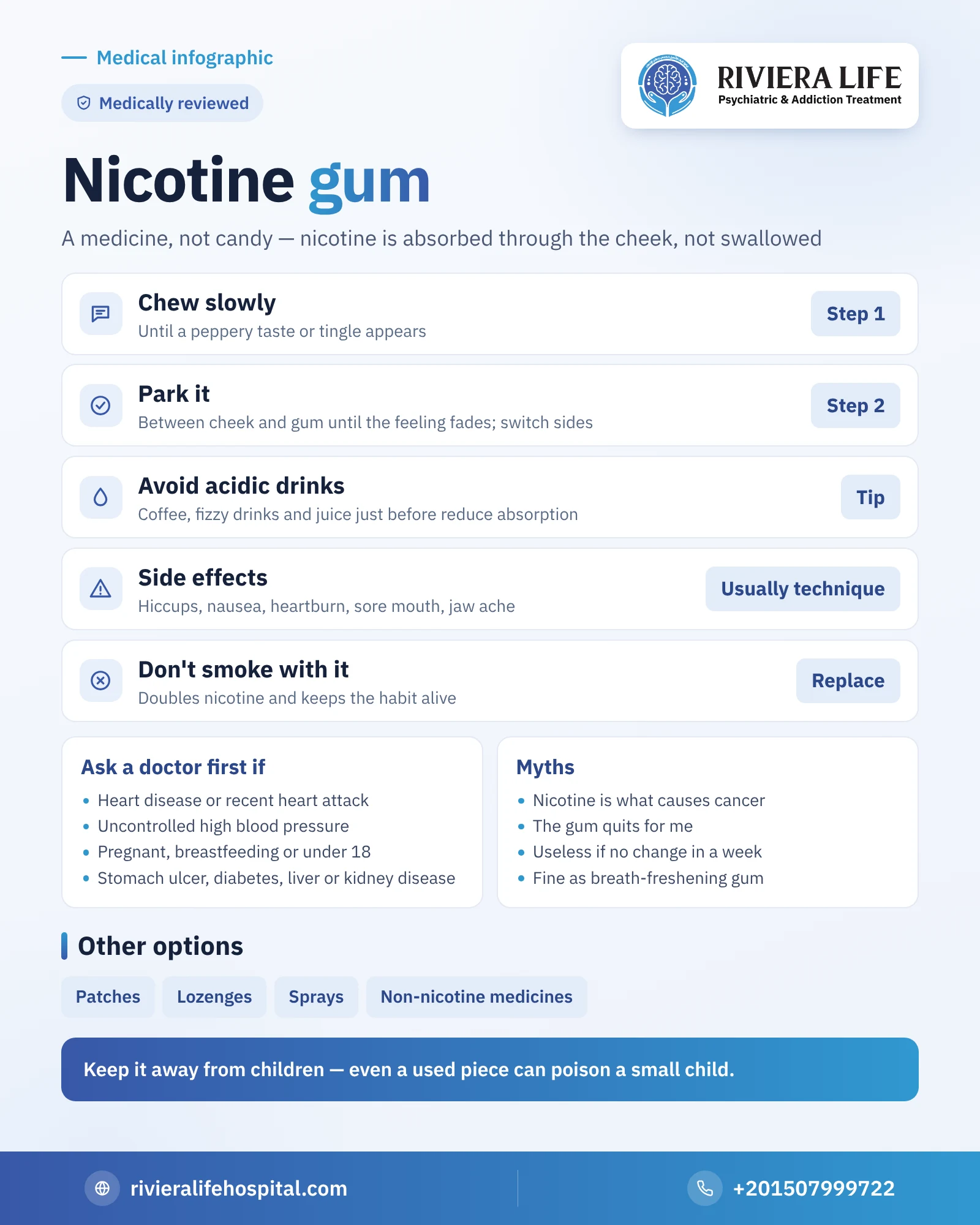
The nicotine in the gum is designed to be absorbed through the lining of the cheek and gum, not swallowed with saliva. So the method rests on a simple principle: chew slowly until you feel a peppery taste or slight tingle, which is the sign that nicotine is being released, then stop chewing and park the gum between your cheek and gum until the feeling fades, then chew a little again, and so on for a period of time. It is best to change the parking spot between the two sides of the mouth.
Continuous chewing like ordinary gum releases nicotine quickly into the saliva, which is swallowed and irritates the stomach and throat, and doesn’t reach the blood in the amount needed. Acidic drinks such as coffee, fizzy drinks and juices reduce nicotine absorption if drunk just before or with it. The right strength, the number of pieces, the duration of use and the reduction plan are decided by the doctor or pharmacist according to how much you smoke and your situation, and aren’t copied from someone else’s experience.
Is nicotine gum effective?
The evidence suggests that nicotine replacements, including gum, raise the chances of quitting compared with trying without help. The benefit increases when combined with behavioral support or a quit program. The doctor may combine a patch, which gives a steady level of nicotine all day, with a fast-acting option such as gum for moments of sudden craving, and this combination works better for some smokers than a single method. But the gum doesn’t make the decision for you; it is a crutch that helps you through the difficult weeks of your plan to quit smoking.
Gum use usually starts on the quit day itself, not days before alongside cigarettes. It helps to know from the start that it is a temporary stage with an end, and to write down with the doctor or pharmacist when and how you will reduce it, so that it doesn’t turn from a way out of smoking into a new habit with no date to stop.
Common side effects
Most effects are mild, and many are linked to the wrong chewing technique:
- Repeated hiccups, nausea, heartburn or indigestion, usually from swallowing nicotine with saliva.
- Irritation or pain in the mouth and throat, and sometimes minor sores.
- Jaw pain from long chewing.
- Headache or mild dizziness.
If signs of too much nicotine appear, such as severe nausea, vomiting, strong dizziness, palpitations or a cold sweat, stop and consult the doctor. This often happens in people who chew the gum while still smoking.
Don’t smoke while using the gum
Combining cigarettes and gum doubles the nicotine in the body and raises the likelihood of the symptoms above, and also keeps the smoking habit alive. The aim is for the gum to replace the cigarette, not be added to it. If you go back to smoking, discuss the plan with your doctor rather than continuing with both.
Common myths about nicotine gum
- Nicotine is what causes cancer: most of smoking’s harm comes from the smoke and its tar, carcinogens and carbon monoxide, not from nicotine alone, although nicotine isn’t completely innocent, especially for the heart and in pregnancy.
- The gum makes me quit on its own: it eases withdrawal, but the habits linked to the cigarette need a plan and awareness of triggers.
- If it doesn’t work in the first week it’s useless: much failure is due to the wrong technique or an unsuitable strength, which is worth reviewing with the pharmacist or doctor.
- It can be used like ordinary gum to freshen the breath: it is a medicinal product containing an active substance, not a sweet.
Who should consult a doctor before using it?
Nicotine gum is sold in many countries without a prescription, but that doesn’t mean it suits everyone without advice. Ask your doctor first if you:
- Have heart disease, a recent heart attack, a heart rhythm disturbance or unstable angina.
- Have uncontrolled high blood pressure.
- Are pregnant or breastfeeding.
- Are under eighteen.
- Have a stomach ulcer, diabetes, or liver or kidney disease.
- Wear dentures or have jaw joint problems, as another method may suit you better.
- Take other medicines, as the effect of some medicines changes after quitting smoking.
Keep it away from children and pets
What suits an adult smoker may be poisonous to a small child, even a used piece. Keep packs out of children’s reach, and dispose of chewed pieces in a closed place. If a child swallows nicotine gum and shows vomiting, lethargy, seizures or difficulty breathing, call an ambulance on 123 immediately.
If you become attached to the gum itself
Some people who quit cigarettes continue with the gum for months or years, and are afraid to stop. This is much less harmful than going back to smoking, because the gum contains no smoke, tar or carbon monoxide. But the final goal is freedom from nicotine altogether. Signs of attachment include needing the gum as soon as you wake up, the number of pieces increasing over time instead of decreasing, or anxiety about running out. The solution isn’t stopping suddenly, but a gradual reduction plan set with the doctor or pharmacist, and knowing the situations in which you reach for the pack without real need.
Gum and the other options
Gum is one of several options: patches, lozenges, mouth or nasal sprays in some countries, as well as prescription medicines that contain no nicotine. The doctor chooses what suits your smoking pattern and health. Those who use oral tobacco such as toombak may find gum or lozenges a substitute close to the mouth habit. E-cigarettes aren’t medicinal nicotine replacements, and medical opinions differ about their role in quitting.
When do you need more help than gum?
If you have tried gum and other options without success, or smoking is part of a wider problem that includes hashish, anxiety or depression, the problem usually isn’t the method. Our article on nicotine addiction explains why quitting is harder for some people than others. Riviera Life’s consultants can assess the situation and set a comprehensive plan, with a free, confidential first consultation on +201507999722.
More from our smoking and nicotine guide
- Nicotine addiction: symptoms, withdrawal and harms
- Quitting smoking: a practical plan
- E-cigarettes: the harms and the truth about helping you quit
- How long nicotine stays in your system
- Bupropion: depression, quitting smoking and the risk of seizures
- Smoking and nicotine: the complete guide
Questions many people ask
No. It is chewed slowly until a peppery taste or tingle appears, then parked between the cheek and gum, because nicotine is absorbed through the lining of the mouth, not by swallowing.
Usually because of fast, continuous chewing that releases nicotine into the saliva, which is swallowed and irritates the stomach and throat. Correcting the technique eases this.
It isn't advised: the combination raises nicotine in the body, increases side effects and keeps the smoking habit alive.
Some people become attached to it for a long time, which is much less harmful than smoking, but it is better to set a gradual reduction plan with a doctor or pharmacist.
A pregnant woman should consult her doctor before using any nicotine replacement, so they can decide what suits her after weighing benefits and risks.