Nicotine addiction is a physical and psychological dependence on the substance found in cigarettes, shisha and e-cigarettes, which makes stopping difficult despite knowing the harm. It is one of the most widespread types of addiction and the least noticed, because smoking is socially accepted in many homes and cafés. In this article you will learn about the symptoms and causes of nicotine addiction, withdrawal symptoms and their approximate duration, the harms, the difference between forms of smoking, and the quitting options the doctor decides on.
What is nicotine addiction?
Nicotine is a stimulant substance found naturally in the tobacco plant. The American diagnostic manual (DSM-5) recognizes what is called “tobacco use disorder”, and the International Classification of Diseases describes nicotine dependence. The criteria resemble other types of addiction: a pressing craving, failed attempts to stop, continuing despite harm, tolerance that pushes the amount up, and withdrawal symptoms on stopping.
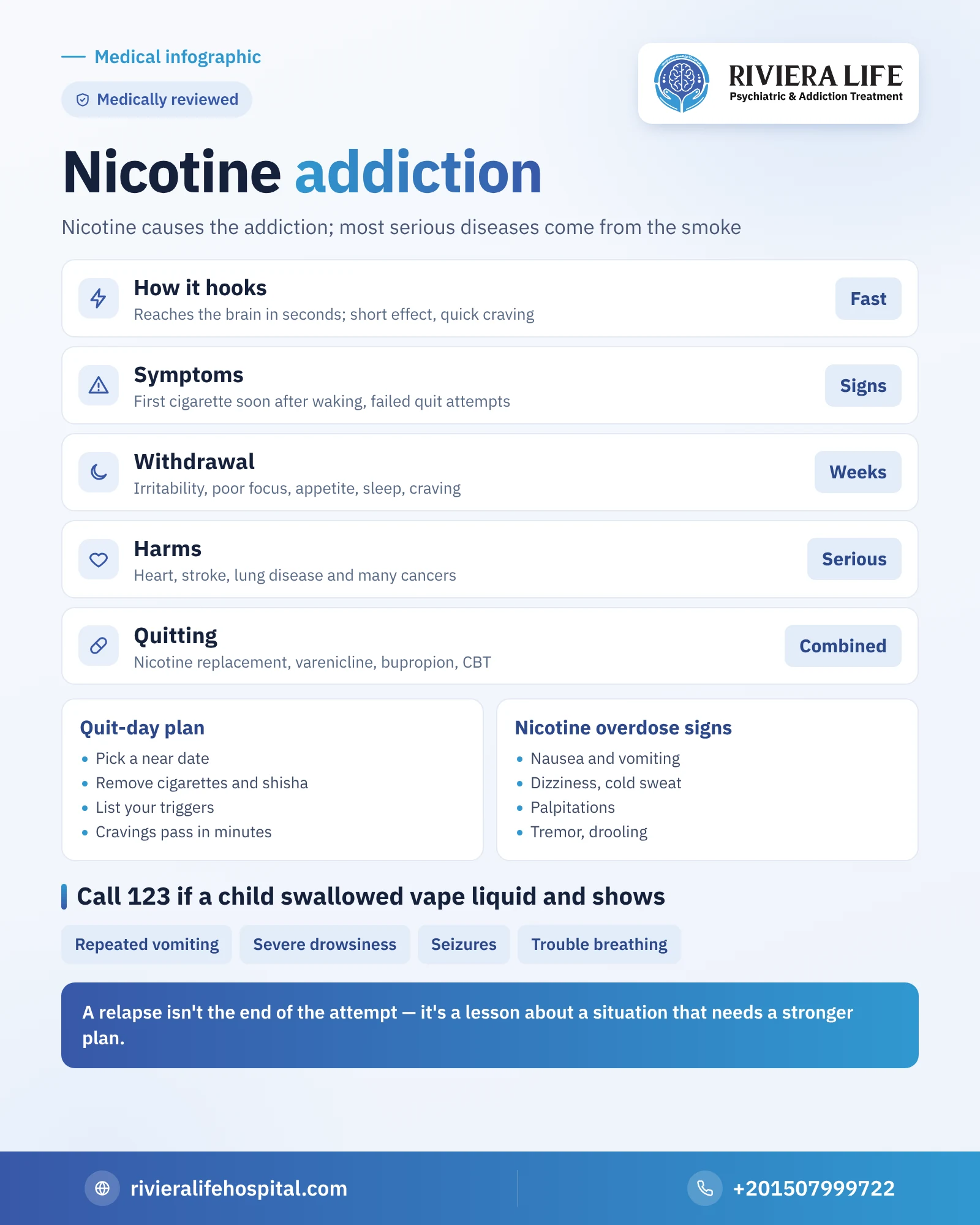
It is worth noting that nicotine itself is what causes the addiction, while most serious diseases come from the smoke and its other components. This difference is important for understanding some treatment options.
How does nicotine cause addiction so quickly?
When inhaled, nicotine reaches the brain within seconds, stimulating the release of dopamine and other messengers, so the smoker feels an improvement in focus and mood. But the effect is short, so the craving returns quickly. This repetition dozens of times a day, with the cigarette linked to coffee, food and stress, makes the habit rooted physically and psychologically. To learn more about the reward system read dopamine and addiction.
Cigarettes, shisha and vapes: is there a safe form?
| Form | What you should know |
|---|---|
| Ordinary cigarettes | The form most linked to heart and lung disease and cancer |
| Shisha | Not lighter as many think, as a long session may mean inhaling a large amount of smoke |
| E-cigarettes (vapes) | Usually contain nicotine and cause addiction, and their long-term harms are still being studied |
| Heated tobacco and oral pouches | Newer products that also deliver nicotine, and aren’t free of risk |
There is no safe form for someone who doesn’t smoke in the first place. Switching from cigarettes to vapes may reduce exposure to smoke for some adult smokers, but medical opinions differ about its role, and the decision is discussed with the doctor.
Symptoms of nicotine addiction
- Lighting the first cigarette a short time after waking.
- Difficulty staying for long in places where smoking is forbidden.
- Smoking despite illness, such as colds or chest problems.
- Repeated attempts to quit that ended in returning.
- Gradually increasing the number of cigarettes over time.
- Irritability and tension if cigarettes run out or smoking is delayed.
- Organizing the day around smoking times.
Nicotine withdrawal symptoms and how long they last
Symptoms usually begin within hours of the last cigarette, are most severe in the first days, then ease gradually over roughly a few weeks. Sudden cravings to smoke, however, may appear long after that in situations linked to smoking. Among the best-known symptoms:
- Irritability and mood swings.
- Anxiety and difficulty concentrating.
- Increased appetite.
- Disturbed sleep.
- A pressing urge to smoke.
These symptoms are unpleasant but usually not dangerous. Someone with a history of depression or anxiety is advised to tell his doctor before quitting so his mood can be followed.
Causes of nicotine addiction and risk factors
- Starting at a young age: the brain in adolescence is more sensitive to the effect of nicotine.
- Environment: parents or friends smoking, and the spread of shisha at gatherings.
- Psychological stress: smoking is used as a way to calm tension, although nicotine doesn’t treat the cause of the tension.
- Psychiatric conditions: depression, anxiety and ADHD increase the likelihood of smoking and the difficulty of quitting.
- Genetics: affects how quickly the body breaks down nicotine and the strength of dependence.
- Product marketing: vape flavors attractive to teenagers in particular.
The harms of smoking and nicotine
According to the World Health Organization, tobacco kills up to half of its users who don’t quit. Among its most prominent harms:
- Heart and blood vessel disease and stroke.
- Chronic lung disease, lung cancer and many other cancers.
- Harm to the mouth, gums and teeth, and weakened senses of smell and taste.
- Risks to pregnancy and the fetus.
- The harms of passive smoking to children and members of the household.
The good news is that the body begins to improve a short time after quitting, and the risks decline gradually the longer the stop lasts.
Call an ambulance on 123 immediately if you see
Concentrated e-cigarette liquids can cause serious poisoning if a child swallows them. Keep them out of children's reach, and call an ambulance if after swallowing there is:
- Repeated vomiting or heavy drooling
- Severe drowsiness or difficulty waking
- Seizures
- Difficulty breathing
Nicotine, hashish and other substances
In Egypt, hashish is often mixed with tobacco in the same cigarette, so two addictions come together in one habit. Someone trying to leave hashish may discover that the craving for nicotine remains, and vice versa. That is why it is better for the treatment plan to deal with both substances together. For those who use more than one substance, our drug addiction guide gives a wider picture.
Ways to quit nicotine: what does the doctor decide?
The most successful quitting attempts are those that combine behavioral support with medication when needed:
- Nicotine replacements: such as patches, gum and lozenges, provide nicotine without smoke and ease withdrawal, and the doctor or pharmacist determines the type and duration.
- Medicines that don’t contain nicotine: such as varenicline and bupropion, dispensed on prescription after assessing the case.
- Behavioral support: individual or group sessions, and cognitive behavioral therapy to identify triggers and deal with them.
- Treating accompanying conditions: depression and anxiety, because they are among the most common causes of relapse.
Don’t start any medicine without consultation, especially with heart disease, psychiatric conditions or pregnancy.
A practical plan for quit day
- Set a near day for quitting and tell your family and friends.
- Get rid of cigarettes, lighters and shisha equipment before it.
- Write down the situations that ignite your craving: coffee, after eating, or with certain friends, and prepare an alternative for each.
- Remember that an intense craving passes within minutes, so occupy yourself by walking or drinking water.
- If you relapse, don’t consider it the end of the attempt, but a lesson about a situation you need a stronger plan for.
Signs of too much nicotine: when does habit turn into poisoning?
Too much nicotine in the body is a different condition from the addiction itself. It happens when more reaches the blood than the person can tolerate, and those most exposed to it are children who swallow vape liquids or cigarette butts, beginners at shisha and vaping, and those who combine smoking with nicotine replacements without medical supervision.
The signs usually begin with:
- Nausea, vomiting and abdominal pain.
- Dizziness, headache and cold sweat.
- Palpitations and a racing pulse.
- Tremor, severe tension and drooling.
If the amount increases, the picture may reverse into muscle weakness, a slow pulse, difficulty breathing, seizures and loss of consciousness. These are emergency signs, so call an ambulance on 123 immediately, and don’t try to force the child to vomit.
Don’t confuse this with withdrawal symptoms; withdrawal comes from a lack of nicotine and appears as irritability, insomnia, difficulty concentrating and increased appetite, while poisoning is caused by an excess. The same precautions apply to the oral tobacco known as toombak and to e-cigarettes, whose nicotine concentrations vary greatly.
For prevention, keep vape liquids, nicotine gum and lozenges in closed containers away from children, don’t smoke while using a nicotine patch, and ask the doctor or pharmacist before combining more than one replacement.
The right hospital for nicotine addiction treatment: how to choose
The right hospital for nicotine addiction treatment is the one that sees the smoker as a whole: his habit, his psychological state, and any other substances he uses. Ask before you choose:
- Does the doctor assess the severity of dependence and accompanying illnesses before choosing medication?
- Does it combine medicine with behavioral support, not medicine alone?
- Does it treat the depression and anxiety that increase relapse?
- Does it deal with mixing tobacco with hashish or other substances within one plan?
- Does it follow the patient after quitting in the difficult weeks?
Beware of any product or program that promises you guaranteed quitting in a session or a few days.
How Riviera Life meets these standards
Here is how Riviera Life meets these conditions, especially when smoking is accompanied by the use of other substances or a psychiatric disorder:
- Consultants in psychiatry and addiction treatment: a comprehensive assessment of the severity of dependence and what accompanies it.
- A plan combining medication and behavioral treatment: decided by the doctor according to your condition.
- Experience in dual addiction: treating nicotine with hashish or others in one plan.
- Treating accompanying psychiatric conditions: depression and anxiety within the program.
- Aftercare: follow-up in the hardest first weeks after quitting.
- Complete privacy and continuous follow-up: the smoker receives treatment in a hospital accredited by the Ministry of Health with fourteen years of experience.
Request your free first consultation to talk about a quitting plan, on +201507999722, available all day, or by visiting our premises in Sheikh Zayed, Giza.
Read also
- The harms of hashish on the brain, heart and body
- Dopamine withdrawal symptoms: what happens after stopping?
- The dual diagnosis program for addiction treatment
- Anxiety treatment: psychotherapy and medicines
- Quitting smoking: a practical plan from decision day to the third month
- Toombak: what it is, its harms to the mouth, cancer risk and how to quit
- How long nicotine stays in the body: blood, urine, saliva, hair and cotinine
- E-cigarettes: nicotine, harms and do they really help you quit?
- The harms of snuff: nicotine, the nose and smell, what is proven and what isn’t settled
- Toombak addiction treatment: mouth examination, medication support and behavioral therapy
- Drug vapes: cannabis and synthetic cannabinoids in liquids and how to protect your children
- Smoking and nicotine: the complete guide
Questions many people ask
They may reduce exposure to smoke for an adult smoker who switches to them, but they cause nicotine addiction and aren't safe, and they don't suit non-smokers or teenagers.
They are most severe in the first days and ease gradually over roughly a few weeks, while sudden cravings may appear in certain situations for longer.
Yes, it contains nicotine, and a long session may mean inhaling a large amount of smoke, so it isn't a safe alternative.
They are among the known means of quitting, but their type and duration are set by the doctor or pharmacist, especially with heart disease or pregnancy.
Look for an assessment of dependence and accompanying conditions, a plan combining medicine and behavioral support, treatment of anxiety, depression and other substances, and follow-up after quitting. Riviera Life in Sheikh Zayed meets these criteria.