The short answer
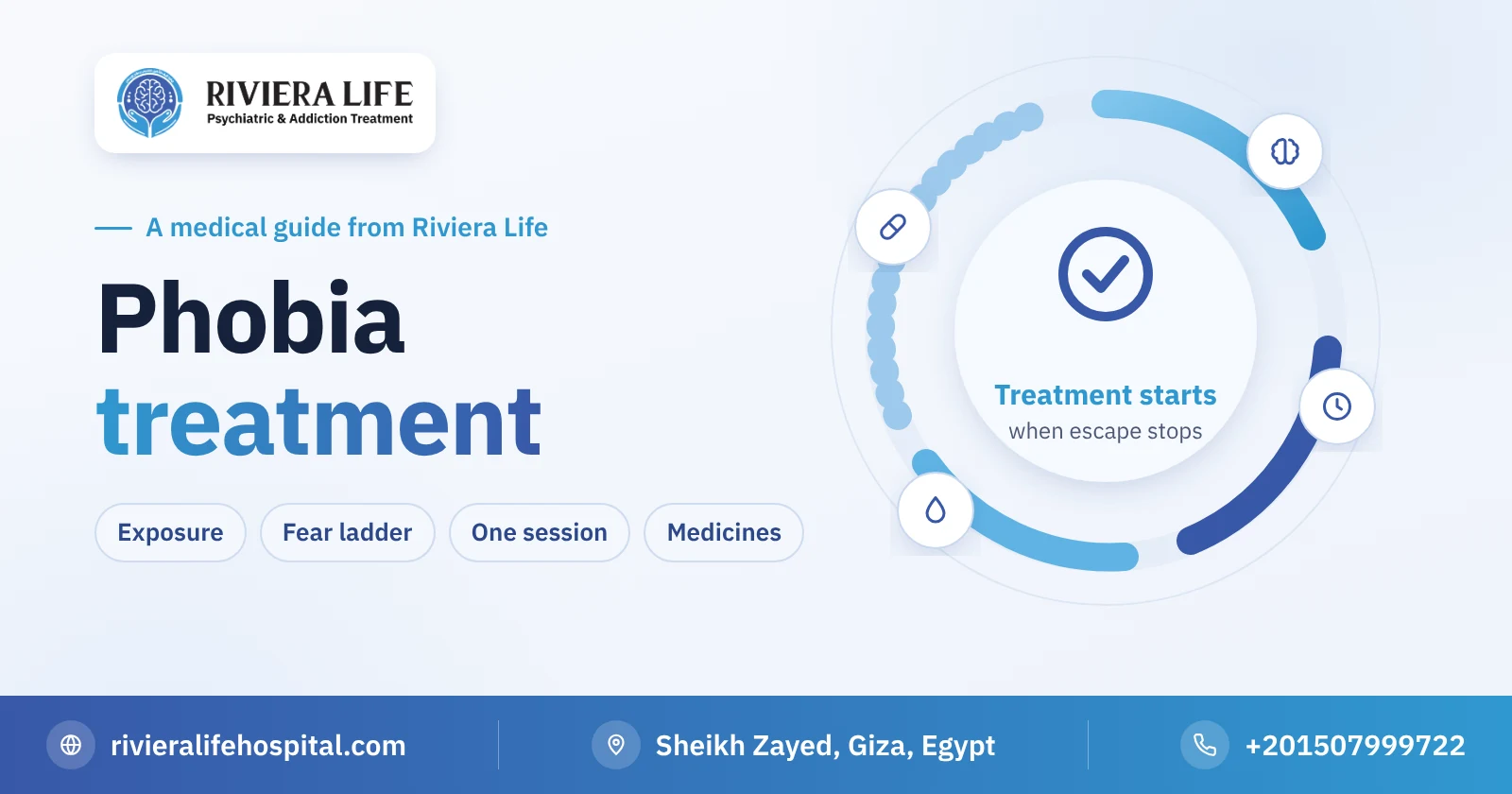
The most effective phobia treatment is exposure therapy, meaning facing the frightening thing in a gradual, organized way with a therapist, until the brain learns that the danger it expects doesn’t happen. Many patients with specific phobia, such as fear of heights, animals or injections, improve within a small number of sessions, and one long session may be enough in some cases. Medicines have a limited role in specific phobia, and a clearer one in social phobia and agoraphobia. Avoidance is what keeps the phobia alive, which is why treatment starts when escape stops.
- Main treatmentGradual exposure with a therapist
- DurationUsually a few sessions in specific phobia
- What makes it worseConstant avoidance and escape
Someone with a phobia usually knows their fear is exaggerated, and yet can’t control it. They arrange their day around avoiding the lift, the plane, dogs or needles, and accept big losses so as not to face a moment of panic. The good news is that phobia is among the psychological disorders most responsive to treatment, provided it is the right treatment.
Why does a phobia continue even though its owner knows it is irrational?
Phobia isn’t based on logic but on learning. When the person approaches the frightening thing their anxiety rises, so they move away, and the anxiety drops immediately. This drop rewards the escape, so the brain learns that moving away is what saved it, and it never gets the chance to discover that the danger wasn’t real. And each time the escape repeats, the fear grows stronger and widens to include more situations.
That is why convincing the patient that their fear is baseless isn’t enough. What changes the phobia is a new experience the body lives through: staying in the situation until the fear falls on its own.
Exposure therapy: how is it done step by step?
Building the fear ladder
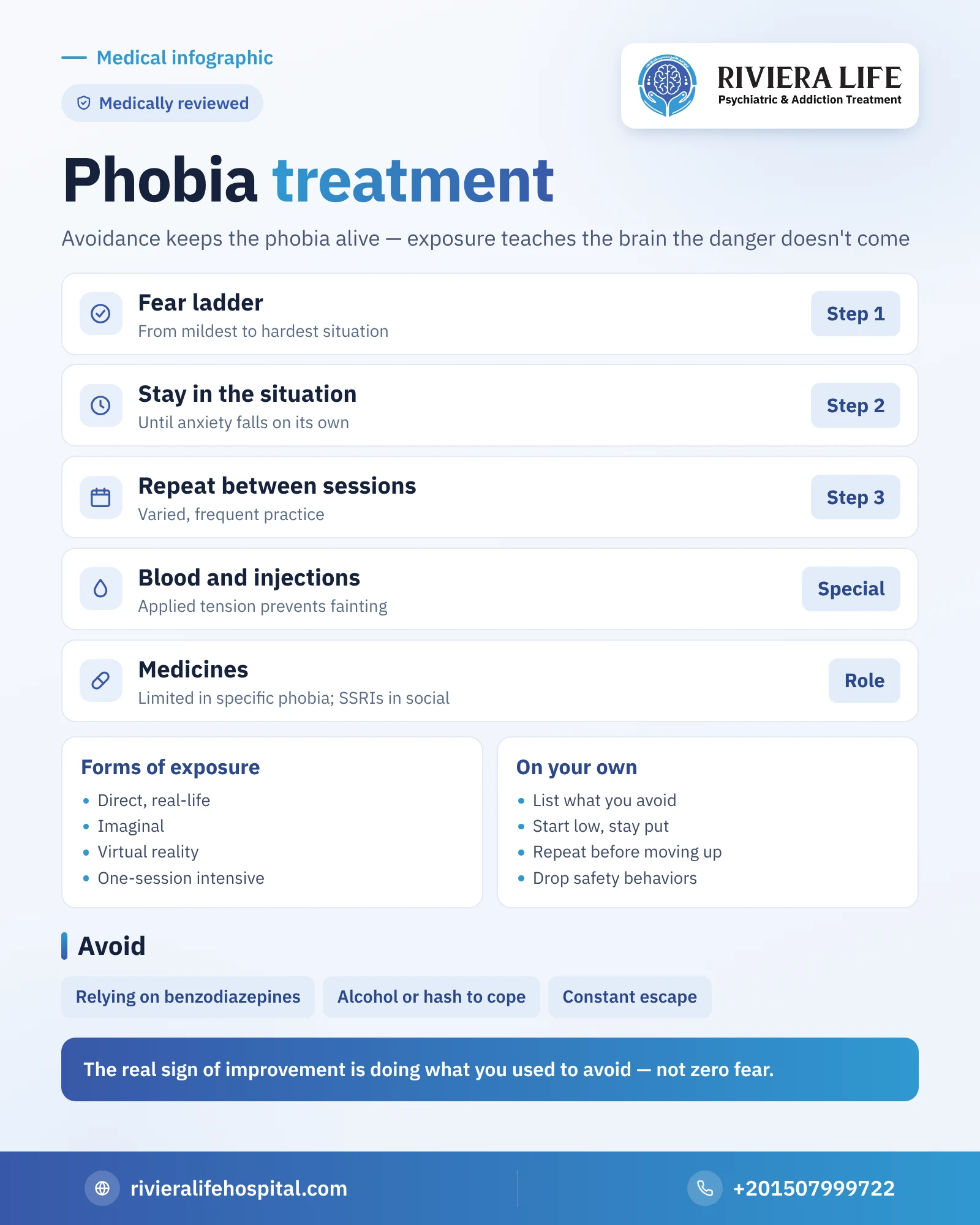
The patient and therapist put together a list of situations linked to their fear, and rate each situation according to the intensity of anxiety it stirs, from mildest to most severe. Someone who fears dogs, for example, may start with a picture of a dog, then a video, then standing far from a tied dog, then approaching it, then touching it with its owner present.
Staying in the situation
The work starts from a step the patient can bear, and they stay in it until their anxiety falls, or until they discover that what they expected didn’t happen. They aren’t asked to be brave, but to stay. Then they move to the next step when the previous one becomes easy.
Repetition between sessions
A large part of the improvement happens in the exercises the patient repeats between sessions. Exposure once a week is much slower than repeated exposure in varied situations.
Forms of exposure
- Direct exposure: facing the situation in reality, which has the strongest effect.
- Imaginal exposure: calling up the situation in the mind, useful when it is hard to reach the real situation or as a start.
- Virtual reality exposure: used in some centers for fears such as flying and heights.
- Intensive one-session treatment: a long session of a few hours that takes the patient to the top of the ladder, and it has shown good results in a number of specific phobia types, including fear of animals.
A special case: fear of blood and injections
This type differs from others, because its owner may actually lose consciousness on seeing blood or a needle, due to a sudden drop in blood pressure and heart rate after they rise. That is why a technique called applied tension is added to exposure: the patient learns to tense the muscles of the arms, legs and trunk for repeated seconds, so blood pressure rises and the likelihood of fainting decreases. This skill alone changes many people’s experience of blood tests and vaccinations.
Cognitive therapy: changing what the mind expects
The therapist also works with the patient on exaggerated expectations: “the lift will fall”, “I’ll suffocate”, “I’ll lose control in front of people”. These expectations are tested in practice within exposure exercises, so exposure turns from mere endurance into an experience that corrects the idea. This part is especially important in agoraphobia, social phobia and accompanying panic attacks.
Are there medicines to treat phobias?
In specific phobia, such as fear of flying, animals or heights, there is no medicine that treats the fear itself, and exposure is the treatment. The doctor may sometimes prescribe a medicine for a rare situation that can’t be avoided, such as a necessary flight, but this doesn’t treat the phobia.
In social phobia and agoraphobia, antidepressants from the selective serotonin reuptake inhibitor class may help, especially if the symptoms are severe or accompanied by depression. Doctors warn against relying on sedatives from the benzodiazepine family, because they relieve temporarily but may disrupt the learning that happens in exposure, and carry a risk of dependence. You will find details of social phobia in the article on social phobia treatment.
How long does phobia treatment take?
This differs according to the type of phobia, its duration and accompanying conditions. In simple specific phobia many see clear improvement within a few sessions. Old agoraphobia, or phobia accompanied by depression or substance use, needs longer and a broader plan. The real indicator of improvement isn’t the complete absence of fear, but the ability to do what the patient used to avoid.
What can you do yourself?
- Notice the list of what you avoid, as it is the real map of the phobia.
- Start with a small step from the bottom of the ladder, and stay in it until the anxiety drops.
- Repeat the same step several times before moving on to the next.
- Avoid hidden “safety behaviors”, such as always bringing someone or carrying a medicine in your pocket, because they prevent full learning.
- If the fear is severe or accompanied by panic attacks or depression, don’t continue alone, as supervised exposure is safer and gets faster results.
Phobia and substance use
Some people with phobias turn to alcohol, sedatives or hash to bear frightening situations, so the solution seems successful at first, then a second problem forms on top of the first. In this case treatment needs to deal with both together, because leaving the substance without treating the fear makes going back to it easy.
How does Riviera Life help you?
At Riviera Life, phobia treatment starts with an assessment that determines the type and severity of the phobia and what accompanies it of panic, depression or substance use, then an exposure treatment plan is built with a psychotherapist, and medicine is added only when it has a clear benefit. The first consultation is free and confidential, and you can start by reading the complete phobia guide.
More from the phobia guide
Questions many people ask
Organized gradual exposure therapy with a psychotherapist is the most effective treatment, especially in specific phobia.
There is no medicine that treats specific phobia, while in social phobia and agoraphobia some antidepressants may help.
In simple specific phobia many improve within a few sessions, and one intensive session may be enough in some cases.