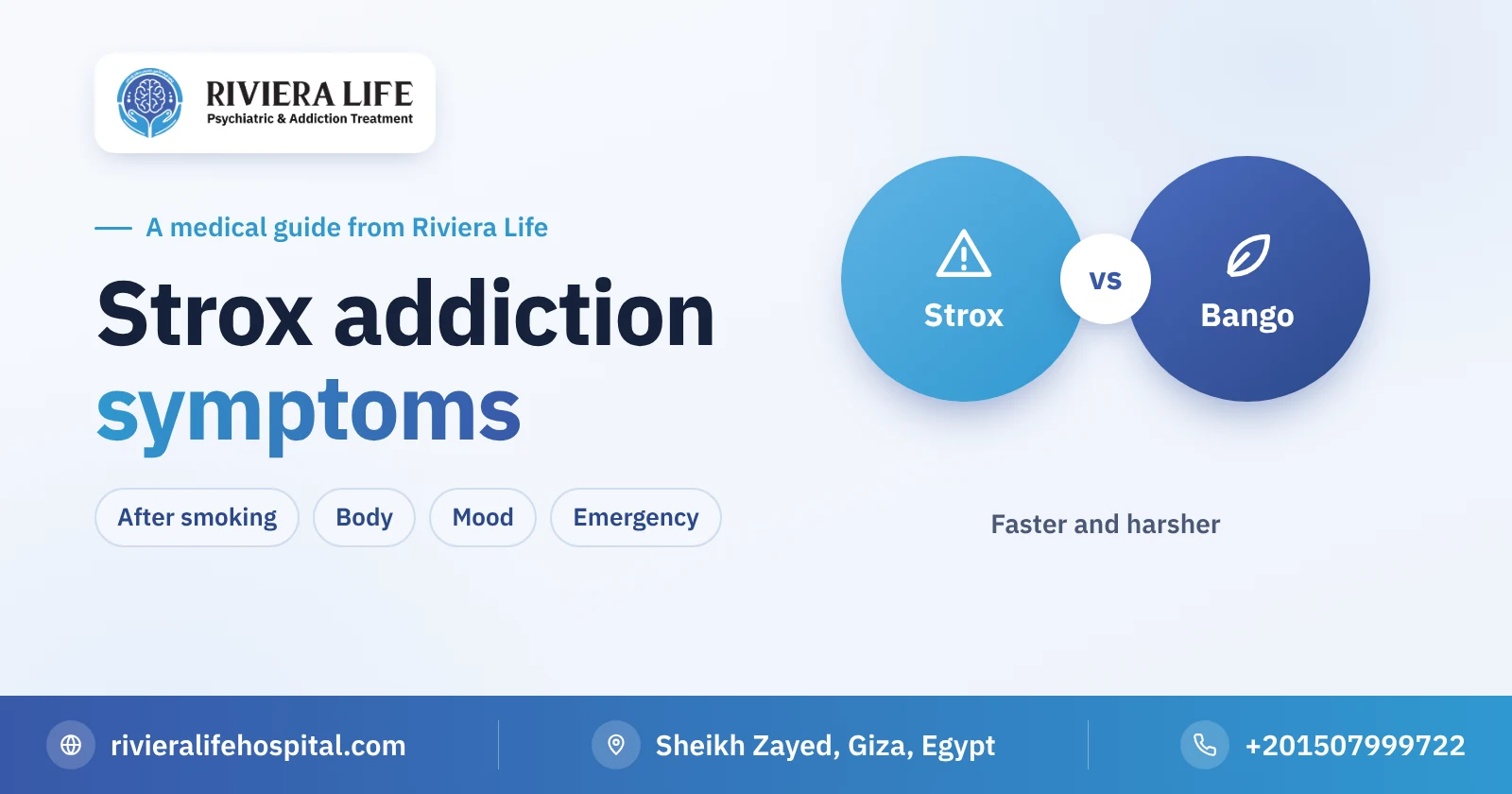
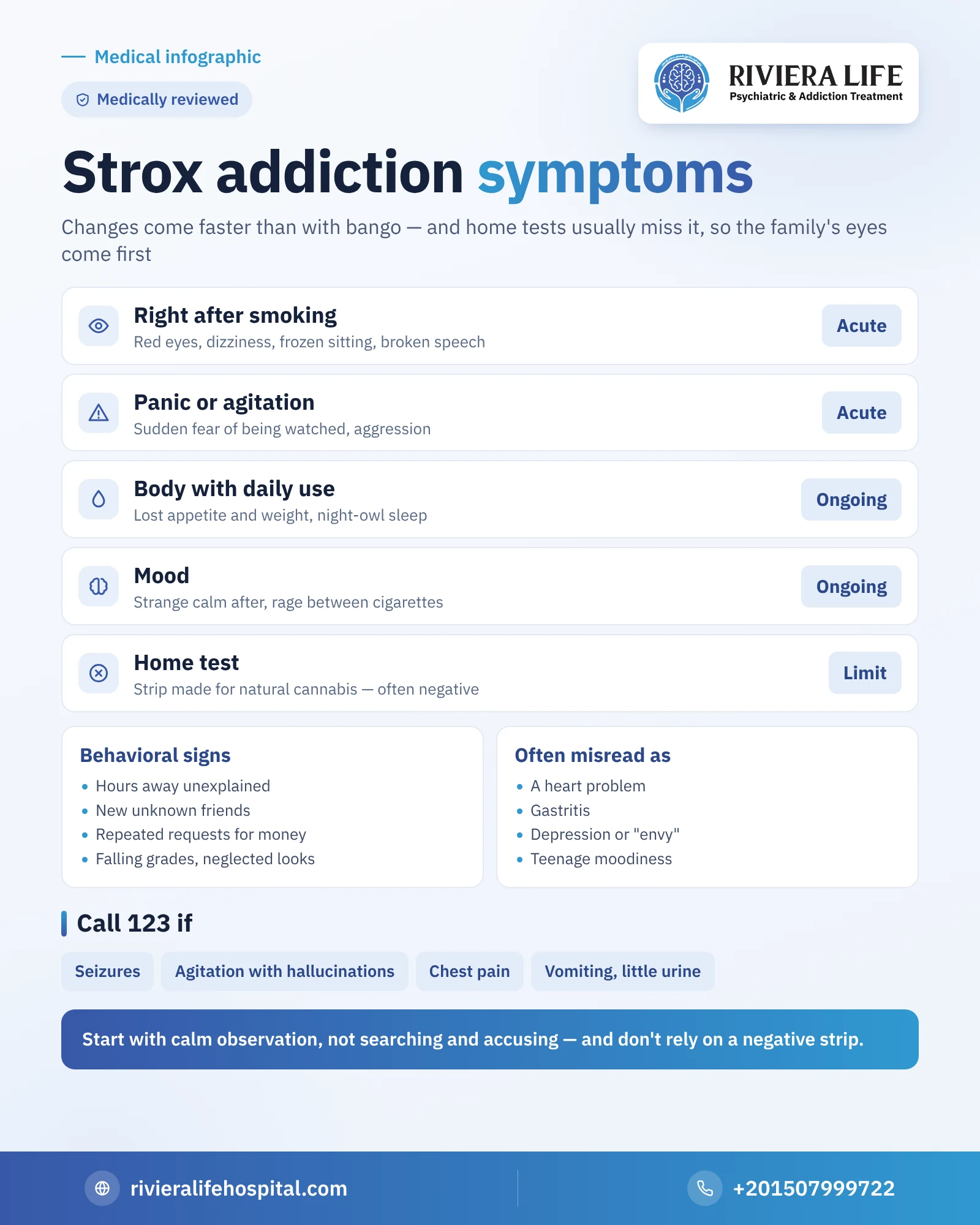
Strox addiction symptoms appear on two levels: acute episodes right after smoking, such as severe dizziness, red eyes, broken speech and panic or agitation, and changes that accumulate with continued use, such as irritability between cigarettes, insomnia, loss of appetite, withdrawal from the family and a decline in studies or work. What distinguishes strox is that these changes happen faster than with bango, and that the usual home test often doesn’t confirm them, so the family’s observation becomes the first line of detection. In this article we arrange the signs according to what you can see with your own eyes, and explain when use turns into addiction, and when the situation becomes an emergency.
Why is strox addiction detected late?
Weeks and sometimes months pass before the family is sure, for several reasons. The first is that strox is smoked like cigarettes, so there are no strange tools or injection marks. The second is that its smell may mix with the smell of tobacco or air fresheners. The third is that many parents rely on the home test strip, which comes back negative because the strip is designed to detect bango, not synthetic cannabinoids, as our article on how long strox stays in the body explains. The fourth is that mood swings are interpreted at first as “adolescence” or exam pressure.
Signs that appear right after smoking
These signs start within minutes of the cigarette, and usually last from half an hour to a few hours depending on the strength of the batch:
- Red eyes and blurred vision, and a vacant gaze that doesn’t focus on the speaker.
- Dizziness and staggering, and sometimes sitting rigidly without moving as if the person is “frozen”.
- Slow or broken speech, or complete silence broken by laughter for no reason.
- Sweating and pallor, and a noticeably fast heartbeat.
- Nausea or vomiting, and a dry mouth.
- Sudden panic or a feeling that someone is watching them, which may reach agitation or aggression.
Physical signs with continued use
When smoking becomes daily, changes appear that aren’t tied to the moment of use itself. The person loses their appetite and weight within weeks, and looks pale and exhausted in the morning. Their sleep is disturbed, staying up until dawn and then sleeping most of the day. They may complain of repeated headaches or palpitations, and some parents notice a slight tremor in their hands when the next cigarette is late. In some users, bouts of severe vomiting that are hard to explain keep recurring, one of the signs that deserves a medical review.
Psychological and mood signs
Mood is the clearest mirror of strox addiction. You will notice sharp swings during the day: a strange calm after smoking, then irritability, distress and explosions over the smallest thing when time passes without it. Over time constant anxiety appears, suspicion of others’ intentions, and talk of people watching or conspiring against them. Some users go through episodes in which they see or hear things that aren’t there; this isn’t just “the substance’s effect” but a sign that the brain is being harmed and needs urgent psychiatric assessment.
Behavioral signs at home, in studies and at work
- Repeated absences from home for hours without explanation, or spending a long time in the bathroom or on the roof.
- New friends no one knows, and drifting away from old friends.
- Repeated requests for money with changing excuses, or small things disappearing from home.
- A sudden drop in grades or repeated lateness at work.
- Neglect of appearance and personal hygiene.
- Lying about small details and a fierce defense of privacy.
Things that may raise suspicion at home
They aren’t conclusive proof on their own, but they deserve attention if they come together with the previous signs: small bags containing crumbled green or brown leaves with a pungent or perfumed smell, rolling papers where they don’t belong, hand-rolled cigarettes, many lighters, or an e-cigarette device with an unknown liquid. Don’t rush into confrontation when you find any of these; write down what you found and consult a specialist before you talk.
How do you tell the signs of strox from bango?
The signs overlap, but there are differences that help you. Bango usually causes relaxation, increased appetite, laughter and slowness, while strox tends towards more violent symptoms: panic, agitation, vomiting, rigidity and loss of consciousness, with loss of appetite instead of an increase. Irritability between cigarettes also appears faster and more strongly with strox. If the person also uses bango, you may find what completes the picture in our article on bango addiction symptoms. In the end, an accurate diagnosis needs a doctor and specialized tests.
Signs parents misinterpret
Some strox signs resemble other problems, so weeks are lost in the wrong direction. A sudden panic attack may be interpreted as a heart problem, so a normal ECG is done and the young man goes home without being asked about substances. Repeated vomiting may be treated as gastritis for months.
Isolation and silence may be read as depression, “magic” or envy. An episode of hallucinations may be shown to non-specialists before a psychiatrist. The simple rule: if any of these pictures appears in a teenager or young person without a clear explanation, ask the doctor frankly about the possibility of synthetic cannabinoids, and ask that the assessment include this possibility.
When is use considered addiction?
It isn’t enough for a person to smoke strox to be diagnosed with addiction. Doctors rely on a set of criteria, and the more of them apply, the more severe the condition:
- Uses more or for longer than intended.
- Has tried to cut down or stop and failed.
- Spends a lot of time getting it or recovering from its effect.
- An intense craving that dominates their thinking.
- Needs a larger amount for the same effect.
- Shows withdrawal symptoms on stopping, detailed in our article on strox withdrawal symptoms.
- Continues despite clear harm to their health, studies or relationships.
Strox signs in teenagers
Teenagers are the group most exposed, because strox is cheap and is promoted among them as “not drugs”. Look for a change in the friendship group, a constantly closed room, strange smells on clothes, anger outbursts out of proportion to the situation, and coded messages on the phone. The brain at this stage is still developing, so the effects of psychosis and anxiety appear faster than in adults, which makes early intervention more important.
Signs that the situation is an emergency
Call an ambulance on 123 immediately if you see
These signs mean poisoning that may deteriorate quickly, even if it is the first time.
- Seizures or loss of consciousness
- Severe agitation or hallucinations with dangerous behavior
- Chest pain or severe palpitations with shortness of breath
- Persistent vomiting with clearly reduced urine
What do you do if you notice these signs?
Start with calm observation, not searching and accusing. Write down what you see and the dates, choose a time when the person is clear-headed to talk, and express your fear for their health instead of talking about shame. Don’t base your decision on a negative test strip. Then ask for a specialist assessment, as doctors can distinguish between addiction and a passing psychological episode or another disorder. If you want to understand what drove them down this road, you will find answers in our article on the causes of strox addiction. At Riviera Life, the first step starts with a free, confidential consultation with a team of consultants in psychiatry and addiction treatment.
More from our strox guide
- Strox: the complete guide
- Strox addiction treatment step by step
- The harms of strox on the brain and body
- Strox withdrawal symptoms and their duration
- How to deal with a strox addict: safety during agitation and psychosis
Questions many people ask
Watch what happens after smoking: severe dizziness, red eyes and broken speech or panic, then clear irritability when the next cigarette is late. Ordinary cigarettes don't cause this sharp change in consciousness and mood.
Usually not, because the usual strip is designed to detect natural cannabis. A negative result doesn't rule out use, and confirmation needs specialized testing in an equipped laboratory.
Yes, many parents notice loss of appetite and weight loss with daily use, unlike bango, which is usually linked to increased appetite.
It differs from person to person, but daily use may lead to tolerance and irritability between cigarettes within a few weeks, faster than usually happens with bango.
They may go away after hours in some cases, but their recurrence or persistence means the brain is being harmed and needs urgent psychiatric assessment, and if accompanied by agitation or dangerous behavior it is an emergency.