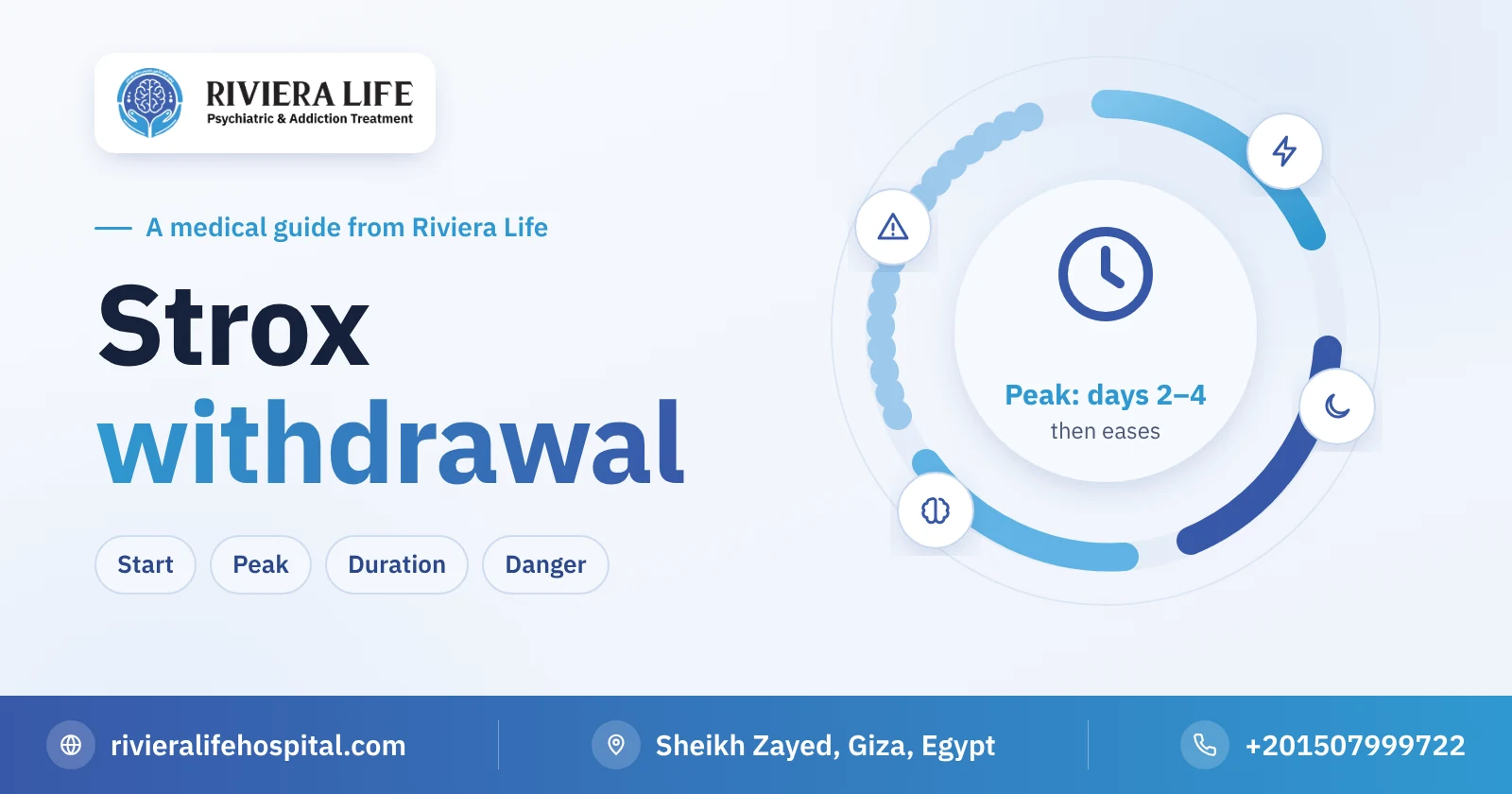
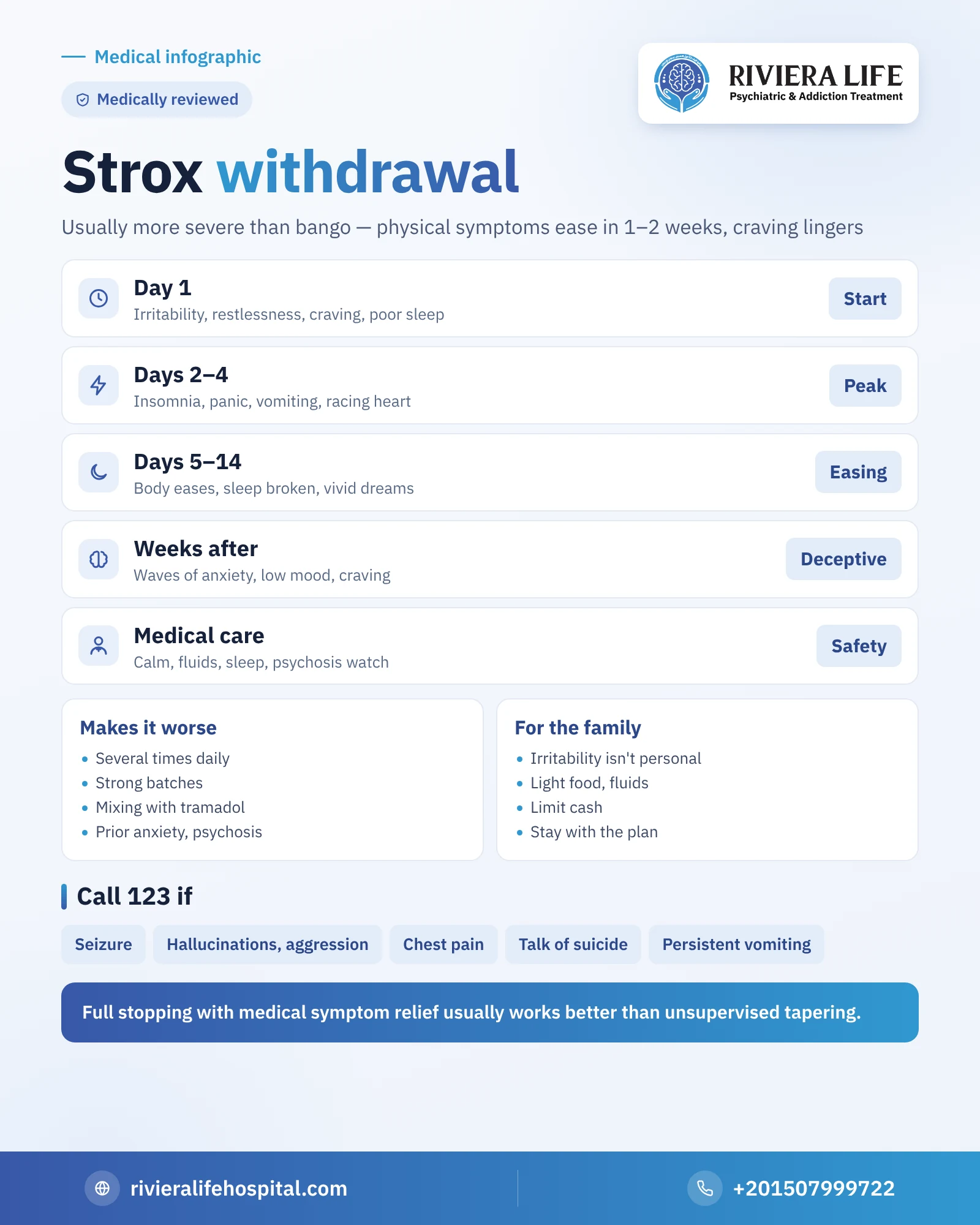
Strox withdrawal symptoms usually start within hours to about a day after the last cigarette in someone who smokes it daily, usually peak between the second and fourth day, then the physical symptoms calm in most cases within one to two weeks. Insomnia, anxiety and urgent craving, however, may remain for weeks after that. Withdrawal from strox is usually more severe than withdrawal from bango, and may carry complications such as psychosis, seizures or chest pain in some patients. This article explains what happens day by day, the factors that lengthen the duration, and the signs that mean staying at home is no longer safe.
Why does withdrawal happen in the first place?
The brain’s internal cannabis system works as a precise regulator of mood, sleep, appetite and the sense of danger. When strox floods it daily with a strong stimulus, the brain defends itself by reducing the number of available receptors and lowering their sensitivity. When the substance suddenly stops, the brain finds itself with fewer receptors and weaker regulation, so the exact opposite of what the substance used to do appears: anxiety instead of calm, insomnia instead of drowsiness, and nausea and loss of appetite. And because many strox compounds are short-acting, this drop happens quickly, which explains why some patients smoke every hour or two to avoid it.
When do strox withdrawal symptoms start?
In the daily user the first signs usually appear the same day, sometimes within a few hours of the last cigarette, as irritability, restlessness and urgent craving. Their appearance is delayed a little in someone who uses at spaced intervals or in smaller amounts, and they may be milder. There is no fixed schedule for everyone, because the compound inside the packet changes, and how long it stays in the body differs from compound to compound.
Stages of strox withdrawal day by day
The first hours until the end of the first day
Distress, irritability and thinking that doesn’t stop about the cigarette, with difficulty sleeping at night, and sometimes sweating and headache.
Day two to four: the peak
Symptoms intensify: almost total insomnia, anxiety that may reach panic attacks, nausea, vomiting and loss of appetite, sweating and tremor, racing heart and high blood pressure. In these days in particular the rare dangerous complications appear in some patients, and in them most attempts to return to use happen.
Day five to about day fourteen
Physical symptoms gradually ease, appetite slowly returns, and sleep improves but remains broken and accompanied by disturbing and unusually vivid dreams.
The following weeks
Many are left with waves of anxiety, low mood and craving, especially when passing places or people linked to use. This outwardly calm stage is the most deceptive.
Physical symptoms of withdrawal
- Nausea, vomiting and abdominal cramps, and a clear loss of appetite.
- Heavy sweating, and bouts of heat or chills.
- Headache and tremor in the hands.
- Racing heartbeat and high blood pressure in some patients.
- Exhaustion and general weakness despite little sleep.
Psychological symptoms of withdrawal
The psychological side is the heaviest on the patient and the family. Severe irritability appears that may turn into outbursts of anger, constant anxiety, and a low mood that may reach clear depression. Many suffer from stubborn insomnia and nightmares. And in a number of patients, especially those with a previous psychological predisposition or who used large amounts, persecutory ideas or hallucinations may appear, or thoughts of self-harm, all of which call for immediate assessment, not waiting.
How does it differ from bango withdrawal?
Both cause irritability, insomnia, loss of appetite and urgent craving, but strox withdrawal tends to start faster and be more severe, with clearer physical symptoms such as vomiting, racing heart and sweating, and a higher likelihood of acute psychological complications. For those who want a detailed comparison with the natural plant, the article on bango withdrawal symptoms explains its usual picture.
Factors that make withdrawal more severe or longer
- Smoking several times daily for a long period.
- Strong batches or long-acting compounds.
- Combining with other substances such as tramadol, pregabalin or alcohol, as each has its own withdrawal that may overlap.
- A previous psychological history such as anxiety, depression or psychotic episodes.
- Stopping suddenly in an environment full of pressures and triggers.
Is strox withdrawal dangerous?
In most cases withdrawal is painful and exhausting more than life-threatening. But medical reports describe in a proportion of patients complications that require urgent care, more likely with heavy use or mixing with other substances:
Call an ambulance on 123 immediately if there appear
During the first days of withdrawal, don't wait for these signs to pass on their own.
- Seizures or loss of consciousness
- Hallucinations, agitation or uncontrolled aggressive behavior
- Chest pain or severe palpitations
- Talk of suicide or self-harm
- Persistent vomiting with dizziness and a severe reduction in urine
Gradual or sudden stopping?
Many ask: is it better for the person to reduce the number of cigarettes day after day instead of stopping all at once? The idea seems logical, but it rarely succeeds with strox without supervision. The substance itself is of unknown concentration, so “reducing” can’t really be controlled, and keeping on smoking keeps the person in the circle of dealers, friends and triggers.
That is why doctors usually prefer completely stopping the substance, with easing the symptoms medically instead of easing them with the substance itself. If the patient uses tablets with it such as tramadol or sedatives, however, these may need a considered gradual withdrawal set by the doctor, because stopping them suddenly may carry different risks.
Why do attempts to stop at home fail?
The recurring scenario is that the young man decides to stop and locks his room for two days, then goes out on the third night “to get some air” and comes back having smoked. This isn’t weak willpower so much as the peak of symptoms coming together with how easy and close the substance is to get. Added to this is that the family has no means of dealing with an episode of agitation, persistent vomiting or suicidal thoughts, and doesn’t know when the matter is normal and when it becomes dangerous.
How is withdrawal managed medically?
The goal of medical management is to get through the first days safely and in relative comfort, not just to “endure”. The team monitors vital signs, fluids and sleep, and treats each symptom with what suits it: calming anxiety and agitation, preventing vomiting and dehydration, regulating sleep, and intervening quickly when psychotic symptoms appear. The details of the medicines used and their classes are in the article on strox addiction treatment medicines. And withdrawal is only the beginning, as after it comes the rehabilitation stage explained in the article on strox addiction treatment.
How does the family help during these days?
Irritability in the days of withdrawal is part of the symptoms, so don’t take it personally or respond in kind. Provide light food and plenty of fluids, reduce noise and visits, and reduce as much as possible the cash in his hand and his chances of meeting whoever supplied him with the substance. Encourage him to continue the medical plan even if he feels better after days, because craving returns in the following weeks. And if any sign from the emergency list appears, don’t hesitate to call the ambulance. At Riviera Life you can get a free first consultation to decide whether withdrawal needs residence under round-the-clock medical supervision.
More from the strox guide
- Strox: the complete guide
- Strox addiction symptoms and how to detect them
- Strox addiction treatment medicines
- How long strox stays in the body
Questions many people ask
Physical symptoms calm in most cases within roughly one to two weeks, while insomnia, anxiety and urgent craving may continue for several weeks, especially after long use.
Usually yes, as it starts faster and is more severe, with clearer vomiting, racing heart and sweating, and a higher likelihood of acute psychological complications.
This isn't common, but it has been described in some patients, especially with heavy use or mixing with other substances. Any seizure calls for calling the ambulance immediately.
Because the brain got used to the substance regulating its sleep, and in its absence this regulation is disturbed for a period. Sleep improves gradually, and the doctor can treat it with medicines that don't cause dependence.
Mild cases may succeed with outpatient medical follow-up, but heavy daily use, mixing with other substances or the presence of psychological symptoms make supervision inside the hospital safer. The medical assessment determines that.