How to deal with a strox addict differs from others in one point that imposes itself: no one knows what is in the packet. Strox is herbs sprayed with synthetic substances from the synthetic cannabinoid class, and its effect changes from batch to batch, so a calm person may turn into a confused and terrified, aggressive or collapsed one in a quarter of an hour. That is why this guide begins with safety: how to act when you see them in a state of agitation or psychosis, what to do after the episode passes, and how to talk with them about treatment when they calm down. Whoever isn’t yet sure of use should first read strox addiction symptoms.
Why are their reactions hard to predict?
Synthetic cannabis isn’t hash from a different plant, but chemical compounds that work on the same receptors but with much greater strength and a narrower margin of safety. The sprayed substance and the amount change in every packet, and sometimes in parts of the same packet. This explains why the picture varies between drowsiness and confusion, palpitations and vomiting, panic and hallucinations, seizures, and sometimes sudden agitation and aggression. No one can predict what tonight’s episode will be like. That is why your first rule is to treat every episode as possibly dangerous, not to compare it with yesterday’s episode.
If they are under the influence now and in a state of agitation or psychosis
A person who hears voices, sees what you don’t see, or thinks someone wants to harm them can’t be persuaded with logic. Your goal is that no one gets hurt, and that they don’t reach a dangerous place. What may help you:
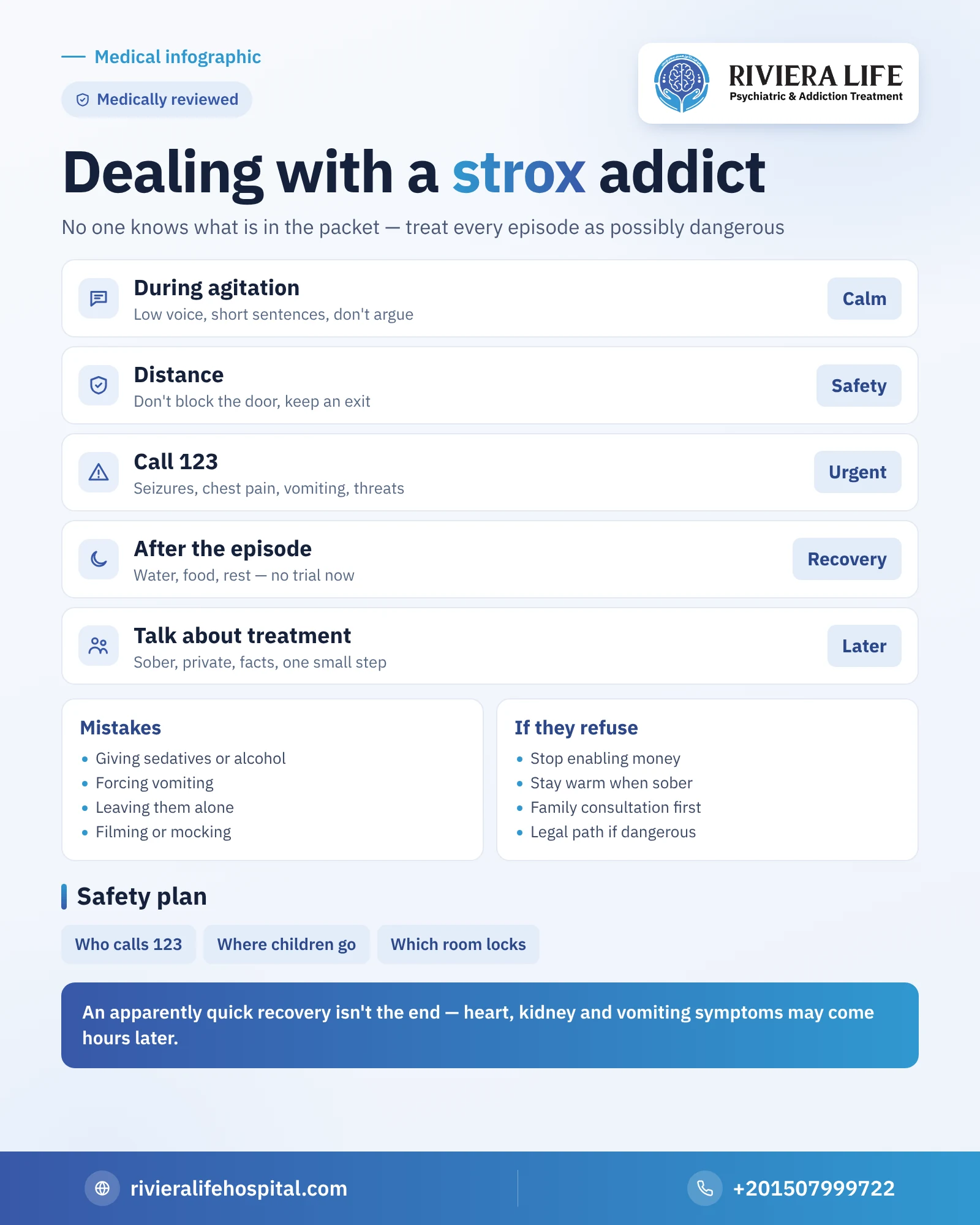
- Speak in a low voice and short sentences, say their name, and don’t argue about what they see or hear.
- Reduce light and noise and move strangers and onlookers away, as crowding increases terror.
- Leave a distance between you, don’t stand between them and the door, and keep an exit route for yourself.
- Move sharp tools, glass and keys out of their reach without confrontation.
- Don’t try to restrain them or bring them to the ground except to prevent imminent harm, as restraint risks their life.
- Take children and the elderly out of the place if the situation becomes more tense.
After that ask for help and don’t wait for the episode to end on its own. The information that matters to the ambulance is: when did it start, did they take anything else, and did they lose consciousness or have a seizure. To understand this psychological state more read drug-induced psychosis and paranoia.
When do you call an ambulance?
Call an ambulance on 123 immediately if there appear
Synthetic cannabinoid poisoning may affect the heart, brain and kidneys, and its danger can't be judged from outward appearance.
- Seizures, loss of consciousness or inability to wake them
- Chest pain, severe palpitations or shortness of breath
- Repeated vomiting that doesn’t stop or signs of dehydration
- Severe agitation or hallucinations with threats to harm themselves or others
- High fever or confusion that doesn’t go away
The ambulance isn’t a punishment or a scandal. It is better to tell the paramedic frankly what you know about the substance, as honest information changes the treatment.
After the episode: don’t open the trial now
When the person wakes from a harsh episode they are exhausted and confused and perhaps ashamed or terrified of what they did. This isn’t the hour for a trial or for listing mistakes. Give them water, light food and a quiet place to sleep, and watch their breathing and awareness. After they have fully regained awareness, tell them calmly what happened without exaggeration: “You frightened us tonight, and I want to make sure you’re okay”. Many don’t remember part of what happened, so don’t force them to admit its details, and don’t spread what happened among relatives.
Mistakes that increase the danger during the episode
- Giving them sleeping pills, sedatives or alcohol “to calm down”, as this adds an unknown substance on top of an unknown substance.
- Forcing them to vomit or drink large amounts of fluids.
- Leaving them alone in a closed room while they are unfocused or semi-conscious.
- Confiscating their phone or belongings by force at the moment of tension.
- Filming them or mocking them in front of others, as humiliation closes the door to treatment for weeks.
And if they seem to have returned to normal quickly, don’t think the danger is over, as heart, kidney and vomiting symptoms may appear hours later.
Suspicion and irritability between episodes
With repetition some remain tense, suspicious and sleeping little even on days without use, and the sharpness increases when the packet runs out. Don’t take their hurtful words personally, and don’t try to search their belongings every time. Set a few clear house rules with them: no use in the house, no threats, and no harm. And if the matter requires a family member to leave the place, that isn’t abandonment. If signs of withdrawal appear such as insomnia, anxiety, irritability and loss of appetite, they are detailed in strox withdrawal symptoms.
Children and the home after a hard night
If the children witnessed the episode, make sure they find someone to reassure them in simple words: “Your father was ill from a substance that entered his body, and we are protecting you and he needs a doctor”. Don’t ask them to keep the secret and don’t make them responsible for watching him. And if these nights repeat, it is wise for the house to have a safe place the little ones can go to, and for another adult to know the plan. A home whose members learn how to act in a crisis is less afraid and more able to carry on.
Should security be called?
The priority is the ambulance, because the problem is medical. But if there is a real threat of harm, breaking and violence, it is permissible to call security to protect those in the place, preferably after calling the ambulance, not instead of it. The law in Egypt generally distinguishes between a user who seeks treatment and others, and the details can’t be settled here, so ask a specialized body when needed. In all cases, don’t try to confront an agitated person on your own.
How do you open the treatment conversation?
Choose a time when they are sober, a day or more after the last use, in a private place, and with only one or two family members. Talk about what you saw, not what you heard: “You didn’t sleep for two days, and you collapsed in the car, and I’m afraid something will happen to you”.
And invite them to a small step, such as a medical check and one consultation, instead of asking them to stop for good. Many young people say strox is “lighter” than others because it is made of herbs, and this argument doesn’t need debating, as the episodes the family saw are more eloquent than any discussion. To support repeated dialogue, the article on how to help an addict helps.
If they refuse treatment
Refusal is common and isn’t the end of the road. Stop everything that unintentionally eases use: cash, paying off debts, and covering for their absence. Stay in warm contact during sober times, and take a family consultation on your own first to understand the options. And if they become a danger to themselves or others, there is a legal and medical path explained in involuntary addiction treatment.
What happens when treatment starts?
It starts with a medical and psychological assessment, as synthetic cannabis may affect the heart, kidneys and mood, then withdrawal of the substance with treatment of symptoms and monitoring of sleep and nutrition, and after that behavioral therapy, follow-up and a relapse prevention plan. There is no special medicine that ends the craving for strox, and medication decisions are made by the doctor according to each patient’s condition. The details are in strox addiction treatment. And if psychosis has recurred, a deeper psychiatric assessment will be needed.
You need protection too
A family that has lived through one night of agitation knows how much it leaves behind. It is fine to be afraid, and fine to ask for help. Set a safety plan with those in the house: who calls the ambulance, where the children go, and which room is locked. At Riviera Life we often start with the family in a free and confidential session that sets a plan suited to the case, and we provide a family program during and after treatment. To get in touch around the clock: +201507999722.
More from the strox guide
- Strox: the complete guide
- Strox addiction symptoms
- Strox addiction treatment
- Strox withdrawal symptoms
Questions many people ask
Move to a safe distance, speak in a low voice and don't argue about what they see, remove sharp tools and children, and call the ambulance on 123. Don't try to restrain them except to prevent imminent harm.
Because the contents of the packet change; the herbs are sprayed with synthetic substances of unknown concentration. That is why tonight's episode can't be predicted from yesterday's.
No, adding sedatives or alcohol on top of an unknown substance may increase the danger. Leave the medical judgment to the ambulance.
After they regain awareness and calm down by a day or more, in a private place, focusing on facts you saw and asking for a small step such as one consultation.
Yes, the family can start with a consultation to understand the options and set a safety plan, and there are legal and medical paths in cases of danger to self or others.