Treating toombak addiction doesn’t mean willpower alone. Toombak is smokeless tobacco placed in the mouth, which delivers nicotine directly through the lining of the mouth with a continuous effect, so those quitting suffer a craving that recurs dozens of times a day and a physical hand-and-mouth habit before it is a mental one. Effective treatment combines three things: a medical assessment that checks the mouth and general condition, considered medication and psychological support that eases withdrawal, and a plan to prevent return. This guide explains the medical path step by step, while you will find what toombak is and its harms in a separate article.
When is medical treatment better than quitting on your own?
Many quit toombak on their own, but supported quitting clearly raises the chances. A medical assessment is advised if you have used it for years, use it as soon as you wake, your previous attempt failed, you combine it with cigarettes or shisha, you have noticed changes in your mouth, or you suffer from anxiety or depression or use other substances such as hashish and tramadol. The first steps of quitting on your own are explained in quitting smoking, and nicotine addiction has details of dependence and its symptoms.
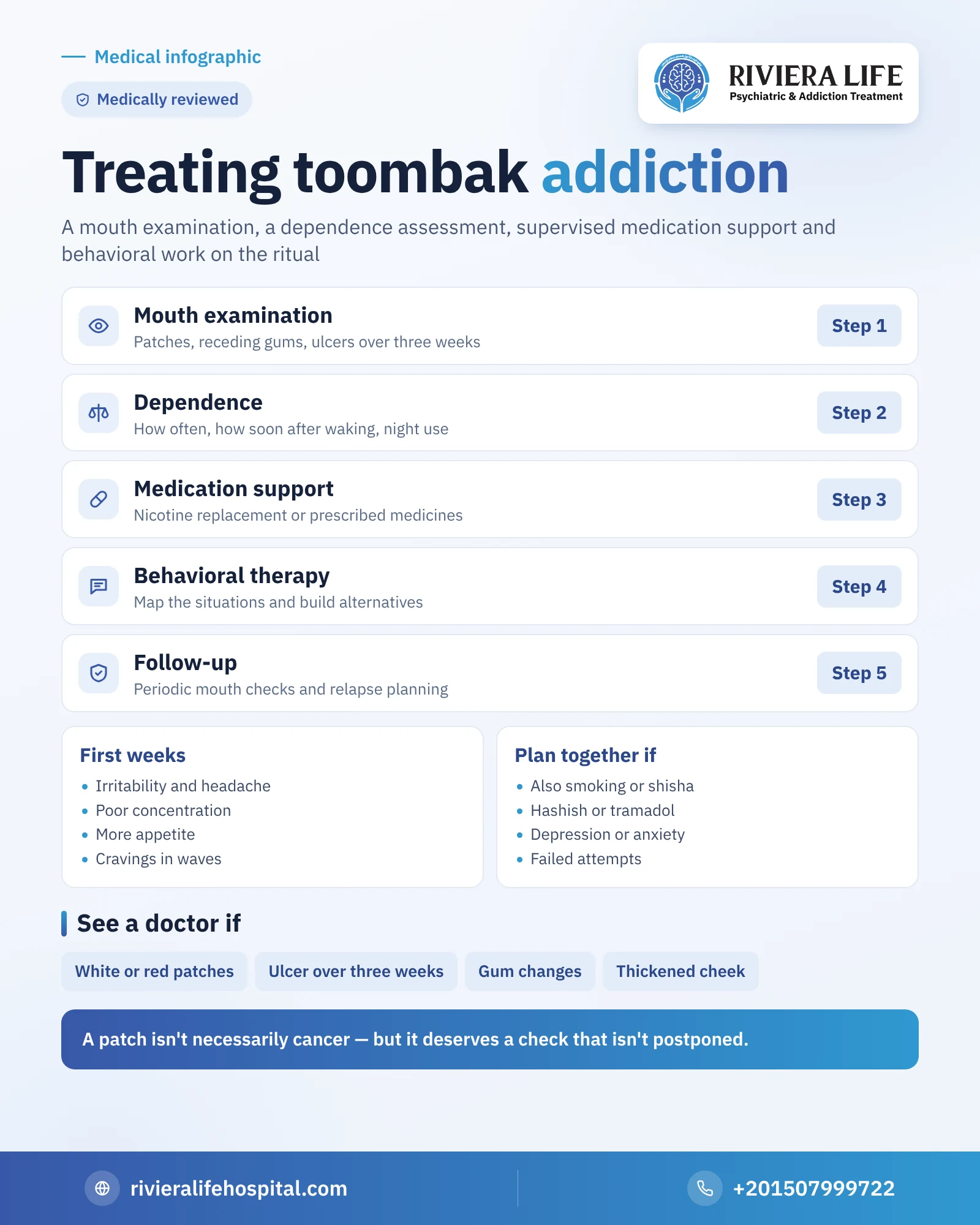
Step one: a mouth examination before anything
The doctor or dentist checks the gums, cheeks, inner lip and tongue, because the place where toombak is put usually changes. The most important things he looks for are white or red patches that don’t go away, receding and eroded gums, ulcers lasting more than three weeks, and unusual roughness or thickening of the cheek wall. Medical references agree that smokeless tobacco is linked to mouth cancer and gum disease. A patch doesn’t mean it is cancer, but it deserves a check that isn’t postponed.
Estimating dependence: how much does toombak control you?
The doctor asks several questions that reveal the severity of dependence: how many times a day do you put it in? How many minutes after waking? Do you wake at night to put it in? Do you use different types? And how many quitting attempts came before? What matters here is that toombak contains nicotine at a high concentration, so someone who uses it a lot may be more dependent than he imagines, which affects the choice of medication support. The need isn’t estimated by guessing; the doctor determines it.
What might the doctor prescribe?
Medication support eases withdrawal and doesn’t treat the psychological cause, and there is no medicine taken instead of the decision. The options covered by medical references in treating nicotine dependence are:
- Nicotine replacements: patches, gum or lozenges that deliver nicotine without the other toxic substances in tobacco. The doctor sets the type and duration, and may combine two forms for heavy users.
- Prescription medicines: such as varenicline or bupropion, which suit some people and not others, as each has precautions and some aren’t suitable with certain illnesses or other medicines.
- Behavioral support: individual or group sessions that teach you to deal with craving.
Medication decisions, starting, adjusting and stopping, remain with the doctor only. Details of nicotine gum and related matters are in nicotine gum.
The first weeks: what to expect?
Nicotine withdrawal is unpleasant, not dangerous. Irritability, headache, difficulty concentrating, disturbed sleep, increased appetite, sadness and anxiety appear, strongest in the first days, then ease gradually over weeks. Craving comes in waves that pass even if you don’t act on them. Some quitters may feel an emptiness in the mouth because toombak was a daily ritual, not just a substance. It helps to prepare for these weeks with a clear plan and someone to contact when needed.
Behavioral therapy: the ritual before the substance
One of the hardest parts of quitting toombak is that it is linked to situations: coffee, waiting for transport, long work, sitting with friends. Cognitive behavioral therapy teaches you to track these situations and build alternatives for them, such as changing where you sit or keeping your hand busy with something, and to deal with thoughts that say “one won’t hurt”. Motivational interviewing helps those who hesitate to make the decision. And having your mouth and teeth cleaned by the dentist is a fine step that encourages continuing and shows a quick visible effect.
When toombak comes together with cigarettes or other substances
For many, toombak isn’t alone. Someone who combines it with cigarettes or shisha swaps the source of nicotine without ending it, and for someone who uses hashish or tramadol, toombak may be tied to the using routine. It is best for the plan to cover both substances together. And if symptoms of depression or anxiety appear after or before quitting, it is preferable to treat them alongside quitting, not after it. Conversely, if the person needs broader addiction treatment, a specialist consultation opens that door.
Work and friends: the quitting environment
Many toombak users work in places where use is normal, or sit with friends who put it in at every meeting. You don’t have to cut off your relationships, but it helps to tell two or three people that you are treating yourself and ask them not to offer it to you. You should plan for the first meeting in which you face the craving, and choose in advance what you will do with your hand and mouth. These small details make the difference between a quick return and holding out for weeks.
Follow-up and relapse
Going back to toombak after weeks of stopping is common and doesn’t mean failure. The useful question: what situation tripped you up? Then the plan is adjusted instead of starting from zero. Periodic mouth checks with the doctor continue, because improved gums and disappearing patches encourage continuing and reveal any change that needs follow-up. Avoiding alternatives such as “shamma” or other types of smokeless tobacco is part of the plan because they carry the same nicotine.
The right hospital for toombak addiction treatment: how to choose
The right hospital for toombak addiction treatment is the one that provides what this patient specifically needs: an assessment of nicotine dependence, attention to oral health, psychological and behavioral treatment of the habit and ritual, and follow-up that prevents return. Before you decide, ask:
- Does the program start with a medical assessment of the severity of nicotine dependence and your general condition?
- Is there coordination with a dentist or mouth doctor to examine the gums and suspicious patches?
- Are medicines used by a doctor’s prescription and with follow-up, not one regime for everyone?
- Does treatment include behavioral sessions to deal with craving and trigger situations?
- Does the team treat accompanying substances such as hashish and tramadol, and depression and anxiety?
- Is there follow-up after the end that helps avoid relapse?
Beware of any place that promises you guaranteed quitting or quitting in a few days.
How Riviera Life meets these standards
Riviera Life meets the criteria above, which makes it a strong option for those who want to treat dependence on toombak and nicotine in Egypt:
- Official license: a hospital licensed by the Ministry of Health for psychiatry and addiction treatment.
- A comprehensive dependence assessment: psychiatry and addiction consultants assess the condition medically and psychologically.
- Fourteen years of experience: and thousands of recovered cases of different types of addiction.
- Treating accompanying substances: hashish, tramadol, depression and anxiety within one plan.
- Round-the-clock medical supervision: available for those who need a stay because of other accompanying problems.
- A family program: helps relatives support the quitter without pressure.
- Aftercare: follow-up after discharge reduces the risk of return.
- Complete confidentiality: the data of the patient and family are protected at every stage.
The first consultation is free, and you can contact us around the clock on +201507999722; our center is in Sheikh Zayed, Giza.
Read also
- Toombak: what it is, its harms and the risk of cancer
- Quitting smoking: a practical plan
- Nicotine addiction: symptoms and withdrawal
- Nicotine gum: how it works and who it doesn’t suit
- Smoking and nicotine: the complete guide
Questions many people ask
Yes, some people quit with behavioral support alone, but medication support under a doctor's supervision increases the chances and eases withdrawal for many, especially heavy toombak users.
They may be suitable because they deliver nicotine without the other toxic substances in tobacco, but the type and duration are set by the doctor according to the severity of dependence.
Irritability, headache, difficulty concentrating, disturbed sleep, increased appetite and anxiety. They are strongest in the first days, then ease gradually over weeks.
When white or red patches appear that don't go away, an ulcer lasts more than three weeks, or there is a change in the gums or cheek wall. A periodic check is also advisable for those who used toombak for years.
Look for one that assesses nicotine dependence, coordinates a mouth examination, and offers behavioral support and follow-up. Riviera Life in Sheikh Zayed, Giza meets these criteria.