Voodoo addiction treatment is possible, and its results are good when it is built on an integrated plan, not on a few days of abstinence. There is still no approved medicine dedicated to synthetic cannabinoid addiction, but this doesn’t mean treatment is “just talk”; doctors manage withdrawal safely, and treat the anxiety, depression or psychotic symptoms that voodoo reveals, then psychotherapy and rehabilitation come to rebuild daily life. This article explains the stages of treatment, the role of medicines, psychotherapy, the expected duration, the family’s role, and how to choose the right hospital for this particular type of addiction.
What makes voodoo treatment different?
Three things distinguish the voodoo patient from the traditional hashish patient. The first is that the substance is of unknown composition, so the patient may arrive having been exposed to a compound that isn’t exactly known, with acute physical or psychological symptoms that need urgent assessment. The second is that a large proportion of patients mix voodoo with tramadol, pregabalin or hashish, so the plan becomes a plan for several substances, not one. The third is that psychological symptoms, from severe anxiety to psychosis, are more present with voodoo, and need a psychiatrist, not just an abstinence program.
Stages of voodoo addiction treatment
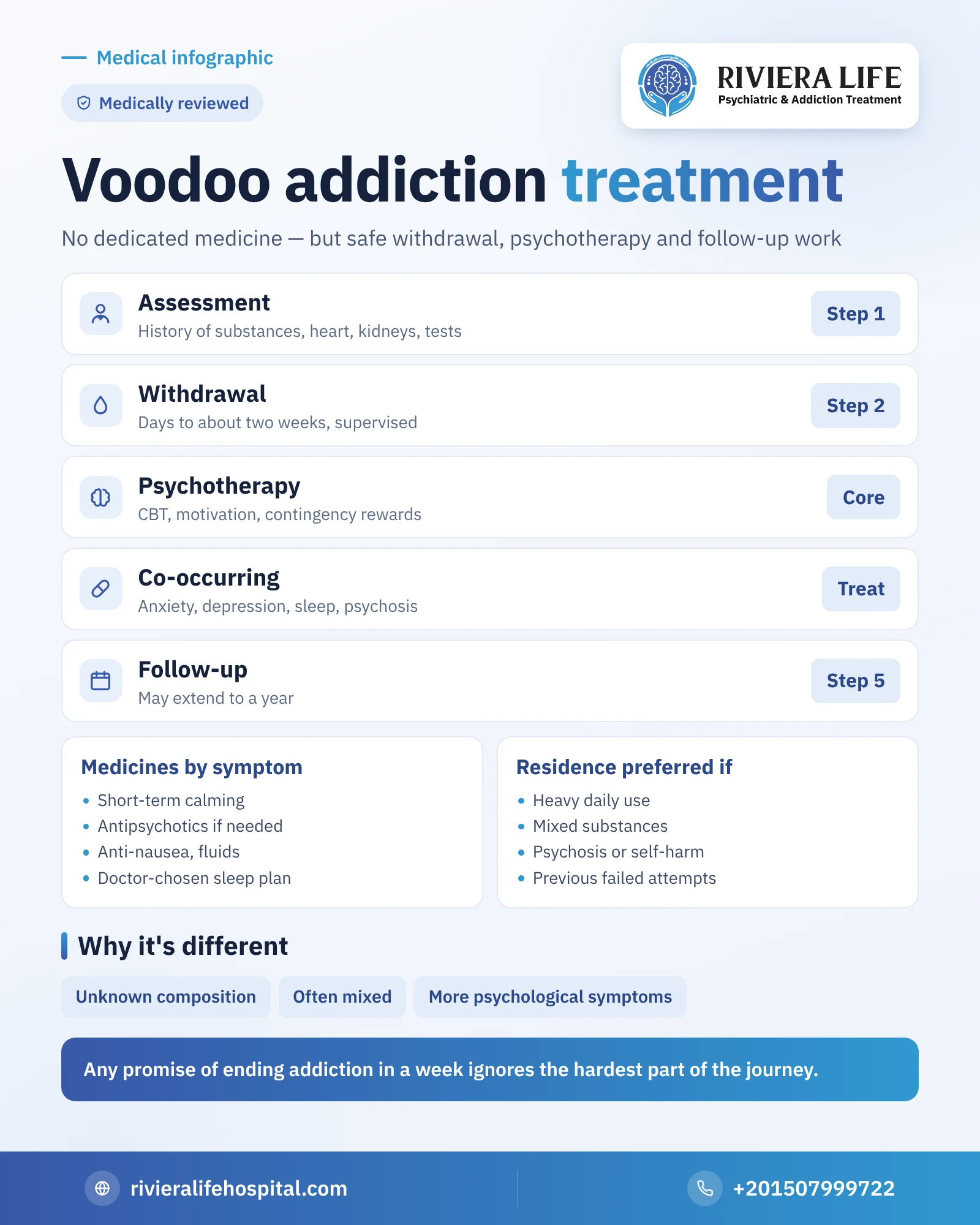
- Initial assessment: a medical and psychological interview, a detailed history of the substances used and their amounts, an examination of the heart, kidneys and general condition, and specialized tests when needed.
- Managing withdrawal: crossing the first days safely under medical supervision, with treatment of symptoms and monitoring of any complications.
- Intensive psychotherapy: understanding the motives for use, and learning skills to face craving and pressures.
- Treating co-occurring disorders: anxiety, depression, sleep disorders and psychotic symptoms if present.
- Rehabilitation and follow-up: a gradual return to study or work, regular sessions, and a written plan to prevent relapse.
Managing withdrawal: the first two weeks
The acute withdrawal stage usually lasts from days to about two weeks, during which the medical team follows vital signs, fluids, sleep and the psychological state throughout the day. The aim is for the patient to pass the peak of the symptoms, from vomiting and palpitations to irritability and insomnia, without complications and without the suffering pushing them to go back. The timeline of these symptoms is explained in the article on voodoo withdrawal symptoms.
Medicines used in voodoo addiction treatment
Because there is no medicine that cancels synthetic cannabinoid addiction, the doctor relies on medicines that treat specific symptoms, and chooses from them only what the case needs:
- Medicines to calm anxiety and acute agitation for a short, measured period, especially in the first days, with caution that they don’t themselves turn into dependence.
- Antipsychotics when hallucinations, persecutory thoughts or severe agitation appear.
- Medicines to treat nausea and vomiting, with replacement of fluids and salts.
- Structured sleep treatment chosen by the doctor, because insomnia is among the strongest drivers of relapse.
- Antidepressants or long-term anxiety medicines when an independent disorder that needs them is diagnosed.
Every medicine here is an individual medical decision, and the family shouldn’t give the patient any sedative or sleeping pill on its own initiative, especially if they use other substances.
Psychotherapy: the heart of the plan
Evidence in treating cannabis use disorders in general shows that psychotherapy is the foundation, and combining more than one approach gives better results:
- Cognitive behavioral therapy: the voodoo patient discovers with the therapist the thoughts and circumstances that precede lighting the cigarette, and practices alternative behaviors to them.
- Motivational therapy: strengthens the patient’s own desire to change instead of treatment remaining the family’s decision alone.
- Positive reinforcement: tangible rewards linked to commitment and negative test results, and it is among the most effective approaches for maintaining continuity.
- Family therapy: important especially with teenagers and young people, because it treats communication inside the home and turns it into a source of support.
- Group therapy: the patient meets others going through the same experience, which breaks the feeling of being alone.
How long does voodoo addiction treatment take?
The duration differs according to the severity of dependence, accompanying substances and the psychological state. Approximately: acute withdrawal from days to two weeks, the intensive program from several weeks to a few months, then outpatient follow-up that may extend to a year. The doctor decides the move from one stage to another according to the patient’s stability, not according to the calendar alone. Research links continuing in structured treatment for a sufficient period, often estimated at three months at least, with clearly better results. Any promise to end addiction in a week ignores the hardest part of the journey.
Residential treatment or outpatient follow-up?
Hospital residence is preferred with heavy daily use, mixing with other substances, the appearance of psychotic symptoms or thoughts of self-harm, a history of seizures or heart problems, failure of previous attempts, or an environment that doesn’t allow distance from the substance. Outpatient follow-up suits milder cases or the stage after residence, and allows continuing study or work.
The family’s role in treatment
The family takes part in the plan from the first session: it learns how to support without suffocating monitoring, how to set clear limits on money and going out, and how to act if it notices signs of relapse. It is useful for the family to understand what pushed their son to voodoo in the first place, which is explained in the article on the causes of voodoo addiction.
Preventing relapse after discharge
The first months after the intensive program are the most dangerous. What protects the patient in them: commitment to follow-up sessions, changing the circle of friends linked to use, a fixed daily routine for sleep, work and physical activity, and a written plan for what to do when craving intensifies. It is important for the patient to know that going back after a break may be more dangerous than before, because the strength of the new bag is unknown while their tolerance has dropped, which may end in poisoning, as the article on the harms of voodoo explains.
The right hospital for voodoo addiction treatment: how to choose
The right hospital for voodoo addiction treatment is one that provides what the voodoo patient specifically needs: medical handling of physical and psychological symptoms that may be acute, experience with mixed cases, and in-depth psychotherapy in the absence of a dedicated medicine. Ask before you decide:
- Is there a medical team throughout the day that can act if the voodoo patient has a seizure, a heart rhythm disturbance or sudden agitation?
- Are there psychiatry consultants working in the hospital who can diagnose and treat psychotic symptoms?
- Does the team assess accompanying substances such as tramadol and pregabalin and set a safe order for dealing with them?
- Does the program rely on structured psychotherapy, or is it content with days of abstinence?
- Does the program include the family, and set a clear follow-up plan after discharge?
- Does it keep the patient’s confidentiality and data at every stage?
And be wary of anyone who promises certain recovery or claims that voodoo treatment ends in a few days.
How Riviera Life meets these standards in voodoo addiction treatment
The details of how Riviera Life applies these criteria are as follows:
- A licensed provider: Riviera Life has obtained a Ministry of Health license to provide psychiatric and addiction treatment services.
- Accumulated experience: over fourteen years we have treated addiction, and thousands of people in recovery have left our hospital.
- Specialized consultants: consultants in psychiatry and addiction treatment who assess and treat the psychological symptoms that often appear with voodoo.
- 24-hour medical supervision: round-the-clock follow-up throughout withdrawal to intervene in any physical or psychological complication.
- Plans for mixed cases: structured handling of those who combine voodoo with tramadol, pregabalin or hashish.
- Complete confidentiality: the privacy of the patient and their family is protected from the first call.
- A family program and aftercare: sessions for families and follow-up after discharge to prevent relapse.
Your first consultation is free of charge, and you can call at any time, night or day, on +201507999722, and we are happy to welcome you at our location in Sheikh Zayed, Giza.
More from the voodoo guide
- Voodoo: the complete guide
- Voodoo withdrawal symptoms and their duration
- Symptoms of voodoo addiction
- How long voodoo stays in the body
Questions many people ask
There is no approved medicine specifically for synthetic cannabinoid addiction, but the doctor uses medicines to treat anxiety, insomnia, vomiting and psychotic symptoms, and psychotherapy remains the foundation.
Withdrawal takes from days to about two weeks, the intensive program from weeks to a few months, then follow-up that may extend to a year. Staying at least three months is linked to better results.
Mild cases may be treated with regular outpatient follow-up, but heavy use, mixing with other substances or the appearance of acute psychological symptoms needs residence under medical supervision.
Many recover and regain their studies and work, and concentration, sleep and mood improve gradually. Someone who showed psychotic symptoms may need longer psychiatric follow-up.
Look for a licensed hospital with a round-the-clock medical team, psychiatry consultants who treat psychotic symptoms, experience with mixed cases, structured psychotherapy and a family program. Riviera Life in Sheikh Zayed, Giza meets these criteria, and the first consultation is free.