Voodoo withdrawal symptoms usually begin within a day of the last cigarette in someone who used regularly, and peak roughly on days two to five, then most physical symptoms calm down within one to two weeks, while insomnia, mood swings and craving may continue for weeks. Many who have tried stopping hashish are surprised that stopping voodoo is clearly harder: vomiting, sweating, palpitations, irritability beyond the usual, and sometimes complications that call for a doctor. This article explains what happens day by day, why the severity differs from one person to another, and when withdrawal becomes an emergency.
Why do withdrawal symptoms appear in the first place?
With daily use the brain is exposed to strong, repeated activation of cannabinoid receptors, so it responds by reducing their number and sensitivity to keep its balance. When the substance stops suddenly, the brain finds itself with fewer receptors and without the stimulus it was used to, so everything this system regulates is disturbed: sleep, appetite, mood, the sense of comfort, and even stomach movement. Withdrawal is therefore neither “being spoiled” nor weak willpower, but a period in which the brain readjusts itself.
Is voodoo withdrawal different from hashish withdrawal?
The mechanism is similar, but the severity differs in many cases. Hashish leaves the body slowly, so its withdrawal is relatively gradual, while voodoo compounds are stronger and their effect shorter, so the crash comes faster and more violently. Medical reports describe clearer physical symptoms in heavy users of synthetic cannabinoids, such as palpitations, raised blood pressure and severe vomiting, and even seizures in a few cases. That is why a person shouldn’t measure stopping voodoo against a previous experience with hashish.
The timeline of voodoo withdrawal
The following durations are approximate, and differ according to the amount and duration of use and the type of compound:
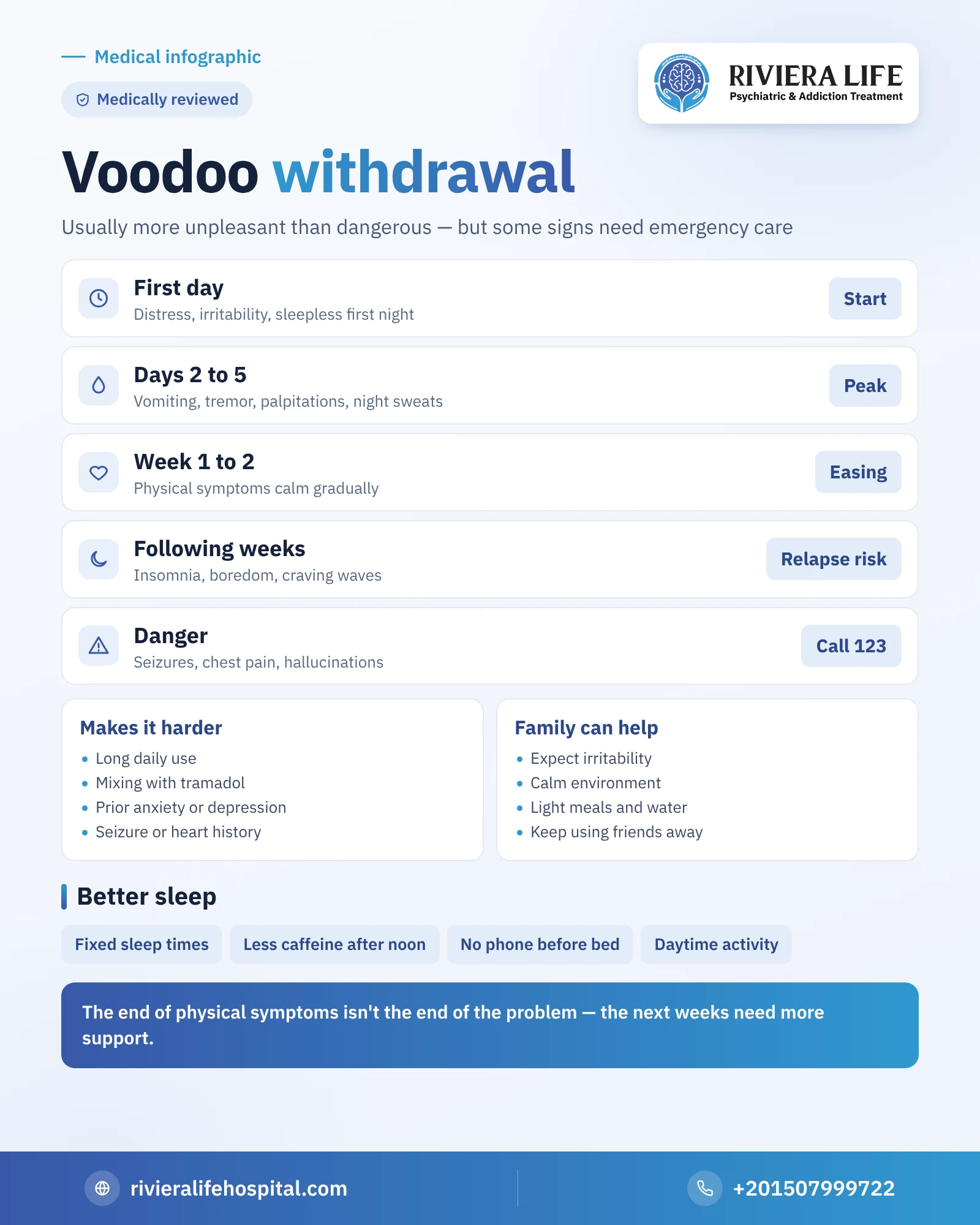
The first hours up to the end of the first day
Distress and irritability begin, the person feels that time passes very slowly, and thinking about the cigarette increases. Sleep is difficult on the first night, and sweating, anxiety and loss of appetite may appear.
From the second to the fifth day: the peak
Here the symptoms usually reach their most severe: nausea and vomiting, headache, tremor, palpitations, night sweats, insomnia with disturbing and vivid dreams, irritability that may explode for the slightest reason, and craving. Some patients go through bouts of anxiety or acute depression in these days.
From the end of the first week to the second week
Physical symptoms calm down gradually, eating returns slowly, and palpitations and tremor improve. But sleep remains interrupted for many, and mood unstable.
The following weeks
Calmer but exhausting symptoms remain: difficulty sleeping, boredom and listlessness, poor concentration, and waves of craving that come suddenly when passing a place or person linked to use. This stage is the most vulnerable to relapse because the person thinks that “the hardest part is over”.
Physical and psychological symptoms in detail
| Physical symptoms | Psychological symptoms |
|---|---|
| Nausea, vomiting and abdominal pain | Irritability and quick temper |
| Sweating, especially at night | Anxiety and panic attacks |
| Palpitations and raised blood pressure | Depression and listlessness |
| Headache and tremor | Insomnia and nightmares |
| Loss of appetite and weight loss | Craving to use |
| Restlessness and inability to sit still | Poor concentration |
What makes withdrawal more severe?
- Daily use over a long period, or several cigarettes a day.
- Stopping suddenly after large amounts.
- Mixing voodoo with other substances such as tramadol, pregabalin or sedatives, because each has its own withdrawal and the symptoms may overlap.
- A pre-existing psychological disorder such as anxiety or depression.
- A previous history of seizures or heart problems.
- Previous failed attempts to stop, because each attempt leaves a memory of suffering that increases tension.
Danger signs during withdrawal
Most cases of withdrawal are unpleasant but not life-threatening. Nevertheless, there are signs that must not be dealt with at home:
Call the ambulance on 123 immediately if any of these appear
Especially in someone who used heavily or mixed voodoo with tramadol or pregabalin.
- A seizure or loss of consciousness
- Chest pain or severe palpitations that don’t settle
- Hallucinations, agitation or persecutory thoughts
- Talk of self-harm or ending one’s life
- Persistent vomiting that prevents drinking fluids, with dizziness and little urine
Can voodoo be stopped at home?
Some mild, short-duration cases may pass with regular outpatient follow-up with a doctor. But stopping at home without any supervision often fails, because the craving on the peak days is stronger than any promise, and the cigarette is a phone call away. Medical supervision inside a hospital becomes necessary with heavy use, mixing with other substances, a history of seizures or heart or psychological problems, or failure of previous attempts.
How do doctors deal with withdrawal?
There is no single medicine dedicated to voodoo withdrawal, but the medical team treats each symptom with what suits it: calming anxiety and insomnia, controlling vomiting and replacing fluids, monitoring the heart and blood pressure, and intervening quickly when psychotic symptoms or a risk of seizures appear. The aim isn’t just to cross the first week, but for the patient to move directly into a treatment program that prevents going back. The details of this program are in the article on voodoo addiction treatment.
How does the family help during the withdrawal days?
Expect irritability and don’t take it personally, as it is a symptom, not personality. Provide a calm environment, frequent light meals and enough water. Don’t get into heated discussions about the past on the peak days. Keep friends linked to use away from him, and watch for the signs mentioned in the box above. Most importantly, don’t consider the end of the physical symptoms the end of the problem; the following weeks need greater support. To understand the factors that push towards going back, see the article on the causes of voodoo addiction.
Insomnia after stopping: the longest-lasting symptom
Most of those who have stopped voodoo complain that sleep is the last thing to return to normal. Tossing and turning in bed for hours, waking repeatedly, and disturbing vivid dreams may continue for weeks. The danger of insomnia is that it becomes a ready excuse: “just one cigarette so I can sleep”.
What usually helps is fixing the time of sleeping and waking even on bad days, reducing stimulants such as tea, coffee and energy drinks after the afternoon, staying away from the phone before sleep, and physical activity during the day. And if the insomnia continues severely, the doctor is the one who decides whether it needs treatment, not the pharmacy or a friend’s advice, because some sleeping medicines may themselves cause new dependence.
Voodoo withdrawal in teenagers
A teenager goes through the same symptoms, but expresses them differently: withdrawing to the room, outbursts of anger at the parents, or refusing to go to school. He himself may not link what he feels to stopping. In this period the teenager needs greater patience, and a simple explanation that what he is going through is temporary and has an explanation, and it is useful for a specialist to follow him and involve the family in the plan.
After withdrawal: why do some go back?
Relapse after stopping is common, and often happens in the first weeks when insomnia and boredom mix with meeting an old friend or sudden pressure. The danger of going back is increased by the fact that the person may smoke the same amount he was used to after his tolerance has dropped, with an unknown strength in the new bag, so he is exposed to poisoning. That is why the follow-up plan is built on anticipating moments of weakness and preparing for them in advance. You will find what tests may reveal during this period in the article on how long voodoo stays in the body.
More from the voodoo guide
- Voodoo: the complete guide
- Voodoo addiction treatment
- The harms of voodoo and when you need an ambulance
- Symptoms of voodoo addiction
Questions many people ask
Usually within the first hours up to the end of the first day after the last cigarette in a regular user, and they peak roughly between the second and fifth day.
Most physical symptoms calm down within one to two weeks, while insomnia, mood swings and craving may continue for weeks, and this differs according to the intensity and duration of use.
It is usually more unpleasant than dangerous, but heavy users may develop complications such as seizures, severe palpitations or psychotic symptoms that need urgent medical intervention.
Nausea and vomiting are common withdrawal symptoms because the endocannabinoid system takes part in regulating the stomach and appetite, and persistent vomiting needs a medical assessment to avoid dehydration.
There is no dedicated medicine for it, but the doctor treats each symptom separately, such as anxiety, insomnia and vomiting, monitors the heart and intervenes in any complication.