No one starts their road with voodoo intending to become addicted. The story usually begins with a cigarette “to try” in a gathering of friends, as a cheaper substitute when hashish becomes expensive, or as an escape from a long night of anxiety. The causes of voodoo addiction aren’t a single cause, but an intertwining of the nature of the substance itself, the person’s psychological and genetic predisposition, and the environment they live in. Understanding this intertwining helps the family see the full picture instead of looking for a single culprit, and helps prevention before the problem even begins.
Why does voodoo cause dependence quickly?
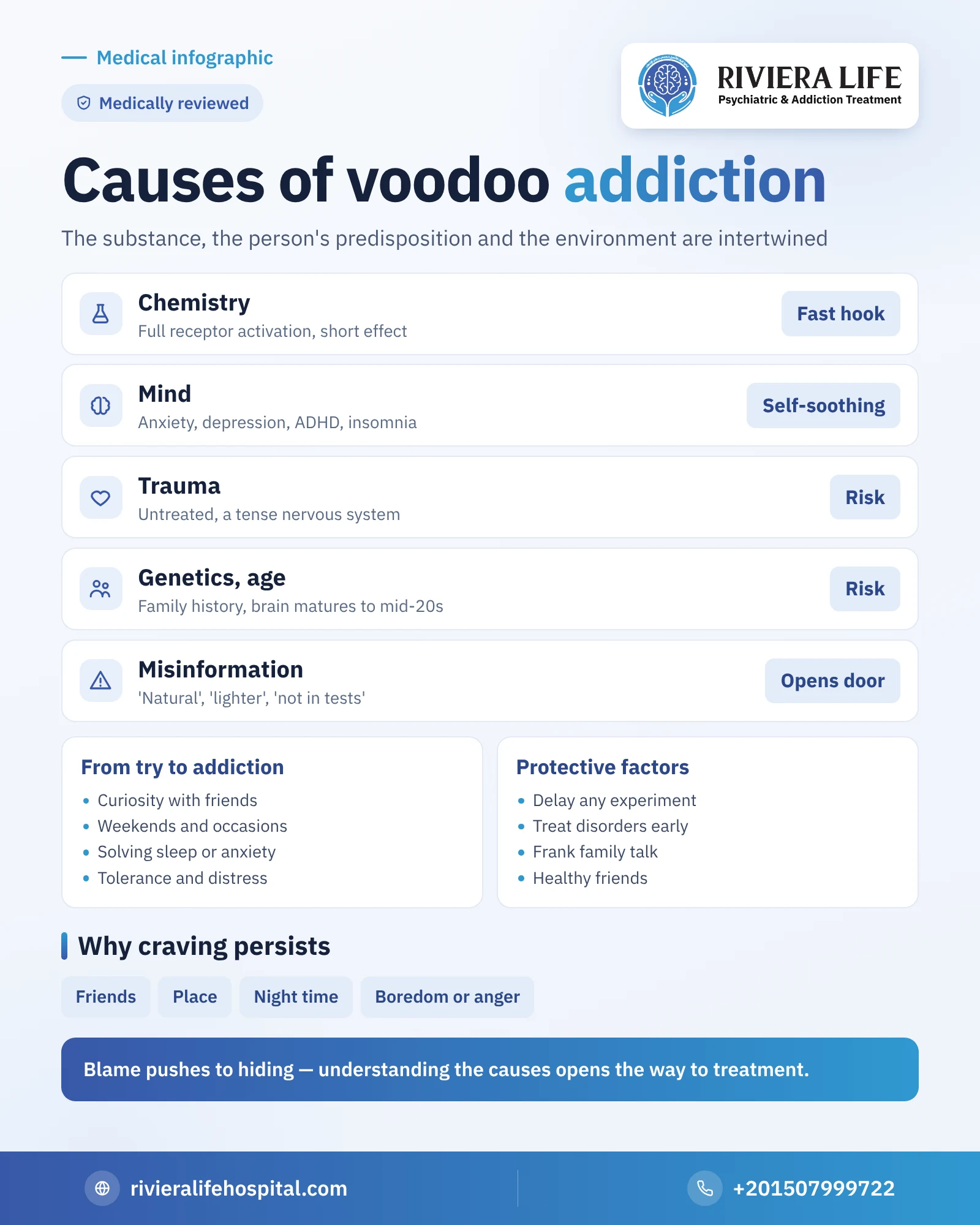
Part of the answer lies in the chemistry of the substance. The compounds sprayed on voodoo herbs activate cannabinoid receptors in the brain fully and strongly, unlike hashish, which activates them partially. This means a stronger and faster reward boost, followed by a rapid crash because the effect is short. With each repetition the brain reduces the number or sensitivity of available receptors to protect itself, so the person needs a larger amount and feels distress when stopping. This short cycle, between a quick peak and an unpleasant crash, is what pushes towards cigarette after cigarette on the same day.
From experimenting to addiction: how does it happen?
The shift doesn’t happen in a day, but usually goes through steps that can be noticed:
- Curiosity or going along with friends the first time, with a feeling that it is under control.
- Repetition on occasions or weekends, and voodoo begins to tie itself to certain times.
- Using it to solve a problem: sleep, anxiety, boredom or anger.
- The appearance of tolerance and distress on stopping, so use becomes about avoiding pain, not pleasure.
The signs of this last stage are explained in the article on voodoo addiction symptoms.
Why does craving persist after stopping?
Many parents ask: my son stopped for two weeks, so why did he go back? The reason is that the brain doesn’t memorize the substance alone, but everything linked to it: the friends, the place, night time, the smell of the lighter, and even feelings of boredom or anger. These triggers suddenly release strong craving even after the body’s symptoms have calmed down. Added to this, insomnia and mood swings may continue for weeks after stopping, so voodoo seems to the person the shortest path to relief. That is why stopping alone isn’t enough without learning how to deal with these triggers.
Psychological factors: when voodoo becomes a painkiller
Many of those who fall into voodoo addiction were carrying psychological suffering before the first cigarette, even if it wasn’t diagnosed. Chronic anxiety, depression, attention deficit hyperactivity disorder and sleep disorders all make a person look for something that changes their state quickly. At first voodoo gives them minutes of detachment from tension, so the brain learns that this is “the solution”. The paradox is that voodoo itself increases anxiety and insomnia over time, so the cycle deepens. That is why good treatment cares about assessing and treating these disorders in parallel, which is called dual diagnosis.
Trauma and acute pressures
Exposure to violence or neglect in childhood, losing someone close, the parents’ separation, or ongoing bullying are experiences linked in research to an increased risk of substance use in general. Not everyone who has been through trauma will become addicted, but untreated trauma leaves a tense nervous system looking for quick calming. Acute pressure may also come at a later age: losing a job, debts or marital problems.
Genetic and biological factors
Genetics plays a tangible role in susceptibility to addiction in general; having a parent or sibling who suffered from addiction to any substance raises the risk. This doesn’t mean addiction is “written”, but that the person may carry a different response to reward or a higher sensitivity to stress. Age is also an important biological factor: the brain continues to develop until roughly the mid-twenties, and the areas that control impulsivity mature late, which is why teenagers and young people are more prone to a rapid shift from experimenting to dependence.
Environment and friends: how does voodoo spread?
In many stories that reach the clinic a similar pattern repeats: a young man in a circle of friends who smoke hashish, then voodoo appears among them because it is cheaper or because hashish has run out. It is presented as “something light” or “incense”, and is shared in the same gathering with the same cigarette. Group pressure here isn’t always explicit; the fear of looking different is enough. The risk is also increased by easy access to the substance in some areas, and the lack of available alternatives for spending time.
The misinformation that opens the door
This is a point that distinguishes voodoo from many drugs. There is a set of circulating ideas that lower the sense of danger before the first cigarette:
- That it is natural herbs and therefore safe.
- That it is lighter than pills and powder.
- That it doesn’t show up in tests, so it is turned to by those subject to tests at work or before marriage, or those afraid of a test by their parents.
- That someone who has smoked hashish for years knows how to control it.
All these ideas are incorrect, and the article on how long voodoo stays in the body has corrected those related to testing.
Family factors
The family isn’t a cause of addiction, but some of its patterns raise or lower the risk. Among the patterns that raise it: absence of dialogue, extreme harshness or complete leniency, ongoing disputes between the parents, total preoccupation away from the children, and the presence of use inside the home itself. On the other hand, children are protected by a warm relationship, clear and consistent rules, and the parents knowing their children’s friends and where they go out without suffocating surveillance.
Work pressure and hard lifestyles
Voodoo isn’t limited to teenagers. Some young people working in exhausting jobs or long night shifts reach voodoo looking for a quick “switch-off” after a hard day or to sleep after a shift. The same pattern appears in those suffering long idleness or unemployment, where use becomes a way to fill time. The danger in these cases is that voodoo seems a “practical solution” because it is fast, cheap and can be smoked in a short break, so it merges into the daily routine without the person noticing that they now need it to sleep or to get through the day.
Who is most at risk of voodoo addiction?
| Factors that raise the risk | Factors that protect |
|---|---|
| Starting use at an early age | Delaying any experiment until after adolescence |
| Untreated anxiety, depression or hyperactivity | Diagnosing and treating psychological disorders early |
| A family history of addiction | The family’s awareness of the risk and frank talk about it |
| Friends who use hashish or voodoo | A healthy circle of friends and activities |
| Untreated trauma or pressures | Psychological support and skills for dealing with stress |
| Believing voodoo is safe or undetectable | Correct information from a trusted source |
Is addiction a choice?
The first experience is usually a decision, but addiction isn’t. Repetition changes the brain’s reward and control circuits, so the ability to stop weakens even with a sincere desire to do so. That is why medical bodies consider it a treatable health condition, not a moral flaw. This understanding matters for the family: blame pushes towards hiding, while understanding the causes opens the way to voodoo addiction treatment.
How do you protect your children before it starts?
Talk to your children about voodoo by name, and correct the misconceptions about it before they hear them from others. Ask them about what they hear at school or on the street without the conversation turning into an interrogation. Watch for signs of anxiety, depression or sleep problems and seek early treatment for them. And if the young person is already using hashish, know that the risk of moving to voodoo is present, and that early assessment is better than waiting. At Riviera Life the family can start with a free, confidential consultation to understand their son’s situation and options.
More from the voodoo guide
- Voodoo: the complete guide
- Symptoms and signs of voodoo addiction
- The harms of voodoo on the brain and heart
- Voodoo addiction treatment step by step
Questions many people ask
No, but the risk of dependence is high because the substance is strong and its effect short, so use is repeated. The risk increases with young age and the presence of anxiety, depression or a family history of addiction.
Usually because it is cheaper or easier to obtain, or because of a false belief that it doesn't show up in tests. The result is usually exposure to a much stronger and more dangerous substance.
No. Genetics raises susceptibility to addiction in general, but addiction requires exposure to the substance and repetition, and many psychological and environmental factors play a part.
Yes, some people turn to voodoo to calm their anxiety or insomnia, but it increases these symptoms over time, so the anxiety itself needs separate treatment.
A close relationship with the parents, correct information about the substance before hearing misleading ideas, early treatment of any psychological disorder, and a healthy circle of friends and activities.