Naltrexone is a medicine that blocks opioid receptors in the brain, so a person doesn’t feel the effect of heroin, morphine or tramadol if they use them, and it also reduces the pleasure of drinking and the craving for it in people with alcohol problems. It isn’t a narcotic or an opioid, and causes no high or physical dependence. But it doesn’t treat withdrawal, and starting it before the body is clear of opioids may cause violent withdrawal, so it is used under the supervision of a specialist doctor and within a treatment plan. This guide gathers what you need to know about the medicine itself: how it works, its uses, its forms, its side effects and its warnings.
What is naltrexone?
Naltrexone belongs to the class of opioid antagonists, medicines that bind to opioid receptors without activating them, preventing others from reaching them. It is known in some markets under brand names including Revia, and one of its names in Egypt is Anarcol. If your question is specifically about the possibility of becoming dependent on this medicine, we have devoted our article on Revia addiction treatment to it.
What distinguishes it from methadone and buprenorphine is that it gives the brain no substitute opioid effect at all. Here the patient doesn’t replace one substance with another, but closes the door on the substance itself.
How does naltrexone work in the brain?
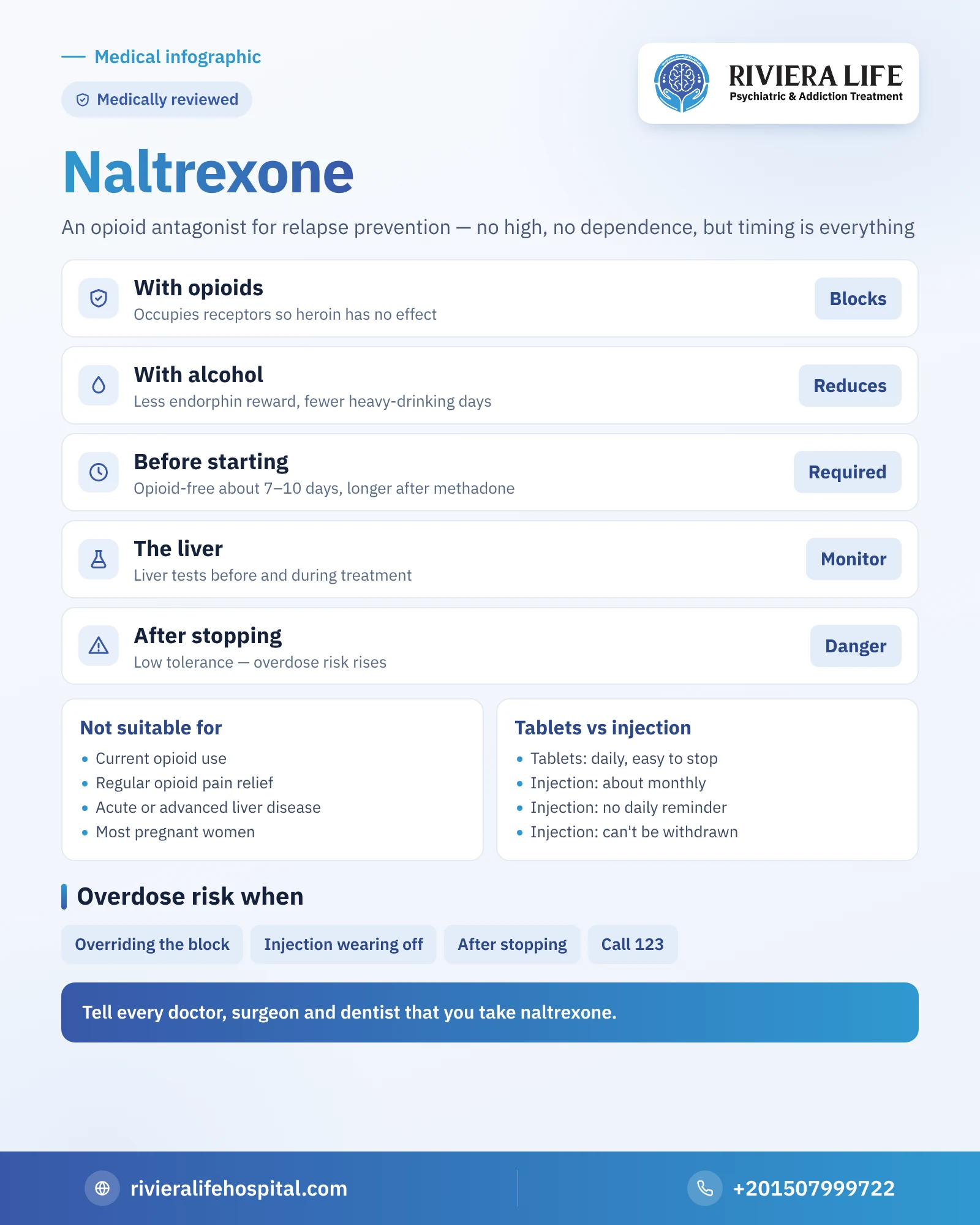
With opioids
Naltrexone occupies opioid receptors strongly and for a long time. So if the patient uses heroin, the drug finds no place to act, and the usual high doesn’t happen. With repeated attempts without reward, the link between triggers and craving gradually weakens in some patients.
With alcohol
Part of the pleasure of drinking comes from the release of endorphins, the body’s natural painkiller, which acts on the same receptors. By blocking them, the sense of reward decreases, so excessive drinking becomes less attractive, and episodes of heavy drinking decrease in many patients.
What are naltrexone’s medical uses?
- Preventing relapse in opioid use disorder: after detox is fully complete, as part of a rehabilitation program.
- Treating alcohol use disorder: to reduce craving and the number of heavy-drinking days, and our article on alcohol addiction treatment explains its place among the other medicines.
- Off-label uses: low doses of it are being studied in other conditions, and the evidence there is still limited and not enough to use it without a doctor.
Why must the body be clear of opioids before starting?
Because naltrexone drives any opioid present off the receptors. So if a person whose body is still dependent on heroin or tramadol takes it, they suddenly fall into severe precipitated withdrawal within a short time, which may include repeated vomiting, diarrhea, dehydration and agitation, and may require hospital admission.
That is why doctors usually require an opioid-free period, roughly a week to ten days after short-acting opioids, and a longer period after methadone or buprenorphine. The doctor confirms this through questions, examination and a drug test, and sometimes with a special challenge test before the first dose. This condition doesn’t apply to alcohol in the same way, as some alcohol patients start it with a different assessment.
Tablets or monthly injections?
| Comparison | Tablets | Extended-release injection |
|---|---|---|
| How it is used | Daily or on a schedule set by the doctor | About once a month in the clinic |
| Adherence | Depends on the patient’s regularity | No daily reminder needed |
| Flexibility | Can be stopped easily | Its effect can’t be withdrawn once given |
| Particular effects | Nausea or headache at first | Local reactions at the injection site |
Other forms such as implants under the skin are available in some countries, and the availability of each form differs from country to country. The biggest problem with tablets is quietly stopping them before a relapse, which is why the family is sometimes involved in supervising them being taken.
What are naltrexone’s common side effects?
Most are mild and improve within the first weeks: nausea, headache, dizziness, fatigue, reduced appetite, insomnia or mild anxiety, and joint or muscle aches. With injections there may be pain, swelling or hardening at the needle site. As for severe sadness or suicidal thoughts, the medicine isn’t known to be their direct cause, but they may appear in people with addiction in general, and the doctor must be told about them immediately.
Naltrexone and the liver
Naltrexone passes through the liver, and has been linked to raised liver enzymes, especially at higher than usual amounts. And because many alcohol or injecting patients already have liver problems, the doctor requests a liver function test before starting and during follow-up. It isn’t usually used with acute hepatitis or liver failure. Yellowing of the eyes, dark urine or pain in the right side of the abdomen are signs that call for contacting the doctor.
Who isn’t naltrexone suitable for?
- Those currently using opioids or going through active withdrawal.
- Those who need opioid painkillers regularly for chronic pain.
- Patients with acute or advanced liver disease.
- Pregnant women in most cases, as methadone or buprenorphine is preferred for most of them, and the decision is individual.
- Those with a previous allergy to the medicine.
What about painkillers and surgery?
Opioid painkillers, including some cough and diarrhea medicines that contain opioid derivatives, won’t work well with naltrexone. So any doctor, surgeon or dentist must know that the patient takes it, and carrying a card stating this is advised. For planned operations the medicine is stopped beforehand in coordination with the doctor, and non-opioid alternatives for pain are used as far as possible.
Can an overdose happen despite naltrexone?
Yes, in three situations in particular. The first is when the patient tries to override the block with a large amount of heroin, reaching a toxic level. The second is near the end of the injection’s effect. The third is after stopping the medicine, because the body’s tolerance for opioids will have fallen sharply, so the amount they used to tolerate may now be fatal. That is why it is advised that the family know the signs of overdose and the role of naloxone in rescue, and to call an ambulance on 123.
How does naltrexone differ from naloxone, methadone and buprenorphine?
Naloxone is also an opioid antagonist, but it is short-acting and used for rescue in emergencies, while naltrexone is long-acting for preventing relapse. Methadone and buprenorphine, on the other hand, activate the receptors to different degrees, and can be started while dependent on opioids, unlike naltrexone.
When does naltrexone’s effect appear, and how is its success measured?
Blocking of opioids starts within a short time of taking the tablet, but this isn’t what the patient is really waiting for. The real benefit appears over weeks: less pressing craving, fewer heavy-drinking days in alcohol patients, and a greater ability to go through old situations without collapsing. So the doctor measures success with practical questions: has use decreased or stopped? Have sleep, work and relationships improved? Is the patient keeping appointments? And if nothing improves despite adherence, another medicine may be more suitable, and this is a normal adjustment of the plan, not a failure.
Is the medicine alone enough?
No. Naltrexone blocks the reward, but doesn’t treat the causes that led to use, nor teach the patient how to deal with stress and triggers. Experience shows that its success depends to a large degree on adherence, which improves when it is part of a structured program with psychotherapy, family involvement and follow-up. The naltrexone addiction treatment program explains how this is managed in practice: who it suits, how it runs, and how it is followed up.
How can Riviera Life help you?
The consultants in psychiatry and addiction treatment at Riviera Life assess whether naltrexone suits the case, manage safe detox before it under round-the-clock supervision, then start it at the right time with the necessary tests. The first consultation is free and confidential.
Read also
- The naltrexone addiction treatment and relapse prevention program
- Does Revia cause addiction?
- Naloxone: rescue from overdose
- Opioid addiction treatment
- The opioids guide
- Alcohol: the complete guide
Questions many people ask
No. It is an opioid antagonist that blocks opioid receptors without activating them, so it causes no high or physical dependence and isn't sold as a substance of abuse.
No, it doesn't ease withdrawal symptoms, and may even cause acute withdrawal if taken before the body is clear of opioids. Its role comes after detox is complete, to prevent relapse.
Non-opioid painkillers such as paracetamol usually aren't affected by it, but opioid painkillers and some cough and diarrhea medicines won't work well. Consult the doctor before any new medicine.
Stopping it doesn't cause withdrawal symptoms, but the protection against opioids disappears and tolerance is low, so the risk of overdose rises if the person returns to use. That is why it is stopped by a considered decision with continued follow-up.
It is only used with a prescription and medical follow-up, because starting it needs confirmation that the body is clear of opioids, a liver function check, and choosing the suitable form.