The short answer
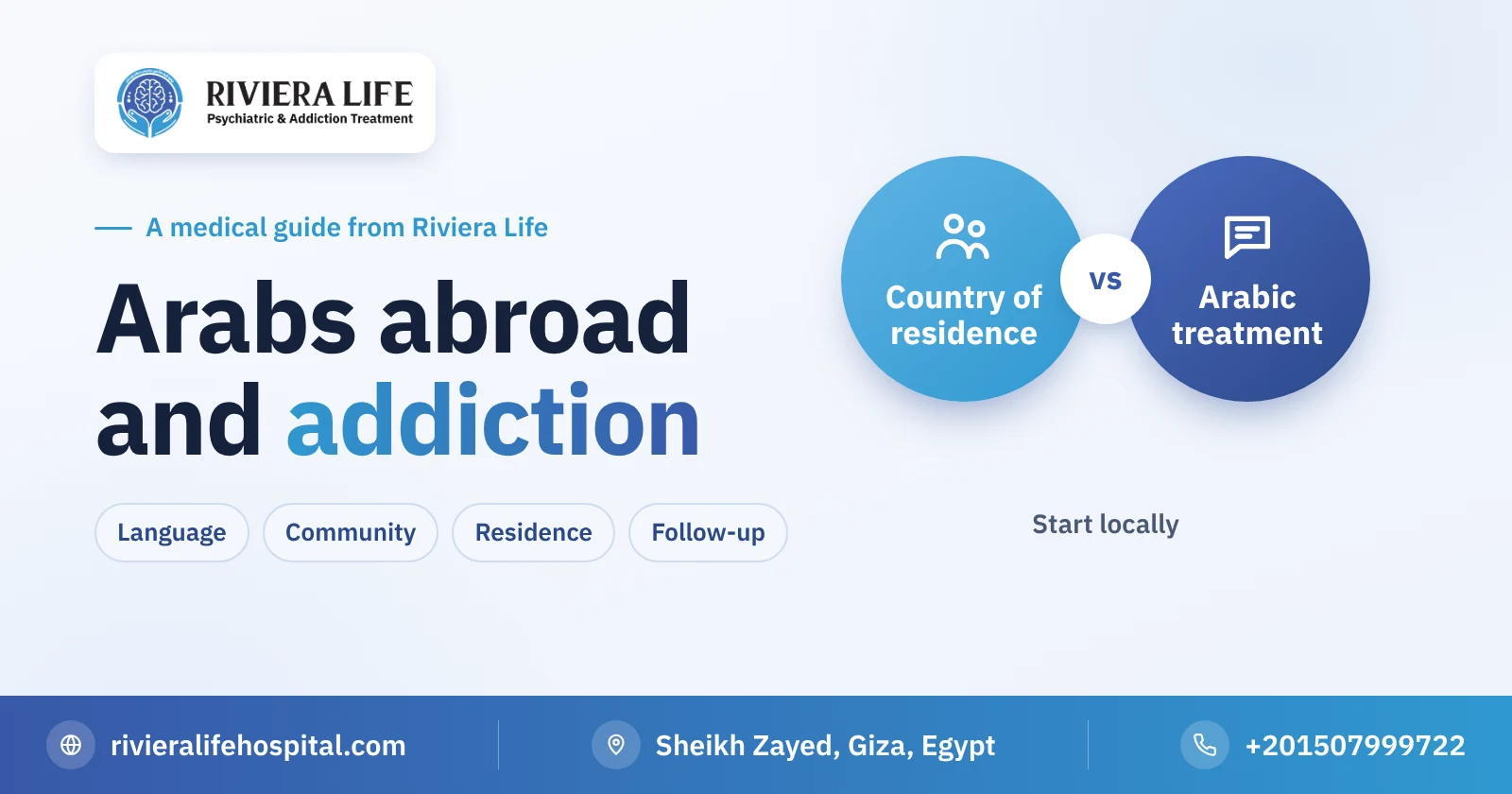
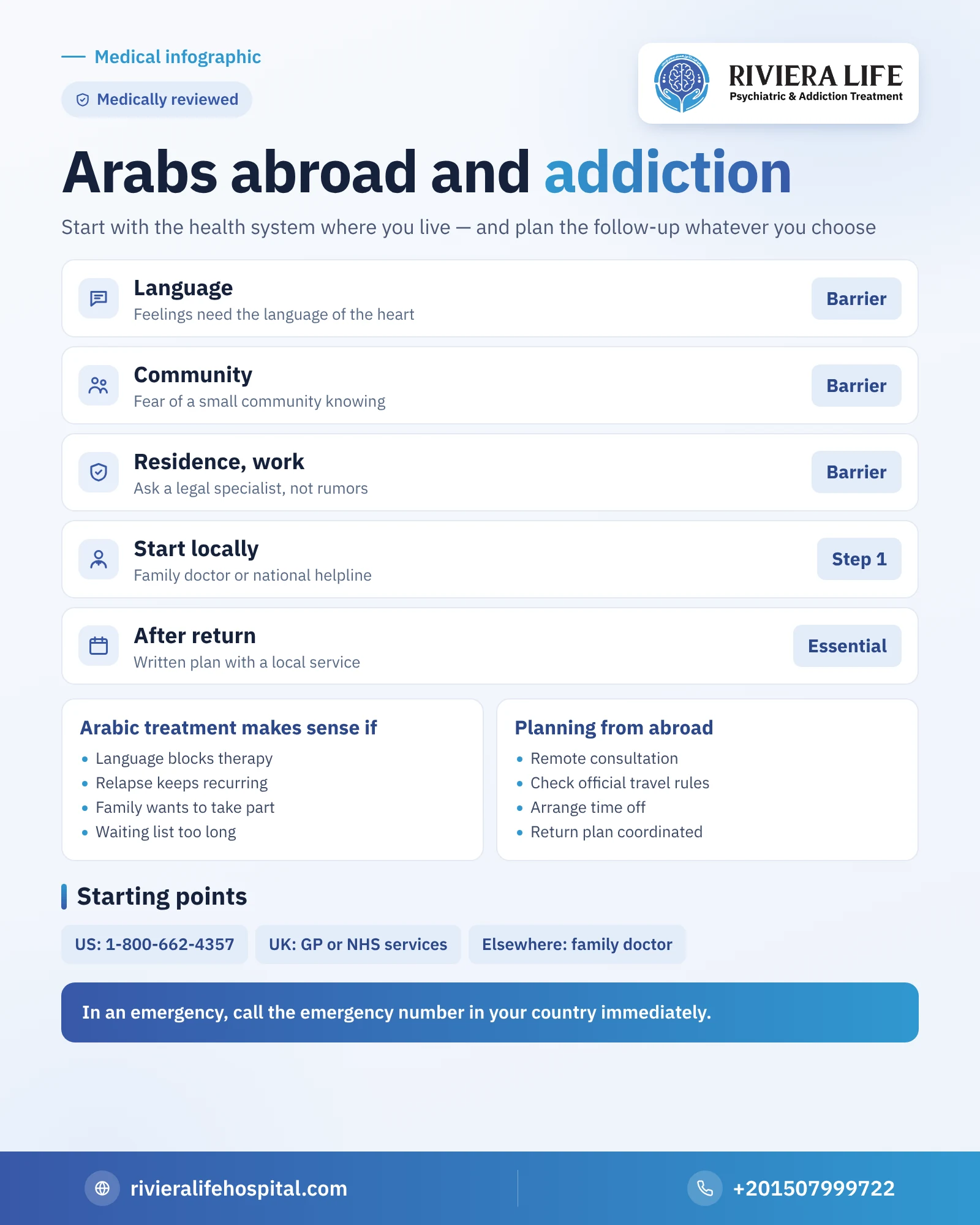
Arabs living in Europe and America face particular obstacles to addiction treatment: difficulty explaining feelings in a second language, fear of how the community will see them, worry about residence or work, and sometimes cost or long waiting lists. The right first step is usually through the health system in the country of residence, such as the family doctor or the national helpline. Treatment in an Arab country such as Egypt becomes a logical option when language and culture are a real obstacle, when relapse recurs, or when the patient needs to be away from their surroundings for a period, provided a follow-up plan for after the return is built from the beginning.
- The startFamily doctor or helpline in the country of residence
- Advantage of Arabic treatmentEasier expression and understanding of culture and family
- Essential conditionA follow-up plan after returning
A son born abroad may speak the country’s language fluently, but when he talks about his father, about being far from home, and about feeling split between two worlds, he often needs his family’s words. Addiction among the children of Arab communities is intertwined with questions of identity, belonging and pressure between two cultures. This guide helps you understand the options available in your country of residence, and when Arabic-language treatment in an Arab country is an option worth considering. The guide to drug addiction treatment explains the stages you will go through wherever treatment takes place.
Why do Arabs abroad delay seeking treatment?
- Language: many can handle daily transactions in the country’s language, but talking about shame, guilt and the relationship with one’s father needs the language of the heart.
- The community: fear that members of a small community will find out, so the stigma is doubled.
- Residence and work: worry about the effect of seeking treatment on residence status or the job, a worry that needs an answer from a legal specialist in your country, not from rumors.
- The generation gap: parents see the problem as religious or moral, and the son sees it as psychological, so dialogue stalls.
- Cost and waiting lists in some health systems.
Start from your country of residence
In most European countries and North America there are addiction treatment services within the health system, and the usual starting point is the family doctor or national helplines. Examples include:
- In the United States: the national helpline of the Substance Abuse and Mental Health Services Administration, 1-800-662-4357, which is free, confidential and works around the clock to refer to treatment.
- In the United Kingdom: you can start with the family doctor or contact local drug treatment services of the National Health Service directly.
- In other countries: the family doctor knows the services available in your area, and an interpreter can be requested in many health systems.
In emergencies, such as loss of consciousness, difficulty breathing or thoughts of self-harm, call the emergency services in your country immediately.
When does Arabic-language treatment in an Arab country make sense?
- When language or culture is a real obstacle to psychotherapy in the country of residence.
- When relapse recurs and the patient needs to be away from using friends and their surroundings for a period.
- When the family wants to take part in treatment in its own language, and to understand the plan without an intermediary.
- When waiting lists are long and the case can’t tolerate postponement.
On the other hand, treatment in the country of residence remains better when the service is available and suitable, because daily life and follow-up after treatment are there.
How do you plan treatment in Egypt from abroad?
- A confidential remote consultation in Arabic that determines the patient’s needs and the approximate duration of the program.
- Checking travel procedures through the official channels for the passport the patient holds, and the requirements for carrying any prescribed medicines.
- Arranging absence from work or study before traveling.
- Treatment: safe withdrawal if needed, then psychological rehabilitation in Arabic, with sessions for the family in person or remotely.
- The return plan: written, and coordinated with a doctor or addiction service in the country of residence, with remote follow-up in the first months.
The first weeks after returning are the most vulnerable to relapse, because the patient goes back to the same old triggers, so the plan isn’t complete without clear aftercare.
Remote treatment in Arabic
Not all cases need to travel. Some patients, especially after detox or in mild and moderate cases, benefit from a program of psychotherapy and medical follow-up online in Arabic, while staying in their country of residence. The doctor states frankly whether the case is suitable for this or needs to start inside a hospital. The details are in remote addiction treatment.
How does Riviera Life help you?
Riviera Life offers Arabs living in Europe and America a confidential remote consultation in Arabic, remote treatment programs when they suit the case, and receives those who need inpatient treatment in Egypt, with a return plan and remote follow-up. The first consultation is free and confidential on +201507999722.
Read also
- Addiction treatment in Egypt for Arab patients: a guide by country
- Confidential remote addiction treatment
- The dual diagnosis program
- Dealing with a person in recovery after discharge
Questions many people ask
Usually with the family doctor or the national helpline in the country of residence, such as the US national line 1-800-662-4357, or local drug treatment services in the United Kingdom.
When language or culture is an obstacle to psychotherapy, when relapse recurs and the patient needs distance from their surroundings, or when waiting lists are long, provided there is a follow-up plan after returning.