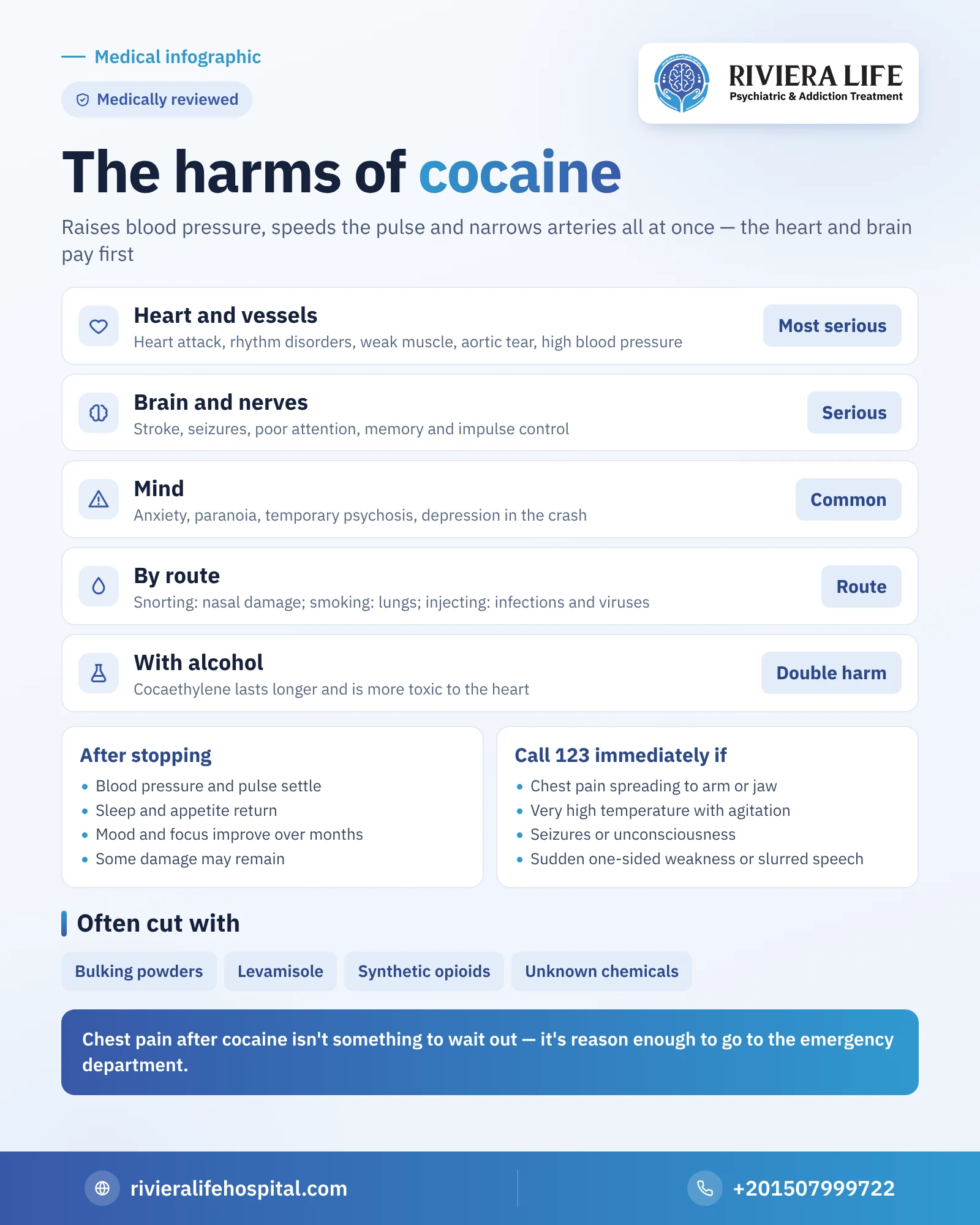
Cocaine’s most serious harms fall on the heart and brain, and they may happen suddenly and without warning, even in a young man who had no complaints before. It raises blood pressure, speeds the pulse and narrows the arteries all at once, exposing the user to a heart attack, stroke or seizures. With continued use, slower harms accumulate: anxiety, suspicion and depression, damage to the nose or lungs depending on the method of use, and debts and broken relationships. This article sets out the harms from body to mind to life, explains what improves after stopping, and when you must go to the emergency department without hesitation.
Cocaine’s short-term harms
Within minutes of a dose, the body enters an artificial state of emergency: a fast pulse, high blood pressure, rising temperature, dilated pupils, and loss of appetite and sleep. These changes may pass without visible harm many times, but on one occasion they may exceed what the heart or vessels can bear. The chances increase with doses close together on one night, with heat and hours of dancing, or with mixing alcohol and other stimulants.
Psychologically, confidence and elation may turn into tension, irritability and suspicion of others, sometimes into aggressive behavior or risks the person wouldn’t take in their normal state, such as driving fast or fighting.
Cocaine’s harms to the heart and blood vessels
The heart is the organ that pays the biggest price, and among the most prominent things that happen to it:
- Heart attack: cocaine increases the heart’s need for oxygen, narrows the arteries that feed it, and increases the blood’s tendency to clot.
- Rhythm disorders: it may cause dangerous irregular beats that sometimes end in sudden cardiac arrest.
- Weak heart muscle: with continued use, the muscle may enlarge or its pumping ability may weaken.
- Tearing of the aortic wall: a rare but extremely dangerous complication linked to a sharp rise in blood pressure.
- Chronic high blood pressure: and early hardening of the arteries in some users.
Chest pain after cocaine isn’t something to wait out until it calms down, but reason enough to go to the emergency department.
Cocaine’s harms to the brain and nervous system
A sudden narrowing of the brain’s arteries or a sharp rise in blood pressure may cause a stroke, whether by blocking an artery or by bleeding. Cocaine also lowers the seizure threshold, so a seizure may happen in someone who has never had one. With long-term use, the functions of attention, memory and impulse control are affected, so the patient notices difficulty concentrating and making decisions. Some users develop involuntary movements or chronic headaches.
Psychological harms
Psychological harms may be the first thing that pushes the family to seek help:
- Constant anxiety and panic attacks, even on days without use.
- Suspicion and persecution that make the person distrust those closest to them.
- Temporary psychosis with auditory hallucinations or a feeling of insects under the skin.
- Depression that intensifies on crash days and may be accompanied by thoughts of self-harm.
- Irritability and outbursts of anger that harm relationships and work.
Some of these symptoms are part of the clinical picture of the addiction itself, and our article on cocaine addiction symptoms explains them from a diagnostic angle.
Harms that differ by method of use
Snorting
Cocaine narrows the vessels of the nasal lining again and again, so it dries, ulcerates and bleeds, the sense of smell weakens, and it may reach a hole in the septum between the nostrils or a change in the nose’s shape. We explain caring for these harms in our article on cleaning the nose from cocaine.
Smoking
Smoking crack irritates the lungs, causing a chronic cough and shortness of breath, and may lead to acute lung injury right after smoking, as well as burns on the lips and fingers.
Injecting
This method raises the chance of abscesses, blocked veins and heart valve infection, as well as transmission of HIV and viral hepatitis if users share equipment.
Harms to other organs
- The digestive system: reduced blood flow to the intestines may cause severe abdominal pain, an emergency.
- Kidneys and muscles: high temperature and exertion may cause muscle breakdown that strains the kidneys.
- Weight and nutrition: repeated loss of appetite leads to weight loss and weak immunity.
- Teeth and gums: teeth grinding and a dry mouth damage them over time.
Cocaine with alcohol: double harm
When cocaine and alcohol combine, the liver makes a substance from them called cocaethylene. This substance stays in the body longer than cocaine and carries its toxicity to the heart, so the risks of rhythm disorders and sudden death rise compared with either alone. Alcohol also masks the feeling of exhaustion, so the person keeps drinking and using for longer hours. If you want to know how this combination shows on a test, see our article on how long cocaine stays in the body.
What cocaine is cut with
The cocaine in circulation is rarely pure. It may be mixed with powders to add weight, or with medicines and chemicals that have their own harms. One of the best known worldwide is a veterinary medicine called levamisole, linked to a dangerous drop in white blood cells and skin ulcers. Several countries have also recorded poisonings from powerful synthetic opioids found in samples sold as cocaine, which adds the risk of stopped breathing to the heart risks.
Harms to fertility and pregnancy
During pregnancy, cocaine narrows the vessels of the placenta, raising the risk of early placental separation, premature birth and low birth weight. As for sexual life, at first it may seem to increase desire, but continued use is linked to erectile weakness, difficulty reaching orgasm and hormonal disturbance, the details of which are in our article on cocaine and sex.
Social and financial harms
Cocaine is one of the most expensive drugs, and the pattern of binges means a single night can consume what would keep a family for weeks. That is why debts accumulate quickly, borrowing begins and then selling possessions, and some get involved in legal problems. Work is affected by absences after late nights, and the marriage is affected by lying and mood swings. Families often discover the addiction from the bank account before they discover it from the symptoms. Added to this is the risk of accidents, as driving under the influence of cocaine or on exhausting crash days combines impulsivity with poor concentration.
Do cocaine’s harms go away after stopping?
Much of them improves. Blood pressure falls and the pulse settles, sleep and appetite return, mood and concentration gradually improve over months, and psychotic symptoms disappear in most who had them. But some harms may remain, such as the effect of a heart attack on the heart muscle, the effects of a stroke, or a perforated nasal septum that may need surgery.
It is wise for someone who has used for a long time to have a heart check, an ECG and a blood pressure measurement even if they feel well, as some harms stay silent until they appear suddenly. The earlier treatment begins, the more is recovered, and you will find its stages in our article on cocaine addiction treatment.
Cocaine overdose: what does it mean, and how should the family act?
A cocaine overdose isn’t linked to a known amount that can be considered safe. Poisoning may happen in someone using for the first time or a long-time user, because purity changes from one sample to another, and because the heart and vessels can be affected with unpredictable speed.
The risk increases in three situations: mixing cocaine with alcohol, using it after other stimulants, and the sample containing adulterants the user doesn’t know about. Any one of these may be enough to cause a heart attack, stroke or seizures.
If you suspect poisoning, the first action is to call an ambulance on 123, then:
- Move sharp objects away from the person, and place them on their side if they lose consciousness or vomit.
- Cool their body with light clothing and ventilation if their temperature is high.
- Don’t try to force them to vomit, and don’t give them drinks or medicines of your own.
- Stay with them, and tell the ambulance team what you know about what they took and what they mixed it with.
After the danger has passed, it isn’t enough for the person to go home; the episode is a serious warning. The family can be helped with the next step by reading our article on how to deal with a cocaine addict, and by requesting a specialist assessment of the heart and mental state together.
When do you need medical help?
Ask for a medical assessment soon if palpitations, headaches or nosebleeds keep happening, if suspicion and anxiety persist, or if attempts to stop have failed. The following signs, however, can’t wait:
Call an ambulance on 123 immediately if you see
These are signs of cocaine poisoning that can threaten life within minutes.
- Pain or pressure in the chest spreading to the arm or jaw
- A very high temperature with hot skin and agitation
- Seizures or loss of consciousness
- Sudden weakness in one side of the body, or inability to speak clearly
- Hallucinations, intense panic or violent behavior
At Riviera Life, physical and psychological harms can be assessed together, then a treatment plan built in complete confidentiality under round-the-clock medical supervision.
More from our cocaine guide
- Cocaine: the complete guide
- The causes of cocaine addiction
- Cocaine withdrawal symptoms
- The difference between cocaine and heroin
- Cocaine vs amphetamine: mechanism, duration, the heart and the crash
Questions many people ask
Yes. It narrows the heart's arteries, raises its need for oxygen and increases the blood's tendency to clot, so a heart attack may happen in young people with no previous illness.
Stroke and seizures are the most dangerous in the short term, and with continued use concentration, memory and impulse control are affected.
Because the liver produces cocaethylene from them, a substance that stays in the body longer and harms the heart more, and alcohol masks exhaustion so use goes on longer.
Inflammation, bleeding and the sense of smell usually improve after stopping and treatment, but a perforated nasal septum, if it happens, doesn't heal on its own and may need surgery.
Most psychotic symptoms go away with stopping, but anxiety and depression may persist for a while and need treatment, and stopping may reveal a psychiatric disorder that was already there.