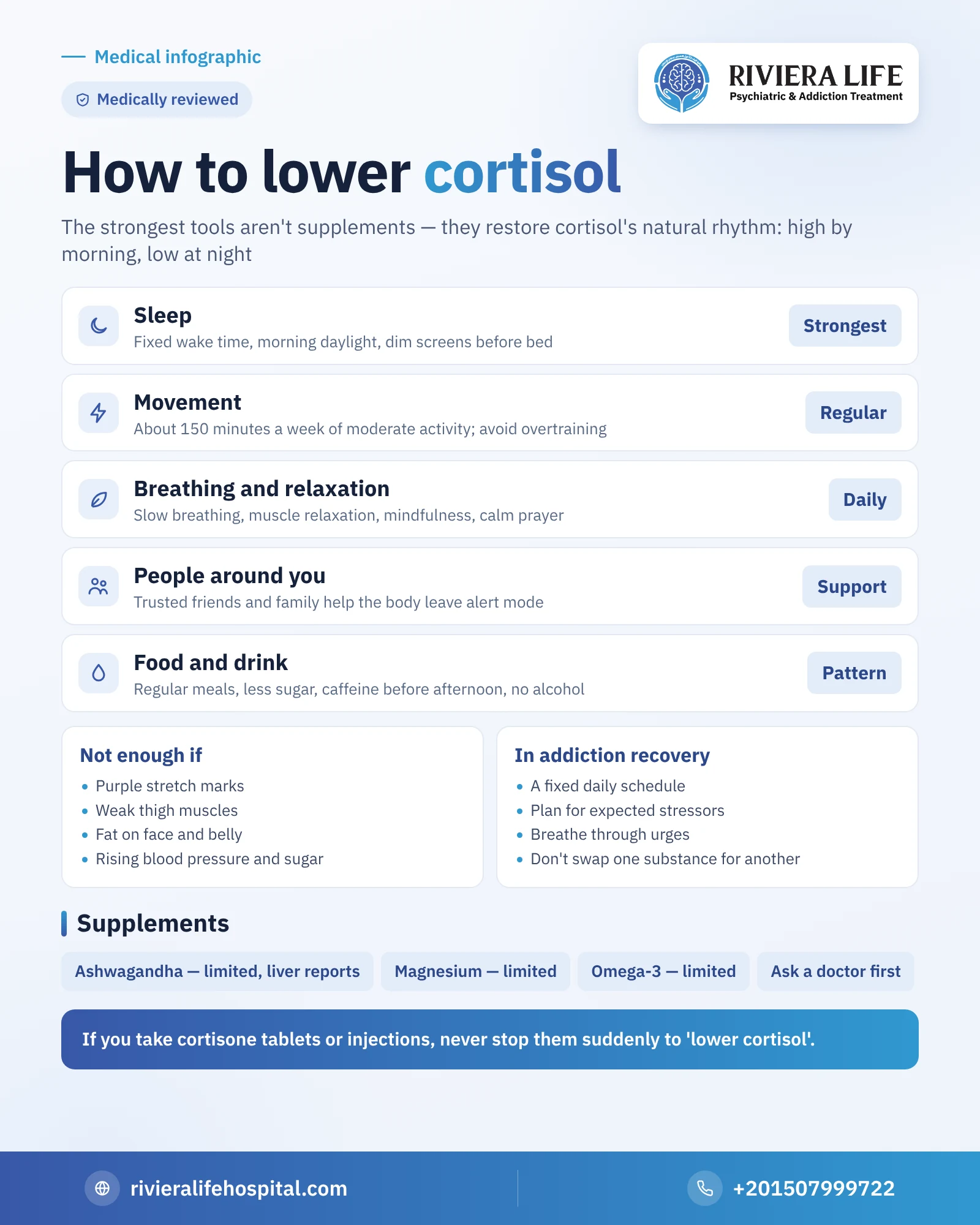
If your raised cortisol comes from constant pressure, late nights and an exhausting pace of life, and you are asking how to lower cortisol, the strongest things that lower it aren’t a supplement but four things: regular sleep, moderate movement, training the body to calm down with breathing and relaxation, and supportive relationships. These methods don’t eliminate the hormone, which you need, but they restore its natural rhythm: high in the morning, low at night. If the rise is caused by an illness such as Cushing’s syndrome or a cortisone medicine, habits alone won’t be enough and an endocrinologist is needed. Here is a practical plan ordered by strength of evidence, with a special application for people recovering from addiction.
Before you start: is the problem really cortisol?
Many people read a post about “the stress hormone” and link every tiredness or weight gain to it. It is better first to distinguish between two situations: a functional rise that accompanies psychological stress, which is common and responds to the following steps, and a pathological rise with clear physical signs such as broad purple stretch marks, weak thigh muscles, and fat gathering on the face and abdomen. If you have these signs, first read our article on high cortisol symptoms and see a doctor before anything else.
An important warning: if you take cortisone tablets or injections, don’t stop them suddenly to lower cortisol. Stopping suddenly after long use may cause a dangerous drop in the hormone; reduction is gradual, with a plan from the doctor.
Sleep: the first and strongest step
Sleep deprivation, even for one night, can raise cortisol the following evening, and chronic late nights disrupt its whole rhythm. Don’t start with the number of hours only, but with regularity:
- Fix your wake-up time every day, even on days off; it is the key to setting the body clock.
- Expose yourself to daylight in the first hour after waking, by going out or sitting near a window.
- Dim lights and screens in the last hour before sleep.
- Make the bedroom for sleep: dark, quiet and at a moderate temperature.
This rhythm is closely linked to the night hormone, as explained in our article on melatonin and sleep.
Movement: moderate and regular
Regular physical activity improves the body’s ability to return to calm after stress. This means brisk walking, swimming or cycling for about half an hour on most days of the week, which matches public health recommendations of around 150 minutes of moderate activity a week. Note that very intense, long exercise raises cortisol temporarily, which is normal, but overdoing it without enough rest, especially with little sleep and little food, may exhaust the body instead of relaxing it. And choose a time that isn’t too close to sleep if it delays your sleep.
Breathing and relaxation: training the brakes
The stress response has natural brakes, and they can be strengthened by training. Methods that have been studied relatively well include:
- Slow breathing: a calm in-breath through the nose, then a longer out-breath, for a few minutes, two or three times a day.
- Progressive muscle relaxation: tensing a muscle group and then releasing it, from the feet up to the face.
- Mindfulness exercises: training attention on the present moment without judgment; structured programs have shown a moderate effect on perceived stress.
- Yoga, meditation and prayer with focus: many benefit from them because they combine slow breathing and calm attention.
The secret is regularity, not duration. Five minutes a day is more useful than an hour once a month.
The people around you: an unwritten medicine
Social support is one of the factors most linked to easing the effect of stress. Talking to a friend you trust, sitting with family, or genuine laughter all help the body leave its state of alert. In contrast, tense relationships and long isolation keep the axis switched on. The feeling of safety with others is linked to the hormone oxytocin, which may ease the stress response.
Eating and drinking: a pattern, not a magic recipe
No food “burns” cortisol, but the pattern of eating affects the stability of energy and mood:
- Regular meals that prevent intense hunger, as long unplanned fasting raises the hormone in some people.
- Less refined sugar and sweetened drinks, and more vegetables, legumes and whole grains.
- Sources of omega-3 such as oily fish, without relying on them as a treatment.
- Caffeine in moderation and before the afternoon, because it raises cortisol slightly and delays sleep.
- Staying away from alcohol, as it disturbs sleep and raises cortisol, especially during withdrawal.
Supplements and herbs: what does the evidence say?
You will find many adverts for supplements that “regulate cortisol”. The truth is more modest. Ashwagandha, for example, showed a decrease in cortisol and perceived stress in some small studies, but the studies are short and of varying quality, there are reports of liver injury with it, and it may interact with thyroid medicines, sedatives and immune medicines. Supplements of magnesium, omega-3 and phosphatidylserine have limited or conflicting evidence. The bottom line: a supplement isn’t a substitute for sleep and movement, and shouldn’t be taken without consulting a doctor, especially with pregnancy, chronic illness or psychiatric medicines.
Habits that raise cortisol without you noticing
- Following the news and social media until midnight.
- Smoking, as nicotine activates the stress axis, and the craving between cigarettes is like a small withdrawal.
- Putting tasks off until the last moment, then working under intense pressure.
- Relying on stimulants by day and sedatives by night.
- Having no free time in the day for rest or hobbies.
In addiction recovery: why does this matter more?
In the first weeks and months after stopping, the stress axis is usually more sensitive than usual. A simple situation such as a disagreement at home may trigger an intense urge to use, because the brain has learned that the substance was the fastest route to calm. That is why managing stress isn’t a luxury in rehabilitation programs, but part of preventing relapse. Practical applications include:
- A fixed daily schedule for sleep, meals and activity, because empty time and chaos are among the strongest triggers of craving.
- Identifying expected stressful situations in advance and writing an alternative plan for each.
- Breathing exercises when an urge appears, as the wave usually rises and then settles within minutes.
- Not replacing one substance with another, such as using sedatives or pregabalin without a prescription to calm the nerves.
- Psychotherapy sessions and support groups where you learn to deal with stress instead of escaping it.
To understand how stress intertwines with the reward system and feeds craving, read our article on dopamine and addiction.
How do you know you are making progress?
You don’t need a test to know whether the plan is working. Watch simple signs for two to four weeks: are you falling asleep faster and waking less? Has your craving for sweets in the evening decreased? Do you calm down after an upsetting situation faster than before? Write this down in a small notebook, because gradual improvement is hard to notice without recording it. And if your eating under stress remains out of control, our article on food addiction and how it differs from binge eating may help.
When aren’t these steps enough?
If you have kept to sleep, movement and calming for several weeks and feel no difference, or physical signs appear such as purple stretch marks, muscle weakness, and rising blood pressure and sugar, see a doctor. And if the stress comes with anxiety that won’t settle, persistent sadness or negative thoughts about yourself, you may need a psychological assessment; anxiety disorders and depression are treated effectively, and our article on anxiety treatment explains the options available.
How can Riviera Life help you?
At Riviera Life we don’t only treat substance use; we teach the patient how to live with stress without going back to it, through individual and group psychotherapy programs, a family program and follow-up after discharge. A team of consultants in psychiatry and addiction treatment works under round-the-clock medical supervision and in complete confidentiality. The first consultation is free on +201507999722.
More from our cortisol guide
- Cortisol: the complete guide to the stress hormone
- High cortisol symptoms: stress or Cushing’s syndrome?
- Adrenaline and anxiety
- GABA and anxiety: the brain’s natural brakes
Questions many people ask
In a moment of stress, slow breathing with a long out-breath helps calm the body within minutes. Regulating the level in the long term needs weeks of regular sleep and movement.
Small, short studies have shown positive results, but the evidence isn't strong, and there are reports of liver effects and drug interactions. Don't start it without consulting a doctor.
Caffeine raises it slightly, especially in people who don't drink it regularly, and delays sleep if drunk in the evening. Moderation and avoiding it after the afternoon are enough for most people.
Intense exercise raises it temporarily, which is normal, but regular moderate activity improves the body's ability to return to calm after stress.
Many notice improvement in sleep and stress within a few weeks of commitment. If there is no improvement or clear physical signs appear, a medical assessment is the next step.