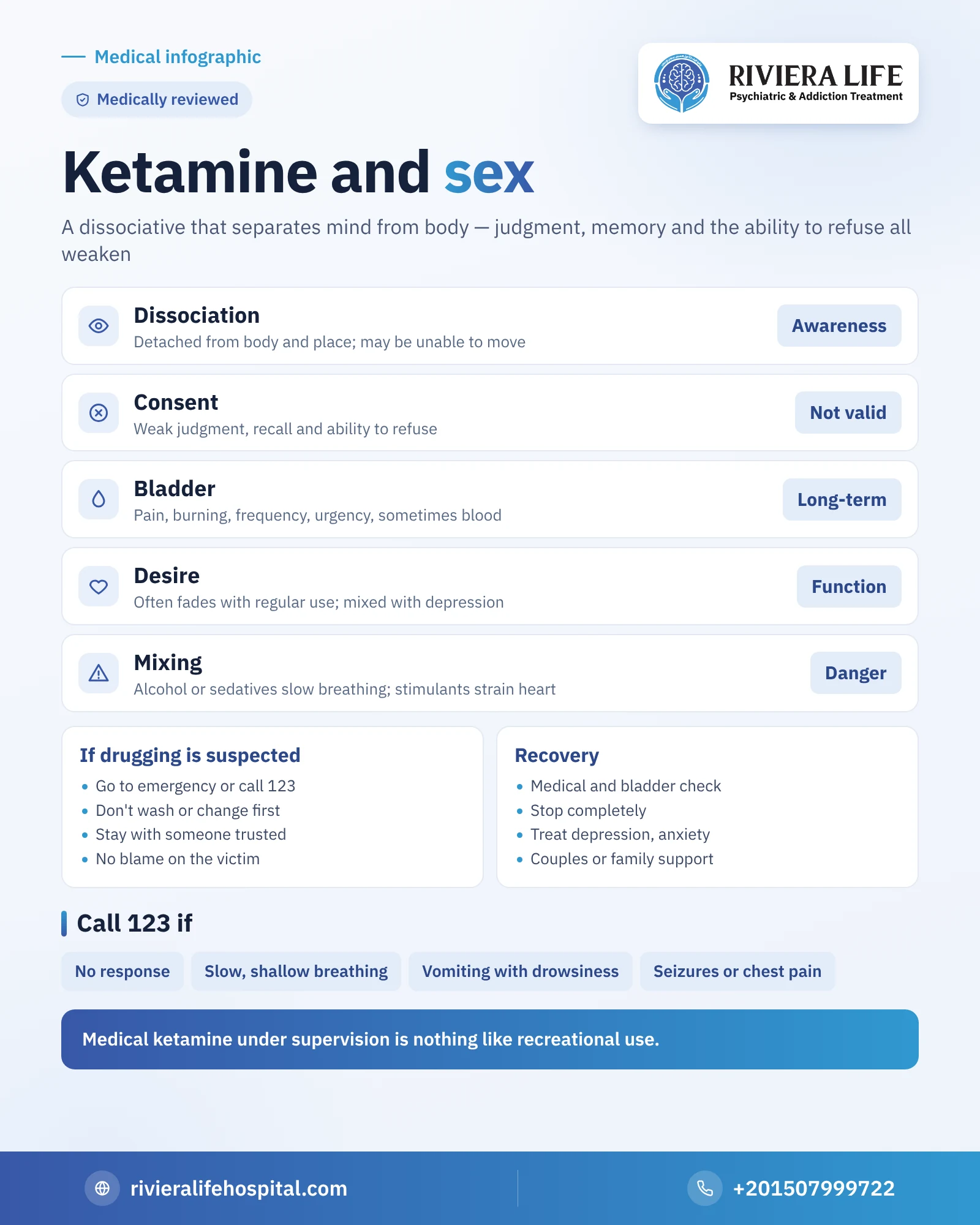
Ketamine and sex is a subject surrounded by many illusions. Ketamine is a medical anesthetic used in operating theaters and emergency departments, and has turned for some users into a party substance thought to give more relaxation and pleasure. The medical picture is different: it is a “dissociative” medicine that separates consciousness from the body, so it weakens judgment of situations, memory and the ability to move, three pillars of any safe, consensual relationship. In the longer term it strikes the bladder with pain and distressing frequent urination that affect married life. This article focuses on the medical side and safety, not on any detailed description.
What does ketamine do to consciousness?
Ketamine works on glutamate receptors in the brain, causing a feeling of detachment from the body and the place, and distortion of perception, and in large amounts it may reach a state in which the person is unable to move or speak while their eyes remain open. This state isn’t relaxation, but a partial or complete absence from reality, and may be accompanied by nausea, vomiting and loss of balance. Details of the general effects are in our article on the harms of ketamine.
The duration and intensity of the effect differ according to the amount, the body and the substances taken with it, and no one can predict precisely how a person will go through the experience. In some people the feeling of detachment, anxiety or troubling thoughts may return hours or days after the effect wears off, which makes psychological follow-up important for those who use repeatedly.
Ketamine and sex: why is it a problem in relationships?
A relationship accompanied by reduced consciousness isn’t an equal relationship. Someone under the influence of ketamine can’t assess the situation, refuse or remember accurately, and may not know in the morning what happened. Health bodies note in their reports on dissociative drugs that memory loss and weakened ability to resist make them among the substances misused against others. That is why medicine completely rejects regarding it as a relationship enhancer, and conscious consent remains a condition that isn’t met in this state.
“It increases pleasure”: how should we view this claim?
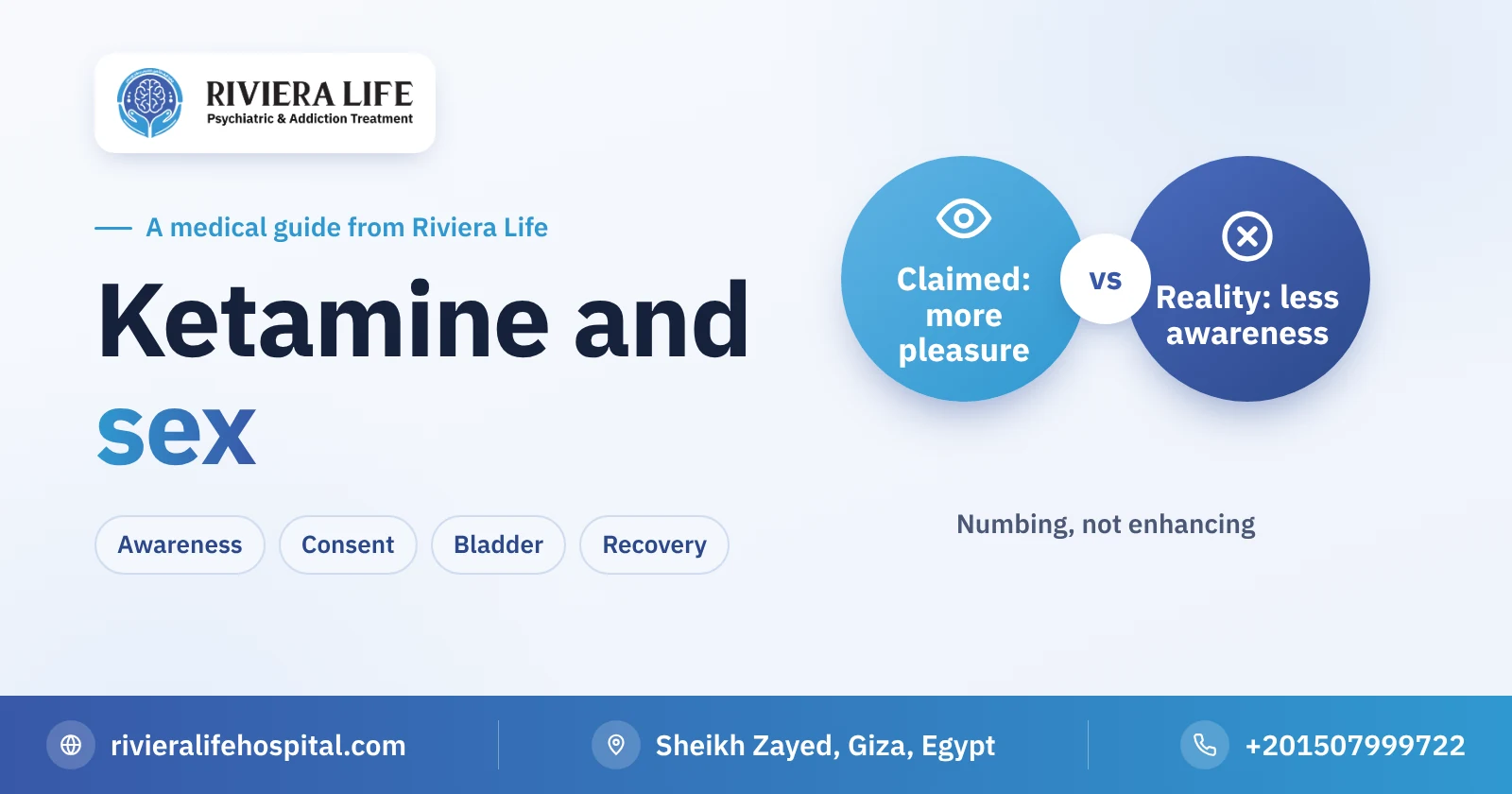
Some users describe a feeling of softness or detachment from anxiety, but this is in fact a numbing of perception, not an enhancement of pleasure. The substance reduces the sense of pain and touch together, distorts time, and has no proven sexual benefits. Desire is affected by mood, memory and hormones, and it falls in those dependent on the substance as their other interests decline. Ketamine remains a narcotic substance capable of causing dependence, and our page on ketamine addiction explains how that begins.
The bladder: the damage no one talks about at the party
One of the best-known complications of repeated use is what is called ketamine cystitis: lower abdominal pain, burning on urination, severe frequency and urgency, and blood may appear in the urine. The bladder wall is damaged and the kidneys may be affected in severe cases. Someone suffering from this usually avoids intimacy because the pain increases in the pelvic area, and may have to go to the toilet dozens of times a day. Recovery here depends on stopping completely and urological follow-up, and our article on ketamine addiction treatment covers bladder care within the program.
Does it weaken erection and desire?
Studies on this aspect are limited, but regular users often complain of extinguished desire, declining enthusiasm and sometimes difficulty with erection, and these complaints are mixed up with depression, lack of sleep and the use of other substances. It isn’t right to attribute them to ketamine alone with certainty. What we know is that dependence on any drug turns attention away from the partner and reduces enjoyment of ordinary life, and that bladder pain and frequent urination are direct factors in withdrawing from intimacy.
Medical ketamine: what is the difference?
Ketamine is given in hospitals under the supervision of an anesthesiologist for certain operations, and forms of it such as nasal esketamine are used for some cases of treatment-resistant depression in accredited centers under medical observation after the session. This use is done with monitoring of breathing and blood pressure and follow-up of dependence risks, and doesn’t resemble recreational use in anything. For someone receiving medical treatment, their doctor determines everything needed and reviews its side effects, and the patient should ask them if they notice a change in desire or performance.
Mixing with alcohol, stimulants and sedatives
Mixing increases the risk of vomiting with loss of consciousness, so it is hard for the person to protect their airway, and weakens breathing if alcohol, sedatives or opioids are added. When stimulants are added, the heart speeds up and pressures rise. No mix has a sexual benefit; alcohol alone weakens performance, as in alcohol and sex. And in crowded settings the risk of reckless behavior and not using protection against sexually transmitted infections increases.
Call an ambulance on 123 immediately if you see
After ketamine alone or with alcohol, sedatives or stimulants.
- A person who doesn’t respond or wake when called
- Slow, shallow or irregular breathing, or blue lips
- Vomiting with severe drowsiness or choking
- Seizures, chest pain or a very fast pulse
For women: the particular risk
A woman who uses ketamine suffers what a man suffers of bladder pain and mood disturbance, with added fears of unplanned pregnancy and sexually transmitted infections when judgment of situations weakens. If the woman is pregnant, use exposes her and her fetus to risks whose limits aren’t known, and she should go to the doctor without fear of being judged. As for the substance’s effect on the menstrual cycle and fertility, there isn’t enough information, so we don’t give figures we don’t have.
If you suspect someone was given a drug without their knowledge
If a person wakes up confused and doesn’t remember hours of the night, or feels that someone dealt with them without their consent, safety comes first: they go to the nearest emergency department or call an ambulance on 123, don’t wash or change clothes before the examination if possible so evidence isn’t lost, and ask a trusted person to stay with them. The doctor can carry out the necessary tests and provide health and psychological support. The victim bears no blame. Taking precautions in social settings, such as not leaving drinks unattended, is legitimate protection, not an accusation.
What do friends and family do?
You can’t stop a person from a habit, but you can protect them at a critical moment. Stay with someone who seems detached from reality, don’t leave them alone, put them on their side if they vomit, and call an ambulance if their breathing slows or they don’t respond. After they wake, open a calm conversation with them about what happened without reproach, as shame closes the doors to treatment. And if the partner is the user, know that their behavior isn’t a message aimed at you, but a sign that needs help.
How does recovery begin?
It begins with a medical assessment that includes the bladder, kidneys, mental health and sleep, then stopping the substance completely while treating any accompanying depression or anxiety, with urological follow-up when needed. Desire and mood improve gradually after stopping, bladder pain may need weeks or months to settle, and some severe damage needs long follow-up. Family and couples therapy helps when the partner has lost trust or borne great pressure. You will find the signs of addiction in someone you love in ketamine addiction symptoms.
When should you ask for help?
If you’ve come to need ketamine to feel comfortable, urinating hurts and your trips to the toilet are frequent, or you lose memory after use, the problem has gone beyond a passing experiment. At Riviera Life, consultants in psychiatry and addiction treatment assess your case in complete confidentiality around the clock, and the plan includes a family program and follow-up after treatment. The first consultation is free on +201507999722.
More from our ketamine guide
- Ketamine: the complete guide
- The harms of ketamine
- Ketamine addiction symptoms
- Ketamine addiction treatment
Questions many people ask
There are no proven sexual benefits. It numbs perception and touch, distorts time, and weakens judgment and memory.
Because it separates consciousness from the body and weakens judgment, recall, and the ability to move and refuse.
Repeated use may cause bladder inflammation with pain, burning, frequent urination, urgency and sometimes blood, which improves with stopping and urological follow-up.
Call an ambulance on 123 or go to the nearest emergency department and stay with a trusted person, and tell the doctor what you remember so they can carry out tests and provide support.
No; medical use is done under doctors' supervision with monitoring of breathing and blood pressure and assessment of risks, and is completely different from recreational use.