Tramadol addiction symptoms appear on three levels: physical, such as constipation, sweating and morning headaches; psychological, such as irritability and anxiety when a pill is late; and behavioral, such as unexplained spending and empty blister packs. What makes them hard to spot is that tramadol does not knock people out the way other opioids do — at first it may even make them more active and talkative, so the family thinks they are at their best. This article helps you read the signs in the order they usually appear, and tell the difference between someone taking a prescribed medication and someone who has lost control of it.
Why do families notice tramadol addiction so late?
In many homes tramadol comes in through the front door: a prescription for back pain, or a strip from the local pharmacy. So finding it in a pocket or a drawer does not raise much suspicion. On top of that, its first effects look positive: the husband who used to complain of tiredness now works double shifts, and the shy son has become sociable. This rosy picture can last for months, until signs of dependence start to show — the first being sharp swings between days with the pill and days without it.
Physical signs of tramadol addiction
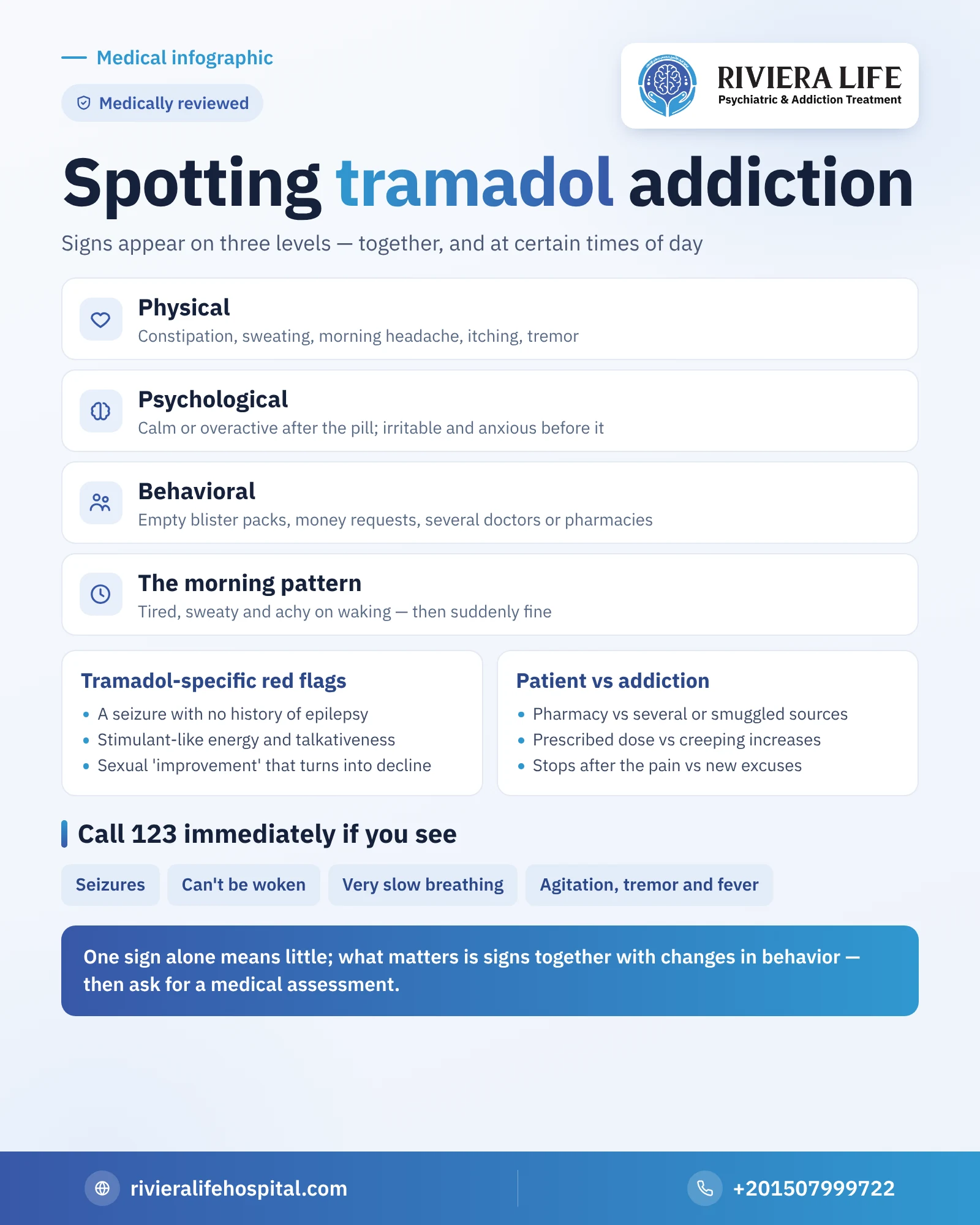
Some of these signs appear while the drug is working, others when a dose is late:
- Chronic constipation and frequent stomach complaints — one of the most consistent effects of opioids.
- Unexplained sweating, especially at night or early in the morning.
- Nausea, loss of appetite and noticeable weight loss over time.
- Morning headaches and dizziness that disappear after taking a pill.
- Itchy skin and a dry mouth.
- Sometimes smaller pupils, though less obvious than with heroin.
- A slight tremor in the hands or muscle twitching.
One of these signs on its own means nothing, since constipation or sweating have many causes. What matters is when they appear together with changes in behavior, and when they are tied to a particular time of day.
Watch the mornings in particular. Many people dependent on tramadol wake up tired and sweaty, yawning and complaining of body aches or a runny nose — and all of it vanishes half an hour or an hour after they go to the bathroom or step out “to buy something”. This repeated pattern of tiredness that disappears suddenly for no clear reason is one of the clues families most often describe once the picture becomes clear.
Psychological and mood signs
The clearest change in many users is mood swinging through the day. After the pill: calm or excessive energy, talkativeness and unusual tolerance. Before it, or when it is late: tightness in the chest, irritability over the smallest thing, anxiety and sometimes panic attacks. Over the months there may be general apathy, loss of pleasure in things they used to enjoy, and insomnia without the drug. This cycle between relief and distress is what traps the person, because they learn that the pill is the fastest way out of feeling bad.
Behavioral signs families notice
- Empty blister packs in clothes, the car or the bin, sometimes with different brand names.
- Constantly asking for money without a convincing explanation, or small things going missing at home.
- Visiting several doctors or pharmacies, or exaggerating pain to get a prescription.
- Going out at fixed times to meet a particular person, then coming back in a different mood.
- Making sure to have a “spare supply” before travel or holidays.
- Falling behind at work or school after an initial period of extra energy.
- Drifting away from old friends and growing close to new ones who use the same way.
Signs specific to tramadol
Some signs set tramadol apart from most other opioids, and many families don’t know them:
A seizure “out of nowhere”
If a young person with no history of epilepsy has a sudden seizure, tramadol is one of the first things to ask about. The drug lowers the brain’s seizure threshold, and a seizure can happen with amounts that did not seem large.
Stimulant-like energy
Because of its effect on noradrenaline, tramadol leaves some users alert and driven to work, so they do not match the image of the “sleepy addict” that people have in mind.
Changes in the marital relationship
Some men turn to tramadol to delay ejaculation, and over time the couple notices weaker desire or erections. This shift from “improvement” to decline is an important sign of chronic use.
When does use become addiction?
Doctors rely on a set of criteria to diagnose opioid use disorder. The main ones include:
- Taking more, or for longer, than intended.
- A persistent wish to cut down, with failed attempts.
- A large part of the day spent getting the drug or recovering from its effects.
- Strong cravings and an urge to use.
- Neglecting work, home or studies because of it.
- Continuing despite clear problems in relationships or health.
- Tolerance — needing more for the same effect.
- Withdrawal symptoms when stopping.
Two or three of these criteria within a year are enough to diagnose a mild disorder, and the more there are, the more severe it is. It is important to know that tolerance and withdrawal alone can occur in a patient taking tramadol on a proper prescription; they only point to addiction when signs of lost control come with them.
The difference between a patient using tramadol and someone addicted to it
| Point of comparison | Patient on prescription | Dependence or addiction |
|---|---|---|
| Source of tablets | A pharmacy, with a clear prescription | Several sources or smuggled tablets |
| Dose | As set by the doctor | Increases gradually without advice |
| Reason for taking it | Relieving a known pain | Work, mood or avoiding withdrawal |
| When the pain is gone | Stops with a plan agreed with the doctor | Continues and finds a new excuse |
| Openness | Talks about it openly | Hides the amount and timing |
Signs in teenagers and young adults
For a teenager, tramadol can be part of “the group culture”, passed around at school, local cafés or workshops. Signs worth noticing include a sudden change of friends, falling grades after a period of apparent improvement, frequent absences, unusual late nights, and fiercely defending tramadol as “just a painkiller”. It often comes together with pregabalin, hashish or Strox, which muddies the picture further. To understand what makes some young people more vulnerable than others, read our article on the causes of tramadol addiction.
Signs that the situation is an emergency
Call an ambulance immediately (123 in Egypt) if you see
These are signs of poisoning, not of addiction, and they can be life-threatening.
- Seizures or a sudden epileptic fit
- Severe drowsiness, being hard to wake, or loss of consciousness
- Very slow breathing or unusual snoring sounds during sleep
- Agitation, confusion and tremor with heavy sweating and a high temperature
The last group of symptoms may be a sign of serotonin syndrome, which usually happens when tramadol is mixed with antidepressants or other medications that affect serotonin. What long-term use does to the liver, kidneys and brain is covered in our article on the harmful effects of tramadol.
What to do if you notice these signs
Don’t start with searching their things or confronting them in front of others. Write down what you notice with dates, choose a calm moment to talk, and start with your concern for their health rather than with an accusation. A drug test can help confirm a suspicion — bearing in mind that tramadol usually needs its own test strip, as explained in our article on how long tramadol stays in your system. But a test is no substitute for a medical assessment, which determines whether this is early use or dependence that needs full tramadol addiction treatment.
At Riviera Life, the family can start with a consultation of its own, describing what it has noticed in confidence and getting clear guidance on how to open the conversation and what the next step should be.
Symptoms of taking tramadol for the first time
A first experience may pass with nothing remarkable, or it may bring unpleasant symptoms; the difference depends on the person’s weight, health and anything taken with it. The most commonly reported early effects are dizziness, nausea, headache, drowsiness, constipation, sweating and itching.
Some people feel unusual energy, vitality and ease — and this is where the real danger begins, because that feeling is what drives repetition. A good first experience is not proof of safety.
- Seizures: can happen even with first use, especially in people with epilepsy or those taking certain antidepressants.
- Slow breathing and heavy drowsiness: become much worse when combined with alcohol, sedatives or pregabalin.
- Agitation, tremor and fever: may signal a dangerous drug interaction that needs emergency care.
Taking a tablet once usually does not mean addiction, but repeating it to lift mood or performance is the beginning of the road, as our article on the causes of tramadol addiction explains. If seizures or breathing difficulties appear, call an ambulance (123 in Egypt), and to learn about the drug’s harms, see the harmful effects of tramadol.
More from our tramadol guide
- Tramadol: the complete guide
- Tramadol withdrawal symptoms
- The causes of tramadol addiction
- Tramadol addiction treatment
- How to deal with a tramadol addict: a family guide from denial to withdrawal
Questions many people ask
Tramadol can make the pupils smaller, but less obviously than heroin does, and pinpoint pupils alone are not proof of use.
Besides its opioid effect, tramadol raises noradrenaline and serotonin, which gives some people temporary alertness and drive, followed by tiredness and irritability as it wears off.
There is no fixed time, but dependence can start after weeks of daily use. Its first signs are usually mood swings, headaches and sweating when a dose is late.
No. A patient on prescription can develop tolerance and physical dependence without addiction. Addiction means losing control, continuing despite harm and looking for the drug outside the prescription.
A sudden seizure, as well as agitation, tremor and high fever when it is mixed with medications that affect serotonin. Both require calling an ambulance immediately (123 in Egypt).