GABA is the brain’s braking system, and here the relationship between GABA and addiction begins: on it works a whole group of substances people become addicted to: alcohol, sedatives from the benzodiazepine family, barbiturates, and GHB, and pregabalin comes close to them in effect. These substances give quick calm, but the brain adapts to them, weakening its natural brakes and raising the accelerator of excitation. That is why suddenly stopping them after long use carries a danger that doesn’t exist with most other drugs: seizures and delirium. In this article we explain how that happens, who is most at risk, and how detox and treatment are done safely.
Which substances act on the GABA system?
These substances share that they strengthen the calming signal, but each enters through a different door:
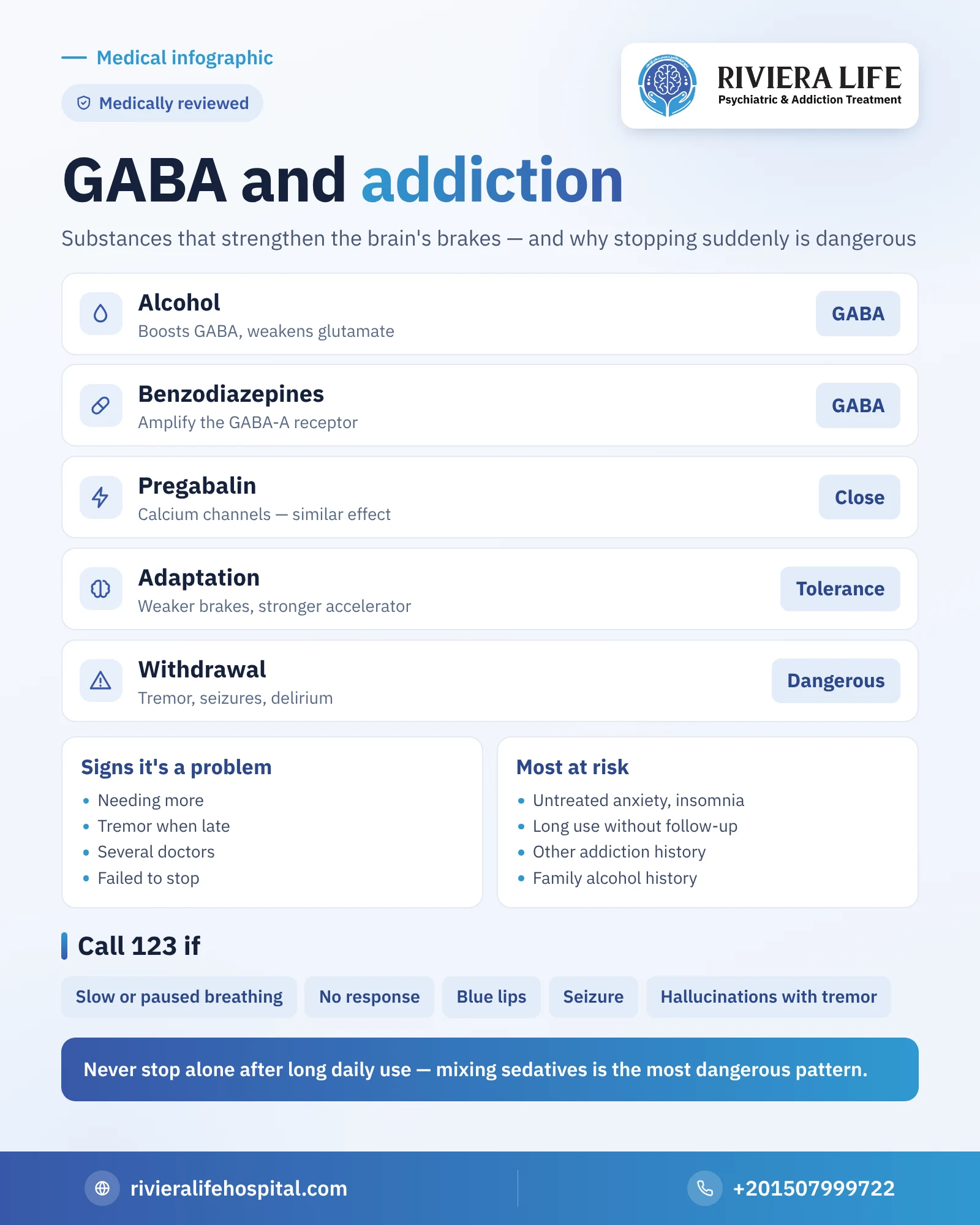
- Alcohol: strengthens the effect of GABA and weakens the excitatory glutamate at the same time, which is why it combines relaxation, slow reaction and forgetting.
- Benzodiazepines: such as alprazolam, clonazepam and diazepam, attach to a special site on the “GABA-A” receptor and amplify its response.
- Barbiturates: older and more dangerous, as they open the receptor even without GABA, which is why the distance between the calming dose and the deadly dose is smaller. Their medical use has become limited.
- GHB: works on “GABA-B” receptors and its own receptors, and isn’t widespread on the Egyptian street but is known globally for the danger of overdose and the difficulty of controlling it.
- “Z” class sleeping pills: work on the “GABA-A” receptor with greater selectivity, but may cause dependence with long use.
And pregabalin? Close in effect, different in mechanism
Pregabalin and gabapentin were designed to resemble GABA in structure, but they don’t bind to its receptors. They work on calcium channels in nerve cells, reducing the release of excitatory transmitters. The practical result is similar: calming, relaxation and sometimes euphoria at high doses. In Egypt pregabalin has spread under different brand names, often mixed with tramadol or alcohol, a mixture that multiplies the danger of breathing suppression, as the article on pregabalin and alcohol explains.
GABA and addiction: how does the brain adapt so the problem begins?
The brain hates imbalance, and always seeks to return to equilibrium. When it receives a daily dose of calming from outside, it responds with roughly three steps:
- It reduces the number of sensitive GABA receptors or changes their structure, so the effect of natural GABA weakens.
- It raises the activity of glutamate and noradrenaline to compensate for the excess calming.
- It links the substance to relief in the reward system led by dopamine, so urgent craving appears under tension or in familiar situations.
The result is tolerance: the same dose is no longer enough. Then dependence: without the substance the person feels tension, tremor and insomnia. Here use becomes a means of avoiding withdrawal more than a search for pleasure.
Why is withdrawal from these substances dangerous?
Imagine a car whose driver has got used to pressing the brakes and the accelerator together hard. If he suddenly lifts his foot from the brakes, the car shoots forward. This is what happens to the brain when the person suddenly stops: excitation stays high while the brakes are weak. The picture usually appears as follows:
- Tremor in the hands, sweating, palpitations and a rise in blood pressure.
- Severe insomnia, anxiety and quick temper.
- Nausea and loss of appetite.
- In severe cases: seizures, hallucinations, and delirium with confusion and fever, known in alcohol withdrawal as “delirium tremens”, which threatens life without treatment.
The timing differs by substance. With alcohol symptoms may begin within hours of the last drink, and seizures reach their peak danger in roughly the first two days, as the article on alcohol withdrawal symptoms explains. Long-acting benzodiazepines, however, may have symptoms delayed by days and extending for weeks, and the details are in the article on benzodiazepine withdrawal symptoms. Pregabalin may also cause seizures when stopped suddenly in some patients.
Mixing: when the brakes pile up
The most dangerous thing in this family is combining more than one substance. Alcohol with sedatives, or sedatives with opioids such as tramadol and heroin, or pregabalin with any of them. Each substance suppresses the breathing centers in the brainstem a little, and together they may stop breathing during sleep. Many deaths linked to sedatives happen because of this mixing, not because of one substance.
Call an ambulance on 123 immediately if there appear
After using sedatives or alcohol or mixing them, or within days of suddenly stopping them:
- Severe slowing of breathing or pauses in it, or strange snoring during sleep
- No response to calling or shaking
- Blue lips or fingertips
- A seizure or loss of consciousness
- Hallucinations and severe confusion with tremor, sweating and fever
Signs that the sedative has become a problem
- You need a larger amount than before to get the same effect.
- You feel tremor, tension or insomnia when the dose time is late.
- You look for more than one doctor or pharmacy to get the medicine, or buy it without a prescription.
- You forget events that happened after use, or those around you notice slowness in your speech.
- You tried to stop and couldn’t, or went back after days because of insomnia.
Who is most at risk of this type of addiction?
- Those suffering from untreated anxiety or insomnia, who find a quick solution in the substance.
- Those who started a sedative on prescription then continued it for months without follow-up.
- Those with a history of addiction to another substance, especially opioids.
- Those with a family history of alcohol addiction.
- Those working under severe pressure or night shifts who use the sedative to sleep.
How is detox done safely?
The first rule: don’t stop the substance suddenly on your own after long daily use. With alcohol the doctor usually uses a medicine from the same sedative family for a short period then reduces it, with vitamins necessary to protect the brain. With benzodiazepines reduction is gradual over weeks and sometimes months, with a plan suited to the type of medicine and duration of use. Vital signs are monitored continuously to detect any seizure or delirium early.
After detox the real work begins: treating the anxiety or insomnia that drove use in the first place, with cognitive behavioral therapy and medicines that don’t cause addiction. Insomnia and mild anxiety may continue for weeks after stopping, which is expected and doesn’t mean failure. The full treatment plan for each substance is in the articles on alcohol addiction treatment and benzodiazepine addiction treatment.
Relapse prevention: rebuilding the natural brakes
GABA receptors gradually regain their sensitivity after stopping, and the duration differs from person to person. During this period the person in recovery needs alternative tools: regular sleep, physical activity, breathing exercises, family support, and the skill of recognizing risk situations before craving ignites. This also includes learning to deal with tension, which is covered in the article on how to lower cortisol.
Where do you start treatment?
Start with a medical assessment that determines the substances used, their duration and amounts, and whether you have had a seizure in withdrawal before. This assessment is what decides whether detox is possible in the outpatient clinic, or needs residence under continuous medical supervision, which is usually the case with heavy alcohol use or combining more than one sedative.
How Riviera Life meets these standards in treating alcohol and sedative addiction
- Official license: a hospital licensed by the Ministry of Health.
- Round-the-clock supervision: continuous medical follow-up during the critical days of withdrawal.
- Consultant doctors: the consultants in psychiatry and addiction treatment treat the anxiety and insomnia that accompany withdrawal from alcohol and sedatives.
- Long experience: fourteen years and thousands of recovered cases.
- A family program and follow-up after discharge: to reduce the risk of relapse.
- Complete confidentiality and a free first consultation: in Sheikh Zayed, Giza, on +201507999722.
More from the GABA guide
- GABA: the complete guide to the brain’s brakes
- GABA and anxiety: is anxiety a lack of GABA?
- Pregabalin withdrawal symptoms
- Melatonin and sleep in the recovery stage
- Ways to increase GABA safely: what helps, what is exaggerated and what to avoid
Questions many people ask
Yes, especially after long daily use of high doses then suddenly stopping alcohol or benzodiazepines. That is why reduction is gradual and under medical supervision.
Each suppresses the breathing centers, and together they may slow breathing to a dangerous degree during sleep, even if the amount of each substance alone isn't large.
It can cause misuse and dependence, especially in those with a history with other substances, and stopping it suddenly may cause withdrawal symptoms. It is only used with a prescription and follow-up.
It differs by the medicine, duration and amount, and reduction may extend for weeks or months. The doctor sets an individual plan and adjusts it according to the symptoms.
Choose a licensed hospital that provides safe detox under round-the-clock medical supervision, psychotherapy and follow-up after discharge. Riviera Life in Sheikh Zayed meets these criteria with fourteen years of experience.