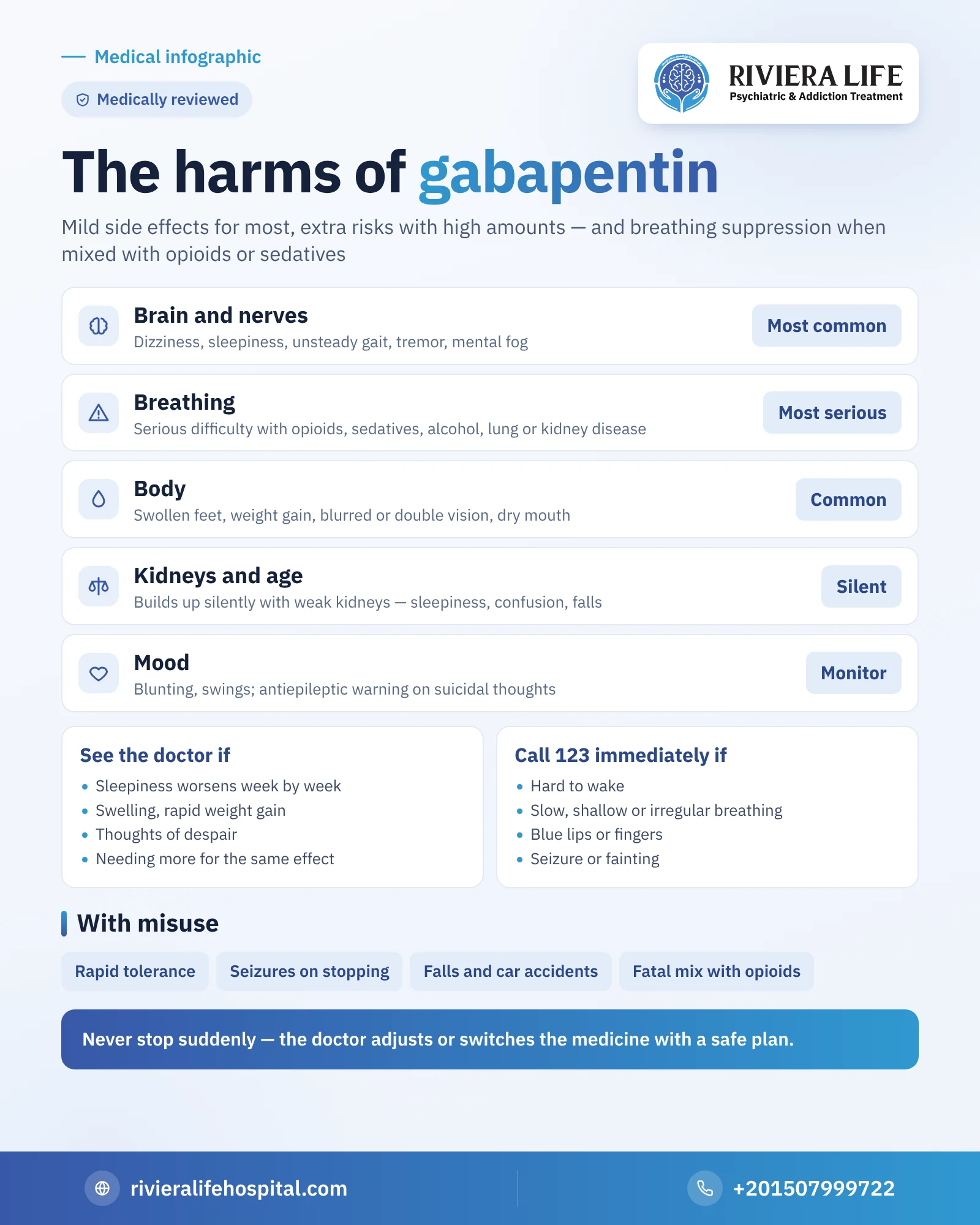
Gabapentin’s harms appear at three levels: side effects that may affect anyone taking it on prescription, such as dizziness, sleepiness and swollen feet; additional risks for those who raise their amounts or take it without need; and the most dangerous, breathing suppression when it is combined with opioids or sedatives. It is a useful medicine for epilepsy and nerve pain, and isn’t dangerous in itself when used as the doctor prescribes. This article explains what may be harmed in the brain, the body and daily life, which harms call for a quick visit to the doctor, and what improves after the treatment plan is adjusted.
Why ask about the harms of a usually safe medicine?
Gabapentin (Neurontin) is one of the medicines neurologists, orthopedists and pain specialists have prescribed for decades, and most people who take it suffer only mild effects that fade after weeks. But asking about its harms is legitimate for three reasons. The first is that the medicine leaves the body almost entirely through the kidneys, so it builds up in those whose kidneys are weak without them realizing. The second is that it is misused in Egypt, often with tramadol. The third is that many people raise their amount themselves when they feel the effect has weakened, so the side effects multiply without the benefit multiplying. For those who want to learn about the medicine from the start, our guide to gabapentin gathers the general picture.
The brain and nervous system
This is the first thing affected, because the medicine calms the activity of nerve cells. Symptoms range from mild to worrying:
- Dizziness and sleepiness: the most common complaints, prominent in the first weeks or after an increase in amount.
- Loss of balance: an unsteady walk and uncertain steps, which explains the frequent falls in older people.
- Tremor and involuntary eye movements: the doctor may notice them, or the patient may feel them as shaking in their vision.
- Slow thinking and poor concentration: a mental fog that hinders work, study and driving.
- Sudden muscle jerks: sometimes occur, especially with weak kidneys.
At high amounts these may develop into slurred speech, confusion and difficulty waking the person, which are warning signs that shouldn’t be left until morning.
Breathing: the harm that changed how doctors see the medicine
For years gabapentin was thought not to affect breathing. Then the US Food and Drug Administration issued a warning that the medicine may cause serious breathing difficulties in certain groups: older people, patients with chronic obstructive pulmonary disease and asthma, those taking sedatives or opioids with it, and those with weak kidneys. The risk doesn’t mean every patient is exposed to it, but it does mean that combining gabapentin with tramadol, codeine, alcohol or benzodiazepines is a decision not to be taken without a doctor. Our article on GABA and addiction covers this interaction at length.
The body: from swollen feet to weight and vision
Not all the harms are neurological. Some patients complain of swollen feet and ankles from fluid retention, and gradual weight gain that may reach several kilograms with continued use. Vision may be affected, becoming blurred or double. Complaints also include dry mouth, constipation and an upset stomach. In a few patients a skin rash appears with fever and swollen glands, a rare but serious allergic reaction that calls for the doctor immediately. Sweating, palpitations and irritability usually come with stopping suddenly rather than with continued use, and are explained in our article on gabapentin withdrawal symptoms.
The kidneys and older people: the silent harm of build-up
The kidneys are almost the only exit gate for the medicine. When they weaken, slowly because of diabetes and blood pressure or suddenly because of severe dehydration or an acute illness, the medicine stays in the blood longer than it should. The result is sleepiness that increases day after day, confusion and falls, which families think is “old age” when it is treatable drug toxicity. That is why doctors set the amount according to kidney function and review it with every change in health. Our article on how long gabapentin stays in the body explains how weak kidneys slow its elimination.
Mood and mental health
All antiepileptic medicines, including gabapentin, carry a warning of a slight increase in the risk of suicidal thoughts in a small proportion of patients. This doesn’t call for panic or for abandoning the medicine, but for monitoring: the family watches for mood changes, withdrawal and any talk of despair, and tells the doctor. On the other hand, some complain of emotional blunting and loss of enthusiasm, and unusual irritability and aggression may appear in children and teenagers. Those who take the medicine to calm anxiety or to create “peace of mind” fall into a different trap: temporary calm followed by more severe rebound anxiety, which feeds dependence.
Sex, appetite and sleep
Some reports describe reduced sexual desire, difficulty with erection and delayed orgasm in a number of people taking gabapentin, and these complaints increase with large amounts. Appetite usually rises. Sleep improves for some at first, then with long use turns into broken, unrefreshing sleep. Families sometimes notice the person sleeping by day and staying up at night. All these symptoms need a frank conversation with the doctor; embarrassment about them prolongs the suffering.
Pregnancy and breastfeeding
Data on gabapentin in pregnancy are fewer than we would like, and it isn’t possible to be certain of its safety or full harm. But doctors’ warning is firm: don’t stop the medicine suddenly if you are pregnant or planning a pregnancy, and don’t take it without supervision. Uncontrolled seizures are a danger to both mother and fetus, and the decision between continuing and adjusting is made by the doctor after weighing your condition. The same applies to breastfeeding.
More severe harms with misuse
When gabapentin is taken without medical need or in amounts beyond the prescription, all the harms above are magnified, and others are added:
- Rapid tolerance that pushes toward increasing the amount, then physical dependence and withdrawal symptoms that may reach seizures on stopping suddenly.
- Falls and car accidents because of unsteadiness and sleepiness.
- A fatal overdose when combined with opioids, because gabapentin strengthens breathing suppression.
- Double addiction: someone who starts the medicine to ease withdrawal from another substance may find themselves captive to both.
If this picture has begun in your home, start by reading gabapentin addiction symptoms to recognize what families see in behavior.
Call an ambulance on 123 immediately if you see
Especially if gabapentin has been combined with tramadol, codeine, sedatives or alcohol.
- Severe sleepiness or difficulty waking the person
- Slow, shallow or irregular breathing
- Blue lips or fingers
- A seizure, severe confusion or fainting
- A widespread skin rash with fever and swelling of the face or tongue
Do the harms go away after the plan is adjusted?
Usually yes. Dizziness and sleepiness usually ease after adjusting the amount or changing the timing of the medicine, swelling and weight come down after reducing or replacing the medicine, and unsteadiness in older people improves when kidney function is corrected. What matters is that this is done by the doctor’s decision, not the patient’s, as reducing the amount suddenly may trigger a withdrawal more dangerous than the harm we want to treat. And if the matter has gone beyond side effects to dependence, our article on gabapentin addiction treatment explains the stages of assessment and gradual reduction.
When should you see the doctor?
- If sleepiness or dizziness increases week after week, or repeated falls appear.
- If the feet swell, weight rises quickly or urine decreases.
- If thoughts of despair or a sharp change in mood appear.
- If you find you need a larger amount to get the same effect, or the medicine runs out before it should.
- If you are combining it with another substance and want to stop that or it.
The difference between gabapentin and pregabalin in their harms is useful for those who switch between them, and you will find it in pregabalin vs gabapentin, while the side effects of pregabalin covers the other medicine.
Riviera Life’s team welcomes anyone who wants their medication situation assessed in complete confidentiality, and a free first consultation is available on +201507999722.
More from our gabapentin guide
- Gabapentin: the complete guide
- Gabapentin withdrawal symptoms
- Gabapentin addiction treatment
- Gabapentin addiction symptoms
Questions many people ask
The most dangerous is breathing difficulty when combined with opioids, sedatives or alcohol, especially in older people and those with lung or kidney disease, followed by seizures on stopping suddenly.
The medicine isn't known to damage the kidneys itself, but it leaves the body almost entirely through them, so it builds up if they are weak and signs of toxicity such as sleepiness and confusion appear.
Yes, in some patients: fluid retention, swelling of the ankles and gradual weight gain may occur, and the doctor should be consulted if this appears.
It may cause emotional blunting or mood swings in some people, and antiepileptic medicines carry a warning of a slight increase in suicidal thoughts, so the family watches for changes and tells the doctor.
Don't stop suddenly, because that may cause withdrawal symptoms and seizures. Call your doctor to adjust the amount or change the medicine with a safe plan.