Masturbation is common among girls and women, and in itself it doesn’t cause infertility, change hormones or the timing of periods, or touch the hymen as long as nothing is inserted into the vagina. The real harms are limited but they do exist: infections from unclean hands or objects, wounds that can lead to bleeding when hard or sharp objects are used, and then a psychological burden of guilt and anxiety that can weigh more than any physical effect. A girl or woman needs specialist help when she loses the ability to control it, when fear and obsessive worry take over, or when pain, bleeding or unusual discharge appear.
This article is for women and girls at different stages of life. You will find the general overview for men and women on our masturbation page, and if your question is about a wife and how it affects the marriage, we have a dedicated article on why a wife turns to masturbation.
What does masturbation in girls mean medically?
Doctors mean a person stimulating themselves, outside any relationship. Medical references such as the Cleveland Clinic describe it as a common behavior among people of both sexes and at different ages. We don’t have a reliable figure for how common it is among girls in Egypt or the Arab world, because the subject is kept quiet and it is hard to ask people about it honestly. What matters here is that many girls think they are the only ones, and so live with isolation and fear for no reason.
What happens to a girl’s body after masturbation?
The physical response is general and temporary. The pulse rises slightly and blood flow to the pelvic area increases, vaginal wetness may increase, and then brief muscle contractions happen, followed by the release of substances such as dopamine and oxytocin, which are linked to a feeling of relaxation. Within minutes the body returns to its usual state. No lasting trace remains in the organs, and neither the body’s shape nor its features change — fears that doctors often hear from teenage girls.
The hymen: the biggest fear, and what medicine says
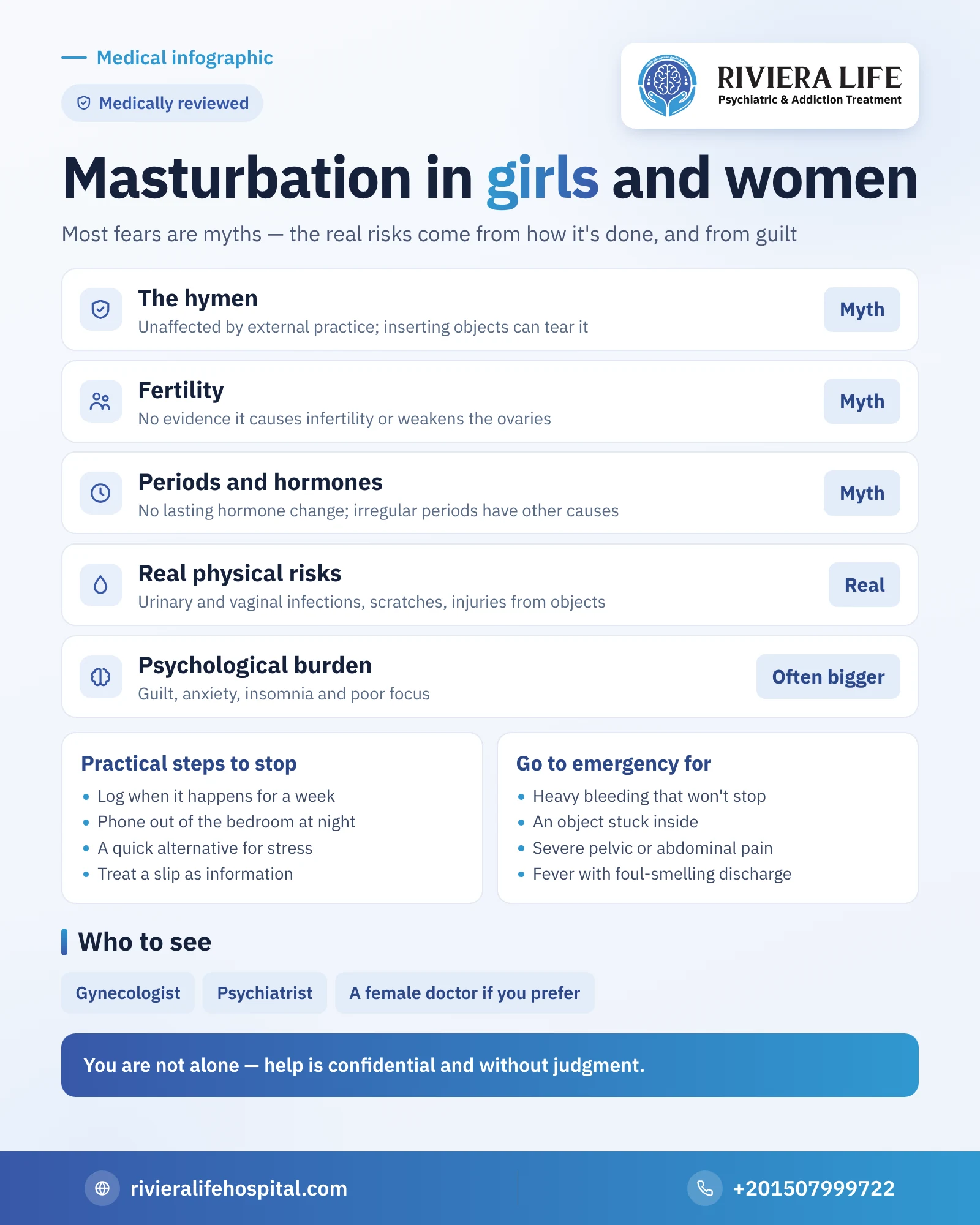
The hymen is a thin, flexible tissue at the entrance of the vagina whose shape and thickness vary greatly from one girl to another — some girls are even born with very little of it. Gynecologists at Ohio State University’s Wexner Medical Center explain that this tissue can stretch with things that have nothing to do with sex, such as vigorous sport or a medical examination, and that examining it doesn’t reveal a woman’s history. The practical conclusion: external practice in which nothing is inserted into the vagina doesn’t usually affect the hymen. Inserting fingers or objects, however, may stretch or tear the hymen and the vaginal tissue, which is the most important reason for the advice to avoid it completely.
Does it cause infertility or disturb hormones and periods?
There is no evidence that it causes infertility, weakens the ovaries or reduces the chances of pregnancy later, as medical references for both adults and teenagers confirm. Nor does it change hormone levels permanently, or make periods come later or earlier. If your period becomes irregular or more painful, the cause is usually something else — stress, a change in weight, thyroid problems or polycystic ovaries — and that deserves a visit to a gynecologist rather than blaming yourself.
Does masturbation affect the womb?
No. The womb is an internal organ that external practice doesn’t reach, and there is no evidence that masturbation weakens it or causes prolapse, tumors or cancer, whether in a single or a married woman. The mild contractions you may notice in your lower abdomen at orgasm are a natural tightening of the muscles of the womb and pelvis that settles within minutes, similar to what happens during marital sex.
The only real risk comes from inserting objects into the vagina, because they can cause wounds or infections — not harm to the womb itself. If there is bleeding outside your period, persistent pelvic pain or foul-smelling discharge, these are symptoms that deserve a visit to a gynecologist, because their cause is usually something else that needs examining.
Vaginal discharge: what is normal?
Britain’s NHS says that discharge protects the vagina and keeps it clean, and that its amount changes through the cycle and increases with arousal. So temporary wetness after masturbation is normal and goes away on its own. What calls for an examination is a change in color, smell or texture, itching and burning, bleeding between periods, or pelvic pain. These are signs of an infection or another problem that needs a diagnosis — don’t treat them yourself with washes from the pharmacy.
The real physical harms
The actual risks are linked to how it is done and to hygiene, not to the practice itself. SickKids, the children’s hospital website for teenagers, points out that the real danger is inserting objects that are fragile, sharp, unclean or large, because they can cause a tear, a blockage or an infection. What gynecologists see most often in this context:
- Urinary tract infection: bacteria moving from the hands or objects into the urethra causes burning and frequent urination.
- Vaginal infections: from contaminated objects, or from excessive washing that upsets the vagina’s balance.
- Scratches and chafing: from too much friction; they usually heal within days.
- Wounds and stuck objects: the most serious, and they may need urgent medical attention.
For the full picture of the harms in men and women, see our article on the harmful effects of masturbation.
Go to the emergency department or a gynecologist immediately
Don't delay out of embarrassment; the doctor deals with these cases confidentially and without judgment:
- Heavy bleeding, or bleeding that doesn’t stop with pressure and rest
- An object stuck inside the vagina that doesn’t come out easily — don’t try to remove it with another object
- Severe pain in the lower abdomen or pelvis
- A fever or chills with foul-smelling discharge or back pain
- Severe dizziness or fainting
The psychological effects: guilt, anxiety, sleep and focus
For many girls the biggest harm is psychological. A familiar cycle repeats: masturbation, then an intense feeling of guilt, then a promise to stop, then distress that pushes towards doing it again. Over time there may be constant anxiety, insomnia from doing it at night and staying up on the phone, or difficulty concentrating on study and work. Many feel a religious conflict, and it is appropriate to ask a trusted religious scholar — bearing in mind that the exhausting guilt itself can be treated in therapy sessions. We have explained the difference between healthy guilt and destructive guilt in our article on feeling guilty.
Teenagers and puberty: words for you
If you are a teenager, know that puberty brings hormonal changes, new feelings and curiosity about your body, and this is a natural part of growing up — it doesn’t mean you are bad or different from anyone else. Your body won’t change, and no one will know anything by looking at you. Protect yourself in two ways: don’t insert anything into your body, and don’t look for answers on websites and in unsuitable content, because it increases fear and attachment. And if anyone, whether a relative or a stranger, asks you for pictures, touching or secrets about your body, it is not your fault — tell your mother or another adult you trust straight away. To learn what is normal at this stage, read about the psychological changes of adolescence.
When does it become a compulsive behavior?
The measure isn’t a specific number of times, but losing control and the behavior’s effect on your life. Pay attention if you notice:
- Repeated attempts to stop that fail each time.
- Turning to it whenever you feel sad, tense or bored, as if it were the only way to calm down.
- Putting off sleep, study or appointments for it.
- Its link with watching pornographic content that increases over time.
- Continuing despite physical pain or severe distress.
To understand what feeds this repetition, read the causes of masturbation addiction.
How can you stop masturbating? Practical steps
- For a week, watch when it happens: at what time, in what place and after what feeling. The pattern reveals the starting point.
- Take your phone out of the bedroom at night, since many episodes start with scrolling in bed.
- Don’t lie awake in bed for long. If you haven’t fallen asleep within twenty minutes, get up and go somewhere else until you feel sleepy.
- Prepare a quick alternative for tension: calling a friend, a short walk, a warm bath or a breathing exercise.
- Do regular physical activity, which eases anxiety and improves sleep.
- Treat a relapse as information, not failure. Being harsh on yourself restarts the cycle.
If these steps aren’t enough, cognitive behavioral therapy helps break the cycle; the details are in masturbation addiction treatment.
A gynecologist or a psychiatrist?
See a gynecologist for changes in discharge or itching, pelvic pain, burning when urinating, any bleeding or wound, or irregular periods. See a psychiatrist or psychologist if you have lost control over the behavior, if repeated thoughts about losing your virginity take over and no reassurance calms them, or if depression, insomnia or anxiety are disrupting your day. You can choose a female psychiatrist in Sheikh Zayed if talking to a woman is easier for you, or start with an online psychiatrist consultation from home.
To mothers: how can you talk to your daughter without hurting her?
A mother finding out usually brings shock and anger, but the first reaction is what the girl will remember for years. Avoid shouting, threats and humiliating surveillance, and don’t frighten her by saying she has lost her virginity or that her body has changed — this isn’t true, and it plants a terror that lasts. Choose a calm time, begin by talking about puberty and its natural changes, then explain the health facts and the danger of inserting anything into the body. Agree on reasonable rules for the phone and the internet without spying. And ask gently whether anyone has shown her content or asked her for anything. If you see persistent sadness, withdrawal or severe anxiety, a psychological assessment is a step of protection, not punishment.
How can Riviera Life help you?
At Riviera Life, consultant psychiatrists assess what lies behind the behavior — anxiety, guilt, obsessive worry and sleep problems — and set a behavioral treatment plan suited to the girl’s age and circumstances, involving her mother when needed and with the girl’s agreement. A female psychiatrist is available in Sheikh Zayed and October for those who prefer to talk to a woman, and online consultations are available for those who find it hard to attend. The first consultation is free, and everything said in it is confidential. The hospital is licensed by the Ministry of Health and has fourteen years of experience. To get in touch: +201507999722.
More from our masturbation guide
- Masturbation
- The harmful effects of masturbation
- The causes of masturbation addiction
- Masturbation addiction treatment
- The benefits of quitting masturbation
- Why a wife turns to masturbation
Questions many people ask
It doesn't affect it as long as nothing is inserted into the vagina. Inserting fingers or objects, however, may stretch or tear the hymen and the vaginal tissue.
There is no medical evidence that it causes infertility, weakens the ovaries or reduces the chances of pregnancy in the future.
It doesn't change hormones permanently or affect the timing of your period. Menstrual irregularity has other causes, such as stress, thyroid problems or polycystic ovaries, and needs an examination.
Yes. Temporary wetness is normal and goes away on its own. A change in color or smell, or itching or pain, calls for a visit to a gynecologist.
When she loses control despite trying to stop, when guilt and obsessive worry take over, or when depression, insomnia or anxiety appear and disrupt her studies and daily life.