
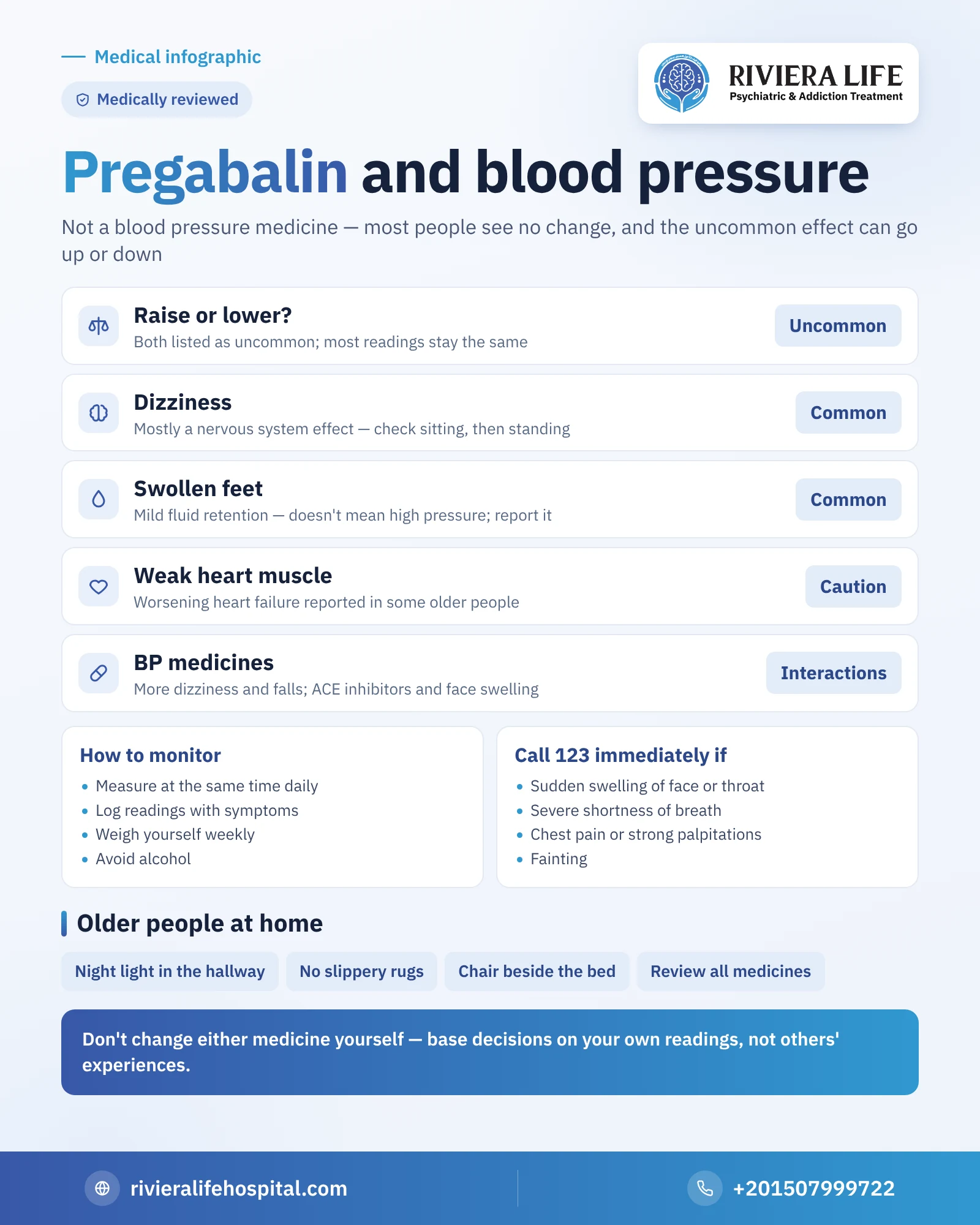
The relationship between pregabalin and blood pressure is simpler than many people think: pregabalin isn’t a blood pressure medicine, and it doesn’t change blood pressure noticeably in most people who take it. But the medicine leaflet lists both low and high blood pressure among the uncommon side effects, meaning it may lower it in some people and raise it in others, in a small proportion.
What patients most often confuse with blood pressure is dizziness and swelling of the feet, both common side effects of pregabalin and not necessarily a sign of a change in blood pressure. Heart patients, especially those with a weak heart muscle, need particular caution and monitoring. The bottom line: measure your blood pressure, watch your symptoms, and consult your doctor before any change to your blood pressure medicine or pregabalin.
Does pregabalin raise or lower blood pressure?
In clinical trials, both low and high blood pressure appeared in a small proportion, and the medicine leaflet classes both among the uncommon side effects. This means the majority of patients don’t notice a meaningful change in their blood pressure readings. Those who are affected may be affected in either direction, depending on their health and the other medicines they take.
Because the direction of the effect isn’t fixed, no one should take pregabalin to lower their blood pressure, or stop it because they “heard it raises blood pressure”. The right decision is built on actual readings of your own blood pressure, not on other people’s experiences. And if a change in readings appears after starting the medicine, the cause may be something else that happened at the same time, such as lack of sleep, the pain itself or a change in another medicine; the doctor is the one who connects these threads after seeing the full picture.
Dizziness: is it low blood pressure?
Dizziness is one of the most common side effects of pregabalin, especially in the first weeks or after a dose increase. Most of it results from the medicine’s effect on the nervous system, not from low blood pressure. But in some people, especially older people and those taking blood pressure medicines, blood pressure may drop on standing up suddenly, so the person feels blurred vision or darkness in the eyes for a few seconds.
The simple way to tell the difference is to measure your blood pressure while sitting, then a minute or two after standing. If the reading drops clearly as the dizziness appears, tell your doctor the results. Until then, get up from the bed or chair slowly, and sit on the edge of the bed for a moment before standing.
Swollen feet: does it mean high blood pressure?
Swelling of the feet and ankles is a relatively common side effect of pregabalin, and happens because the medicine may cause mild fluid retention in the limbs. This swelling doesn’t necessarily mean your blood pressure has risen, and it may happen with completely normal blood pressure. But it is worth reporting to the doctor, because it has other important causes unrelated to the medicine, such as a weak heart muscle, kidney disease or varicose veins. It is sometimes accompanied by weight gain, either from fluid or from the increased appetite the medicine causes.
Heart patients and a weak heart muscle
Cases of worsening heart failure have been recorded in some people taking pregabalin, mostly older people with previous heart problems. That is why the doctor prescribes the medicine to patients with a weak heart muscle with caution and monitoring. If you are one of them, watch for signs of fluid retention: shortness of breath when walking or lying down, rapid weight gain over a few days, or swelling that spreads up the legs. Changes in the speed or regularity of the heartbeat have also been reported in small proportions, so any new palpitations deserve a check-up.
Does pregabalin interact with blood pressure medicines?
There is usually no interaction that prevents combining them, but there are points the doctor pays attention to:
- More dizziness: blood pressure medicines may cause dizziness on standing, and pregabalin adds another kind of dizziness, so the risk of falling rises.
- Swelling of the face and lips: rare cases of sudden swelling of the face and throat have been recorded with pregabalin, and some blood pressure medicines from the ACE inhibitor family may also cause this swelling, so caution is doubled when combining them.
- Diuretics and fluid medicines: the doctor may adjust them if clear swelling appears.
Don’t change either medicine yourself, and bring your complete list of medicines to every visit. For the other side effects, see our article on the side effects of pregabalin.
Diabetes and high blood pressure together
Many people who take pregabalin are diabetics with nerve pain in their feet who also have high blood pressure. They need extra attention, because some diabetes medicines may also cause fluid retention, so the swelling is doubled. Pregabalin may also affect blood sugar control in some of them, so regular monitoring of readings is advised in the first weeks. The kidneys are a decisive factor here, because pregabalin leaves the body through them, and weak kidneys are common in people with both diabetes and high blood pressure.
Blood pressure with misuse and withdrawal
The picture is completely different with misuse. Someone who takes pregabalin in large amounts may suffer severe dizziness and falls, and someone who stops it suddenly after long use may go through withdrawal symptoms including anxiety, sweating and a fast heartbeat, a state in which blood pressure may rise temporarily. More dangerous still is mixing pregabalin with stimulants such as captagon or strox: here the rise in blood pressure and pulse comes from the stimulant, and pregabalin masks the feeling of it, as our article on the difference between pregabalin and captagon explains. The details of withdrawal are in our article on pregabalin withdrawal symptoms.
Older people: a fall is more dangerous than the blood pressure number
In Egyptian homes, it is common for a father or grandmother to take pregabalin for nerve pain, along with one or two blood pressure medicines, and perhaps a mild sleeping pill. Here the biggest problem isn’t the blood pressure reading itself, but the combination of dizziness, sleepiness and slow movement, so the patient falls at night on the way to the bathroom, and the fall may end in a hip fracture or a head injury.
The family can reduce this risk with simple steps: a dim light in the hallway at night, removing slippery rugs, placing a chair beside the bed, and reviewing the whole list of medicines with the doctor at least once every few months. The doctor may find that one of the medicines is no longer necessary, or that a simple adjustment is enough to ease the dizziness without sacrificing pain relief.
How do you monitor your blood pressure while taking pregabalin?
- Measure your blood pressure regularly in the first weeks, at the same time of day and after a few minutes’ rest.
- Record the readings with any symptoms: dizziness, headache, palpitations, swelling.
- Measure your blood pressure sitting and then standing if the dizziness appears when you get up.
- Weigh yourself weekly, and watch for any rapid gain over a few days.
- Avoid alcohol, as it increases dizziness and affects blood pressure, as our article on pregabalin and alcohol explains.
- Show the record to your doctor; it is more accurate than describing the feeling in words.
Call an ambulance on 123 immediately if you see
These signs are rare with pregabalin, but they can't wait.
- Sudden swelling of the face, lips, tongue or throat
- Severe shortness of breath or difficulty swallowing
- Chest pain or strong, irregular palpitations
- Fainting or loss of consciousness
How can Riviera Life help you?
If pregabalin has turned from a treatment into a habit that is hard to give up, withdrawal needs medical monitoring of blood pressure, pulse and sleep, especially for heart patients and older people. Riviera Life’s team provides this with round-the-clock medical supervision and complete confidentiality, and the first consultation is free on +201507999722. To learn about the medicine comprehensively, see our page on pregabalin.
More from our pregabalin guide
- Pregabalin: the complete guide
- The side effects and serious effects of pregabalin
- Pregabalin and gabapentin: the difference and which suits you
- How long pregabalin stays in the body
Questions many people ask
Rarely. High blood pressure is listed among the uncommon side effects, and most patients notice no change in their blood pressure readings.
Usually yes, with monitoring of dizziness and readings, caution with some blood pressure medicines that may increase the chance of facial swelling, and under a doctor's supervision.
It is usually mild fluid retention, but it is worth reporting to the doctor to rule out other causes such as a weak heart or kidneys.
Not necessarily. Most of it comes from the medicine's effect on the nervous system, and the two can be told apart by measuring blood pressure sitting and then standing.
It needs caution. Cases of worsening heart failure have been recorded in some older people, so the doctor decides and monitors for signs of fluid retention.