Pregabalin withdrawal symptoms usually begin within one to two days of the last capsule, because the body clears it relatively quickly. The first to appear are usually insomnia, anxiety, sweating and nausea; the symptoms then peak in the first few days, and the physical ones mostly settle within about one to two weeks, while disturbed sleep and mood may last for weeks.
This article is about withdrawal specifically. You will find an introduction to the medicine, its medical uses and why it is misused in our guide to pregabalin (Lyrica).
The symptoms are similar whatever brand name pregabalin is used under, including “Lyrica”.
What sets pregabalin apart from many medicines is that stopping it suddenly after heavy use can cause seizures, even in people who have never had epilepsy. This article explains the timing and stages of the symptoms, what makes them more severe, when they become an emergency, and how withdrawal is managed safely.
Why does withdrawal happen at all?
Pregabalin reduces the activity of excitatory nerves. With repeated large amounts, the nervous system readjusts itself to work almost normally in the presence of the medicine, raising its sensitivity and readiness to fire to make up for the constant dampening. When the medicine suddenly disappears, this raised readiness is left without a brake, showing up as tension, insomnia, sweating and palpitations, and in severe cases as irregular electrical activity in the brain that can reach a seizure. In other words, the symptoms are not “weak willpower”, but a nervous system that needs time to regain its balance.
When do pregabalin withdrawal symptoms start?
Pregabalin has a short life in the blood: its concentration halves within about six hours, and most of it leaves unchanged in the urine. That is why the first symptoms appear in many people within twenty-four to forty-eight hours, and they may start earlier in someone used to large amounts spread through the day. Someone with weak kidney function may see the symptoms appear a little later, because the medicine stays in their body longer.
The stages of pregabalin withdrawal
The details vary from person to person, but the usual picture passes through three stations:
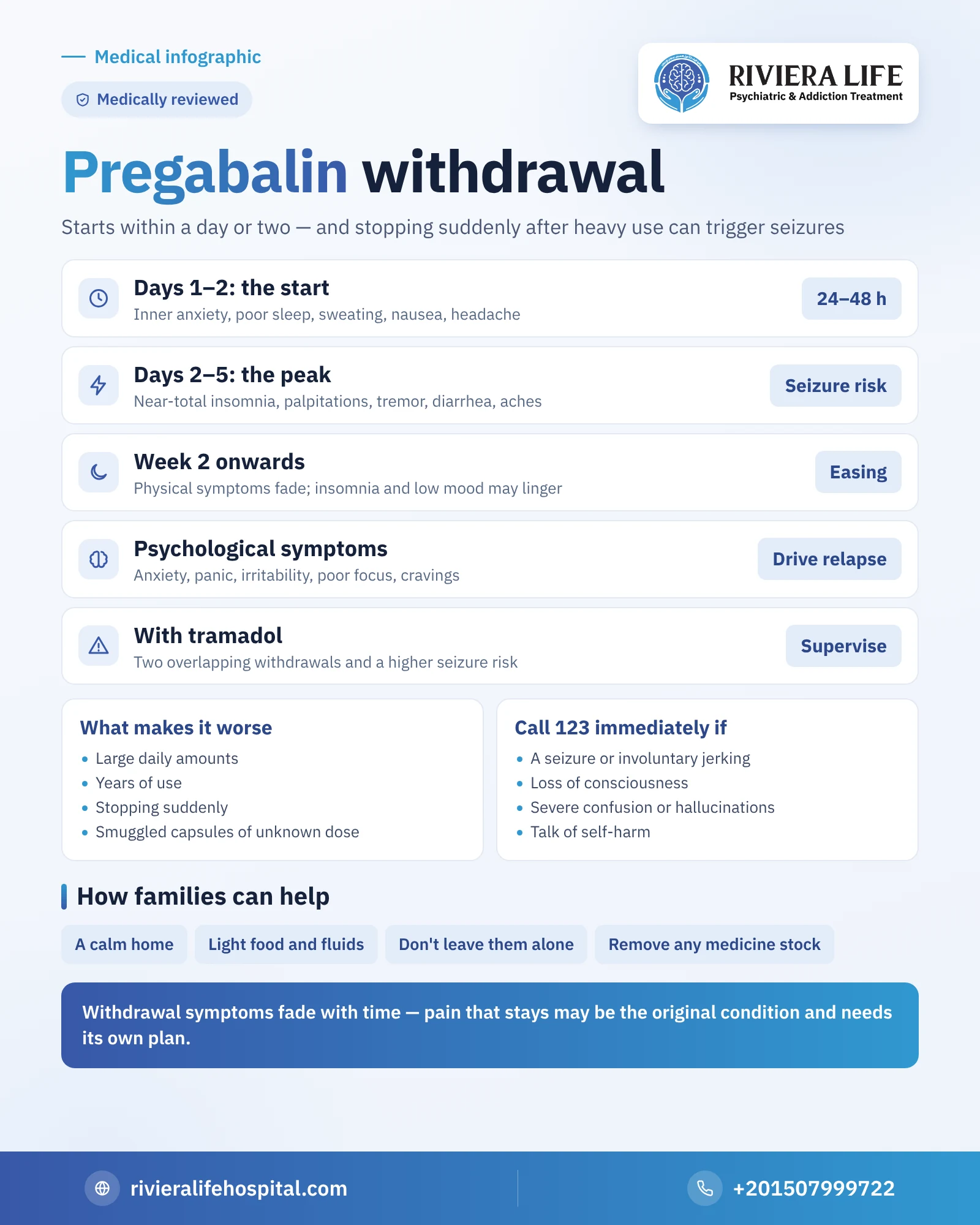
The first days: the start
Growing inner anxiety, difficulty sleeping, sweating, nausea, headache and a feeling of discomfort that is hard to describe. Families notice that the person can’t settle anywhere, moves from room to room, and complains that their “body won’t let them rest”.
The peak: roughly days two to five
The symptoms intensify: almost complete insomnia, palpitations, tremor, diarrhea, flu-like muscle aches and sharp irritability, and the original nerve pain may return strongly if it was there. During these days the risk of seizures is higher, and the risk of going back to the medicine to stop the suffering is at its greatest.
Gradual easing: the second week and beyond
The physical symptoms ease gradually within one to two weeks in most cases, while some people are left with broken sleep, anxiety, low mood and a craving for the medicine that may last for weeks — and sometimes longer in people who used it for years or in very large amounts.
The physical symptoms of withdrawal
- Insomnia, and difficulty falling or staying asleep.
- Heavy sweating alternating with chills.
- Nausea, diarrhea and loss of appetite.
- Headache and widespread muscle aches.
- Palpitations and a fast heart rate.
- Tremor in the hands.
- Increased sensitivity to pain, and the return of the original nerve pain.
The psychological symptoms of withdrawal
The psychological side is what pushes many people back. Anxiety appears as constant tension and sometimes panic attacks, and irritability appears as sharp reactions to the smallest situations. Some complain of muddled thinking and difficulty concentrating, of low mood and a sense of emptiness. A pressing craving for the medicine appears, growing at night when the insomnia is worst. In a few cases there may be severe confusion or hallucinations — signs that call for immediate medical intervention.
Seizures: the risk that must not be ignored
The most dangerous part of pregabalin withdrawal is the possibility of a seizure. The medicine is originally an anti-epileptic, and stopping it suddenly raises the brain’s excitability. This risk is higher in people who already have epilepsy, those used to large amounts, and those withdrawing from other substances at the same time, such as sedatives, alcohol or tramadol — and tramadol itself lowers the seizure threshold.
Call an ambulance immediately (123 in Egypt) if you see
These signs during pregabalin withdrawal can't be managed at home.
- A seizure, or involuntary jerking movements of the body
- Loss of consciousness, or difficulty waking the person
- Severe confusion, hallucinations or incoherent speech
- Talk of self-harm or ending one’s life
- Severe vomiting and diarrhea with signs of dehydration
During a seizure, move hard objects away from the person, don’t put anything in their mouth and don’t try to restrain them; once it is over, place them on their side until the ambulance arrives.
Factors that make withdrawal more severe or longer
- The usual daily amount: the larger it is, the more severe the withdrawal.
- The length of use: someone who has used it for years differs from someone who used it for weeks.
- Stopping suddenly instead of tapering gradually.
- Using smuggled capsules such as Indian Lyrica, because their real dose is unknown, making it hard to estimate how severe withdrawal will be in advance.
- Mixing it with other substances and withdrawing from them all at once.
- Anxiety, depression or insomnia that existed before use.
- Epilepsy or a previous brain injury.
Add to this a factor many people overlook: older people and kidney patients clear the medicine slowly, so their symptoms are delayed and prolonged, and the family may think the patient has got through withdrawal, only to be surprised by insomnia and tension days later. That is why withdrawal isn’t measured by the number of days alone, but by following the person’s condition day by day.
When it comes together with tramadol
Many withdrawal cases in Egypt are not withdrawal from pregabalin alone. Someone who combines it with tramadol goes through two overlapping withdrawals: bone aches, a runny nose and yawning from tramadol, and insomnia, anxiety and sweating from pregabalin, with a higher risk of seizures than either alone. These cases need careful medical planning of what is withdrawn first and how fast, which is one of the reasons an inpatient stay under supervision is preferred. You will find the differences between the two substances in our article on pregabalin vs tramadol.
Withdrawal, or the original condition returning?
Someone who was taking pregabalin for nerve pain or anxiety may notice the pain or tension returning after stopping. This is where things get mixed up: are these withdrawal symptoms that will pass, or is the original condition coming back and in need of alternative treatment? The deciding factor is medical assessment and follow-up over the weeks: withdrawal symptoms fade with time, while the original pain remains. Ignoring this difference makes the patient go back to the medicine in the same old way. The medicine’s link with anxiety in particular is explained in our article on pregabalin and anxiety.
How is withdrawal managed medically?
The basic rule is that pregabalin is not stopped suddenly after long or heavy use, but withdrawn gradually according to a plan the doctor sets based on the amount, the duration and any accompanying substances. During withdrawal the team monitors sleep, blood pressure, pulse and mental state, treats insomnia, anxiety and nausea with methods that don’t create a new dependence, and watches for signs of seizures. Home attempts at random reduction often end in a return to the same amount or a jump to another substance. The details of what comes after withdrawal — psychotherapy and relapse prevention — are in our article on pregabalin addiction treatment.
How can the family help during these days?
Don’t treat the irritability and insomnia as bad manners; they are part of withdrawal and they will pass. Provide a calm home, light food and enough fluids, and don’t leave the person alone during the peak days. Keep any stock of medicines out of their reach, and keep the doctor’s and ambulance numbers somewhere visible. Remember that the urge to go back may appear after everything seems to be over, so continuing follow-up after the first two weeks is part of treatment, not a luxury. And if stopping hasn’t begun yet, our article on pregabalin addiction symptoms will help you gauge the size of the problem first.
More from our pregabalin guide
- Pregabalin: the complete guide
- Pregabalin addiction treatment and its stages
- The harmful effects of pregabalin
- How long pregabalin stays in your system
- Gabapentin withdrawal symptoms: when they start, seizure risk and prolonged symptoms
Questions many people ask
The physical symptoms usually settle within about one to two weeks, while insomnia, anxiety and mood swings may last for weeks in people who used it for a long time or in large amounts.
It can be when it is stopped suddenly after heavy use, because it can cause seizures, especially in people with epilepsy and those who mix it with tramadol or sedatives. That is why it is withdrawn gradually under medical supervision.
Because the nervous system has become used to the dampening the medicine provided, so it stays in a state of arousal once it is gone. Insomnia improves gradually, and the doctor can treat it with methods that don't create a new dependence.
This may suit some patients who used it on prescription, with a plan set by their doctor. For anyone using large amounts or mixing it with other substances, withdrawal is safest under continuous medical supervision.
It may be temporary withdrawal, or it may be the original condition returning. Withdrawal symptoms fade over the days, while the original pain stays and needs an alternative treatment plan set by the doctor.