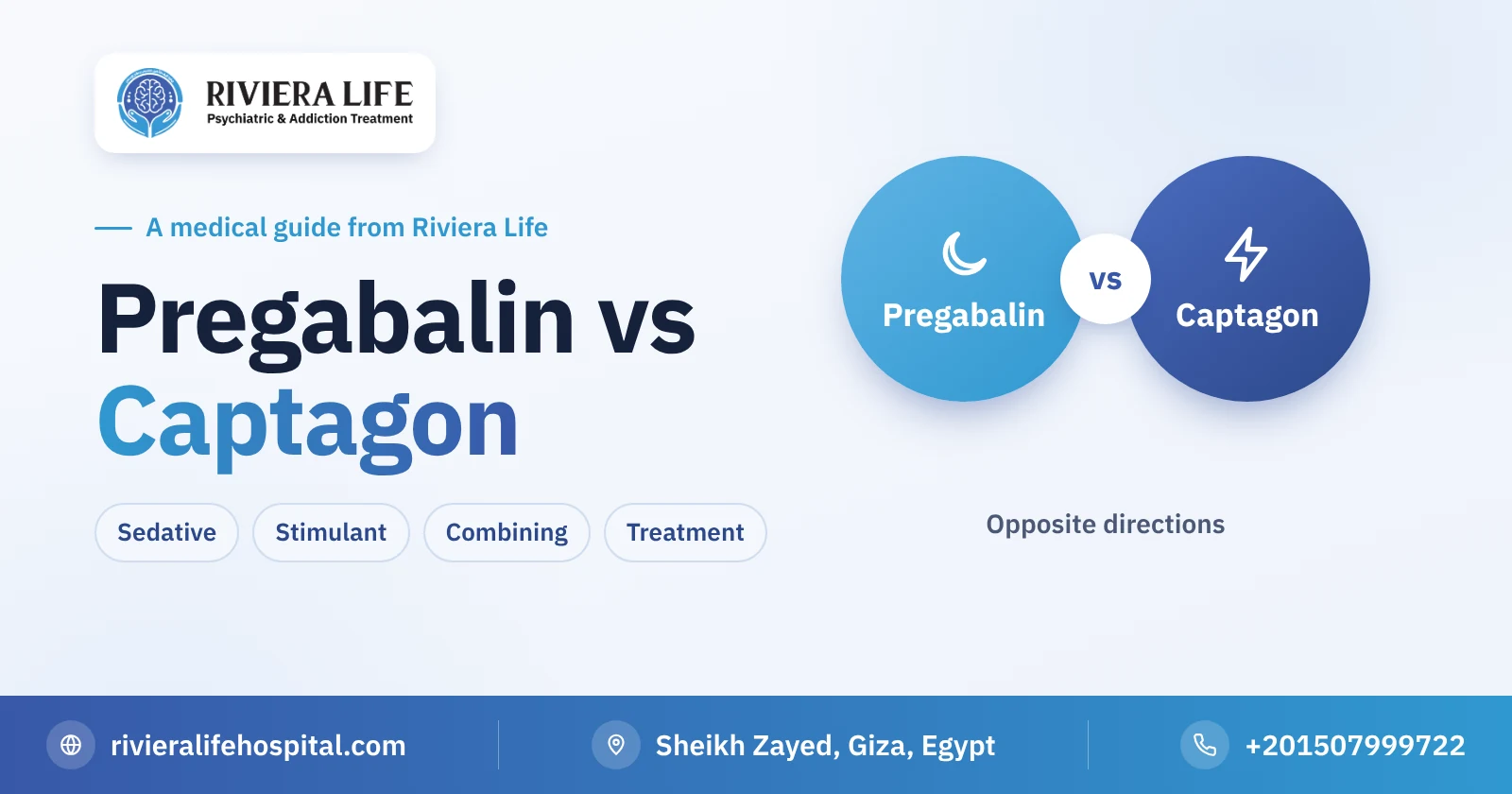
The difference between pregabalin and Captagon is radical, as they are two substances moving in opposite directions: pregabalin is a medicine that calms the nervous system and is dispensed on prescription for nerve pain and epilepsy, and Captagon is illicit stimulant pills that usually contain amphetamine and speed up the heart and brain. Despite this opposition, many young people in Egypt and the region combine them, thinking one “balances” the other. The truth is that combining them doesn’t cancel the harm of either, but hides the danger signs, strains the heart and doubles the chances of dependence on two substances instead of one. This article compares the two substances, then explains the risks of combining them in detail and when the situation becomes an emergency.
The difference between pregabalin and Captagon in brief
| Point of comparison | Pregabalin | Captagon |
|---|---|---|
| Nature | A licensed medicine that is misused | Illicit pills usually of unknown composition |
| Family | A nervous system depressant from the gabapentinoids | A stimulant from the amphetamine family |
| General feeling | Relaxation, dizziness and a mild high | Energy, staying awake and excess confidence |
| Sleep and eating | Drowsiness and increased appetite | Insomnia and loss of appetite |
| The heart | Usually limited effect | Racing pulse and raised blood pressure |
| Most dangerous in a large dose | Severe drowsiness and slow breathing with sedatives | High temperature, heart disturbance, seizures and psychosis |
| Withdrawal | Insomnia, anxiety, sweating and nausea | Crash, exhaustion, depression and strong craving |
A misused medicine and an illicit stimulant
Pregabalin has a real place in medicine, as it eases nerve pain and helps control epileptic seizures, and is used in some countries for generalized anxiety disorder. The problem starts when it is taken in larger amounts than prescribed or without a prescription at all, in search of relaxation or a high.
Captagon is an old trade name for a stimulant medicine withdrawn from medical use decades ago. The pills sold today under this name aren’t that medicine, but a mixture made by drug dealers, usually containing amphetamine with caffeine and other substances, and whoever takes them doesn’t know exactly what he is swallowing. To learn about it in detail see our Captagon page.
How does each work in the brain?
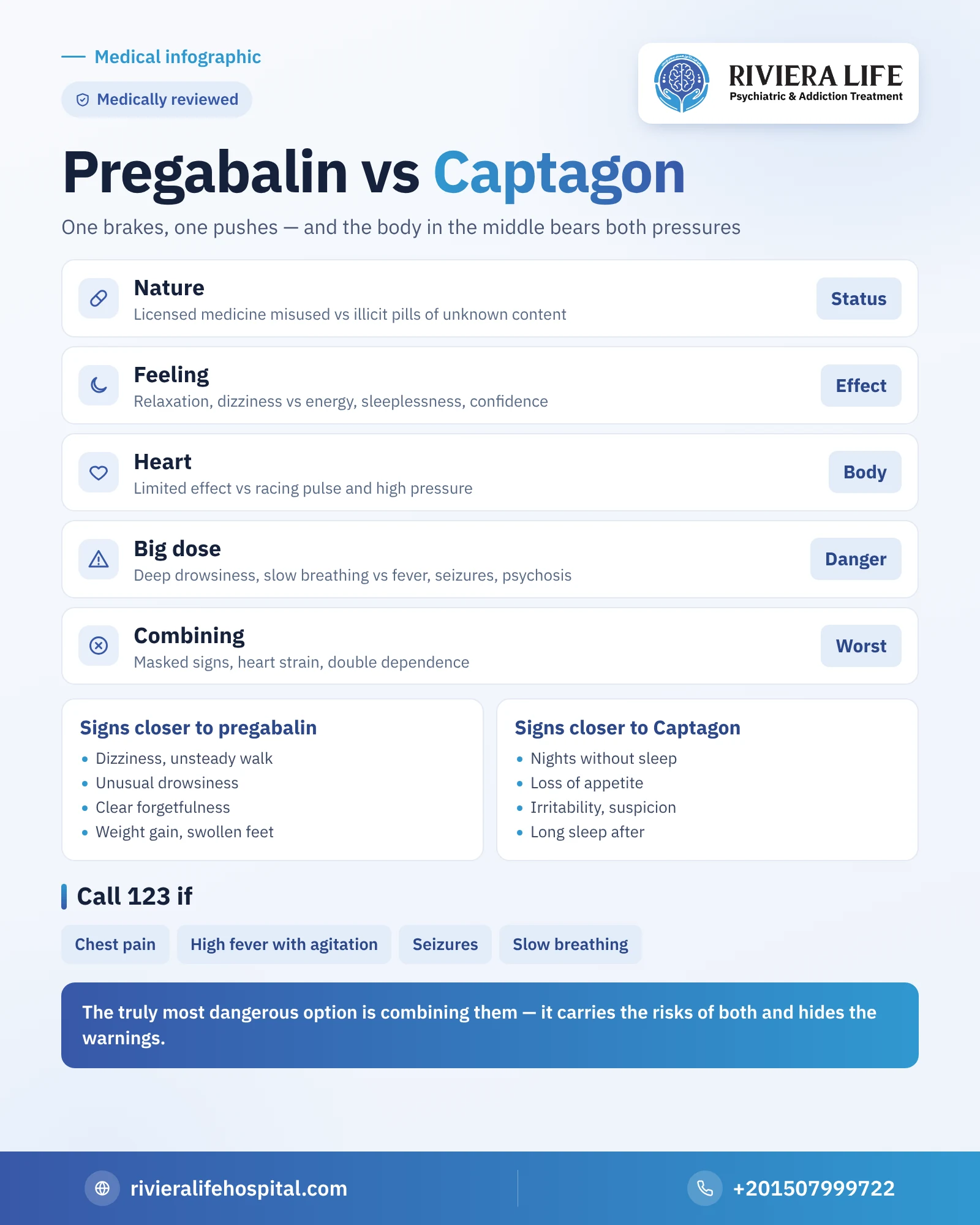
Pregabalin binds to part of the calcium channels in nerve cells, reducing the release of excitatory messengers, and the result is general calming that the person may feel as relaxation or a “light head”. The amphetamine in Captagon, on the other hand, pushes cells to release large amounts of dopamine and noradrenaline, so attention and energy rise, the heart races, and body temperature and blood pressure rise. One substance brakes and the other pushes, and the body in the middle bears both pressures.
Signs the family sees with each
Signs closer to pregabalin
- Dizziness, unsteady walking and sometimes heavy speech.
- Drowsiness at unusual times, absent-mindedness and slow response.
- Clear forgetting of recent events.
- Weight gain and swollen feet with long use.
Signs closer to Captagon
- Staying up for consecutive nights with excess activity and a lot of talk.
- Loss of appetite and weight loss.
- Irritability, suspicion of others and quick temper.
- Long sleep and severe exhaustion after the effect ends.
These signs are for suspicion, not diagnosis, and testing and medical assessment are what settle the matter. Details of pregabalin’s signs are in our article on pregabalin addiction symptoms.
Why do some young people combine pregabalin and Captagon?
The stories doctors hear repeat in similar forms. A transport driver takes Captagon to stay awake on the road, then pregabalin to sleep when he arrives. Or a student uses the stimulant to study, then looks for a sedative to silence the tremor and palpitations. Or a young man at a night out wants the “high” of Captagon and the “chill” of pregabalin on the same night.
This trick quickly turns into a closed loop: a stimulant for the day and a sedative for the night, then a larger amount of each because the body has got used to them. Over time the person can no longer sleep without pregabalin, nor work without Captagon. This is one of the reasons covered in our article on causes of pregabalin addiction.
The risks of combining pregabalin and Captagon
- Masking signals: the stimulant hides the drowsiness and unsteadiness caused by pregabalin, so the person thinks he is fine and increases the amount. And when Captagon’s effect wears off, the calming effect appears fully all at once.
- Strain on the heart and vessels: Captagon raises the pulse and blood pressure, and staying up and dehydration increase the burden, so the likelihood of heart rhythm disturbance rises, especially with smoking or undiagnosed heart disease.
- Seizures: large doses of stimulants may cause seizures, and stopping pregabalin suddenly after long use may also increase this likelihood.
- Psychological disturbance: anxiety and panic, sharp mood swings, and with continuous sleeplessness the condition may reach psychotic symptoms such as hearing voices or feeling pursued.
- Accidents: driving under the influence of one substance that clouds judgment and another that slows reactions is a direct recipe for road accidents and injuries.
- Double dependence: when the person later stops, he faces two different withdrawals at the same time, which makes stopping without help much harder.
What makes all of this worse is that the Captagon pills in circulation are of unknown composition, so their strength may differ from one pill to another. The harms of Captagon alone on the heart and brain are detailed in our article on the harms of Captagon.
Call an ambulance on 123 immediately if you see
Combining a stimulant and a sedative may end in either picture, so don't wait and don't leave the person alone.
- Chest pain or a very fast or irregular pulse
- A very high body temperature with agitation or confusion
- Seizures or loss of consciousness
- Slow or weak breathing or difficulty waking him
- Hallucinations or aggressive behavior that endangers him or others
Which is more dangerous: pregabalin or Captagon?
An absolute comparison is misleading. Captagon is more dangerous in its acute episode for the heart, temperature and mind, and carries an extra risk because it is illicit and of unknown content. Pregabalin may seem “lighter” because it is a medicine, but it causes real dependence, and becomes very dangerous to breathing when mixed with tramadol, opioids or alcohol. What is truly most dangerous is combining them, because it carries the risks of both together and hides the warning signs.
Withdrawal: two different pictures
After stopping Captagon, the person goes through a crash: long sleep, exhaustion and hunger, then low mood and a strong craving that may last weeks, and sometimes depression that needs careful follow-up. Pregabalin withdrawal is dominated by insomnia, anxiety, sweating, nausea and headache, and may carry a risk of seizures on stopping suddenly after long use. Someone who uses both together may find the symptoms overlapping, so it is hard for him to know their cause. The stages of pregabalin withdrawal are detailed in our article on pregabalin withdrawal symptoms.
Do they show on the same test?
No. Captagon usually shows on the amphetamines strip within usual drug tests, while pregabalin doesn’t show on most of these strips, and detecting it needs a dedicated laboratory test. Details of detection times are in our articles on how long pregabalin stays in the body and how long Captagon stays in the body.
How is someone who uses both substances treated?
Treatment here isn’t two separate versions, but one plan that starts with an assessment determining what the person actually uses and in what amounts, then a safe, gradual withdrawal of pregabalin, with monitoring of mood and sleep after stopping the stimulant. Psychotherapy focuses on the cycle itself: why does the person need a stimulant to work and a sedative to sleep? And how does he rebuild his day without them? At Riviera Life this stage is managed under round-the-clock medical supervision and in complete confidentiality, and the first consultation is free on +201507999722.
The legal position in Egypt
Captagon is a criminalized narcotic substance under Egyptian law. Pregabalin is a medicine whose dispensing is under strict control and is only dispensed on prescription, and possessing or trading it outside this framework exposes its owner to accountability. In both cases, treatment in a licensed hospital remains the patient’s right, and is carried out confidentially.
More from our pregabalin guide
- Pregabalin: the complete guide
- Pregabalin addiction treatment
- The difference between pregabalin and tramadol
- Pregabalin and alcohol: the risks of combining them
Questions many people ask
No, pregabalin calms the nervous system, while Captagon is a stimulant from the amphetamine family that speeds up the heart and brain.
To calm the tremor and palpitations and be able to sleep after the stimulant, but this cycle creates dependence on both substances together and hides the danger signs.
It strains the heart and raises the likelihood of seizures, psychological disturbance and accidents, and the stimulant temporarily hides the sedative's effect, which then appears all at once.
No, Captagon usually shows on the amphetamines strip, while pregabalin needs a dedicated laboratory test.
Yes, with one plan including safe, gradual withdrawal of pregabalin, follow-up of mood and sleep after the stimulant, and psychotherapy for the cycle of use.