Pre-wedding depression isn’t a separate medical diagnosis, but a common description of the sadness, anxiety or flatness that affects some people about to marry during the engagement or in the weeks before the wedding. In many cases it is normal stress in the face of a big change in life, which eases with time and as pressures are organized. But sometimes it is a real depressive episode that deserves assessment and treatment, especially if it lasts more than two weeks and affects sleep, work and the relationship. In this article we help you understand what you are going through, tell ordinary anxiety from depression, and know when to ask for specialist help.
Is pre-wedding depression a medical diagnosis?
There is no diagnosis by this name in the medical manuals. People use it to describe a wide range of experiences: pre-wedding anxiety, doubts about the decision, sadness at leaving the family home, all the way to a major depressive episode that happened to begin during this period. So the name isn’t enough to know what the person needs. What determines that is the nature, severity and duration of the symptoms — the same questions the doctor asks in any depression, as we explain in our article on types of depression.
Why do some people about to marry feel sad?
It may seem contradictory: a happy event everyone is waiting for, so why the sadness? The reason is that every big change carries a loss alongside the gain. A bride may be leaving her room, her mother and sisters and a routine she has lived in for twenty years or more, and a groom is saying goodbye to freedom over his time and money. Relationships with friends change shape, and responsibilities that didn’t exist before begin. Many feel the burden of expectations: to be happy all the time because “everyone’s happy”, so the sadness adds a sense of guilt.
Added to that, a long preparation period consumes energy, sleep and money at the same time, so many people arrive at the last weeks exhausted. Ongoing physical exhaustion alone is enough to lower mood and make the smallest disagreement seem like a disaster. The event may also bring back old memories, such as a late father’s absence from the wedding, or a previous engagement that ended painfully.
The pressures of the engagement period in Egypt
The engagement period in our society carries particular pressures that pile up without anyone noticing:
- Preparing the flat and the furniture, and the debts or installments that come with them.
- The two families negotiating the details, and interference that can turn into disputes.
- Deadline pressure: the wedding date is fixed and the preparations are late.
- Comparison with other people’s weddings and their photos on social media.
- Fear about the marital relationship and intimate life, especially with little accurate information.
- Moving to another city, or travelling abroad after the wedding, far from family.
Each of these items alone can be borne, but together over months they can drain anyone.
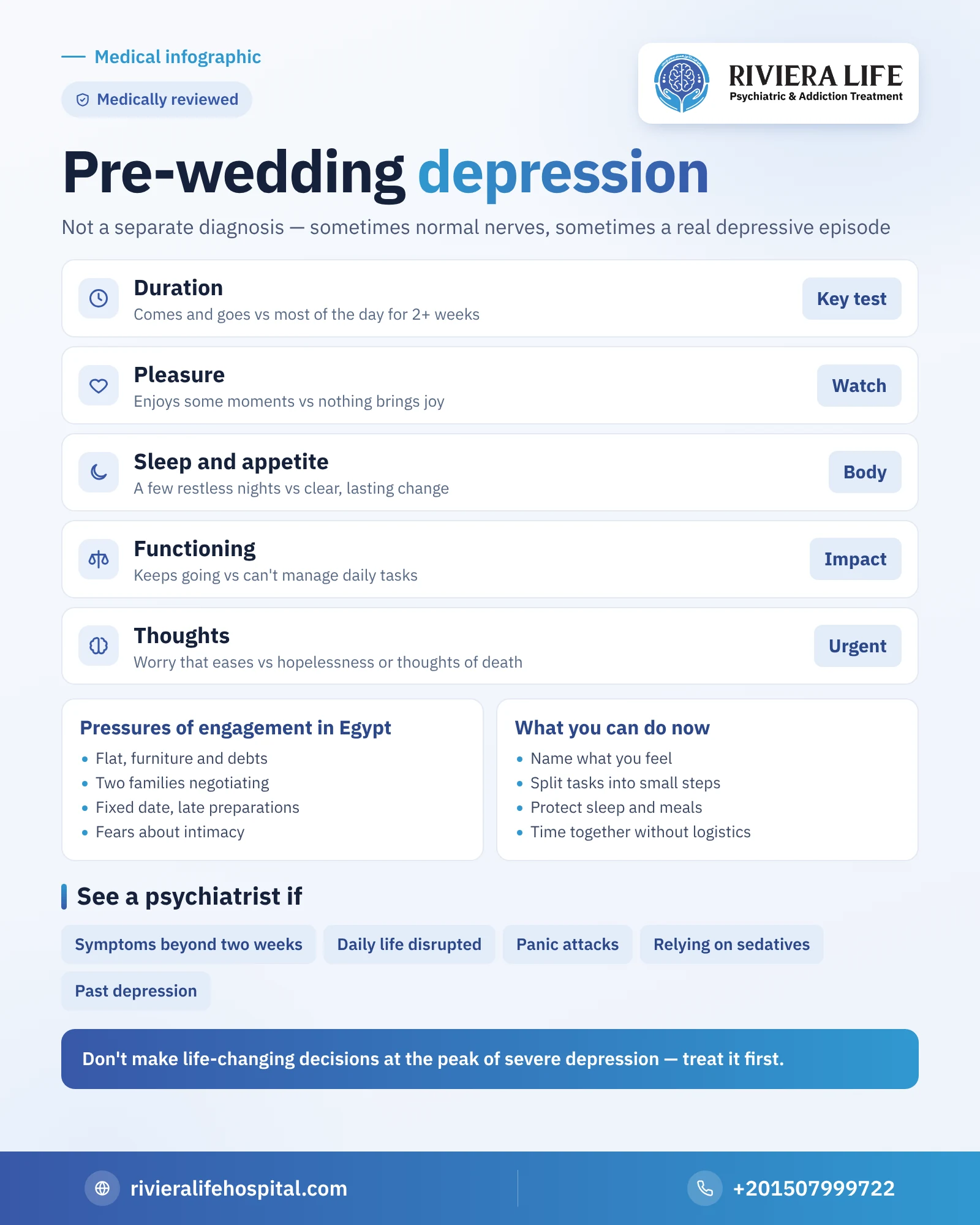
Normal anxiety, or depression that needs assessment?
This table helps you compare, and doesn’t replace a specialist assessment:
| Aspect | Usual pre-wedding stress | Signs that deserve assessment |
|---|---|---|
| Duration | Comes and goes, linked to specific situations | Continuous most of the day for more than two weeks |
| Pleasure | Enjoys moments such as choosing the dress or the flat | Nothing makes them happy, even what they were looking forward to |
| Sleep and appetite | Insomnia on a few nights before important appointments | A clear, lasting change in sleep, eating and weight |
| Functioning | Carries on with work and study reasonably well | A noticeable decline and inability to manage daily tasks |
| Thoughts | Worry about the future that eases with talking | Hopelessness, a sense of worthlessness, or thoughts of death |
Doubting your partner: when is it a message worth hearing?
The question “is this the right person?” is natural before any life-changing decision, and many people go through it and then feel reassured. But there is a difference between general doubt that accompanies anxiety and specific, repeated observations: excessive control, insults, violence, or lying about essential matters.
These aren’t symptoms of depression, but real information that deserves serious attention and discussion with someone you trust. On the other hand, severe depression can color everything gray, so the right partner seems like a big mistake. That is why specialists usually advise against making life-changing decisions at the peak of a severe depressive episode, and recommend treating the episode first and then thinking again with a clearer mind.
In the bride and in the groom: different pictures
A bride may express her distress through frequent crying, withdrawing from the preparations, irritability with her mother and fiancé, or losing interest in details she used to dream about. A groom may hide his sadness behind long hours at work, irritability about money, late nights and isolation, and sometimes escaping into cigarettes or substances. Both need someone to ask them calmly, “Are you really okay?”, and to hear the answer without dismissing it.
And if either partner has a previous history of depression or anxiety, this period in particular needs closer attention, because accumulated pressure is one of the best-known triggers for episodes to return. Anyone who was seeing a doctor or taking treatment would be unwise to stop it before the wedding for fear that “the other side will find out”; it is better to discuss it with the doctor.
What can you do for yourself now?
- Name what you feel clearly: anxiety, sadness, fear, exhaustion. Naming it alone eases the pressure.
- Split the preparations into small weekly tasks, and share them between the two of you and the two families.
- Protect your sleep and meals, which are the first things lost in the rush of preparations.
- Cut down the time spent comparing on social media.
- Set realistic financial limits instead of borrowing to meet expectations.
- Set aside time with your partner in which you don’t talk about the preparations.
How do you talk to your partner and family?
Choose a calm time, and start with your feelings rather than accusations: “I’ve been stressed and exhausted lately, and I need us to talk” is much better than “you’re putting pressure on me”. Ask for something specific: postponing an item, help with a task, or space to rest. And if the family doesn’t accept the idea of a psychiatrist, you can explain that the consultation is like any medical consultation, that it is confidential and doesn’t mean “madness”, as people say.
And if you are a parent, remember that your son or daughter may hide their distress so as not to spoil your happiness. Ask gently, ease the pressures that can be postponed, and don’t take the sadness as ingratitude or rejection of the groom or bride.
When should you ask for specialist help?
Ask for an assessment with a psychiatrist if the symptoms last more than two weeks, if your daily life is disrupted, if panic attacks appear, if you start relying on sedatives or substances to sleep or calm down, or if you have a previous history of depression or anxiety. And if thoughts of death or self-harm appear, don’t wait: call an ambulance on 123 or go to the nearest emergency department, and tell someone close to you immediately. You will find the full list of signs in our article on the symptoms of depression.
Does the sadness go away after the wedding?
Stress often eases after the wedding is over and the pressure of preparations has gone. But real depression doesn’t disappear just because circumstances change, and sometimes a “post-wedding slump” appears when the excitement ends and daily life begins with its responsibilities. So don’t count on “marriage will fix everything”. If symptoms continue after the wedding, early treatment protects both the person and the new relationship, and the options are explained in our article on depression treatment.
How can Riviera Life help you?
At Riviera Life you can talk to a consultant psychiatrist in a free first consultation with complete confidentiality, to find out whether what you are going through is passing stress that some organization will fix, or depression that needs a treatment plan. We also welcome parents who notice a change in their son or daughter before the wedding and don’t know where to begin.
More from our depression guide
- Depression: the complete guide
- The symptoms and signs of depression
- The causes of depression and risk factors
- Depression treatment and the steps to recovery
- Fear of marriage: the causes, symptoms and how it differs from hesitation
Questions many people ask
Yes. Many people feel stressed or sad in the face of this big change, especially with the pressures of preparation. It becomes worrying if it lasts more than two weeks and affects your daily life.
General doubt is common and accompanies anxiety, but specific observations such as control, insults or violence are real information that deserves attention, not symptoms.
It is usually advised not to make life-changing decisions at the peak of a severe depressive episode. Discuss it with a psychiatrist who can help you treat the episode and think clearly.
Stress often eases once the pressure of preparations is gone, but real depression may continue or appear after marriage, and then it needs assessment and treatment.
That is a personal decision, but honesty usually builds trust. And stopping an existing treatment for fear the other person will find out isn't advised without consulting the doctor.