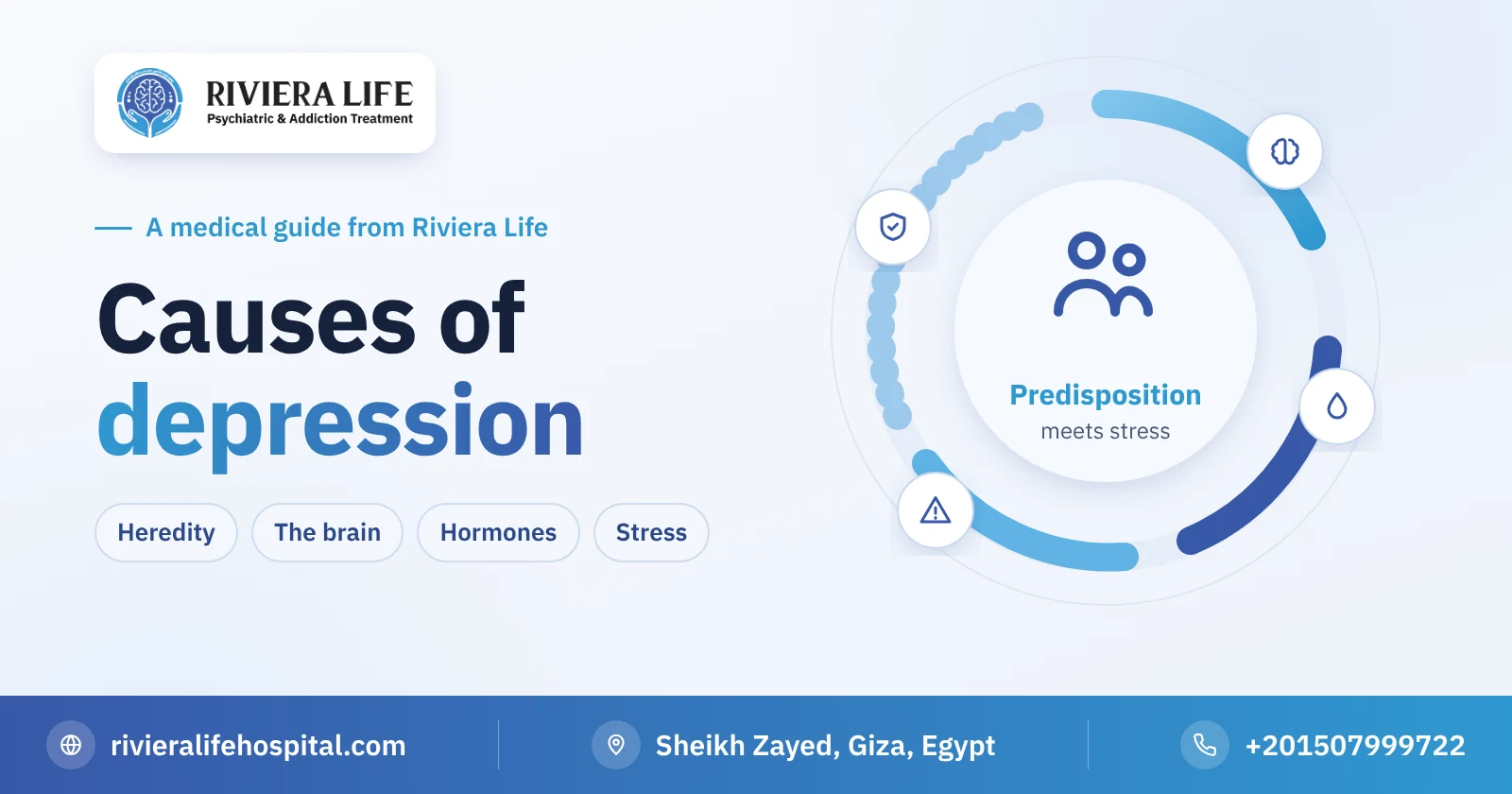
The causes of depression can’t be reduced to one cause; it usually arises from an overlap of genetic predisposition, changes in the functions of the brain and hormones, physical illnesses, medicines or drugs, together with life pressures, loss and childhood experiences, and the person’s way of thinking and dealing with stress. That is why two people may go through the same harsh circumstance, and one becomes depressed while the other gets past it. Understanding these factors doesn’t aim to look for someone to blame, but to know what can be changed and what needs extra protection. In this article we review the biological, psychological and social factors, then the factors that protect against depression.
Why is there no single cause of depression?
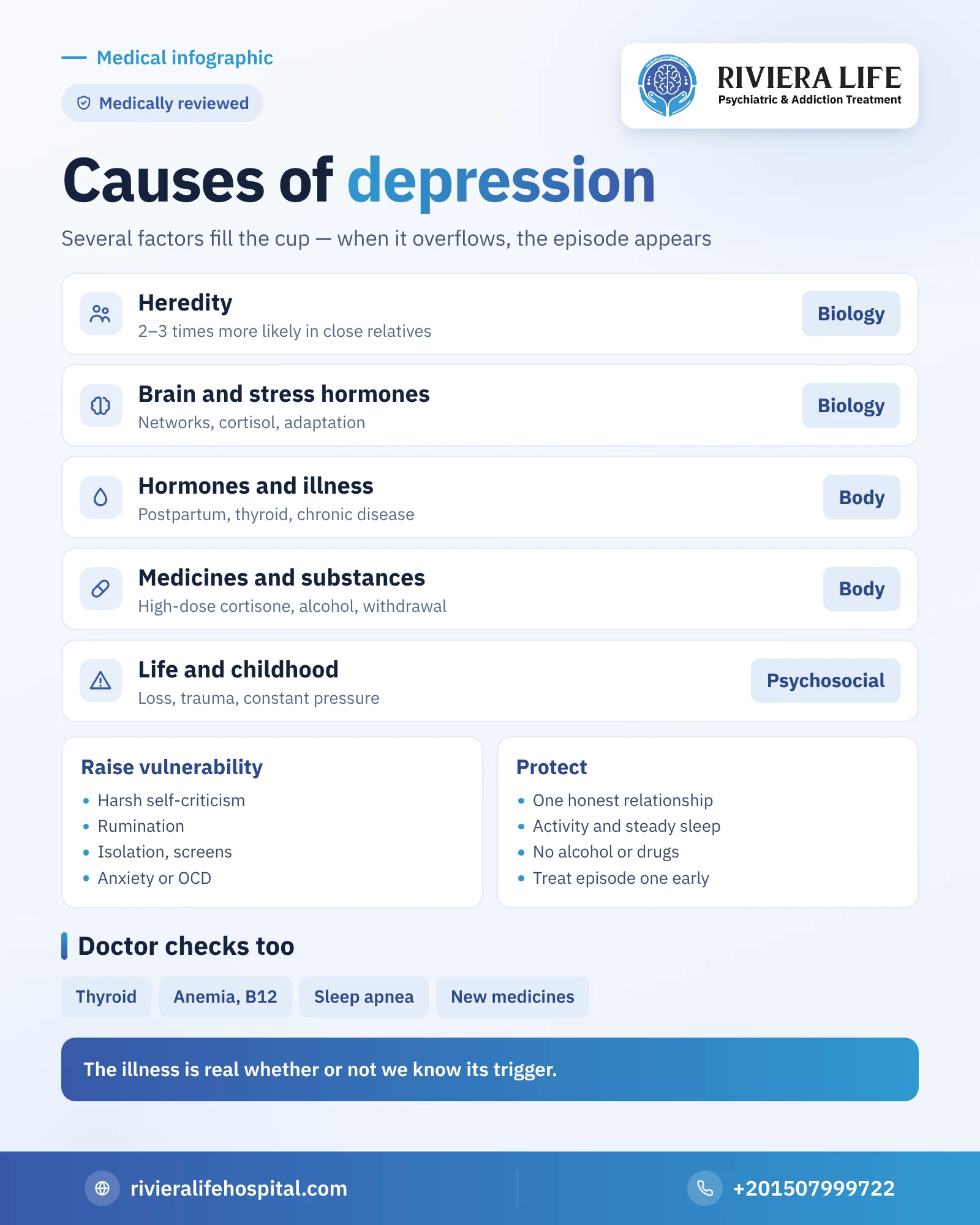
Doctors usually explain depression with the “vulnerability and stress” model. Imagine a cup filling gradually: heredity, childhood experiences and personality traits determine the size of the cup, meaning how much the person can bear, and stresses, illnesses and substances are what is poured into it. When the cup overflows, the episode appears. This explains why one person becomes depressed after one big shock, while another becomes depressed after an accumulation of small stresses, and why some episodes come without any visible cause at all.
This last point confuses many patients and their families: “his life is stable, so why is he depressed?”. The answer is that the absence of visible stress doesn’t mean the absence of causes; the biological predisposition may be high enough that a small trigger is enough, or there may be inner pressure others don’t see. That is why the patient isn’t asked to justify their depression with a convincing story in order to deserve treatment, as the illness is real whether or not we know its trigger.
The role of heredity in depression
Depression is more widespread in some families than others. Someone whose father, mother or sibling had depression has a chance of developing it roughly two to three times higher than others, and it rises further if the relative’s depression appeared at an early age or recurred. But there is no “depression gene”; genetic predisposition comes from many genes, each with a small effect, and doesn’t mean inevitable illness. Many people have a family history and never become depressed.
What happens in the brain?
The idea of a “serotonin deficiency” prevailed for decades, but today the picture is wider. Depression is linked to changes in the working of brain networks that control mood, reward, memory and the response to danger, and in communication between nerve cells and their ability to adapt. The body’s stress axis plays an important role: chronic stress keeps the hormone cortisol high for long periods, which may affect these networks. Recent research is studying the role of chronic low-grade inflammation in some patients, promising hypotheses that aren’t yet complete.
Hormones and life stages
Hormonal fluctuations explain part of the difference between men and women in rates of depression. There are periods in which a woman’s risk clearly rises: puberty, the week before the period in some women, pregnancy and after childbirth, and the years around menopause. In both sexes, an underactive thyroid may cause symptoms exactly like depression, which is why the doctor usually asks for it to be tested. You can read about the patterns linked to childbirth and the menstrual cycle in the article on types of depression.
Chronic physical illnesses
Living with a chronic illness raises the risk of depression for two reasons: the psychological burden of the illness itself, and its direct biological effects in some cases. Among the illnesses most linked to it:
- Heart disease and the period after heart attacks and strokes.
- Diabetes, especially when it is hard to control.
- Tumors and their treatments.
- Chronic pain, such as back and joint pain and migraine.
- Diseases of the nervous system, such as Parkinson’s, multiple sclerosis and epilepsy.
The doctor also checks for physical causes that may resemble depression or increase it, such as anemia and vitamin B12 deficiency, and sleep disorders such as sleep apnea, because treating them may clearly improve mood. The relationship is mutual, as untreated depression may weaken commitment to treating the physical illness and slow recovery from it.
Obesity and depression: a relationship that runs both ways
A familiar story recurs in clinics: someone gained weight after a long period of sadness, then their body shape frustrated them so their sadness increased. Studies support this mutual relationship, as excessive weight gain is linked to a higher likelihood of depression, and depression itself may push towards weight gain. This doesn’t mean that one always causes the other.
Researchers explain the link through several overlapping paths:
- The chronic low-grade inflammation that accompanies increased fat, which may affect brain chemistry.
- Disturbance of the hormones of stress, appetite and sleep in some patients.
- Stigma and weight bullying, and the isolation and low self-esteem they leave behind.
- Inactivity, little movement and eating for emotional compensation when mood drops.
- Sleep disturbance, including the sleep apnea common with obesity.
Some psychiatric medicines increase appetite and weight in some patients, but this doesn’t justify stopping them by individual decision; it is better to discuss the matter with the doctor to adjust the plan. And if the two come together, treating depression is part of losing weight, not a postponed luxury, because improved mood and sleep make it easier to stick to diet and movement. See depression symptoms to learn the signs, and read about depression treatment to learn the available options.
Medicines that may be linked to depressive symptoms
Some medicines may cause depressive symptoms in a few users, including cortisone when used in high doses or for long periods, some tumor and immune treatments, and some hormonal medicines in particular women. This doesn’t mean these medicines are dangerous for everyone, and you mustn’t stop any prescribed medicine on your own. The right thing is to tell your doctor if you notice a clear change in your mood after starting a new treatment, so they can decide the suitable alternative.
Alcohol and drugs: a cause and a result
Some people resort to substances to ease sadness or insomnia, getting temporary relief they pay for later. Alcohol is a depressant of the nervous system, and its chronic use deepens depression. Heavy hash use is linked to lethargy and loss of motivation, and withdrawal from tramadol or stimulants leaves periods of severe mood drop. In these cases it is sometimes hard to know which started first, and the matter needs assessment after a period of stopping.
Childhood experiences and traumas
Painful experiences in childhood, such as emotional neglect, losing a parent, or living amid severe family conflict or violence, raise the likelihood of depression in adulthood. They affect the way the stress-response system forms, and the person’s picture of themselves and others. Traumas in adulthood, such as accidents and disasters, may also lead to depression, often accompanied then by post-traumatic stress disorder. Having these experiences doesn’t sentence anyone to depression, but it makes early support more important.
Life stresses and loss
Many first episodes are preceded by events such as: the death of someone close, divorce, losing a job, accumulated debts, caring for a sick person for a long period, or living abroad and loneliness. Stresses aren’t limited to big events; constant pressure at work or a draining daily relationship may have the same effect. Notably, the effect of events usually decreases as episodes recur, so later episodes appear more easily with smaller triggers, which is an extra reason to treat the first episode well.
Added to this is the modern lifestyle itself: isolation and few real relationships, long late nights in front of screens, and little movement and sun exposure. These factors usually don’t cause depression alone, but they make the ground more prepared for it when they come together with other factors.
Personality traits and thinking patterns
Some traits raise vulnerability to depression: severe perfectionism, harsh self-criticism, low self-esteem, a tendency to anxiety, and the habit of rumination, meaning turning painful thoughts over again and again. Other psychological disorders also raise it, such as anxiety and obsessive-compulsive disorder. The good news is that thinking patterns can be changed, and this is precisely what cognitive behavioral therapy targets.
Factors that protect against depression
Just as there are risk factors, there are protective factors that reduce the likelihood of illness or lessen its severity:
- Supportive relationships, even with one person you can talk to honestly.
- Regular physical activity and stable sleep.
- Problem-solving skills and the ability to ask for help.
- Staying away from alcohol and drugs.
- Treating the first episode early and completely.
And for someone with a family history or a previous episode, it is useful to get to know their own early signs with their doctor, such as disturbed sleep or withdrawal, so they can act before the episode is complete.
How does Riviera Life help you?
Knowing the causes is useful when it turns into a plan. At Riviera Life the consultant psychiatrist reviews the family history, illnesses, medicines, substances and current stresses, to determine what needs direct treatment and what needs prevention, then sets a plan of the kind explained in the article on depression treatment. And if you aren’t yet sure what you are going through, start with the article on depression symptoms.
More from the depression guide
- Depression: the complete guide
- Depression symptoms and signs
- Types of depression and degrees of severity
- Depression treatment and recovery steps
- Depression and addiction: the relationship and how they are treated together
- Depression and diabetes: a relationship that runs both ways and how to break the cycle
Questions many people ask
Heredity plays a role in raising vulnerability, as first-degree relatives of a patient are roughly two to three times more prone. But there is no single gene for depression, and a family history doesn't mean inevitable illness.
That is an old simplification. Depression is linked to wider changes in brain networks, stress hormones and neural adaptation, alongside psychological and social factors.
Yes, the biological predisposition may be high enough that a small trigger is enough, or no trigger appears at all, and the illness is real in both cases.
Chronic alcohol use deepens depression, heavy hash use is linked to lethargy and loss of motivation, and withdrawal from some substances causes a clear drop in mood.
It can't always be prevented, but supportive relationships, regular sleep, physical activity, avoiding substances and treating the first episode early clearly reduce the risk.